Over-the-Counter Mineral Vanadyl Sulfate Clears Senescent Cells and Lengthens Lifespan in Preclinical Trial
RapAdmin
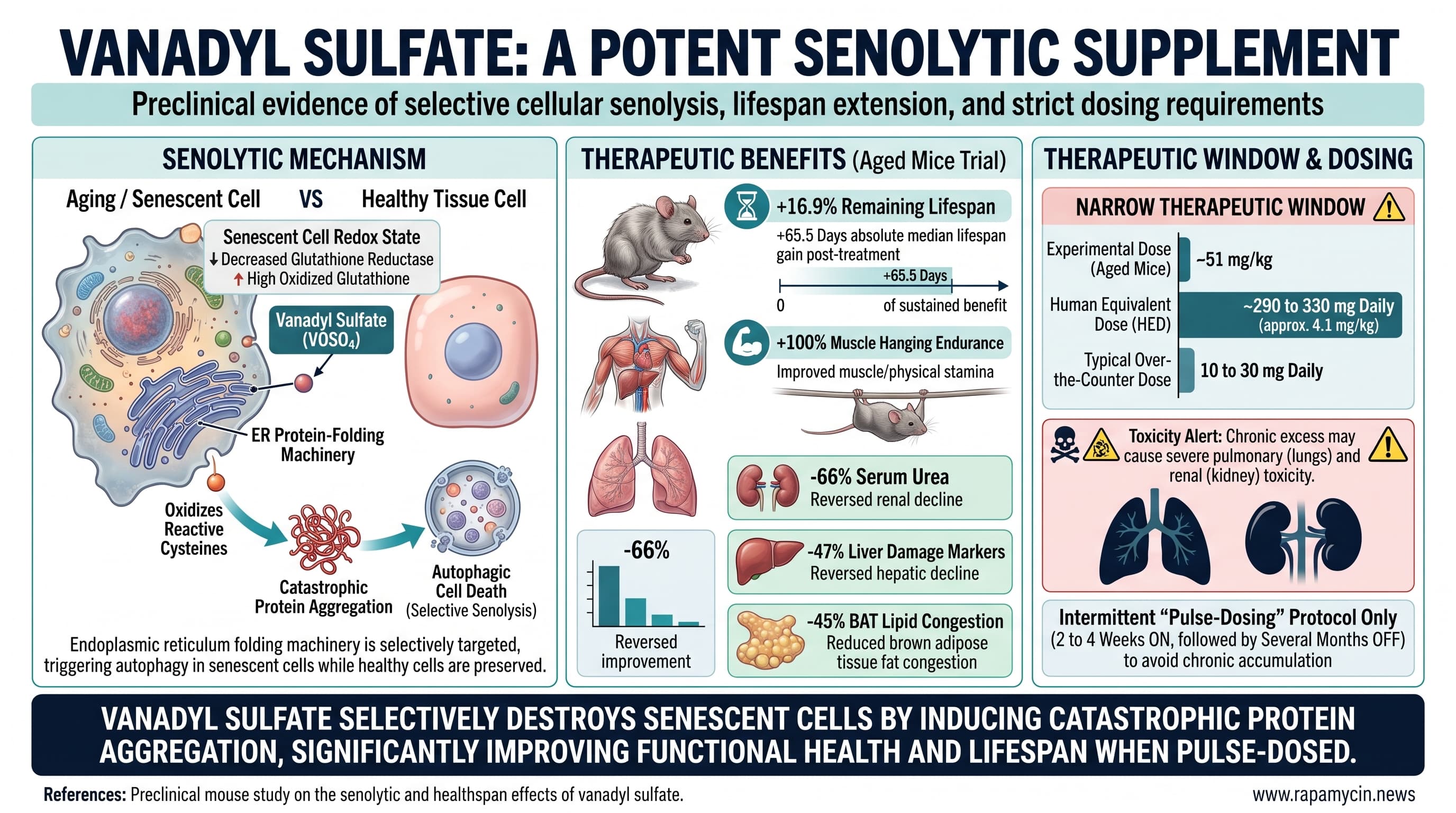
Researchers have identified that vanadyl sulfate, an inexpensive dietary supplement, functions as a potent senolytic agent capable of selectively destroying senescent cells while preserving healthy tissue. During aging, senescent cells develop a unique redox environment characterized by diminished glutathione reductase activity and an accumulation of oxidized glutathione. To survive and continually release inflammatory factors, these cells rely heavily on endoplasmic reticulum protein-folding machinery. Administering vanadyl sulfate selectively oxidizes reactive cysteines within these folding enzymes, inducing catastrophic protein aggregation and triggering autophagic cell death specifically in senescent cells. In aged male mice, a ninety-day oral regimen improved muscle endurance, lowered visceral fat, reversed hepatic and renal decline, and extended median post-treatment lifespan by nearly seventeen percent. These therapeutic improvements persisted even after treatment withdrawal, suggesting that periodic dosing protocols could offer substantial longevity and metabolic advantages.
A team of investigators at the University of Chicago has uncovered an unexpected biological vulnerability that could transform how we eliminate senescent cells. As cells age, they often enter senescence, a state of irreversible growth arrest where they refuse to die, instead churning out inflammatory proteins that degrade neighboring tissues and drive systemic decline. Researchers screening a library of circulating blood nutrients discovered that vanadyl sulfate, an over-the-counter mineral supplement commonly used for blood sugar control, selectively triggers the death of senescent human cells while leaving healthy counterparts unharmed.
The discovery hinges on a peculiar metabolic defect found within senescent cells. Healthy cells maintain an optimal balance of reduced glutathione to buffer against oxidative stress. Senescent cells, however, experience an accumulation of oxidized glutathione disulfide because of the downregulation of the recycling enzyme glutathione reductase.Simultaneously, these damaged cells dramatically upregulate their endoplasmic reticulum protein-folding machinery,particularly protein disulfide isomerases and endoplasmic oxidoreductin 1 alpha. This enhanced protein-folding infrastructure is necessary for senescent cells to manufacture and secrete high volumes of toxic inflammatory cytokines without succumbing to internal stress.
This protective infrastructure doubles as an Achilles heel. When vanadyl sulfate enters a senescent cell, its oxidized vanadyl ions interact with the abnormal redox environment. The compound attacks reactive cysteine residues on the overworked endoplasmic reticulum folding enzymes, forcing inappropriate disulfide bonds to form. This reaction causes widespread protein misfolding and massive protein clumping within the cell. While senescent cells attempt to rescue themselves by ramping up autophagy and lysosomal clearance, the volume of aggregated protein rapidly overwhelms their digestive capacity, ultimately killing the cell. Healthy cells, which retain normal antioxidant defenses and balanced protein synthesis, tolerate the compound without distress.
To evaluate practical outcomes, researchers administered vanadyl sulfate in the drinking water of aged male mice for three months, starting at approximately seventeen months of age, which corresponds to late middle age in humans. The intervention produced striking physical and systemic benefits. Treated animals doubled their hanging grip endurance, lost significant visceral fat mass, and exhibited sharp reductions in markers of liver and kidney damage. Blood glucose regulation and insulin responsiveness were restored to levels approaching those of young animals. Most importantly, the treatment extended median survival from 886.5 days in control animals to 952 days in the treated group.
Remarkably, these functional improvements persisted weeks after the supplement was removed from the water, and blood vanadium levels returned to baseline. This durability demonstrates a hit-and-run senolytic mechanism: once the toxic senescent cells are eradicated, tissues remain rejuvenated until new senescent cells accumulate over time. The findings indicate that pulse-dosing this accessible trace mineral may provide a viable therapeutic pathway for mitigating age-related decline.
Actionable Insights
Vanadyl sulfate demonstrates genuine senolytic activity in preclinical models, offering a potential nutritional tool for targeting cellular senescence. In the study, aged mice given vanadyl sulfate for three months experienced an absolute median lifespan gain of 65.5 days, which represents an extension of their remaining lifespan after treatment by 16.9 percent. In physical performance, treated animals demonstrated a 100 percent improvement in muscle hanging endurance relative to untreated controls. Metabolic biomarkers displayed similarly dramatic shifts: serum urea dropped by approximately 66 percent, serum liver damage markers fell by 47 percent, and brown adipose tissue lipid congestion was reduced by roughly 45 percent.
Caution: Vanadium exhibits a narrow therapeutic window. Chronic excessive exposure to oxidized vanadium compounds can cause severe pulmonary and renal toxicity. In the mouse trial, the effective drinking water concentration equated to roughly 51 milligrams per kilogram of body weight in mice, which translates to a human equivalent dose of approximately 4.1 milligrams per kilogram, or roughly 290 to 330 milligrams daily for an average adult. Over-the-counter supplements typically supply 10 to 30 milligrams. The research strongly suggests that if vanadyl sulfate is deployed clinically, it should follow an intermittent, pulse-dosing protocol, such as two to four weeks on followed by several months off, rather than continuous daily consumption.
Context and Source
- Open Access Paper: Altered protein cysteine reactivity in senescent cells is a vulnerability for senolysis to ameliorate aging, Nov. 6, 2026.
- Institutions: Department of Medicine and Department of Chemistry, The University of Chicago, Chicago, Illinois,USA; UT Southwestern Medical Center, Dallas, Texas, USA; City of Hope, Duarte, California, USA; University of Utah, Salt Lake City, Utah, USA; Buck Institute for Research on Aging, Novato, California, USA
- Country: United States of America
- Journal: Nature Aging
- Journal Impact Factor: The impact score of this journal is 16.6, evaluated against a typical high-end range of 0 to 60+ for top general science, therefore this is a High impact journal.
Related Reading:
- Senolytic Therapy: What are you doing?
- Sweat or Senolytics? Exercise Matches Dasatinib and Quercetin for Heart Aging, But Synergies Fail
- Sixty Years On, Senescence Is Better Understood Than Ever, and Senolytics Still Have Not Delivered in Humans
- Old Cells, Thin Skin: A New Review Makes the Case for Senolytic Skincare