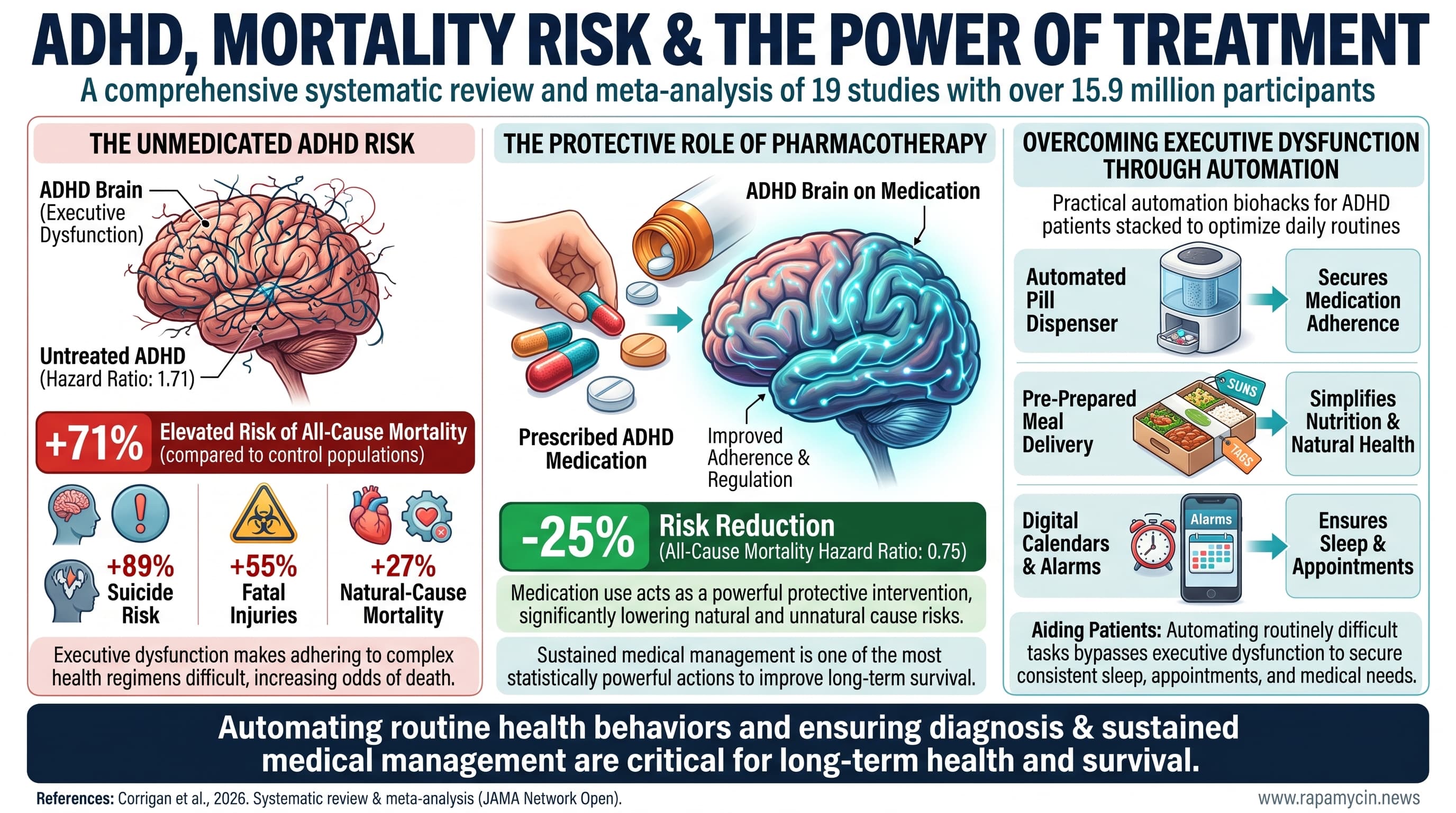
Attention-deficit hyperactivity disorder is highly correlated with adverse life outcomes and premature mortality. A comprehensive systematic review and meta-analysis of 19 studies encompassing over 15.9 million participants evaluated the association between this disorder and various mortality causes. The data demonstrate that individuals with this condition face a 71% elevated risk of all-cause mortality compared to control populations. This risk increase spans multiple specific causes, including an 89% increase in suicide risk, a 55% increase in fatal injuries, and a 27% increase in natural-cause mortality. Crucially, the meta-analysis reveals that pharmacological treatment for the disorder acts as a powerful protective intervention. Patients utilizing prescribed medication exhibit a 25% reduction in all-cause mortality risk. This underscores the critical importance of accurate diagnosis and sustained medical management for improving long-term health and survival.
Neurodevelopmental conditions are rarely viewed through the lens of classical longevity and lifespan extension. However, population data strongly suggest that psychological and neurobehavioral phenotypes exert a massive influence on mortality. The recent meta-analysis by Corrigan and colleagues aggregates data from nearly 16 million individuals across multiple nations to clarify the true magnitude of mortality risk associated with attention-deficit hyperactivity disorder. The findings reframe the condition from a behavioral or occupational impairment into a systemic risk factor for premature death.
The data reveal a stark reality. Individuals diagnosed with the disorder experience a hazard ratio of 1.71 for all-cause mortality. The elevated mortality is not driven solely by impulsive behaviors leading to accidents, although unintentional and intentional injuries are elevated by 55%. The risk profile is broad. Suicide rates are nearly doubled, reflecting the profound toll of co-occurring conditions like depression, anxiety, and the psychological burden of navigating environments poorly suited to neurodivergent individuals. Furthermore, natural-cause mortality is elevated by 27%, which highlights how the condition indirectly accelerates biological aging and physical decline. Poor impulse control and executive dysfunction frequently translate into adverse health behaviors, including higher rates of substance abuse, poor dietary choices, disrupted sleep architecture, and a failure to adhere to medical protocols for other chronic diseases. Over decades, these friction points compound, degrading metabolic and cardiovascular health.
The most critical finding from a life-extension perspective is the protective effect of pharmacotherapy. The analysis of medication users indicates a hazard ratio of 0.75 for all-cause mortality. This means that medical intervention fundamentally alters the survival trajectory of this population, pulling their mortality risk significantly closer to the baseline of the general public. The exact mechanisms of this mortality reduction likely involve acute improvements in impulse control and emotional regulation, which immediately reduce accident and suicide risks. Long-term benefits likely accrue from improved executive function, allowing individuals to maintain stable employment, cultivate supportive social networks, and reliably engage in positive health behaviors.
The scientific community must acknowledge that effective psychiatric treatment is a primary longevity intervention for affected populations. These findings strongly advocate for public health strategies that remove barriers to diagnosis and ensure continuous access to indicated medications. Addressing the structural determinants of health and reducing the stigma surrounding both the diagnosis and its pharmacological treatments will be necessary to close this substantial mortality gap.
Actionable Insights
For individuals with attention-deficit hyperactivity disorder, securing and adhering to evidence-based pharmacotherapy is one of the most statistically powerful actions available to increase lifespan. The data show a hazard ratio of 0.75 for medication use. In practical terms, this represents a 25% relative risk reduction in all-cause mortality.
The unmedicated condition carries a hazard ratio of 1.71. This means that over a given timeframe, an untreated individual faces a 71% higher chance of death from any cause compared to someone without the condition. Because the disorder increases natural-cause mortality by 27%, affected individuals must proactively optimize routine health behaviors. Executive dysfunction makes adherence to complex health regimens difficult. Therefore, biohackers and patients should prioritize automating their health routines. Strategies include using automated pill dispensers, subscribing to pre-prepared healthy meal deliveries, and utilizing digital scheduling systems to ensure consistent sleep patterns and medical appointments. By treating the underlying neurodevelopmental traits with medication, the cognitive friction associated with maintaining these healthy habits is significantly reduced, directly mitigating both the physiological and behavioral drivers of premature mortality.
Context/Source
- Open Access Paper: Mortality Among People With Attention-Deficit/Hyperactivity Disorder: A Systematic Review and Meta-Analysis, October 19, 2026
- Institution: University of Liverpool, King’s College London, University College London,Bradford Institute for Health Research
- Country: United Kingdom
- Journal Name: JAMA Network Open
- Impact Evaluation: The impact score of this journal is 13.8, evaluated against a typical high-end range of 0 to 60+ for top general science, therefore this is a High impact journal.