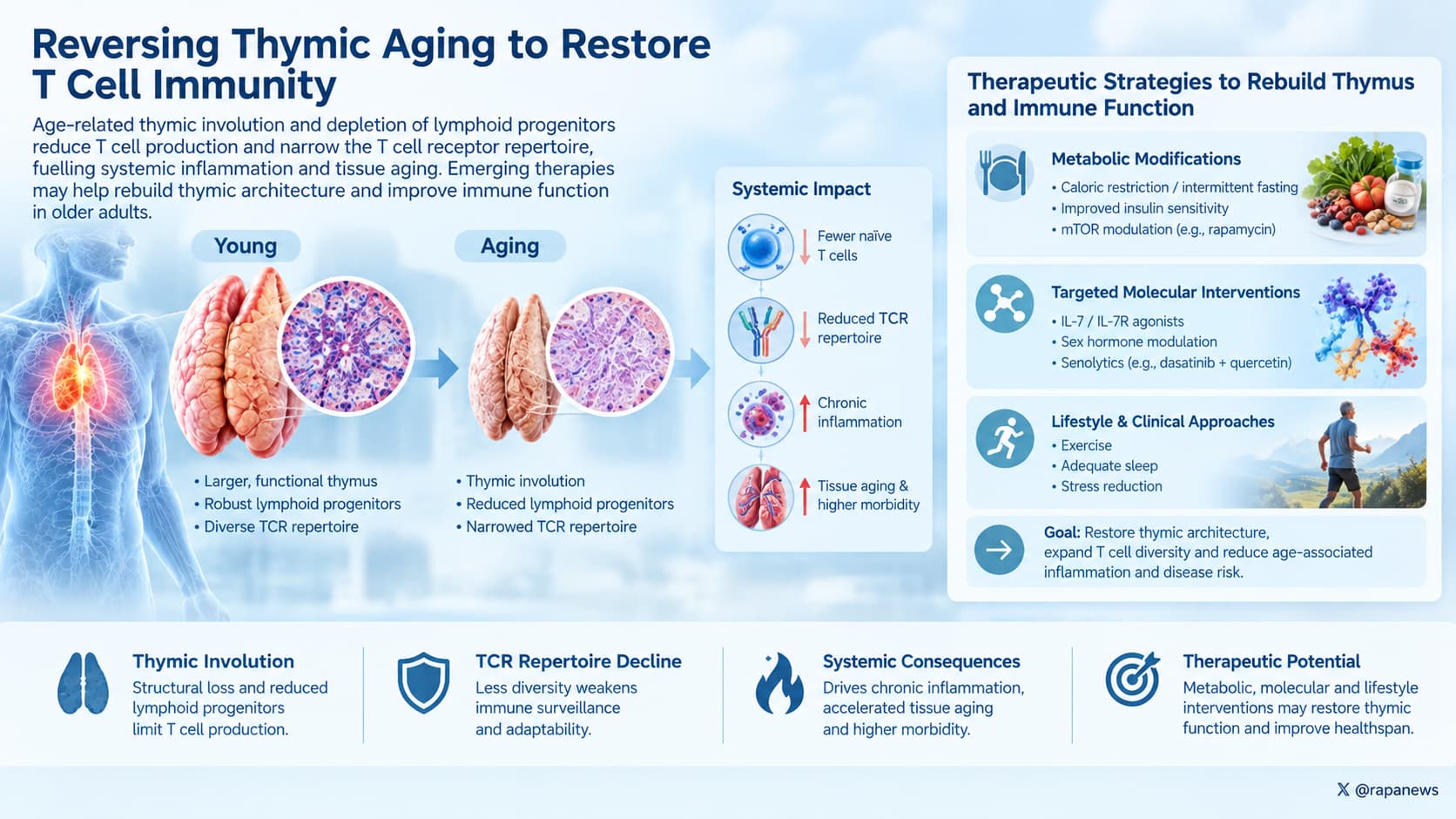
This review synthesizes current research on age-related thymic involution and evaluates emerging therapeutic interventions designed to restore T cell production and systemic immune function. The authors outline how the structural degradation of the thymus and the depletion of lymphoid progenitors compromise the T cell receptor repertoire, leading directly to systemic tissue aging and chronic inflammation. By exploring therapies ranging from metabolic modifications to targeted molecular interventions, the paper provides a framework for clinical and lifestyle approaches to rebuild thymic architecture and mitigate age-associated morbidities.
Global life expectancy increased to 73.4 years by 2019, yet healthy life expectancy only reached 63.7 years. This widening 9.7-year gap highlights a critical period of chronic disease driven significantly by “inflammaging,” a low-grade chronic inflammation linked closely to immune system degradation. A primary driver of this immune decline is the age-related involution of the thymus, an organ responsible for T cell development. Thymic involution begins early in life and accelerates with age, resulting in a severe drop in the production of new naive T cells. As thymic output falls, the peripheral immune system compensates through homeostatic proliferation, which leads to the accumulation of exhausted and senescent T cells. These senescent cells secrete proinflammatory cytokines and prosenescence factors like granzyme K, which actively drive systemic tissue deterioration and accelerate the onset of neurodegenerative, cardiovascular, and metabolic diseases.
The microenvironment of the aging thymus undergoes profound structural changes. Thymic epithelial cells lose their ability to differentiate and proliferate, while atypical age-associated thymic epithelial cells emerge, acting as dysfunctional decoy cells that consume vital growth factors. Concurrently, fibroblasts and adipocytes infiltrate the organ, replacing functional lymphoid tissue. Pre-thymic events also contribute to this decline, as aging hematopoietic stem cells exhibit a myeloid bias and produce fewer common lymphoid progenitors capable of migrating to the thymus.
Reversing thymic involution requires targeting both the hematopoietic and stromal compartments. Experimental interventions have shown notable preliminary efficacy. Caloric restriction prevents thymic adipogenesis and preserves epithelial density. Hormonal interventions, including sex steroid ablation and the administration of growth hormone combined with metformin and dehydroepiandrosterone, have demonstrated potential to reverse thymic fat accumulation and increase naive T cell numbers. Molecular therapies utilizing recombinant proteins like keratinocyte growth factor, interleukin-21, and RANKL aim to directly stimulate thymic epithelial cells and endothelial cells to restore the structural niches necessary for T cell development. While translating these findings into clinical practice remains challenging due to variable human responses and potential side effects, targeted thymic rejuvenation presents a highly viable strategy to break the cycle of inflammaging and extend human healthspan.
Actionable Insights
-
Thymosin Alpha 1: This peptide hormone naturally produced by thymic epithelial cells acts as a potent immunomodulator. In retrospective clinical analyses, thymosin alpha 1 administration enhanced T cell production and resulted in a 60 percent absolute reduction in mortality among patients suffering from severe COVID-19.
-
Caloric Restriction: A two-year caloric restriction intervention in middle-aged humans successfully induced thymic rejuvenation, improving naive T cell production by preserving epithelial signatures and halting thymic adipogenesis.
-
Growth Hormone Protocol: An exploratory clinical trial treating 51 to 65-year-old men with recombinant growth hormone, metformin, and dehydroepiandrosterone successfully reversed thymic fat accumulation, increased naive T cell numbers, and reduced epigenetic age.
-
Zinc Supplementation: Age-related declines in plasma zinc correlate strongly with thymic involution due to reduced thymulin activity. High-dose oral zinc supplementation effectively regenerates thymic function and restores naive T cell production in aged animals and human patients undergoing hematopoietic stem cell transplantation.
Context/Source
- Open Access Paper: Age-related thymic involution: Mechanistic insights and rejuvenating approaches to restore immune function, Published 13 Feb 2026.
- Institution: Centre d’Immunologie de Marseille-Luminy, CNRS, INSERM, Aix-Marseille Université
- Country: France
- Journal Name: Science Advances
- Impact Evaluation: The impact score of this journal is 14.1, evaluated against a typical high-end range of 0–60+ for top general science, therefore this is a High impact journal.
Related Reading:
- Your Immune System Is Aging Faster Than You Are, and the Thymus Is the First Domino to Fall
- Thymulin: A Forgotten Thymus Hormone Reawakens the Immune System Against Cancer
- A Thymic Rejuvenation Protocol - Tesamorelin · Thymosin a1 · Rapamycin · Imeglimin · DHEA
- The Thymus may play a key role in longevity and cancer (WaPo)
- The Thymus Renaissance: Reawakening the Body's Forgotten Immune Engine for Longevity
- Thymus and Immunosenescence - A deep dive into genetic pathways for actionable insights