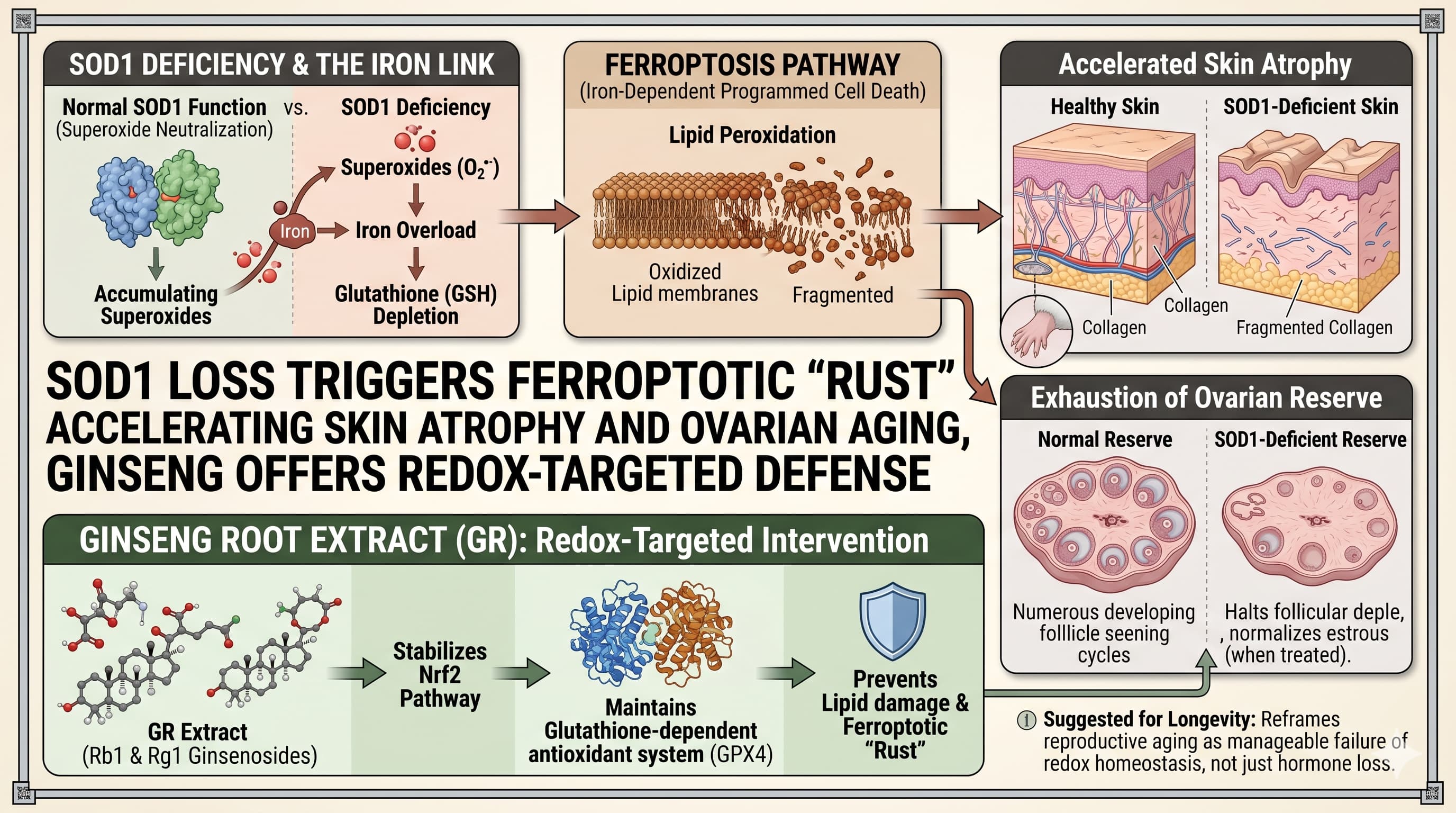
Aging is often described as a slow burn of oxidative stress, but new research published in GeroScience suggests that for the reproductive system, it may be more like a slow “rusting.” Scientists have identified a critical link between the loss of Superoxide Dismutase 1 (SOD1) —a primary antioxidant enzyme—and ferroptosis , an iron-dependent form of programmed cell death characterized by lipid peroxidation. While SOD1’s role in neutralizing superoxides is well-known, this study demonstrates that its deficiency triggers a cascade of iron overload and glutathione depletion, specifically accelerating skin atrophy and the exhaustion of the ovarian reserve.
Using a dual-model approach involving hairless Sod1-/- mice and C. elegans , the research team found that SOD1-deficient subjects exhibited systemic “redox-ferroptotic” damage. In mice, this manifested as “dermatoporosis”—a thinning of the skin and formation of dermal cysts—and a dramatic decline in primordial and primary follicles, the “bank account” of female fertility. In the nematode C. elegans , the lack of SOD1 led to elevated ferrous iron (Fe2+), increased hydrogen peroxide, and a significantly shortened reproductive span.
The study’s most promising finding is the protective efficacy of Ginseng Root extract (GR) , specifically enriched with ginsenosides Rb1 and Rg1. When administered to the SOD1-deficient mice and worms, the extract acted as a “redox-targeted intervention,” effectively halting follicular depletion, normalizing estrous cycles, and reducing iron-driven lipid damage. This suggests that the age-old herbal remedy may work by stabilizing the Nrf2 pathway and maintaining the glutathione-dependent antioxidant system (GPX4), which prevents the ferroptotic “rust” from destroying tissue architecture. For those in the longevity community, this study reframes reproductive aging not just as a loss of hormones, but as a manageable failure of redox homeostasis.
Actionable Insights: Preserving the Ovarian Bank Account
-
Targeting the Ferroptosis Triad: The study reinforces that reproductive longevity depends on three pillars: iron homeostasis, glutathione (GSH) availability, and lipid protection. Biohackers should focus on strategies that maintain high GSH levels and prevent iron accumulation in tissues.
-
Ginseng as a Redox Stabilizer: Korean Red Ginseng (Panax ginseng) extract showed cross-species efficacy in mitigating SOD1-deficiency pathologies. The effective mouse dose was 300 mg/kg/day (Human Equivalent Dose: ~24 mg/kg or ~1.7g for a 70kg adult).
-
Prioritize Specific Ginsenosides: The study highlights Rg1 (9.5 mg/g) and Rb1 (41.7 mg/g) as the primary molecular mediators. When selecting supplements, standardizing for these specific compounds is essential for replicating the anti-ferroptotic effects seen in the data.
-
Monitor Oxidative Biomarkers: If tracking longevity markers, the study identifies 8-isoprostane , malondialdehyde (MDA) , and pentosidine as key systemic indicators of the “ferroptosis-associated redox imbalance” that precedes visible reproductive or skin aging.
Source:
- Open Access Paper: SOD1 deficiency drives ferroptosis-linked oxidative and reproductive aging, mitigated by ginseng root extract
- Institutions: Konkuk University (South Korea); National Center for Geriatrics and Gerontology (Japan); Chiba University (Japan); Juntendo University (Japan).
- Journal: GeroScience (Official Journal of the American Aging Association).
- Impact Evaluation: The impact score (JIF) of this journal is approximately 5.6, evaluated against a typical high-end range of 0–60+ for top general science; therefore, this is a High-impact specialty journal in the field of gerontology and aging biology.
Related Reading:
- American Ginseng Extract Rejuvenates Aging Neurons by Scrubbing Cellular Waste
- Vitamin C Re-evaluated: A Direct Inhibitor of the 'Ferro-Aging' Clock
- Women Taking Rapamycin for Enhanced Fertility / Menopause Prevention?
- A guide to extend longevity by delaying menopause (Age1)
- Mechanisms of Ovarian Aging: A Target for Geroprotection in Women, Yousin Suh, Columbia U
- Recharging the Biological Clock: Multimodal Strategies to Combat Ovarian Aging
- Rapamycin for Fertility and Menopause; Clinical Results
- How to Stop or Reverse Skin Aging (2026)