How an HIV Drug Restores Youthful Memory Linking
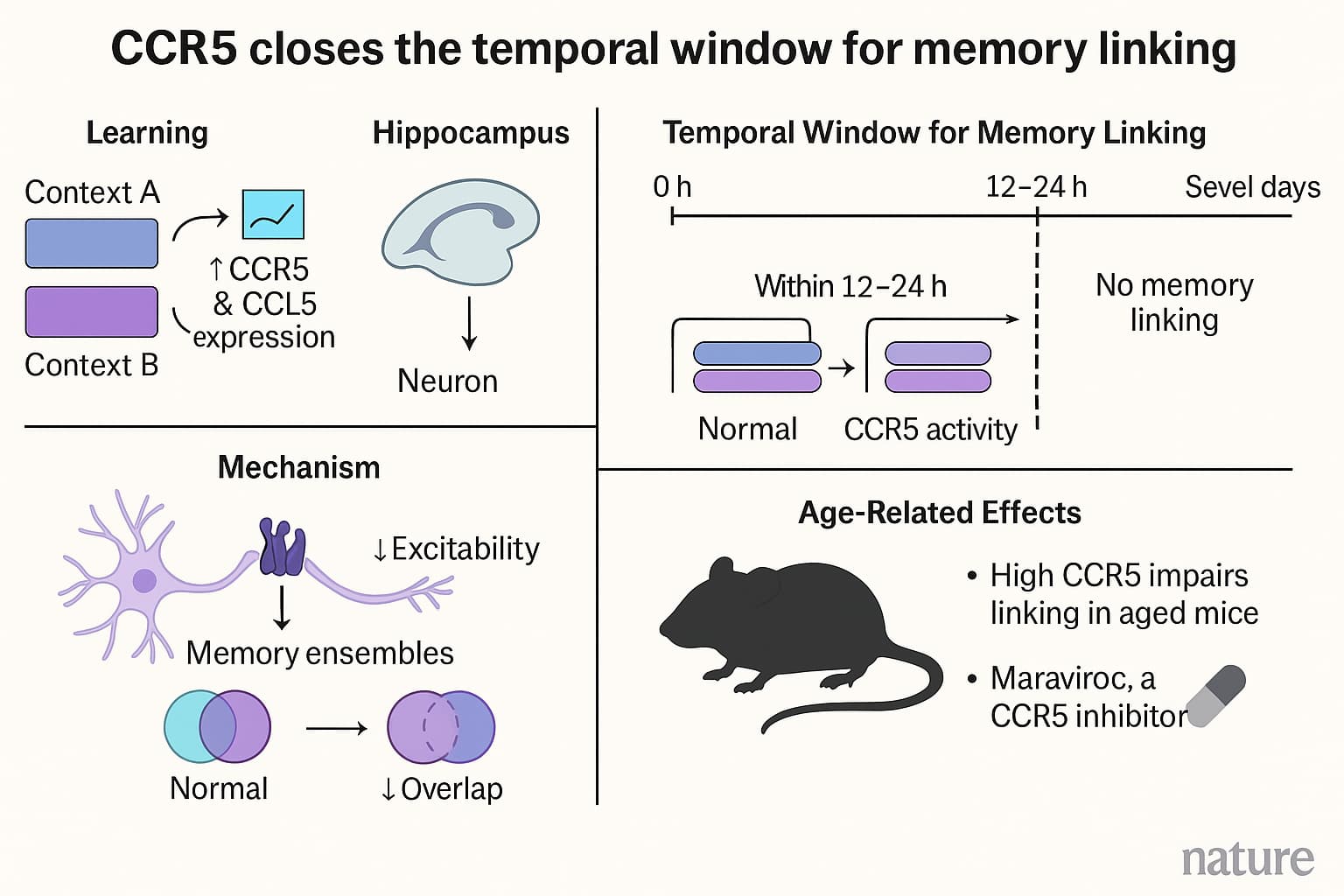
A recent study published in Nature reveals that the immune receptor CCR5 and its ligand CCL5 act as a molecular clock in the mouse hippocampus, segregating memories that occur at different times. In aging mice, this chemokine system becomes overactive, prematurely closing the temporal window required to connect related events. By inhibiting CCR5 using either genetic knockout models or the FDA-approved HIV drug Maraviroc, researchers successfully reversed age-related memory linking deficits. This identifies a highly specific neuroinflammatory pathway as a novel therapeutic target for cognitive rejuvenation.
The human brain must balance two competing tasks when processing daily events. It must link related memories that occur close in time to build a coherent understanding of the world, while simultaneously segregating events separated by longer intervals to prevent chaotic associations. Until now, the biological mechanisms that actively separate memories across time have remained elusive. Researchers investigated the dorsal CA1 region of the hippocampus, an area critical for contextual memory. They discovered that learning triggers a delayed increase in the expression of the CCR5 receptor and its ligand CCL5. This increase occurs 12 to 24 hours after a memory is formed.
When CCR5 levels rise, the receptor suppresses neuronal excitability. This dampening effect prevents the same ensemble of neurons from participating in the formation of subsequent memories, effectively closing the temporal window for memory linking.
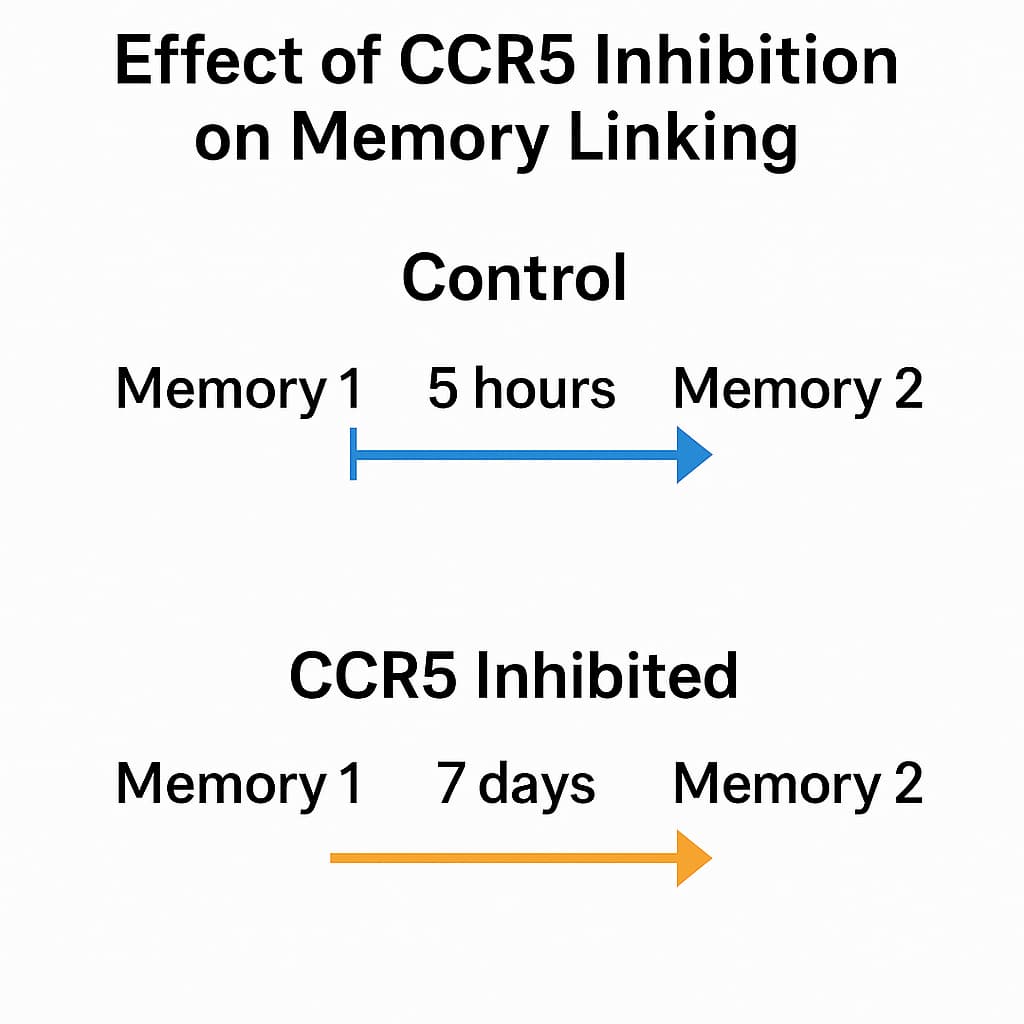
The critical breakthrough for longevity research lies in the aging data. As mice reach middle age, their baseline levels of CCR5 and CCL5 in the hippocampus increase significantly. This elevated state of chronic neuroinflammation means the temporal window for memory linking is prematurely closed, leading to documented cognitive deficits. To test if this decline could be reversed, researchers administered Maraviroc, an FDA-approved CCR5 antagonist originally developed to treat HIV. When infused into the brains of middle-aged mice, Maraviroc successfully rescued their ability to link memories separated by a five-hour interval. The mice behaved identically to their younger counterparts, proving that this specific mechanism of cognitive aging is not a permanent structural loss but a reversible biochemical blockade.
Context/Source
- Paywalled Paper: CCR5 closes the temporal window for memory linking
- **Institution:**University of California Los Angeles (UCLA)
- Country: USA
- Journal: Nature
- Impact Evaluation: The impact score of this journal is 64.8, evaluated against a typical high-end range of 0–60+ for top general science, therefore this is an Elite impact journal.