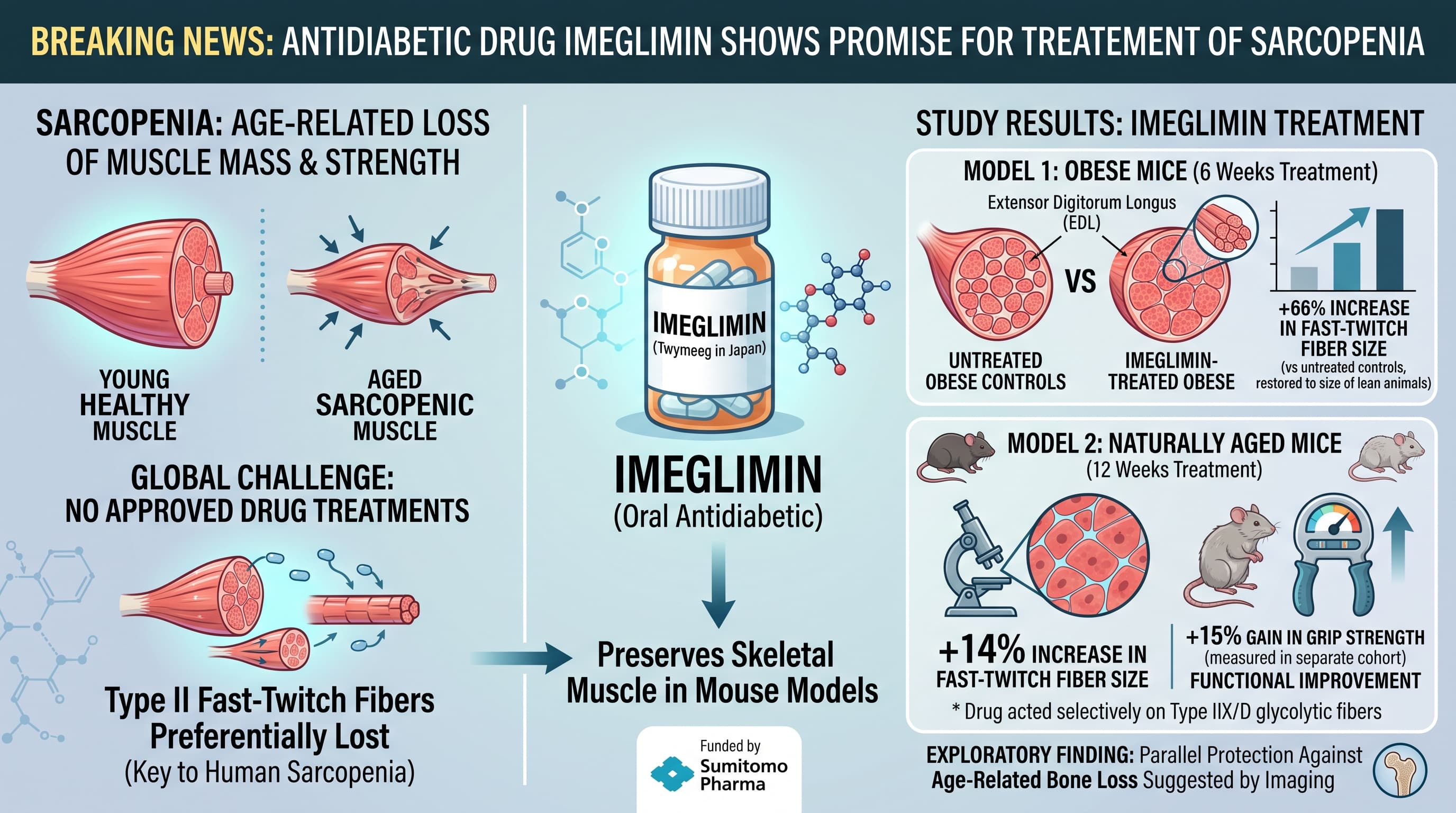
Sarcopenia, the age-related loss of muscle mass and strength, has no approved drug treatment anywhere in the world. This study reports that imeglimin, a first-in-class oral antidiabetic already licensed in Japan under the name Twymeeg, preserved skeletal muscle in two independent mouse models of muscle loss. In obese mice, six weeks of treatment restored shrunken fast-twitch fibres in the extensor digitorum longus to the size seen in lean animals, a 66 percent increase over untreated obese controls. In naturally aged mice, twelve weeks of treatment produced a 14 percent increase in fast-twitch fibre size and, more importantly, a roughly 15 percent gain in grip strength measured in a separate cohort. The drug acted selectively on Type IIX/D glycolytic fibres, the same fibre population that is preferentially lost in human sarcopenia. Exploratory bone imaging suggested parallel protection against age-related bone loss. The work was funded by Sumitomo Pharma, which markets the drug.
Muscle loss with age is not a cosmetic problem. Sarcopenia predicts falls, fractures, hospitalisation, loss of independence, and death, and it affects a substantial fraction of adults over seventy. Despite decades of work there is still no approved pharmacological treatment. Resistance training and adequate protein remain the only interventions with solid evidence, and both require sustained effort that many older adults cannot manage.
Against that background, a Japanese and Chinese research team has reported that an existing drug preserves muscle in mice. Imeglimin is a glimin, a new chemical class of oral diabetes medication approved in Japan. It is a structural relative of metformin, but its primary action is on mitochondria, improving respiratory chain function and reducing the reactive oxygen species that mitochondria leak when a cell is under metabolic stress.
The team tested it in two separate models of muscle loss and it worked in both. Obese mice on a high-fat diet lost roughly a third of the cross-sectional area of their fast-twitch fibres. Adding imeglimin to their food restored those fibres to lean-animal dimensions. In naturally aged mice, eighteen months old at the start, twelve weeks of treatment produced a smaller but real increase in fibre size.
The result that matters most is the functional one. In a separate cohort of aged animals, grip strength after seven weeks of treatment was about 15 percent higher than in untreated age-matched controls. Morphology is suggestive; strength is the endpoint that maps onto what sarcopenia actually costs people.
Two features sharpen the case. First, the effect was fibre-type selective, hitting Type IIX/D glycolytic fibres while leaving slow-twitch soleus fibres largely alone. That is precisely the pattern of human sarcopenia, where Type II fibres are preferentially lost. Second, the drug produced these effects in aged mice without changing body weight, fasting insulin, or glucose tolerance at all. That dissociation matters because it argues the muscle effect is direct rather than a downstream consequence of better metabolic control, which is what a repurposing candidate would need to show.
RNA sequencing pointed at the mechanism: a coordinated shutdown of stress-response and inflammatory gene programmes inside the muscle fibres themselves. Notably, the classical muscle-wasting machinery was untouched.
The context is favourable. Most current metabolic drugs, including GLP-1 agonists and SGLT-2 inhibitors, are associated with lean mass loss. A metabolic drug that protects muscle would occupy distinct ground. This remains a mouse study in male animals only, with a small headline experiment and no human muscle data.
Actionable Insights
Anchor on the right number. The 66 percent fibre-size gain in obese mice came from only five animals per group, which means the true effect could be anywhere from modest to enormous. The aged-mouse experiment used ten to twelve animals and produced a 14 percent fibre-size gain and roughly a 15 percent grip strength gain, about 8 grams on a baseline of 53. In statistical terms that strength effect is large, somewhere near a standardised effect size of 1.0 to 1.3, but small studies inflate such numbers. For scale, a 15 percent strength improvement is comparable to what a few months of resistance training delivers in older adults.
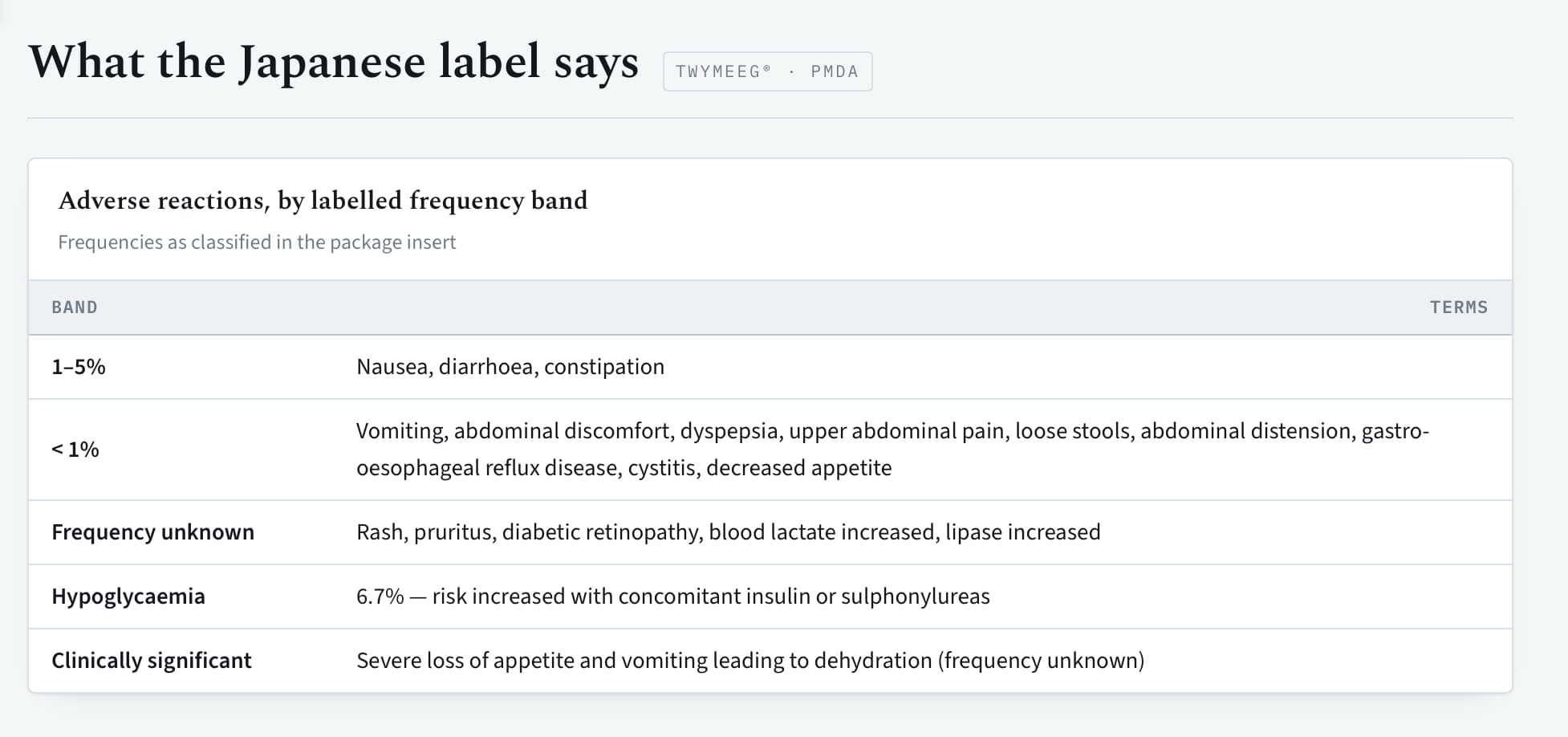
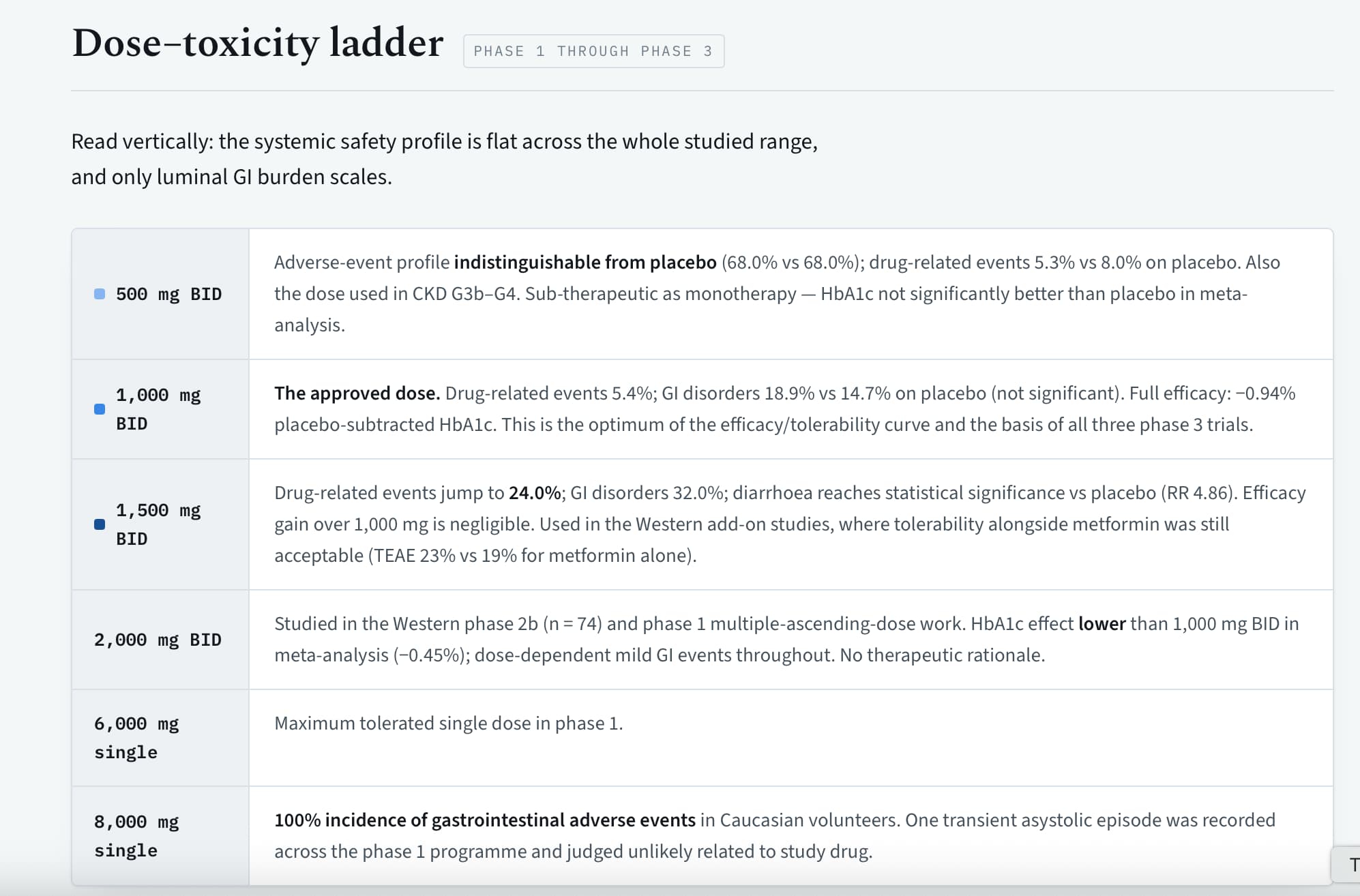
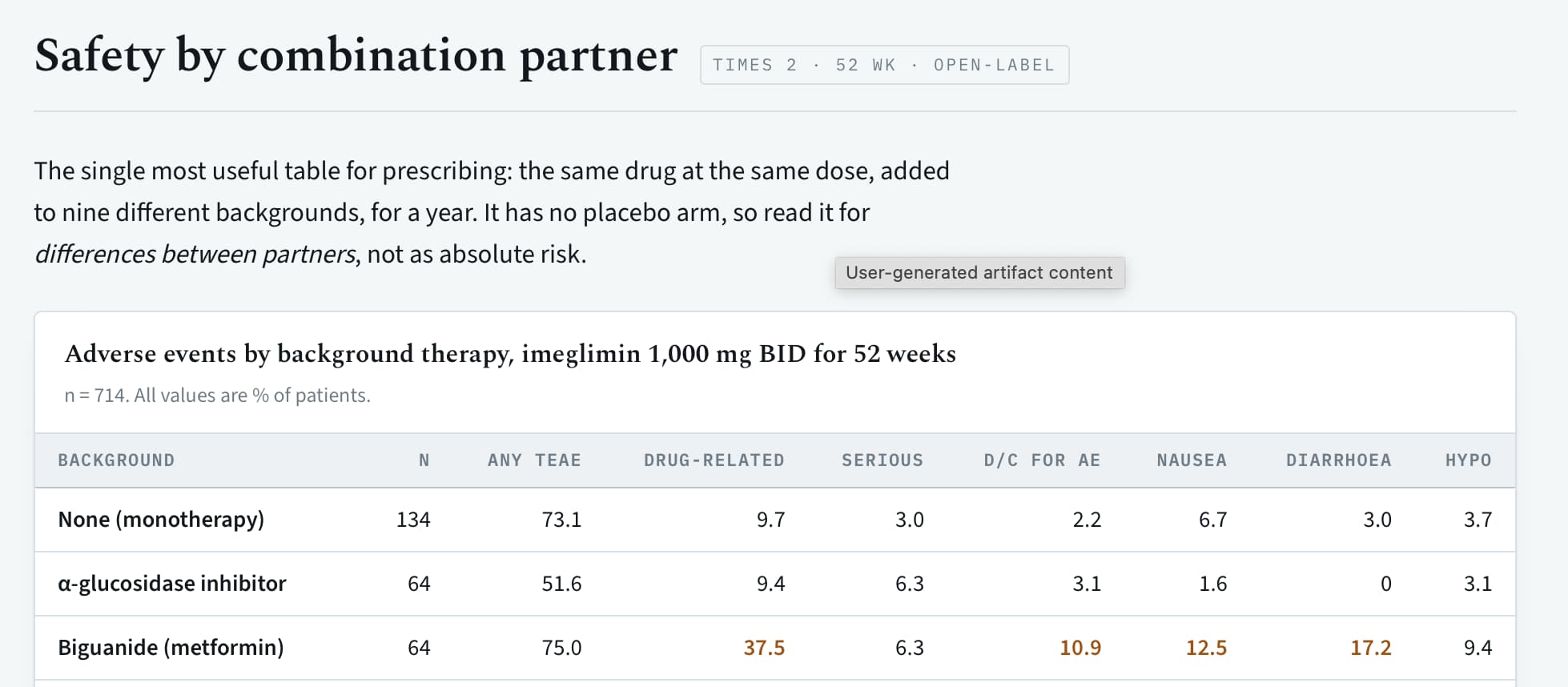
Imeglimin, currently approved only in Japan (but it is available inexpensively in India, including from many online pharmacies who sell to international buyers), and it may eventually offer a viable approach to minimizing muscle loss while aging. Watch for a dedicated human sarcopenia trial. None has yet been reported. Many people here on our forums have already started using Imeglimin as its helpful with keeping blood sugar spikes low, helps keep A1C levels down, and avoids the muscle-related problems of Metformin (in fact helps muscles, it now seems).
Context and Source
- Open Access Paper: Imeglimin Attenuates Skeletal Muscle Atrophy in Mouse Models of Obesity and Ageing
- Institutions: Japan Institute for Health Security (Diabetes Research Center and Department of Laboratory Animal Medicine), Tokyo, Japan; Graduate School of Medicine, The University of Tokyo, Japan; Department of Geriatrics, Zhongshan Hospital, Fudan University, Shanghai, China
- Countries: Japan (lead) and China
-
Journal: Journal of Cachexia, Sarcopenia and Muscle (Wiley), 2026.
Impact evaluation: The impact score of this journal is 9.1 (2024 Journal Impact Factor; sources reporting the 2025 release list 9.9), evaluated against a typical high-end range of 0 to 60+ for top general science, therefore this is a High impact journal.

 … pending a bit more research. We’ll see. Also I’m waiting for an update from