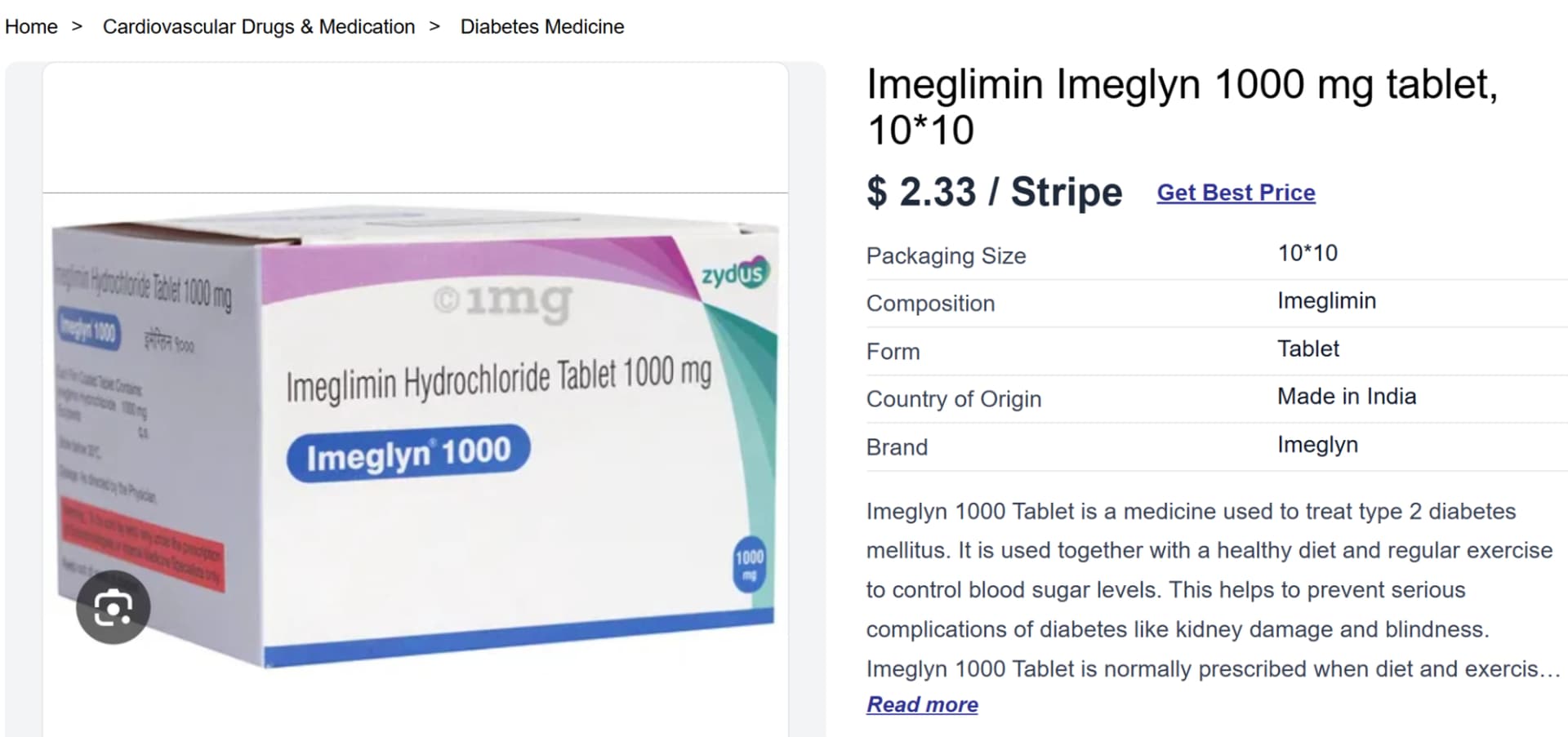
Has anyone knowledge about this drug? Its from Japan, I suppose. And it can be “a new better version” of metformin.
Maybe someone knows any reviews from some smart guys like Johnson or Sinclair or Kaeberlein?
Has anyone knowledge about this drug? Its from Japan, I suppose. And it can be “a new better version” of metformin.
Maybe someone knows any reviews from some smart guys like Johnson or Sinclair or Kaeberlein?
The following analysis evaluates the scientific and clinical evidence for Imeglimin (Twymeeg), specifically focusing on its potential impact on healthspan and longevity beyond its approved use for Type 2 Diabetes (T2D).
Current Status: Imeglimin is a first-in-class oral medication (“Glimin”) approved in Japan for T2D.1
Longevity Verdict: Promising but unproven. While it shares critical mechanistic pathways with Metformin (AMPK activation) and NAD+ precursors (mitochondrial bioenergetics), clinical evidence is currently limited to glycemic control and safety. No human data currently supports lifespan extension, and large-scale cardiovascular outcome trials (CVOTs) are lacking.
Key Differentiator: Unlike Metformin, which inhibits mitochondrial Complex I “blindly,” Imeglimin appears to modulate Complex I while correcting Complex III dysfunction, potentially reducing Reactive Oxygen Species (ROS) without the metabolic rigidity (e.g., lactate risk) sometimes seen with biguanides.2+1
Imeglimin’s primary appeal for longevity lies in its unique ability to target mitochondrial bioenergetics, the “engine room” of aging.3
Most high-quality data comes from the TIMES (Trials of IMeglimin for Efficacy and Safety) program in Japan.10
Kidney Function: Safety has been established in patients with Chronic Kidney Disease (CKD) up to stage 3b/4.14 Small retrospective analyses suggest it may reduce proteinuria (albuminuria), a marker of kidney aging/damage, likely via endothelial protection.15
Cardiovascular: There are no large-scale CVOTs (like EMPA-REG for Empagliflozin) proving Imeglimin reduces heart attacks or strokes. However, it does not appear to increase CV risk.
Biomarkers: Recent studies have noted reductions in circulating cell-free mitochondrial DNA (a marker of systemic mitochondrial stress) and inflammatory cytokines (IL-6) in treated patients.16
An interesting finding from the INFINITY trial suggests Imeglimin may prolong the lifespan of red blood cells (erythrocytes) .17
This is where the strongest “longevity” signal exists, though it has not yet translated to humans.
| Feature | Metformin | Imeglimin |
|---|---|---|
| Primary Target | Mitochondrial Complex I (Inhibition) | Complex I (Inhibition) + Complex III (Correction) |
| AMPK Activation | Strong | Yes (Likely similar potency) |
| NAD+ Effect | Indirect | Direct (via NAMPT upregulation) |
| ROS Production | Can increase ROS if dosage is toxic | Decreases ROS (prevents oxidative stress) |
| Gut Tolerance | Poor (Diarrhea common) | Moderate (Better tolerated than Metformin) |
| Lactate Risk | Rare but possible (Lactic Acidosis) | Lower theoretical risk (no inhibition of lactate metabolism) |
| Cost | Extremely Low | High (Patented) |
Scientifically, Imeglimin is a “super-Metformin” candidate. Its mechanism hits the “holy trinity” of metabolic longevity: Mitochondrial quality control, ROS reduction, and NAD+ synthesis.23
Clinically , it is a robust anti-diabetic agent with a favorable safety profile.24 However, there is zero direct clinical evidence currently supporting its use as a geroprotector (anti-aging drug) in healthy humans. It remains a speculative optimization for those who cannot tolerate Metformin or wish to target mitochondrial dysfunction more specifically.
Looks very promising.
Ofcourse, some time should pass to loose its patented status, get approvals worldwide… Meanwhile some new studies will come.
Maybe it will be more accessible.
It appears to be widely available from India at a reasonable price. I will be ordering some to try, as I can no longer use metformin because it causes gastrointestinal problems.
Great find. I am going to replace my 1.5 gms of Metformin with this. I will order it at the earliest. I have been worried about my kidneys as albumin excretion seems to have increased per my last test. This will be another leg of mitochondrial support along with SS31, MOTSc and NAD+ injections.
The fact that this new drug is available from India inexpensively makes it much more interesting. If I were taking metformin on a regular basis I would definitely look into the idea of switching to this drug. I also think the ITP should probably look at this drug as a potential longevity drug.
My key area of interest was related to exercise effects, and thus this prompt:
Given the mechanisms of action for Imeglimin compared to metformin, is it likely to have the same exercise hypertrophy blunting effect that metformin has, as outlined in this paper: Metformin blunts muscle hypertrophy in response to progressive resistance exercise training in older adults: A randomized, double‐blind, placebo‐controlled, multicenter trial: The MASTERS trial - PMC
Based on recent clinical and mechanistic data (including studies from 2024–2025), Imeglimin is unlikely to blunt exercise adaptations to the same degree as Metformin.
In fact, emerging human evidence suggests Imeglimin may enhance muscle strength and mitochondrial function when combined with resistance training, marking a critical divergence from Metformin.
While the Walton et al. (MASTERS trial) paper you referenced confirmed that Metformin blunts muscle hypertrophy in older adults, a prospective cohort study published in late 2024/early 2025 (Shimada et al., Journal of Diabetes and its Complications) found the opposite functional outcome for Imeglimin:
Metformin and Imeglimin both target mitochondrial Complex I, but their downstream effects on the hypertrophy signaling pathway (mTORC1) appear to differ.
| Feature | Metformin Effect | Imeglimin Effect | Impact on Muscle |
|---|---|---|---|
| AMPK Activation | Strong Activation. AMPK directly inhibits mTORC1 (the “muscle growth switch”). | Activation. Also activates AMPK (via AMP/ATP ratio shift). | Both: Theoretically brakes growth. |
| Akt Signaling | Inhibition/Neutral. Metformin often fails to phosphorylate Akt in muscle during exercise. | Activation. Studies (Ishiguro et al.) show Imeglimin increases Akt phosphorylation. | Imeglimin Advantage: Akt activates mTORC1, potentially counteracting the AMPK “brake.” |
| Mitochondria | Inhibition. Can limit ATP availability during high-demand exercise. | Optimization. Corrects Complex III, maintaining better ATP flux while reducing oxidative stress. | Imeglimin Advantage: Better fuel efficiency for contracting muscle. |
| ROS Hormesis | Blunting. Scavenges ROS “blindly,” potentially killing the signal for adaptation. | Targeted Reduction. Prevents Complex III superoxide leakage but increases PGC-1α (biogenesis). | Imeglimin Advantage: Enhances mitochondrial density without killing the exercise signal. |
Export to Sheets
The primary fear with antioxidants (and Metformin) is that they blunt hormesis—the beneficial stress response where Exercise-Induced ROS signals the body to get stronger.
Scientific evidence suggests Imeglimin is superior to Metformin for the active individual. While Metformin acts as a “metabolic brake” that can compromise the anabolic response to exercise, Imeglimin acts more like a “mitochondrial tuner.” It likely will not blunt strength gains and may synergize with exercise to improve sarcopenia risks, even if it doesn’t strictly act as a hypertrophy agent (muscle builder).
Not medical advice. ChatGPT 5.2
 Approved Japanese Prescribing Information (Summary)
1,000 mg twice daily (total 2,000 mg/day)
Taken after meals (usually breakfast and dinner)
This is the only fully approved dose in the Japanese package insert.
Japan’s labeling is conservative. Dose reductions below are not formally approved indications, but are commonly cited in PK analyses, expert reviews, and post-marketing discussions.
| eGFR (mL/min/1.73 m²) | Dose Used / Suggested | Regulatory Status in Japan | Notes |
|---|---|---|---|
| ≥45 | 1,000 mg twice daily |
 Approved Approved |
Standard dosing |
| 30–<45 | 500 mg twice daily |
 Not formally approved Not formally approved |
Based on PK modeling; monitor closely |
| 15–<30 | 500 mg twice daily |
Off-label / modeling only |
Very limited clinical data |
| <15 or dialysis | 500 mg once daily |
 Not recommended Not recommended |
Not approved; insufficient safety data |
Japanese labeling does NOT officially endorse dose adjustment for moderate or severe renal impairment.
Instead, it states that use should be avoided or approached with extreme caution in advanced CKD.
The reduced-dose schemes (500 mg BID or QD) come from:
Pharmacokinetic simulations
Small exposure studies
Expert consensus (not large outcome trials)
Given your interest in glucose-lowering alternatives with mitochondrial relevance:
Low hypoglycemia risk (no insulin stimulation)
No lactic acidosis signal (unlike metformin)
GI effects are usually mild and transient
Long-term renal outcome data remain limited
The price is affordable, Zydus is trustful.
But can it be counteractive with Rapamycin?
Have you tried an SGLT2 inhibitor instead of metformin?
I’ve tried Jardiance. It’s not nearly as effective as metformin.
You wrote that Jardiance was ok for you, just takes time to start working at full strength. Whats happened?
The pharmacological management of metabolic disease and the emerging field of geroprotection—therapies designed to extend healthspan and lifespan—are currently converging on the mitochondrion as a central therapeutic target. For decades, the biguanide metformin has stood as the vanguard of this class, modulating energy metabolism through mechanisms that, while clinically effective, impose specific bioenergetic taxes on cellular respiration. The emergence of Imeglimin (IMEG), a novel tetrahydrotriazine-containing entity, represents a significant evolution in this domain. This report provides an exhaustive analysis of Imeglimin’s molecular mechanisms of action (MOA), contrasting them with the established pharmacodynamics of metformin, and rigorously evaluates the scientific evidence supporting Imeglimin’s potential as a healthspan-extending agent in mammals.
The core thesis of this analysis posits that Imeglimin functions as a “mitochondrial optimizer” rather than a metabolic stressor. Unlike metformin, which exerts uncompetitive inhibition on Complex I and suppresses mitochondrial respiration, Imeglimin induces a specific kinetic constraint that preserves oxidative capacity while reducing Reactive Oxygen Species (ROS) generation via Reverse Electron Transport (RET). Furthermore, Imeglimin exhibits a unique tripartite mechanism: the competitive modulation of Complex I, the amplification of the NAD+ salvage pathway through Nicotinamide Phosphoribosyltransferase (NAMPT) induction, and the direct inhibition of the Mitochondrial Permeability Transition Pore (mPTP) via Cyclophilin D interaction.
Full Gemini Pro Deep Search Analysis: https://gemini.google.com/share/0718a4c876e9
I have been taking it for 2 years (with jardiance). So far so good.
What can you share with us about it. Overall performance compared to Metformin. Standard 2 gm dosage? What prompted you to try this. Your physician recommend this? Are you in Japan or someplace this is available?
Thanks
Cheers
last visit

DrFraser
I think this review is pretty balanced … it’s something one might substitute for metformin for presumed mitochondrial effects and reduction of ROS … looks inferior to higher dose metformin on the glucose side of things.
Bottom line for clinical decision-making:
Table 1: Comparative glycemic efficacy and mechanisms
| Domain | Imeglimin | Metformin | Evidence level |
|---|---|---|---|
| Typical dose | 1,000 mg BID (approved in Japan) | 1,500–2,000 mg/day (titrated to GI tolerance) | — |
| HbA1c reduction vs placebo | ≈ −0.6 to −0.9% at 24 weeks (dose‑dependent; TIMES 1 −0.87%) | ≈ −1.0 to −1.2% (dose‑response up to ~2,000 mg/day) | Level I: 19, 7, 2, 4; 4, 3 |
| Head‑to‑head A1c | Similar at imeglimin 2,000 mg/day vs metformin 1,000 mg/day (24 weeks) | Same as previous cell | Level I: 7 |
| FPG reduction vs placebo | ~ −0.5 mmol/L | ~ −2.0 mmol/L (meta‑analysis) | Level I: 19; 3 |
| Mechanism — β‑cell/GSIS | Amplifies GSIS via NAD+ salvage (NAMPT) → cADPR/CD38‑Ca2+; ↑ ATP; preserves β‑cell mass | No direct insulinotropic effect; primary is hepatic glucose output suppression; gut GLP‑1 effects | Level I/II: 8, 8, 1; 7 |
| Mechanism — liver/muscle | Improves insulin sensitivity; corrects complex III deficiency; reduces complex I activity and ROS; reduces gluconeogenesis | Inhibits hepatic gluconeogenesis (complex I, AMPK, mGPDH), gut actions; ↑ GLP‑1 | Level I/II: 8, 1 |
| Incretins | ↑ GLP‑1 and uniquely ↑ GIP | ↑ GLP‑1; no GIP increase | Level I: 7 |
| Hypoglycemia | Low (monotherapy) | Low (monotherapy) | Level I: 19, 4 |
| Lactic acidosis biology | Lower preclinical propensity vs metformin (less complex I and no mGPDH inhibition) | Rare clinical risk; mGPDH and complex I inhibition observed | Level II/III: 20 |
Caption: Imeglimin’s dual pancreatic and extra‑pancreatic actions contrast with metformin’s dominant hepatic mechanism and gut incretin effects. Head‑to‑head evidence at 24 weeks suggests equivalence between imeglimin 2,000 mg/day and metformin 1,000 mg/day for HbA1c, but full‑dose metformin typically achieves greater A1c reduction.
Table 2: Practical dose “equivalency” on HbA1c (approximate, based on available data)
| Regimen | Expected HbA1c change vs placebo | Notes |
|---|---|---|
| Imeglimin 1,000 mg BID | ≈ −0.6 to −0.9% | TIMES 1 −0.87% at 24 weeks 19; meta‑analyses consistent 7, 2 |
| Metformin 1,000 mg/day | ≈ −0.6 to −0.9% | Head‑to‑head: similar to imeglimin 2,000 mg/day at 24 weeks 7 |
| Metformin 1,500–2,000 mg/day | ≈ −1.0 to −1.2% | Dose–response; optimization to 2,000 mg/day improves HbA1c further 4, 11 |
Caption: Based on one head‑to‑head RCT (imeglimin 2,000 mg/day ≈ metformin 1,000 mg/day), imeglimin 1,000 mg BID is roughly “equivalent” to lower‑dose metformin on HbA1c. Full‑dose metformin (2,000 mg/day) typically lowers HbA1c more than imeglimin 1,000 mg BID.
Table 3: Outcomes and “longevity” signals
| Agent | Cardiovascular/mortality outcomes | Summary |
|---|---|---|
| Imeglimin | No completed CV or mortality outcomes trials | No evidence for reduced MACE or mortality to date (needs CVOT). Glycemic efficacy and safety established over 24–52 weeks 7, 20, 21 |
| Metformin | UKPDS legacy effect: ↓ MI (33%), ↓ all‑cause mortality (27%) in overweight T2D; multiple cohort/meta‑analytic signals favor lower MACE/mortality vs sulfonylureas; mixed across settings (e.g., no mortality benefit in DPPOS prediabetes) | Strongest long‑term data among “older” agents but heterogeneous; not a dedicated mortality drug; benefits are context‑dependent 14, 21, 12, 10, 17, 23, 18 |
Caption: Only metformin has randomized and large‑scale observational evidence suggesting long‑term macrovascular and mortality benefits in specific T2D populations; imeglimin lacks outcomes data at present.
References:
Jardiance isn’t working for me. I’m still taking it, but it’s not as effective as metformin at lowering my fasting glucose levels. I took metformin for ~20 years, but in the last year of taking it, it started to affect my gut, mainly in the form of diarrhea. When I was young I had an iron gut, and it wasn’t affected by foods or medications. But, at 85, it is now a weakling, and I have to watch what I take. I am hoping that Imeglin with Jardiance will be as effective as metformin alone.
ChatGPT 5.2
Average glucose-lowering effect (monotherapy)
| Drug (typical dose) | HbA1c reduction (vs placebo) | Fasting glucose reduction (vs placebo) |
|---|---|---|
| Metformin (often 1500–2000 mg/day) | ~−1.1% HbA1c | ~−2.0 mmol/L (≈ −36 mg/dL) |
| Empagliflozin (Jardiance 10–25 mg/day) | ~−0.74% to −0.85% at 24 weeks | Across SGLT2 inhibitors: ~−0.78 to −2.02 mmol/L (≈ −14 to −36 mg/dL) |
Bottom line on “effectiveness” for A1c and fasting glucose:
If someone starts with an A1c near-normal (e.g., ~5.4%) and fasting glucose ~110 mg/dL, the absolute drop you’ll see from any drug is typically much smaller than the averages above, because those trial averages are mostly in people starting around A1c ≥7%.
Guidelines emphasize that in people with heart failure, chronic kidney disease, established ASCVD, or high CV risk, an SGLT2 inhibitor like empagliflozin may be selected for organ protection regardless of baseline A1c or metformin use.
When used together early, empagliflozin + metformin reduces A1c more than either drug alone (as you’d expect from additive mechanisms).
Ordered some from India.
For me it’s more a replacement for Plioglitazone which works well but has some safety issues.
Also my DEXA fat % went from 14% to 16% with Plioglitazone.
Metformin did not do anything at all for me.
I did a Gemini Pro deep research: Bioenergetic Pharmacotherapy in Type 2 Diabetes: A Comprehensive Analysis of Imeglimin Interactions, Comparative Safety, and Physiological Adaptations
That includes interaction with rapamycin, empagliflozin, exercise, etc.
Table 1: Comparative Safety and Efficacy Profile: Imeglimin vs. Pioglitazone
| Feature | Pioglitazone (TZD) | Imeglimin (Glimin) | Clinical Consequence |
|---|---|---|---|
| Primary Target | Nuclear PPARγ Receptor | Mitochondrial Complex I/III | Imeglimin avoids nuclear transcription side effects. |
| Heart Failure Risk | Increased (Boxed Warning) | Neutral (Potential Benefit) | Imeglimin is safer for patients with cardiac history. |
| Edema | Frequent (Renal Na+ reabsorption) | Rare / Absent | Imeglimin preferred in patients prone to volume overload. |
| Bone Fracture Risk | Increased (Marrow adipogenesis) | Neutral | Imeglimin preferred in postmenopausal women/elderly. |
| Weight Effect | Weight Gain (Adipogenesis + Fluid) | Neutral | Imeglimin avoids exacerbating obesity. |
| Liver Fat | Reduces (Potent) | Reduces (Moderate) | Both benefit MASH, but Pioglitazone has more data. |
| Onset of Action | Slow (Weeks/Months) | Rapid | Imeglimin offers faster glycemic control. |
Table 2: Mechanism of Interaction: Imeglimin + Empagliflozin
| Component | Empagliflozin Contribution | Imeglimin Contribution | Synergistic Outcome |
|---|---|---|---|
| Glycemia | Urinary glucose excretion (Insulin Independent) | Insulin sensitization + GSIS (Insulin Dependent) | Potent HbA1c reduction covering all mechanisms. |
| Cardiac | Hemodynamic unloading + Ketone fuel | Mitochondrial efficiency + Endothelial function | Structural and metabolic cardiac remodeling. |
| Renal | Reduced glomerular pressure | Reduced oxidative stress | Preservation of nephron mass. |
| Liver | Reduced hepatic fat | Reduced lipogenesis + fibrosis | Mitigation of MASH progression. |
Table 3: Summary of Imeglimin Interactions and Effects
| Domain | Interaction / Comparison | Key Outcome / Mechanism |
|---|---|---|
| Pharmacology | vs. Metformin | Competitive vs. Non-competitive Complex I inhibition; Imeglimin rescues Complex III and amplifies GSIS. |
| Safety | vs. Pioglitazone | Imeglimin has NO heart failure, edema, or bone fracture risk. Weight neutral. |
| Synergy | w/ Tirzepatide | Complementary beta-cell effects: Tirzepatide stimulates, Imeglimin protects (mitochondrial buffering). |
| Synergy | w/ Empagliflozin | Full Cardio-Renal protection: SGLT2i (hemodynamic) + Imeglimin (metabolic/endothelial). |
| Longevity | w/ Rapamycin | Imeglimin (AMPK/SIRT1) rescues mitochondrial biogenesis inhibited by Rapamycin (mTORC1 blockade). |
| Muscle | Strength Training | Increases strength (~13%) without hypertrophy. Improves NMJ/Bioenergetics. |
| Muscle | Endurance | Enhances PGC-1α and mtDNA. Potentially additive to exercise adaptations. |
| Renal | TWINKLE Study | Safe in eGFR < 45 mL/min (unlike Metformin). No lactic acidosis signal. |
Also cited in the post of Dr. Fraser (citation #7)
In the present study, only imeglimin enhanced insulin secretion and the effect on insulin sensitivity was similar between imeglimin and metformin; however, the reduction of HbA1c in both drugs was similar at 24 weeks. This may be explained by that metformin has the glucose‐lowering effect via mechanisms not involving insulin signal such as enhancing release of glucose into the intraluminal space of the intestine or influencing the gut microbiota.
Is that a desired result? Isn’t increased insulin age accelerating?
In humans, epidemiological studies suggest a pro-aging effect of insulin. Insulin resistance increases with aging, but centenarians usually preserve normal glucose tolerance, low levels of fasting insulin and higher insulin sensitivity, when compared with adults > 75 years of age (52–54). The higher longevity in shorter men is also associated with lower fasting insulin concentrations (55).
again using AI to help: Imeglimin (brand name Twymeeg) is a first-in-class oral antidiabetic approved in Japan since 2021 for Type 2 diabetes. It shares some mechanisms with metformin but works differently at the mitochondrial level, which is why longevity enthusiasts are interested in it.
| Feature | Metformin | Imeglimin |
|---|---|---|
| Complex I | Non-competitive inhibition (blunts respiration) | Competitive modulation (preserves oxidative capacity) |
| Complex III | No effect | Corrects dysfunction, reduces ROS |
| NAD+ effect | Indirect | Direct upregulation via NAMPT |
| Insulin secretion | None (works via liver) | Amplifies glucose-stimulated insulin secretion (GSIS) |
| GI tolerance | Often poor (diarrhea) | Generally better tolerated |
| Lactic acidosis risk | Rare but possible | Lower theoretical risk |
| HbA1c reduction | ~1.0–1.2% at full dose | ~0.6–0.9% (head-to-head similar to lower-dose metformin) |
| Cost | Very low (generic) | High (patented) |
The appeal for healthspan is its “mitochondrial optimizer” profile—it reduces ROS via reverse electron transport while preserving ATP production, and it boosts the NAD+ salvage pathway through NAMPT induction. However, no human clinical data currently support lifespan extension, and no large cardiovascular outcome trials (CVOTs) exist yet.
Unlike metformin, which can blunt muscle hypertrophy (per the MASTERS trial), emerging data suggest imeglimin may enhance muscle strength (~13% improvement in one cohort) without blocking exercise adaptations. It activates Akt signaling (which supports mTORC1/growth) rather than purely braking it through AMPK, and it enhances PGC-1α for mitochondrial biogenesis.
Imeglimin is a promising “super-metformin” candidate for those who cannot tolerate metformin or want more targeted mitochondrial support, especially if they exercise regularly. The glycemic efficacy is slightly weaker than full-dose metformin, but the safety profile (no lactic acidosis signal, better GI tolerance, neutral on weight/heart failure/bone) and potential exercise compatibility make it attractive. That said, it remains speculative for longevity until human outcome trials are completed
Certainly a valid concern. However, it is super important to try to understand the MOA (mechanism of action) of any drug before making a decision about taking it. There are drugs that increase insulin output, such as sulfonylureas, meglitinides, glp-1ra etc. However, you have to ask about the MOA of any particular class of drugs. If the drugs force greater insulin output from beta cells leading to beta cell exhaution, that can be a long term negative. But what if your pancreas would release a “normal” amount of insulin in response to glucose levels, but it’s prevented by some kind of defect in some beta cell pathway, either production or release or whatever. Then, removing that defect simply restores insulin levels to “normal” - in that scenario increased insulin levels are not a negative.
That’s why it is so crucial to try to establish the MOA. But let us assume that imeglimin increases insulin production through repairing a defect along the beta cell pathway.
Imeglimin Amplifies Glucose-Stimulated Insulin Release from Diabetic Islets via a Distinct Mechanism of Action
https://www.biorxiv.org/content/10.1101/2020.10.20.346841v1
Does that mean you should add imeglimin to your drug stack if you have elevated A1c? Not necessarily. Let us go back to a fundamental concept, frequently invoked by Ralph DeFronzo, that diabetes (and prediabetes is just along the spectrum of poor glucose control) is a multifactorial disease with many causes, as in the defect may be along any pathway of glucose control. If it so happens, that your poor glucose control is down to a specific defect in the beta cell pathway that imeglimin addresses, you are golden: go take this drug. But that may not be the case at all. For example, many prediabetics, or even people who are normoglycemic have very high insulin levels. Clearly their problem is not an inadequate production or release of insulin by the pancreas. In that scenario, trying to fix a non-existant defect in the pancreas with imeglimin as a way to normalize glucose metabolism might not yield the desired results. Addressing any disease starts with the correct diagnosis. You must establish - and the more precisely the better - where does the defect in glucose metabolism lie in your case. And once you’ve established that, you can try to address it with the appropriate drug.
Unfortunately, we face two problems. Problem one, is that we often are not sure where the problem lies, and problem two is that a given drug may have MOA that is not transparent to us, or has multiple pathways (a “dirty” drug, like metformin). Sure, you can say metformin/sglt2i/pio/glp-1ra “brings down A1c” - but if that’s all the study shows, you really can’t be sure that it will work for you or indeed that it is appropriate and not counterproductive.
Just as an example, I take myself. My A1c is consistently high (5.7-5.9). My morning fasting blood glucose is also high (~110mg/dL). However, my insulin levels are also high. It doesn’t seem like the problem for me is inadequate insulin release. For the amount of insulin I pump out, my glucose levels ought to be lower (HOMA-IR 1.7 in my case) as reflected by A1c. I therefore am going to hold off on imeglimin for the time being. It seems to me, the problem here is somewhere else - either insulin sensitivity or excessive hepatic neoglucogenesis. That would make pioglitazone more interesting to me (in my case). But the complication is of course that imeglimin also works along multiple pathways muddying the issue - is it worth hammering the pancreas with an unnecessary “fix” because the drug also suppresses hepatic neoglucogenesis? Maybe. Or maybe I’d prefer a more targeted intervention, a drug that addresses my defect and not anything else (maybe a luxury I don’t have!).
My point here is this: we often read that a given drug does something (lowers glucose, A1c, lipids, homocysteine whatnot) and we decide to spring for it, especially if we suffer from some issue (excessive glucose levels, lipid levels whatnot). But that may transpire to be a very unwise choice.
Instead you need to ask: given my problem (say, glucose control) - will drug X (say, imeglimin) help in my case? Unless you know, why take the drug? What is the MOA of that drug and what is your defect and etiology of your pathology, does that drug address it, or does it merely give you side effects without benefits or merely surface benefits which are disastrous longer term (insulin therapy for some T2DM cases). Perhaps imeglimin might work short term - but will it work for you long term, or be counterproductive?
And that’s why I’m interested in the MOA of this drug. And why it takes me a long time to research a drug before I even consider taking it. YMMV.