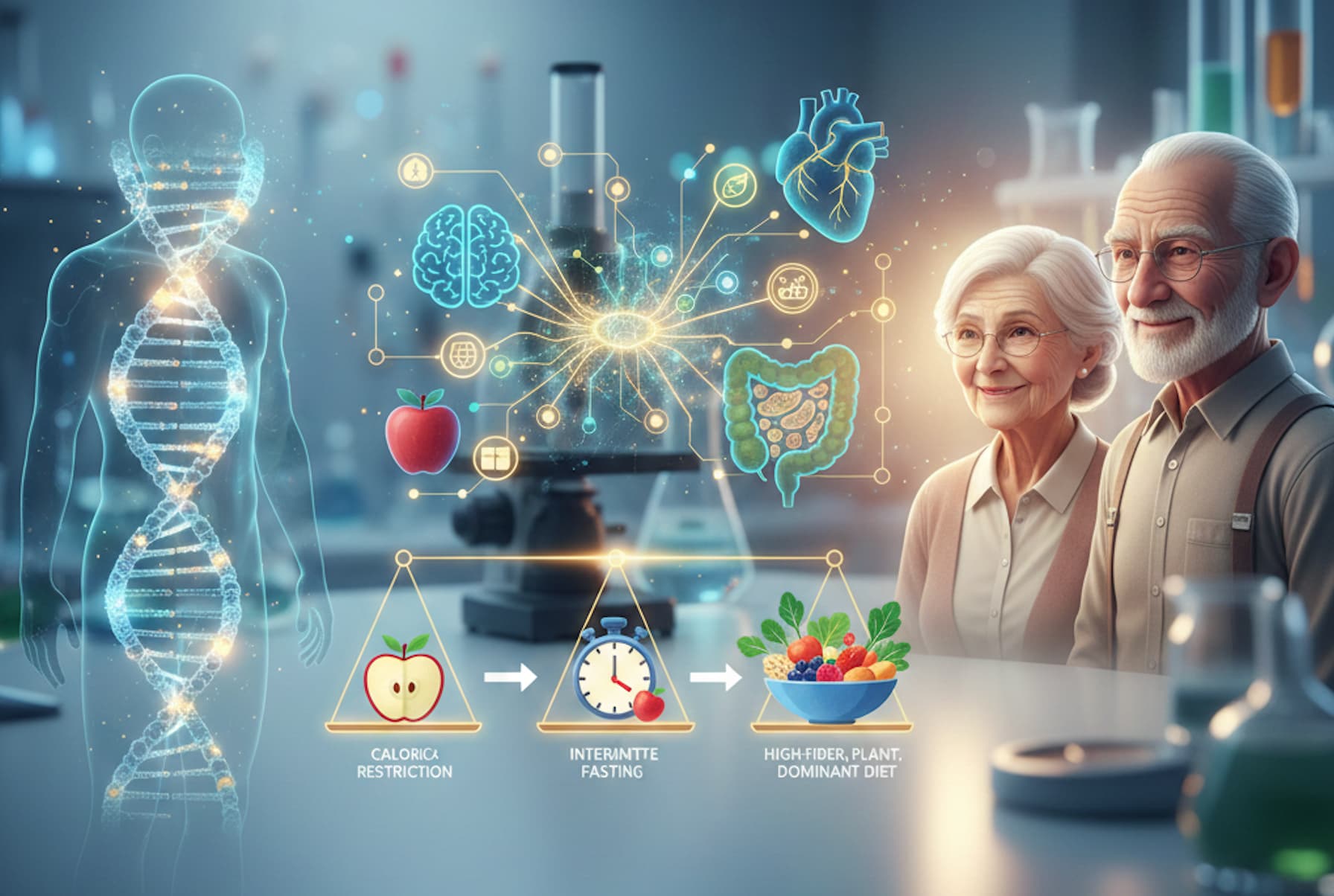
Recent translational research aggregates epidemiological and molecular data to decode the dietary architectures of centenarian populations. The central thesis is that exceptional human longevity is not strictly a genetic lottery; it is heavily mediated by continuous, low-grade dietary interventions that modulate key nutrient-sensing pathways and the gut microbiome. Researchers from Universidad Espíritu Santo (Ecuador), Texas State University (USA), and the University of Naples Federico II (Italy) evaluated dietary patterns across global longevity hotspots. Published in the Journal of Translational Medicine, the findings emphasize that centenarians naturally engage in mild caloric restriction (CR), intermittent fasting (IF), and consume high-fiber, plant-dominant diets. These patterns logically converge to reduce systemic inflammation (“inflammaging”) and preserve mitochondrial integrity.
Crucially, the study highlights a distinct microbial signature in centenarians: a shift away from Bacteroides dominance toward beneficial taxa like Akkermansia muciniphila and Bifidobacterium. This microbial pivot enhances gut barrier function and systemic metabolic flexibility. While the review validates established biohacking targets—such as mTOR inhibition and AMPK activation via time-restricted eating—it casts some doubt on the efficacy of isolated nutraceuticals. Data indicates that fewer than 13% of centenarians rely on supplements, suggesting that synergistic food matrices may provide superior geroprotection compared to synthetic isolates and the traditional vitamin / supplement approaches.
Source:
- Open Access Paper: Nutrition and longevity – diet in centenarians
- Journal: Journal of Translational Medicine, January 30, 2026.
- The impact score of this journal is 7.5, therefore this is a High impact journal.