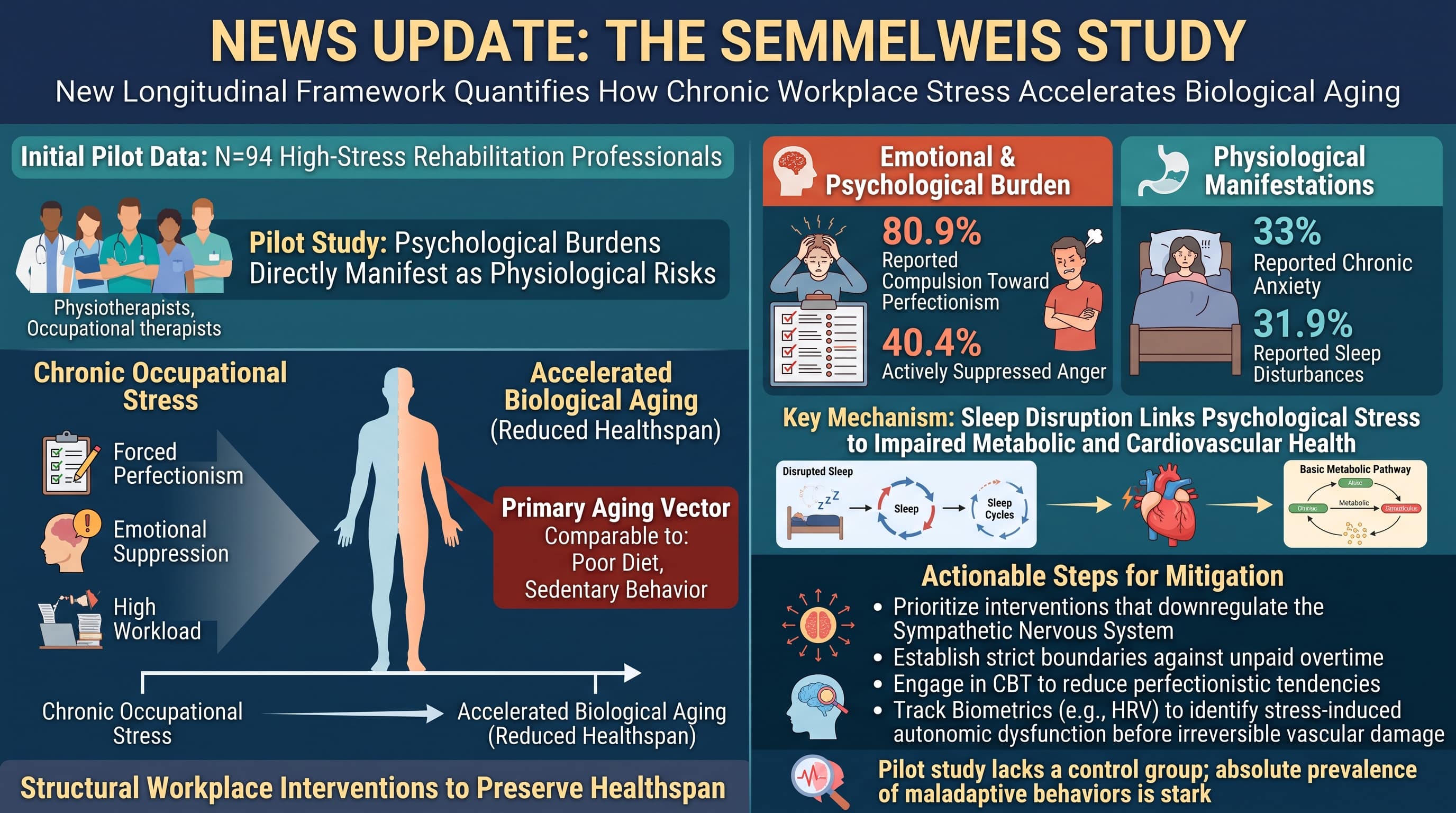
The Semmelweis Study outlines a new longitudinal framework to quantify how chronic workplace stress accelerates biological aging. Initial pilot data from 94 high-stress rehabilitation professionals reveals alarming rates of sleep disruption, emotional suppression, and forced perfectionism, highlighting the urgent need for structural workplace interventions to preserve healthspan and prevent early cognitive and metabolic decline.
Occupational stress is not just a psychological burden; it functions as a fundamental driver of biological aging. The Semmelweis Study, launched in 2024, represents a targeted effort to track how workplace hazards like emotional labor and time pressure directly translate into cellular damage. Researchers are systematically measuring perceived stress, effort reward imbalance, and burnout, and correlating these subjective experiences with biological markers such as inflammatory cytokines, metabolic profiles, epigenetic clocks, and retinal age. The core hypothesis suggests that unrelenting work stress disrupts the hypothalamic pituitary adrenal axis and triggers systemic inflammation, leading to premature vascular and cognitive aging. To test their assessment tools, researchers conducted a pilot study on 94 conductors, who are specialized rehabilitation workers dealing with neurological patients. The psychological toll on these workers is severe, characterized by high workload intensity and emotional burden. The study posits that occupational stress acts as a chronic exposure that interacts with lifestyle choices to either buffer or accelerate age-related disease. The long term goal of this cohort is to track whether stress reduction programs can slow down biological clocks, turning the workplace into a target for longevity interventions.
Actionable Insights
To improve longevity, you must treat chronic occupational stress as a primary aging vector akin to poor diet or sedentary behavior. The pilot study indicates that psychological burdens directly manifest as physiological risks. Specifically, 31.9 percent of the assessed high-stress workers reported sleep disturbances, and 33 percent reported chronic anxiety. Sleep disruption is a primary mechanism linking psychological stress to impaired metabolic and cardiovascular health. The pilot lacks a control group, which precludes the calculation of standardized effect sizes like Cohen’s d or Relative Risk. However, the absolute prevalence of maladaptive behaviors is stark. For example, 80.9 percent reported a compulsion toward perfectionism, and 40.4 percent actively suppressed anger. To mitigate these effects, individuals should prioritize interventions that downregulate the sympathetic nervous system and improve sleep architecture. Actionable steps include establishing strict boundaries against unpaid overtime, engaging in cognitive behavioral therapy to reduce perfectionistic tendencies, and tracking biometrics like heart rate variability to identify stress-induced autonomic dysfunction before it causes irreversible vascular damage.
Context and Source
- Open Access Paper: Workplace stress and healthy aging: assessment strategies, research hypotheses, and pilot insights from the Semmelweis study.
- Institution: Semmelweis University.
- Country: Hungary.
- Journal Name: GeroScience.
- Impact Evaluation: The impact score of this journal is 5.3, evaluated against a typical high-end range of 0 to 60+ for top general science, therefore this is a Medium impact journal.