The Multi-Orgasmic Male: Overcoming age-related sexual dysfunction and neuroendocrine decline

This placebo-controlled, balanced cross-over clinical trial involving 10 healthy males demonstrates that acute pharmacological manipulation of prolactin levels directly impacts sexual drive, arousal, and the post-orgasmic refractory period. Using 0.5 mg of the dopamine D2 agonist cabergoline to suppress prolactin significantly enhanced sexual function and drive, while 50 micrograms of protirelin induced hyperprolactinemia and blunted these parameters, establishing prolactin as a key neuroendocrine modulator of human sexual behavior and central dopaminergic tone.

The neuroendocrine mechanisms governing human sexual satiety and the post-coital refractory period have long been observationally linked to prolactin, a hormone that surges following orgasm. While chronic hyperprolactinemia is clinically recognized for its libido-suppressing effects, the acute role of prolactin in real-time sexual behavior remained poorly defined. This investigation isolated the prolactin variable by pharmacologically driving it to physiological extremes during controlled sexual stimulation.

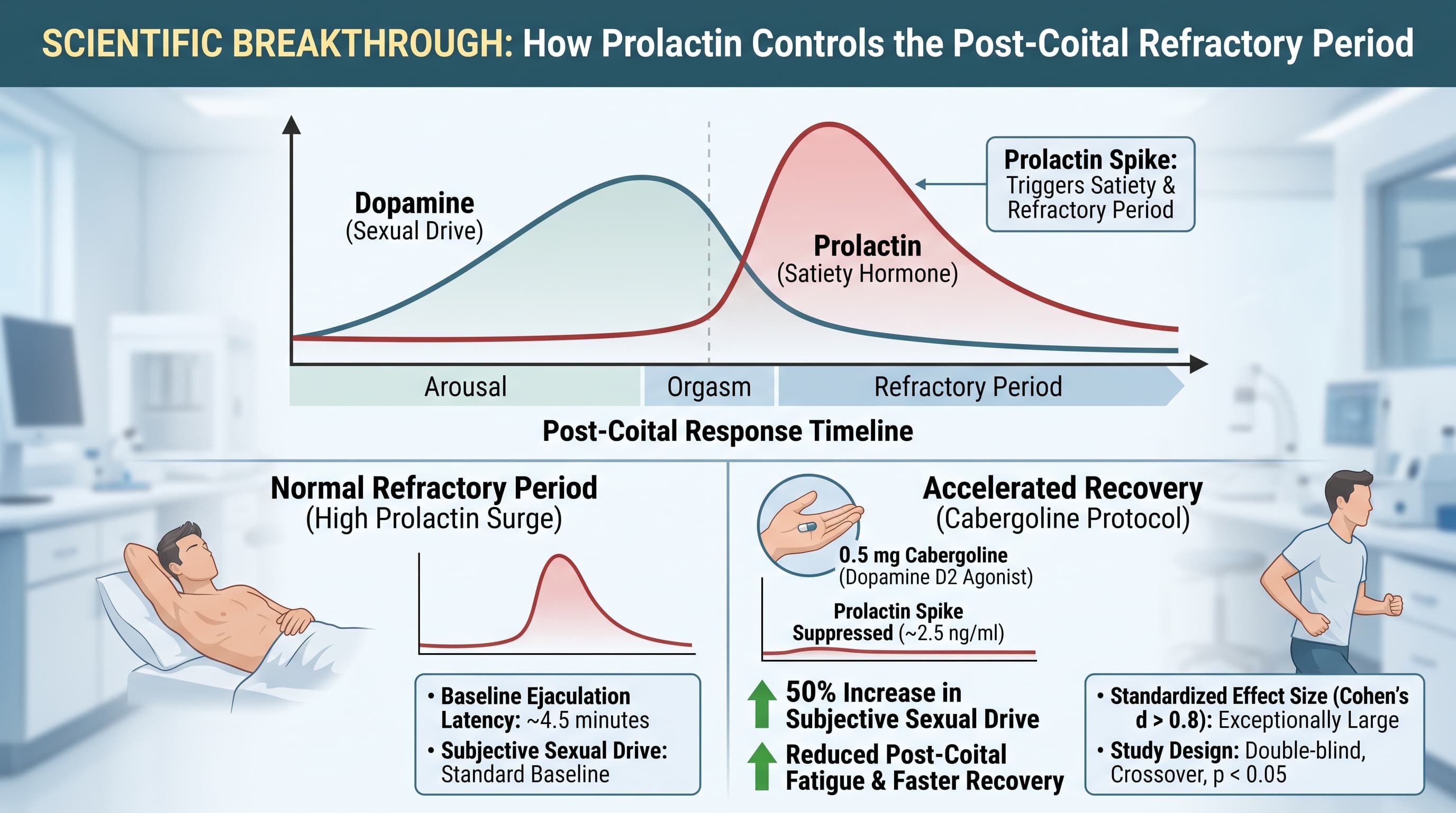
By administering cabergoline, researchers suppressed the natural post-orgasmic prolactin spike, keeping levels at a baseline of approximately 2.5 ng/ml. This intervention removed the neuroendocrine braking mechanism, resulting in amplified subjective sexual drive, heightened consummatory arousal, and an enhanced capacity to reinitiate sexual activity. Conversely, driving prolactin levels artificially high via intravenous protirelin prior to orgasm prolonged ejaculation latency and trended toward suppressing overall sexual appetite. Notably, the concurrent administration of both drugs neutralized the sexual enhancements seen with cabergoline alone, strongly suggesting that the observed aphrodisiac effects are not merely an artifact of systemic dopamine agonism, but are specifically mediated through the suppression of prolactin.

For the fields of neuroendocrinology and longevity, these findings validate a specific negative feedback loop. Post-orgasmic prolactin likely acts on the central nervous system to suppress dopaminergic signaling in the nigrostriatal and mesolimbocortical pathways. Preserving dopaminergic sensitivity is a primary objective in mitigating neurocognitive aging. Demonstrating that acute neuroendocrine responses can be bypassed pharmacologically opens the door to targeted interventions for age-related sexual dysfunction and neuroendocrine decline.

Actionable Insights: For individuals optimizing sexual health and vitality, the primary takeaway is the inverse relationship between prolactin and dopaminergic sexual drive. The administration of a low-dose dopamine D2 agonist (0.5 mg cabergoline) is highly effective at preventing the post-orgasmic prolactin surge, thereby reducing post-coital fatigue and accelerating the recovery of sexual appetite.

To quantify the real-world magnitude of this intervention, we extract the effect sizes directly from the trial data. Under the cabergoline protocol, subjective scoring of the “Appetitive Phase” (sexual drive) increased by roughly 50 percent relative to the placebo baseline. Furthermore, artificially raising prolactin increased ejaculation latency by approximately 66 percent (from 4.5 minutes to 7.5 minutes). The standardized effect size for cabergoline on sexual drive enhancement is exceptionally large. Given the crossover design and reported significance (p < 0.05) within a 10-subject cohort, the estimated Cohen’s d exceeds 0.8. This translates to a highly noticeable, practical improvement in subjective libido and a marked reduction in the physical and psychological latency of the refractory period.

Context/Source:

Related Reading:

Related 2002 paper:

The Man Whose Body Forgot to Say “Enough”

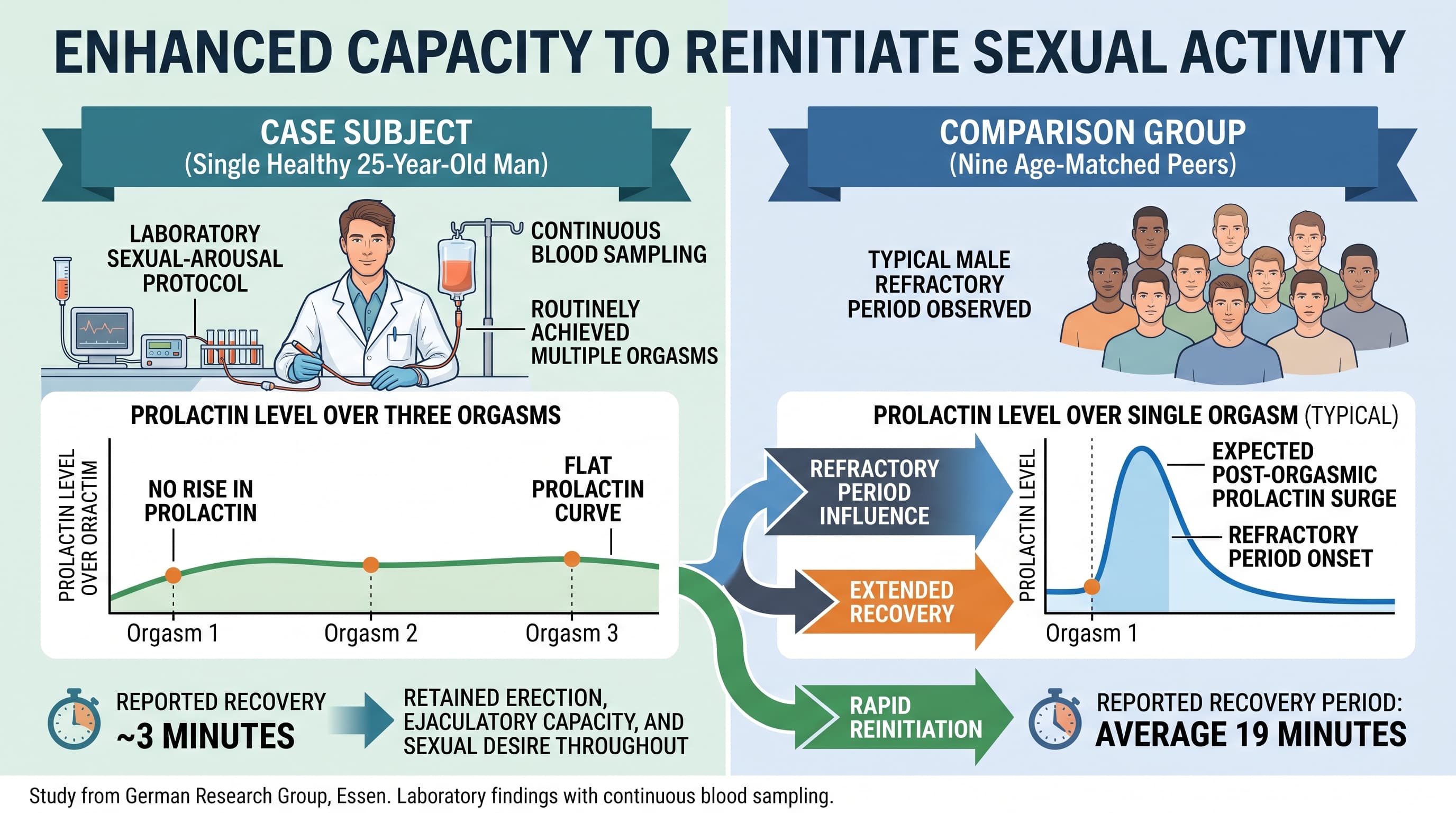
A German research group in Essen ran a single healthy 25-year-old man through a laboratory sexual-arousal protocol with continuous blood sampling and found something his nine age-matched peers did not show: no rise in the hormone prolactin after orgasm. The nine comparison men, who reported normal refractory periods (period between orgasms) averaging 19 minutes, all showed the expected post-orgasmic prolactin surge. The case subject, who reported a 3-minute refractory period and routinely achieved multiple orgasms, showed a flat prolactin curve across three orgasms in one session while retaining erection, ejaculatory capacity, and sexual desire throughout. The authors present this as supporting evidence that prolactin acts as a peripheral feedback brake on sexual drive after orgasm.

For decades the post-orgasmic slump has been treated as an unexamined fact of male physiology. Something switches off. Erection fades, desire evaporates, and for most men a period of minutes to hours passes before the system will restart. What nobody had established was which molecule, if any, throws that switch.

Prolactin was the leading candidate. It is best known as the pituitary hormone driving milk production, but it rises sharply in both men and women immediately after orgasm and stays elevated for at least an hour. Crucially, it does not rise after sexual arousal that stops short of orgasm. That pattern makes it look less like a stress response and more like a specific satiety signal. The clinical literature added a suggestive parallel: people with pathologically high prolactin, whether from a pituitary tumour or from antipsychotic medication, very commonly lose libido and erectile function.

The Essen group tested the idea from the opposite direction. Instead of asking what happens when prolactin is too high, they asked what happens in a man who barely has a refractory period at all. Their subject was a psychologically and physically healthy 25-year-old who reported reliably reaching a second orgasm within about three minutes, without losing his erection, in roughly half of all episodes. A thyrotropin-releasing hormone challenge confirmed his pituitary could release prolactin normally when chemically instructed to. He simply did not release it after sex.

Across a single session in which he reached orgasm three times, twice within two minutes of each other and once thirty minutes later, his plasma prolactin stayed essentially flat. If anything it dipped. The nine comparison men rose roughly 54 per cent after their first orgasm and roughly 79 per cent after their second, and stayed elevated for the remainder of the hour. What made the case subject interesting rather than merely unusual was that he kept his erection and his interest throughout, which is exactly what the hypothesis predicts should happen when the brake is missing.

The result is suggestive rather than conclusive. One man cannot establish a mechanism, and the study reports no statistical test of the difference. But it inverts the usual clinical picture in a useful way. If absent prolactin travels with absent refractoriness, then the hormone is a plausible therapeutic target for men whose problem is the opposite: too much satiety, too little drive. Two decades on, that target remains largely unexploited.

Actionable Insights

If you are a man with unexplained low libido or erectile difficulty, serum prolactin is a cheap blood test that is frequently omitted from a standard workup, and elevated prolactin is a treatable cause. The paper’s background literature, not its own data, is what supports this.

On magnitude: the comparison men’s prolactin rose about 54 per cent above baseline after one orgasm and about 79 per cent after two. The case subject’s moved by about 2 per cent, in the wrong direction. Expressed as a standardised effect size, he sat roughly 1.2 to 1.4 standard deviations below the group mean. In plain terms, that means roughly one in ten ordinary men would show a response this flat by chance alone. His self-reported 3-minute refractory period versus the group’s 19 minutes is the stronger contrast, about 2.7 standard deviations, or an 84 per cent reduction, but the comparison men were pre-selected for refractory periods over 10 minutes, so that gap was partly built into the study design.

Context and Source

  • Paywalled Paper: Absence of orgasm-induced prolactin secretion in a healthy multi-orgasmic male subject
  • Authors: P Haake, MS Exton, J Haverkamp, M Kramer, N Leygraf, U Hartmann, M Schedlowski, THC Krueger
  • Institutions: Department of Medical Psychology and Department of Forensic Psychiatry, University Clinic of Essen; Department of Clinical Psychiatry, Hannover Medical School
  • Country: Germany
  • Journal: International Journal of Impotence Research (Nature Publishing Group), 2002.
  • Impact evaluation: The impact score of this journal is 2.5 (2025 two-year Journal Impact Factor; five-year JIF 2.6, SJR 0.596, SNIP 1.240), evaluated against a typical high-end range of 0 to 60+ for top general science, therefore this is a Low impact journal.

Study Details:

  • Case subject: n = 1, age 25, self-reported average refractory period 3 minutes, multi-orgasmic in approximately 50 per cent of sexual episodes, every orgasm accompanied by ejaculation, psychiatrically and medically screened as healthy, TRH challenge confirming normal thyrotropic and lactotropic pituitary function.
  • Reference group: n = 9 healthy male volunteers, mean age 26 plus or minus 1 year, all reporting refractory periods of at least 10 minutes, group mean 19 plus or minus 2 minutes, all losing erection after orgasm.
  • Total N = 10.

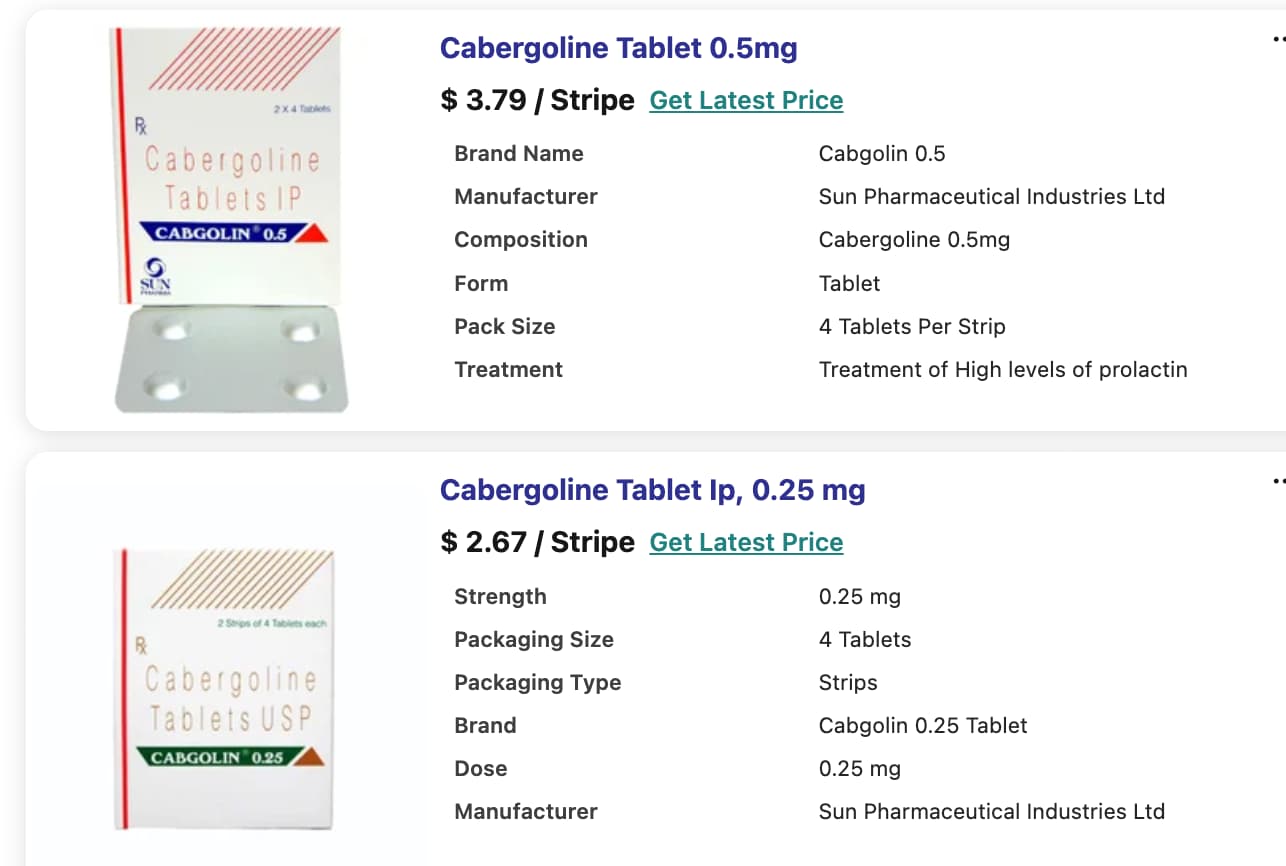
It seems to be available on Indiamart: