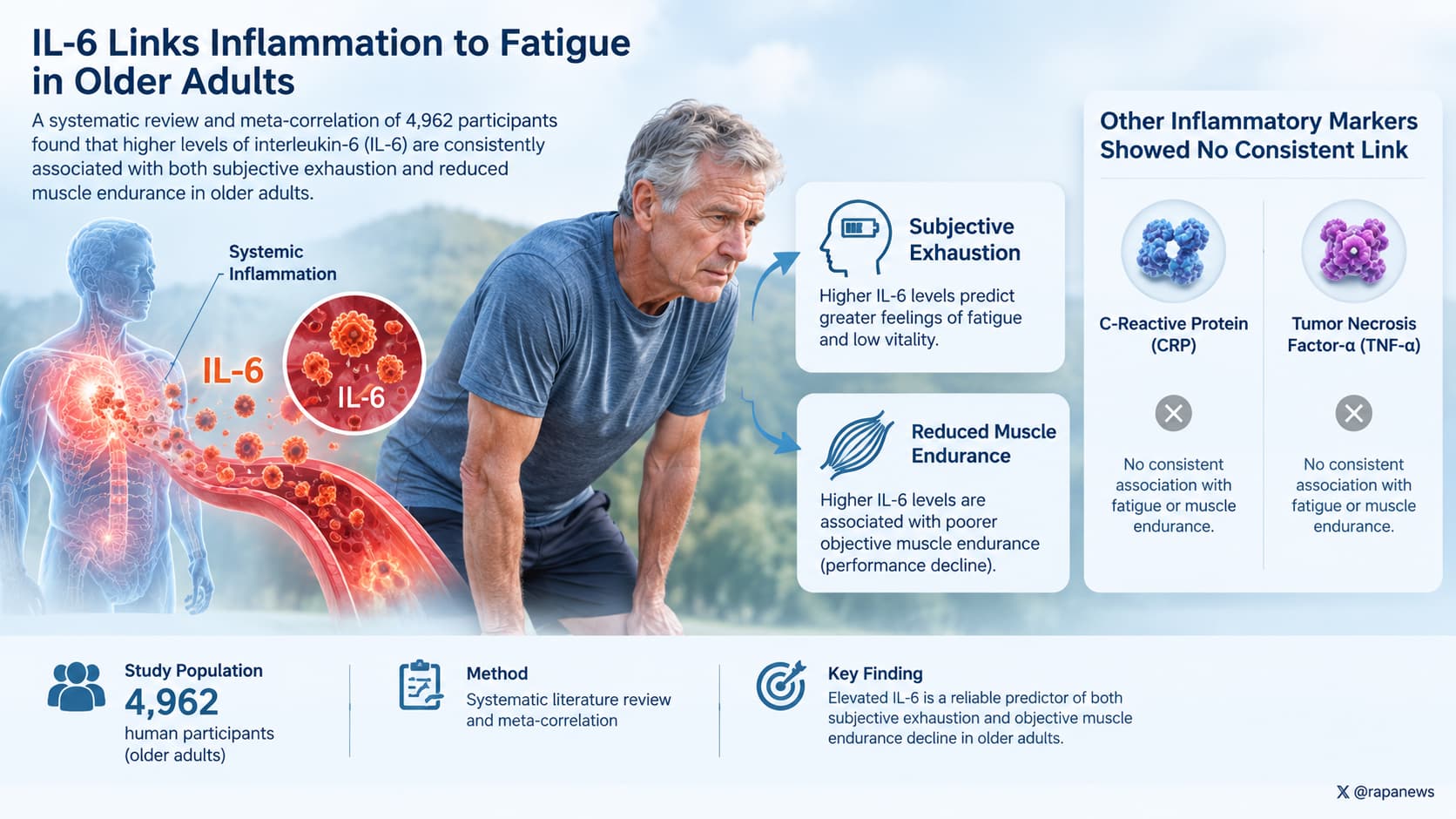
This systematic literature review and meta correlation evaluated the relationship between systemic inflammation and two distinct dimensions of fatigue in older adults. Analyzing data from 4962 human participants, the researchers found that elevated circulating levels of Interleukin 6 consistently predict both a subjective feeling of exhaustion and an objective decline in muscle endurance. Other common inflammatory markers, such as C reactive protein and Tumor Necrosis Factor alpha, did not show the same consistent statistical relationship with vitality loss.
The aging process is characterized by a gradual decline in intrinsic capacity. A core component of this physiological decline is vitality capacity, which is typically measured through two highly intertwined symptoms: how tired a person feels, and how quickly their muscles fail under stress. Clinical medicine frequently dismisses these symptoms as unavoidable consequences of getting older. However, a growing body of evidence points toward a specific biological driver. Chronic, low grade inflammation is now recognized as a primary catalyst for physical and mental decline. This phenomenon is commonly referred to in the literature as inflammaging.
A new systematic review analyzed data from thousands of older adults to understand exactly which inflammatory markers track closest with vitality loss. Researchers aggregated 27 distinct studies covering 4962 participants. They looked at both subjective questionnaires of self perceived fatigue and objective physical tests of muscle fatigability. The goal was to see if circulating cytokines like Interleukin 6, Tumor Necrosis Factor alpha, and C reactive protein consistently predict fatigue.
The findings establish a clear hierarchy among inflammatory markers. Interleukin 6 emerged as the only cytokine with a statistically significant and consistent correlation across both subjective and objective measures of fatigue. When Interleukin 6 levels rise in the bloodstream, older adults both report feeling more exhausted and demonstrate reduced muscle endurance during grip work. The data showed a distinct negative correlation between Interleukin 6 and muscle fatigue resistance.
Conversely, the data did not support the same conclusions for other well known markers. Tumor Necrosis Factor alpha showed no statistically significant relationship with muscle fatigability. C reactive protein, which is commonly used in general practice to track systemic inflammation, yielded highly mixed results. The correlation between C reactive protein and objective muscle performance was not significant, and its relationship with subjective fatigue was plagued by severe data heterogeneity.
This distinction is biologically coherent. C reactive protein is an acute phase protein produced downstream in the liver. Tumor Necrosis Factor alpha regulates localized tissue inflammation but is notoriously difficult to measure accurately in systemic circulation due to complex spatial and temporal regulation. Interleukin 6 is a direct systemic messenger. It acts as a primary component of the senescence associated secretory phenotype.
The big idea here is that fatigue in older age is a measurable phenotype linked to a specific circulating cytokine. By isolating Interleukin 6 as the dominant signal for vitality loss, this research provides a precise molecular target for biological interventions. It moves the conversation away from vague anti inflammatory advice and directs attention toward specific pathways that drive Interleukin 6 production.
Actionable Insights
For individuals actively working to optimize healthspan, the primary takeaway is the necessity of tracking the correct biomarkers. Standard physicals often measure C reactive protein (CRP) to gauge baseline inflammation. This paper demonstrates that Interleukin 6 is a far superior metric for predicting vitality capacity and muscular endurance in older age. If you are experiencing unexplained fatigue or a drop in physical stamina, tracking and targeting Interleukin 6 is more biologically relevant than relying solely on C reactive protein.
However, you must temper expectations regarding the magnitude of this effect. The meta correlation yielded an r value of 0.189 for muscle fatigability and 0.160 for self perceived fatigue. When converted to standardized effect sizes, this equals a Cohen’s d of approximately 0.38 and 0.32, respectively. These represent small to medium clinical effects. In practical terms, calculating the explained variance reveals that circulating Interleukin 6 levels account for only 3.6 percent of the variance in objective muscle endurance and 2.6 percent of the variance in subjective fatigue. Lowering Interleukin 6 will not single handedly reverse aging or restore youthful energy. It offers a statistically robust but marginal gain, representing just one isolated variable of the broader longevity equation.
Context/Source
- Open Access Paper: Association between muscle fatigability, self-perceived fatigue and inflammation in older adults: A systematic literature review., Published 2026 Sep 22.
- Institution: Vrije Universiteit Brussel.
- Country: Belgium.
- Journal Name: Ageing Research Reviews.
- Impact Evaluation: The impact score of this journal is 13.1, evaluated against a typical high-end range of 0 to 60+ for top general science, therefore this is a High impact journal.