Amen to that!
1 Like
Can’t wait for this to go on sale in the US! A wearable blood pressure band for continuous monitoring is something I have wanted since I got deeply into wearable tech.
https://www.wired.com/review/aktiia-hilo-blood-pressure-monitor/
Approved by FDA last year but still going through the red-tape process. I am hopeful it will be available in the next few months.
3 Likes
1 Like
On the topic of monitoring BP (but not cuffless), @DrFraser has been “hyping” the ‘Conneqt Pulse Device for Monitoring Vascular Health’. Should I, as an interested ‘civilian’ , purchase one?  What do people think?
https://www.grantfrasermd.com/post/conneqt-pulse-device-for-monitoring-vascular-health
2 Likes
It seems very interesting… almost like a Pulse Wave Velocity measure, but not quite…
Market Analysis: CONNEQT Pulse Availability
A comprehensive real-time market search indicates that the CONNEQT Pulse device is currently subject to a closed-distribution model. CardieX, the parent company, restricts sales exclusively to its direct-to-consumer and direct-to-clinic platform. Consequently, compiling a “Top 10” list of distinct, variable-cost vendors is not feasible. A secondary or wholesale retail market for this specific hardware does not yet exist.
Verified Pricing and Primary Source
At present, there is only one verified commercial source for acquiring the device.
| Source | Item | Price (USD) | Notes |
|---|---|---|---|
| CONNEQT Health Official Store | CONNEQT Pulse Monitor | $289.00 | Includes 30 days of Care+ access. FDA-cleared. Requires completion of a physician intake form during checkout. |
Note: Recent marketing data indicates the manufacturer periodically offers discount codes (e.g., $60 off via code “HEARTMONTH”), which can temporarily reduce the initial capital outlay.
Total Cost of Ownership (TCO) Considerations
From a procurement perspective, the initial hardware expenditure is only a fraction of the total cost. The CONNEQT Pulse relies on a proprietary software ecosystem. While basic biometric measurements remain functional without ongoing fees, full longitudinal tracking and comprehensive cardiology reporting require subsequent purchases.
- Care+ Subscription: Following the 30-day trial, ongoing monthly reports and unlimited on-demand assessments necessitate a subscription priced at $24.99/month or $199.00/year via the CONNEQT App.
- A La Carte Assessments: A 10-pack of On-Demand Assessments is available for $99.00 for users who opt out of the subscription model.
- Hardware Accessories: Replacement cuffs are priced at $20.00, and protective cases at $30.00 via the CONNEQT Accessories Shop.
2 Likes
I have one.
It works by de-embedding the pressure pulse from its reflections. That’s a real effect. I’ve designed ultrasound systems doing exactly that so I can attest that it works.
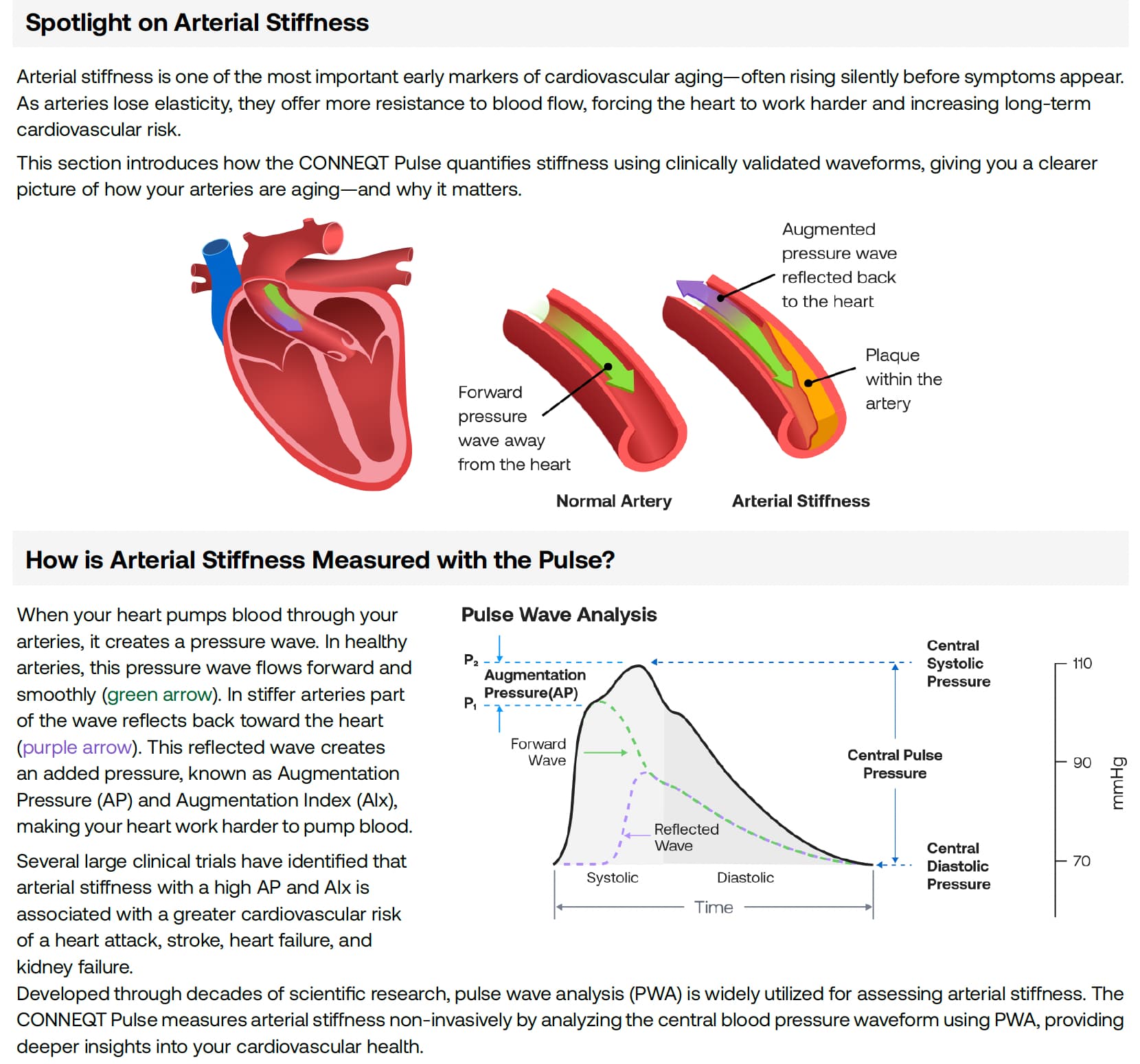
Here is my feedback after 6 weeks of use.
I use it every morning before my coffee as caffeine will impact the results.
The way I use it: I make a bunch of measurements until they get stable.
For instance a few min after I sit down it can be at 110 then 104 then the following measurements oscillate around 102. I do at least 5 measurements in the stable period and throw away the highest and lowest ones to remove outliers.
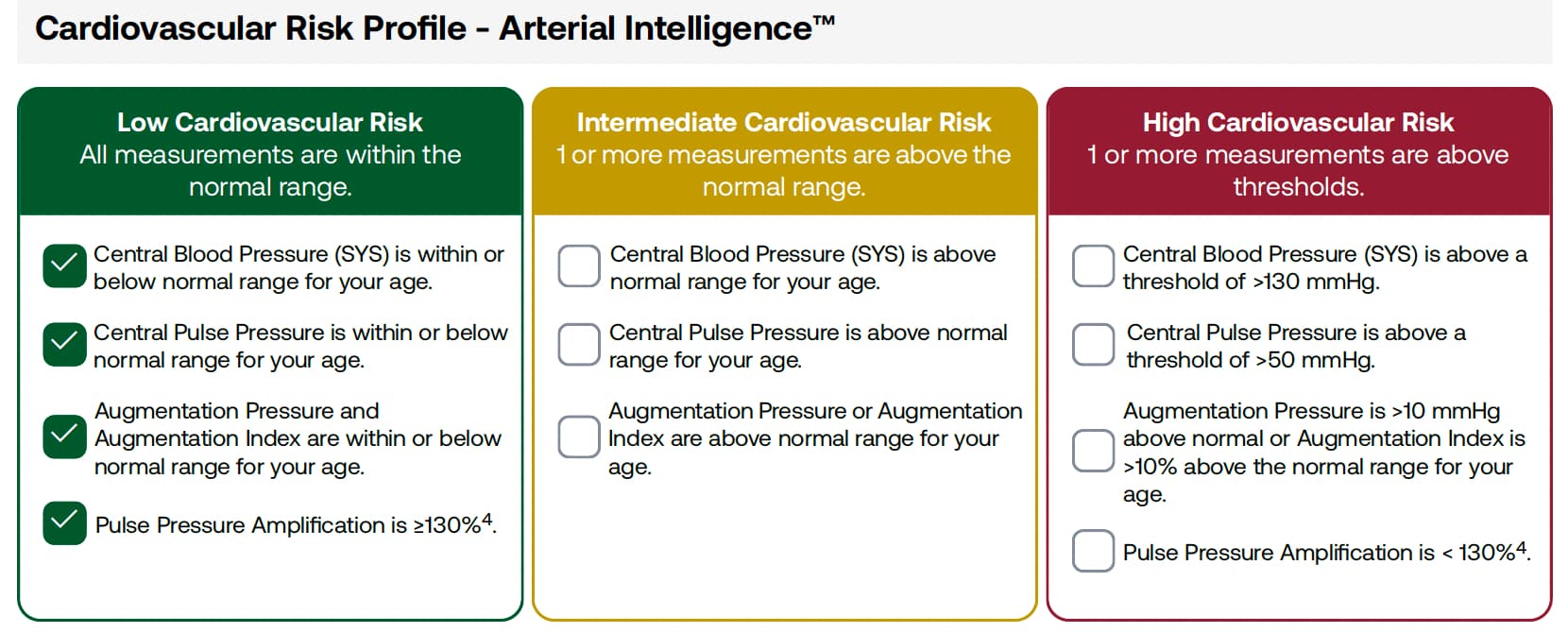
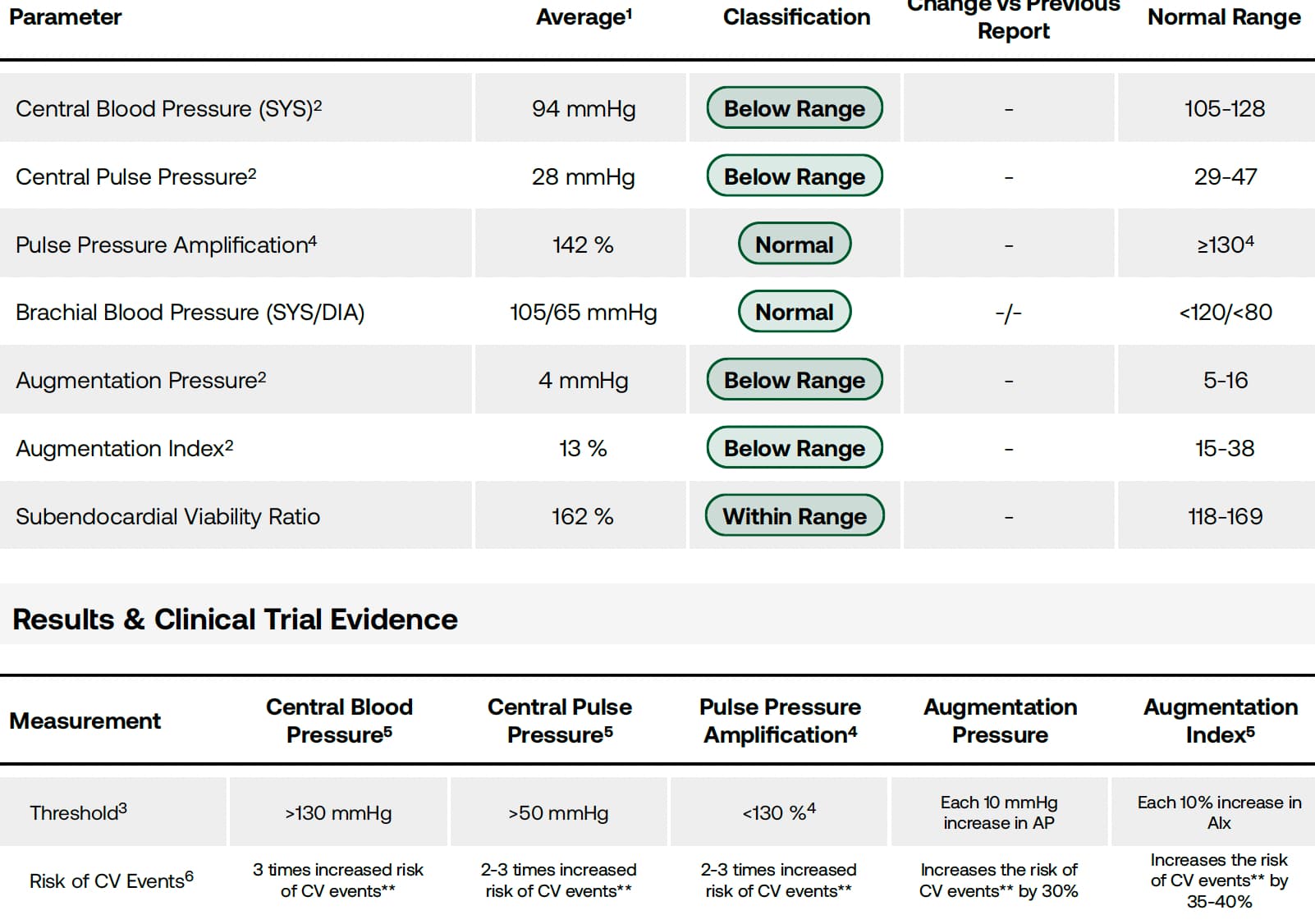
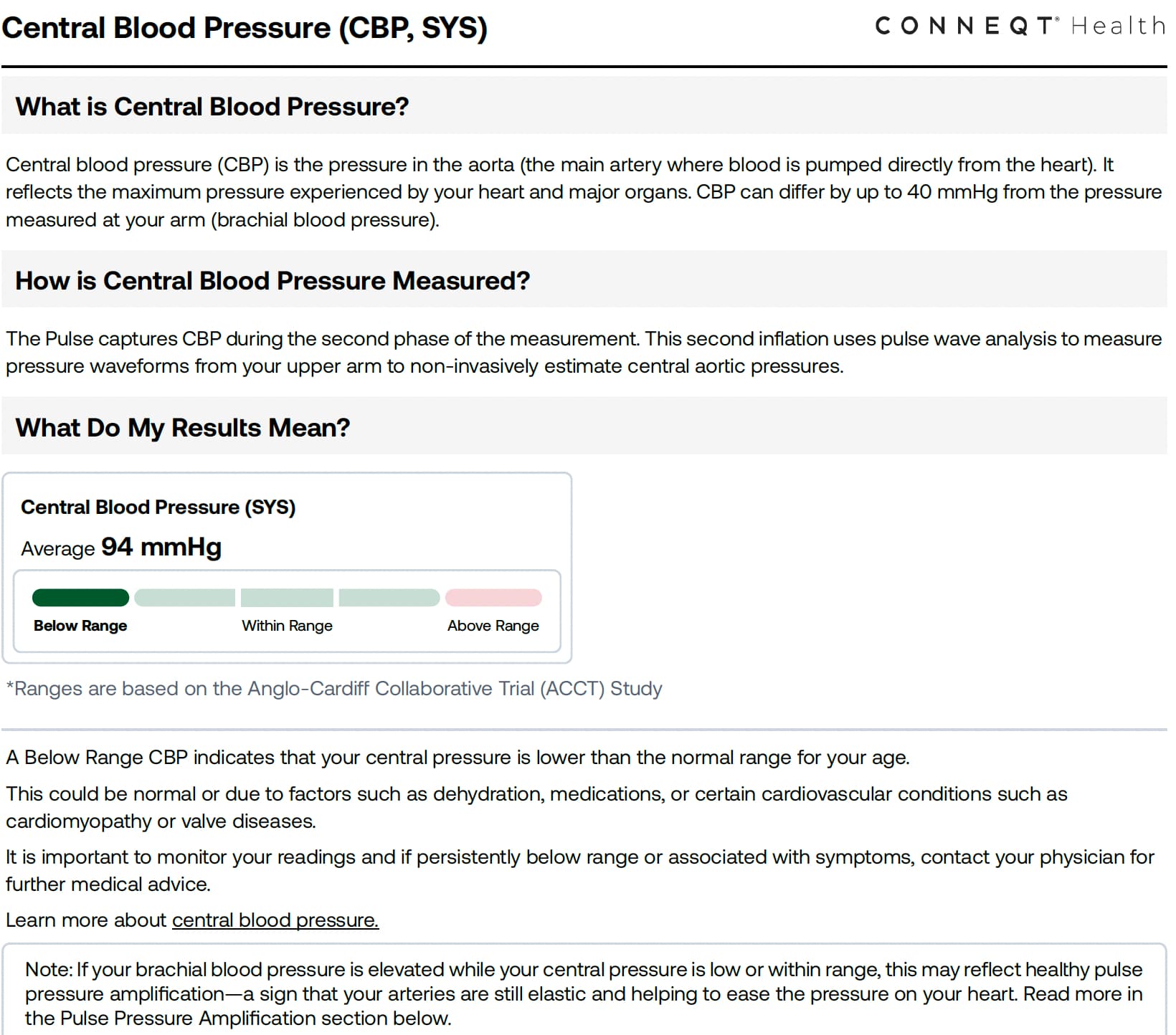
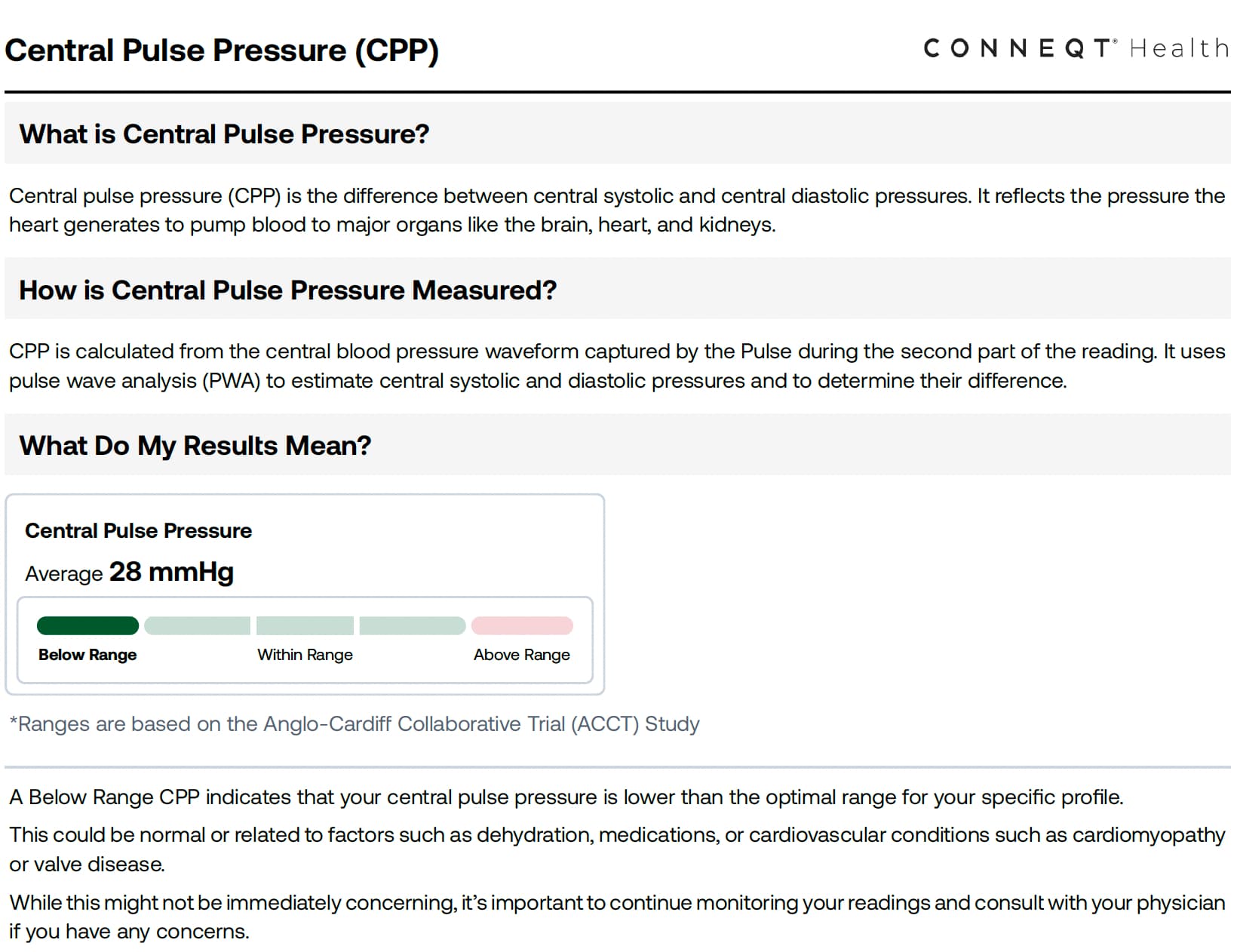
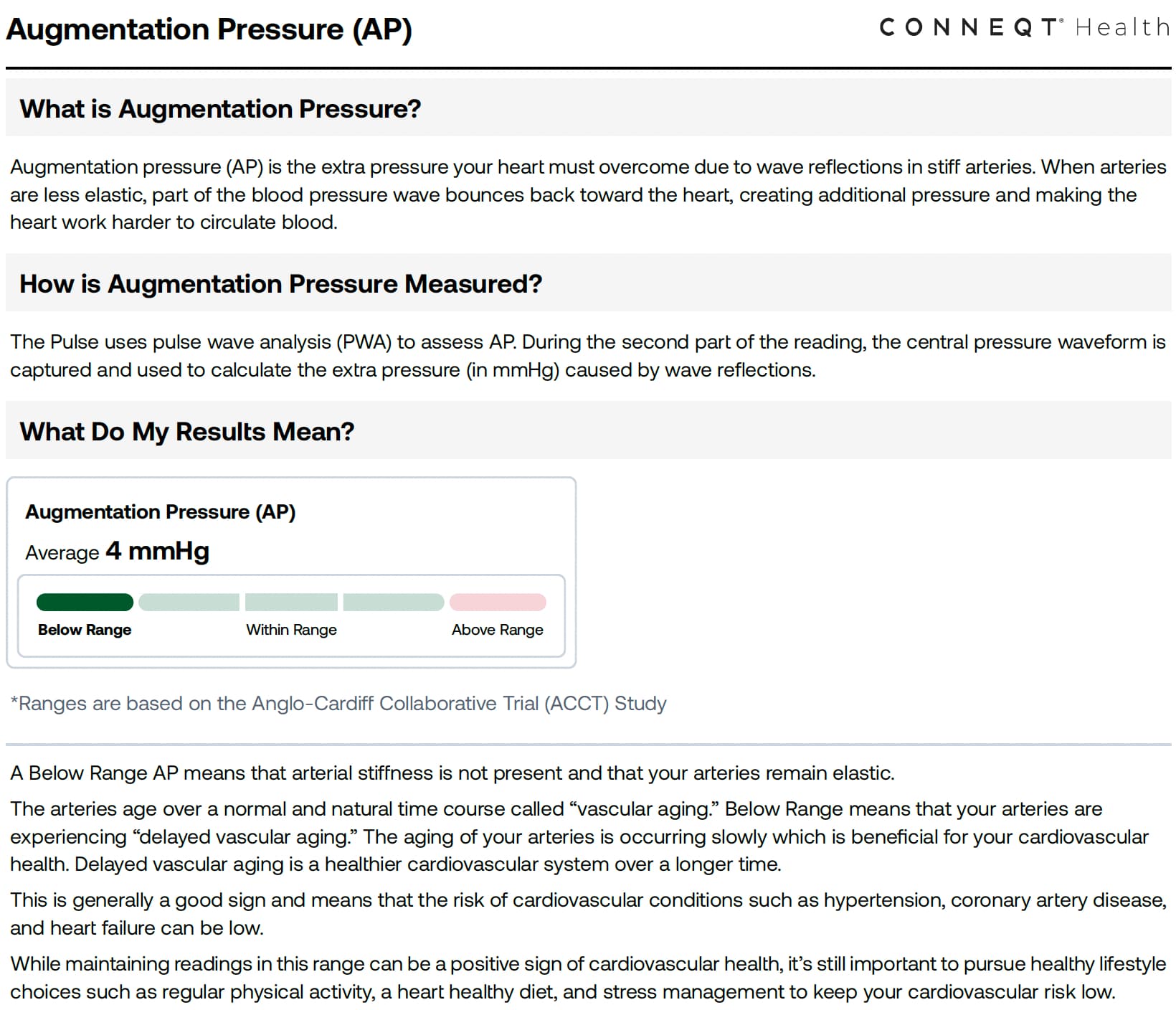
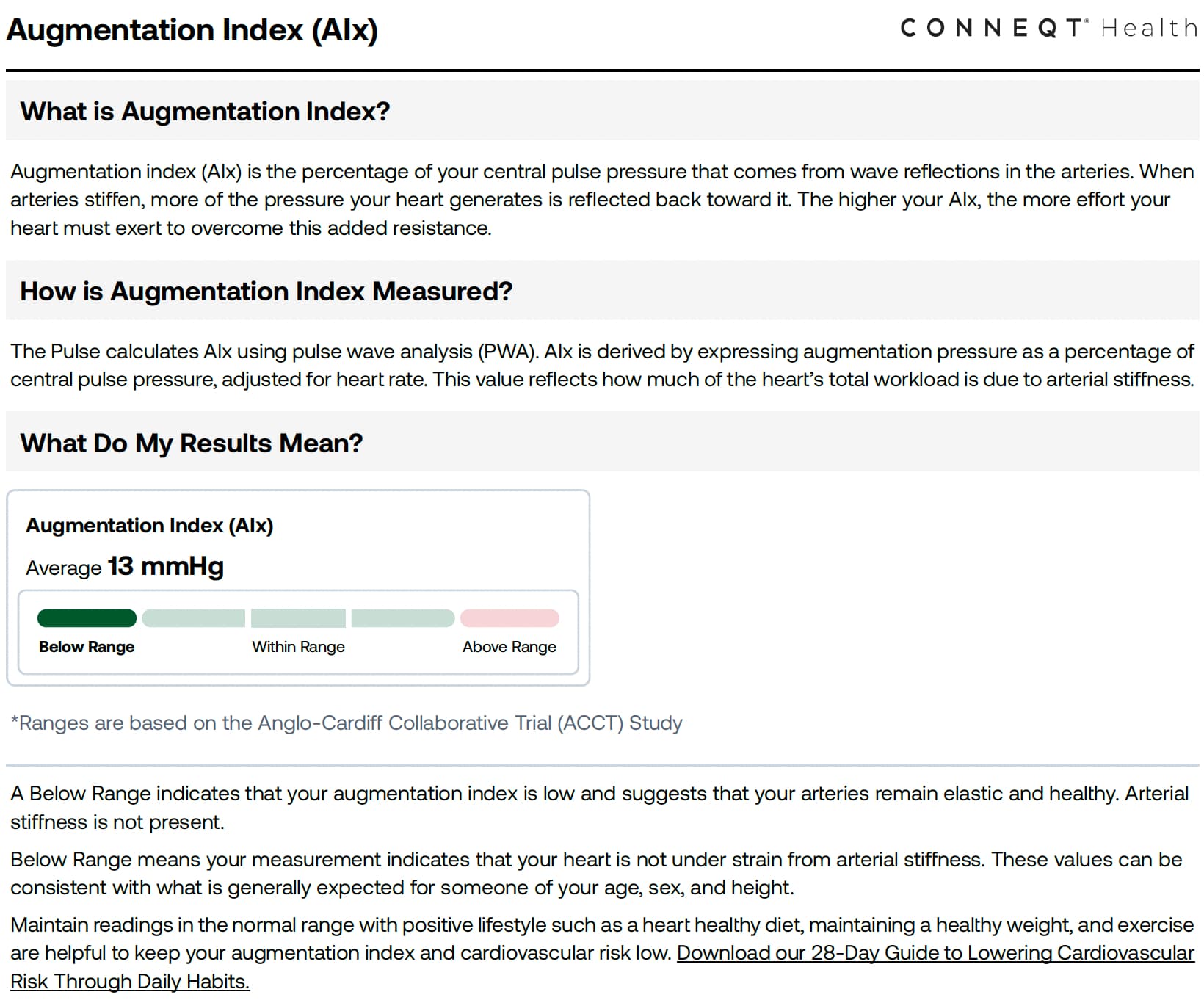
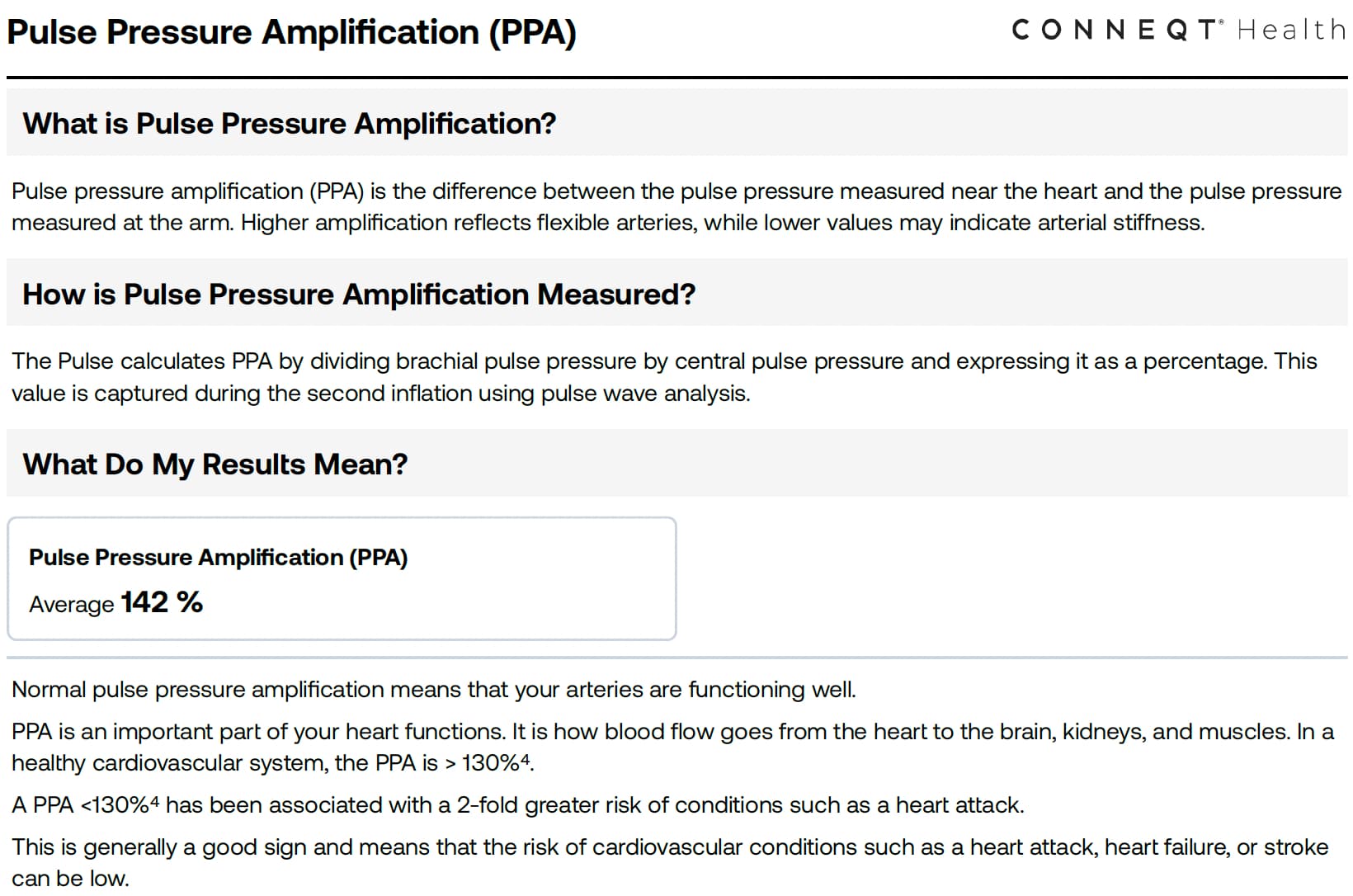
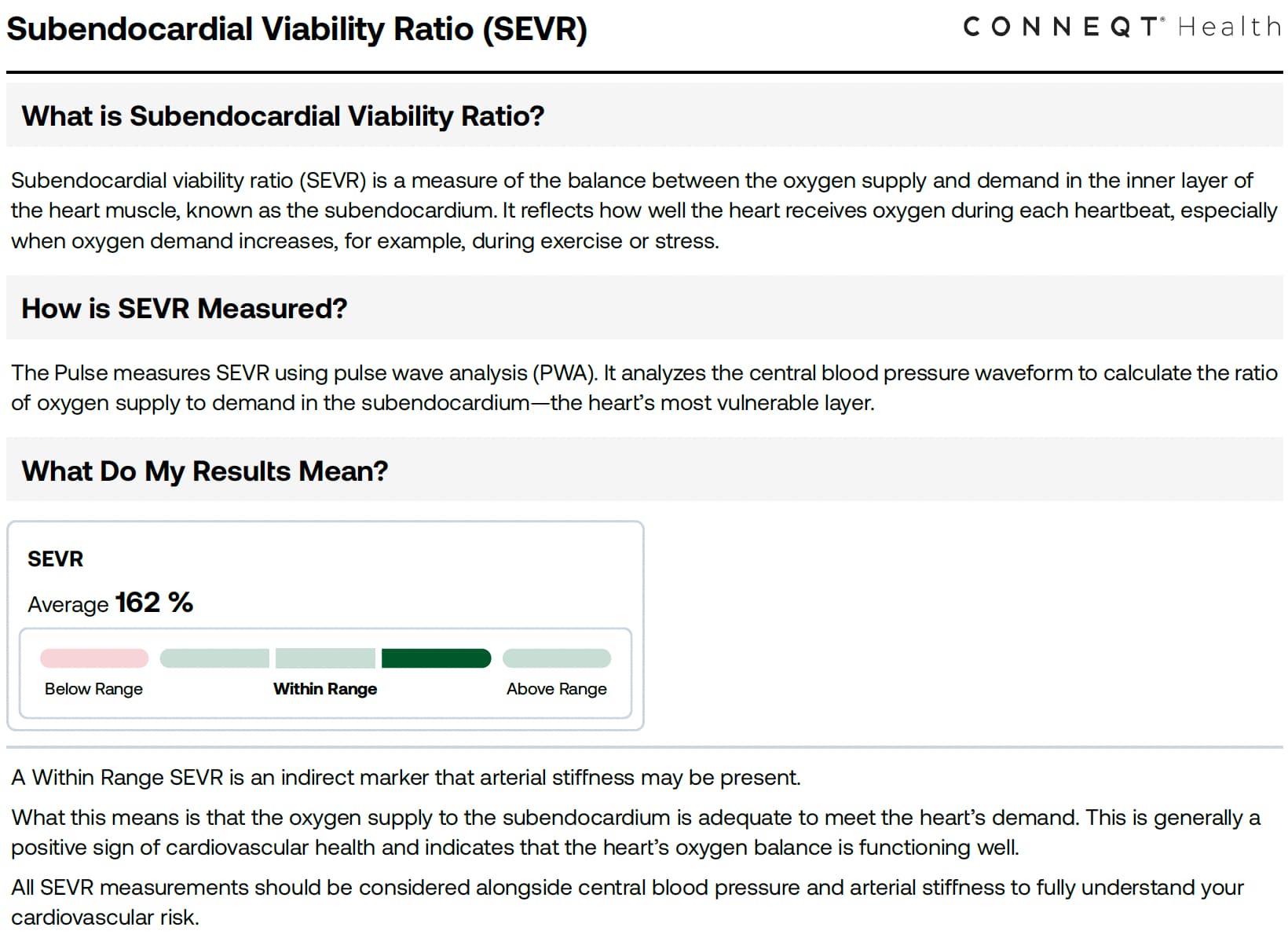
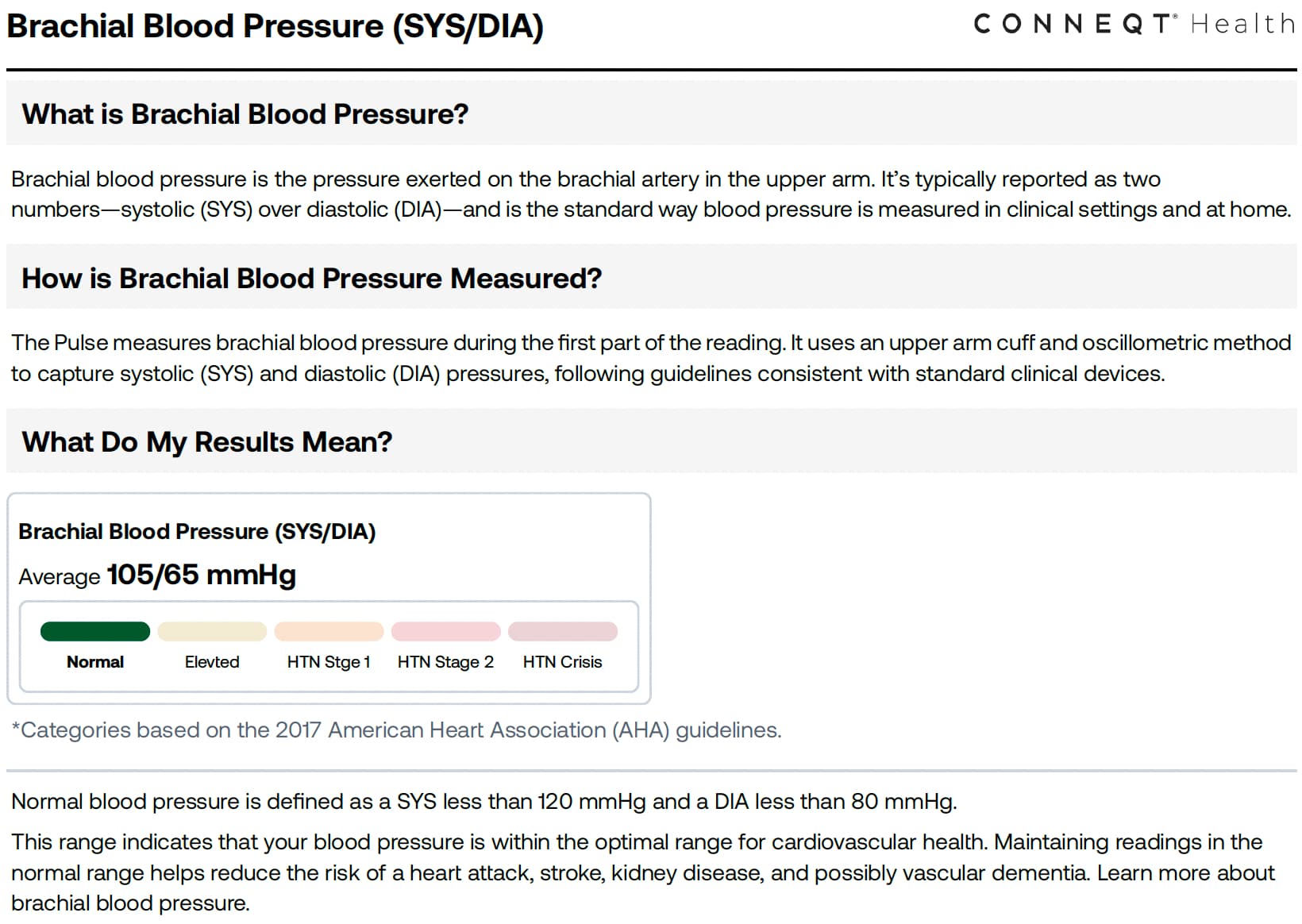
Here is the monthly report. The first report is free then you have to take a subscription but it’s totally useless as the report just averages the measures that are already in the app.
Here are the useful parts of the report:
3 Likes
This sounds like ‘buy the device, get the first free report, but after that, forget the report and just look at what the device outputs’, or are you saying something more nuanced?
3 Likes
That’s exactly that. There is nothing in the report that is not in the app. You just get the monthly average for the values but looking at the values is more informative than the average anyway.
4 Likes
Hopefully, @DrFraser, who has a dog in this fight will chime in, since he is promoting it with both a blog post and a YouTube video.
1 Like
Why the brain, and why now? Temple is developing a wearable designed to sit on the side of the head, near the wearer’s temple. Its aim is to continuously track cerebral blood flow – essentially, how much blood is reaching different parts of the brain over time. That may sound clinical, but the underlying idea is surprisingly intuitive.
If the heart is the engine of the body, the brain is the command center. And just like any high-performance engine, it depends on fuel. In this case, that fuel is oxygen-rich blood. When blood flow shifts, cognitive performance can shift with it – affecting focus, reaction time and decision-making under pressure.In a January podcast conversation, Goyal described Temple’s ambition as building “the ultimate wearable for elite performance athletes,” capable of measuring metrics that current devices cannot. Unlike wrist-worn trackers or smart rings, which primarily monitor heart rate, sleep cycles and activity, Temple is aiming higher up the body [2].
Most wearables today use the heart as a proxy for performance. Temple wants to look at the brain directly. It is a bold claim in a market where companies like Oura, Whoop and Garmin have spent years refining hardware and building trust with athletes. Those devices already offer increasingly sophisticated data on recovery and strain.
Temple’s wager is that the next frontier is not just how hard your heart is working, but what your brain is doing while it happens.
Tracking cerebral blood flow has traditionally required bulky machines in controlled environments. Temple’s challenge is to shrink that into something wearable, comfortable and reliable.
Introducing Brain Flow™
Blood flow to the brain is a proven signal of health and aging. Until now, it’s been hard to measure. Temple tracks Brain Flow, a proxy metric based on this very blood flow to the brain.
All of you, in one place
Track heart rate, HRV, sleep patterns, periods, activity levels, VO2 Max, and more to get an all-round view of your health.
Built for your temple
At the temple, skin is thin and rich with capillaries allowing for better readings. Worn using our gentle medical-grade tapes, Temple is comfortable, easy to wear, and non-invasive.
2 Likes
I am recommending all of my patients go over to this device as it is a technological advancement on the limited approach using brachial blood pressures. I have a lot of patients with abnormal values, and making small interventions, or trialing one class of medication vs. another gives an N=1 approach on exactly what works for your vascular health. As much as we can make logical choices as physicians on what we think is the best choice to optimize a given individual’s numbers, actually getting this detailed feedback on all these parameters gives a better picture. Also interventions like increasing potassium to 3:1 ratio to sodium with sodium being limited to 1500-2000 mg and optimizing Nitrous Oxide all have interesting beneficial effects. However, this detailed data gives us better feedback on interventions than simply a brachial pressure.
@RapAdmin I wonder how much Temple adds simply to knowing central blood pressure and central pulse pressure, along with knowing that your vertebrals and carotids are wide open with no disease on MRA head/neck?
2 Likes
Sadly they are not selling it to the UK as yet.
Looks like it is in development and not on sale anywhere. Nice concept if it works.
It’s a marketing scam. Nothing more than other trackers like Oura, whoops, etc.
They start by a true assertion:
Then they tell you what they really do (Note that Brain Flow is not the Blood Flow they mention above):
Basically they measure the peripheral blood at the temple.
Then they give you the measurements they take in which nothing relates to the blood flow to the brain.
Note that Oura, Whoops and the like already do all that + other things too.
Sadly they don’t do any of that. I’ve put above what they measure and pressure is not in them.
The CONNEQT Pulse discussed above in the thread is based on real science but not this.
Congratulation for them to raise 54M for basically taping an Oura ring to the temple!
A perfect fit for the current pseudo-science environment.
That said there are ways to measure the oxygen saturation in the brain with Functional near-infrared spectroscopy (NIRS) but that’s not the case here.
3 Likes
How New Longevity Tech Could Help You Reach 100
Daily biometrics, smart scales and AI companions are quietly rewriting the rules of aging.
Fort: The First Wearable Built for Strength Training.
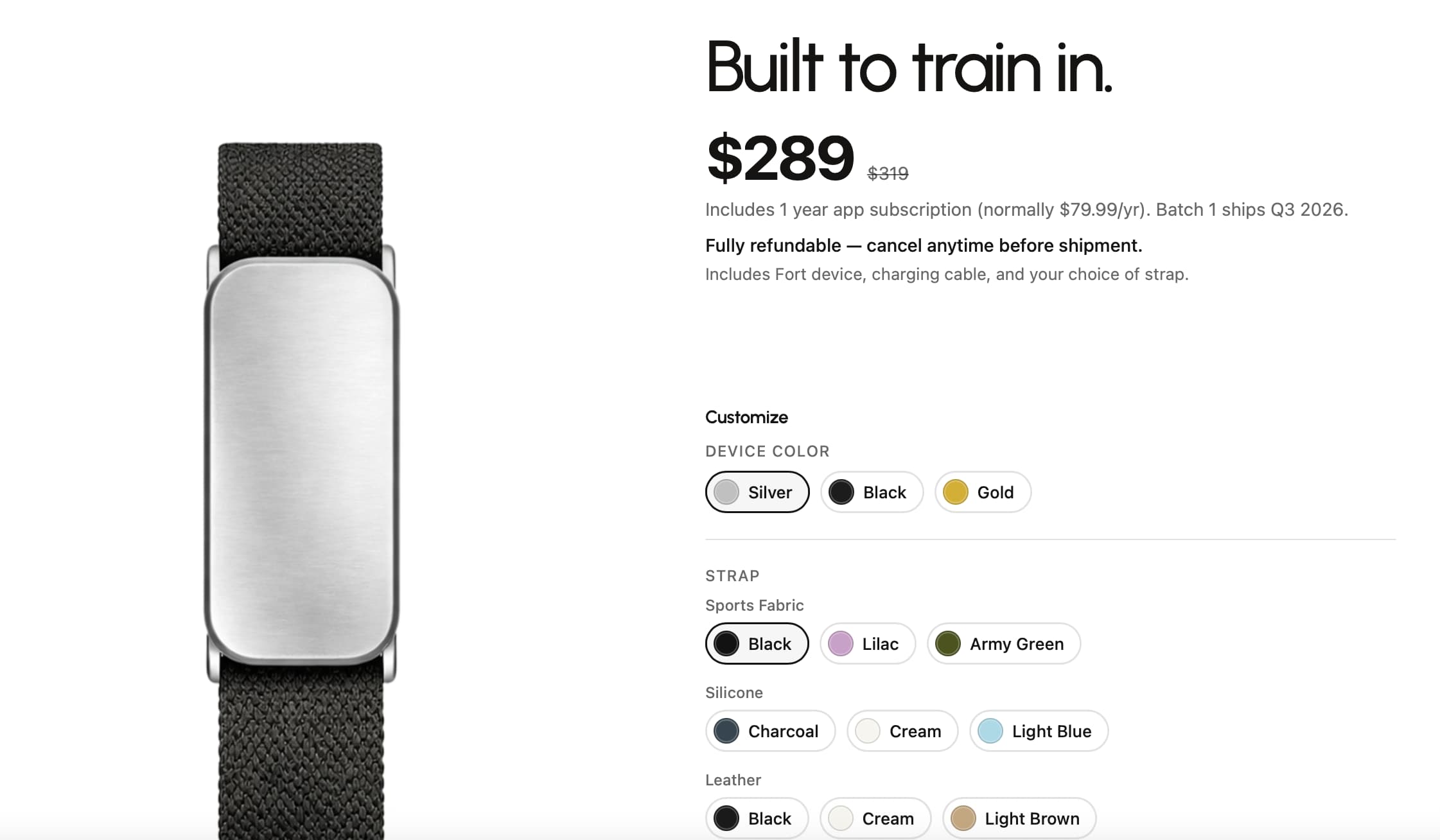
Company website:
Founders discuss their wearable and what it does:

1 Like
I got my CONNEQT BPM several days ago. At first I thought the product was just a very expensive bpm. After using it for three days I have changed my opinion and am considering retiring my OMRON bpm in favor of the CONNEQT device.
4 Likes
[
Can you provide more details as to why you changed your opinion and why you are considering using this CONNEQT device over the OMRON?
I like the extended information that the CONNEQT device displays, which is over and above BP and heart rate. I am a health data nerd, so more information is almost always better IMO. I track a variety of my health metrics in spreadsheets and will be adding the extended CONNEQT data to my tracking.
Key metrics beyond basic heart rate and blood pressure include:
- Central Blood Pressure (CBP): Measures the pressure in the aorta, which is the actual load placed on vital organs like the brain and heart, rather than just the brachial pressure in the arm.
- Arterial Stiffness: Tracks the flexibility of arteries, acting as an early indicator of vascular aging.
- Central Pulse Pressure (CPP): Measures the pressure difference in the aorta, with elevated levels indicating higher risk for cardiovascular events.
- Augmentation Index (AIx): A measure of wave reflection that indicates the stiffness of the arterial system.
- Subendocardial Viability Ratio (SEVR): Also known as the, this measures the balance between oxygen supply and demand in the heart muscle.
- Waveform Analysis: Analyzes the shape, strength, and timing of blood pressure waves to determine vascular health
3 Likes
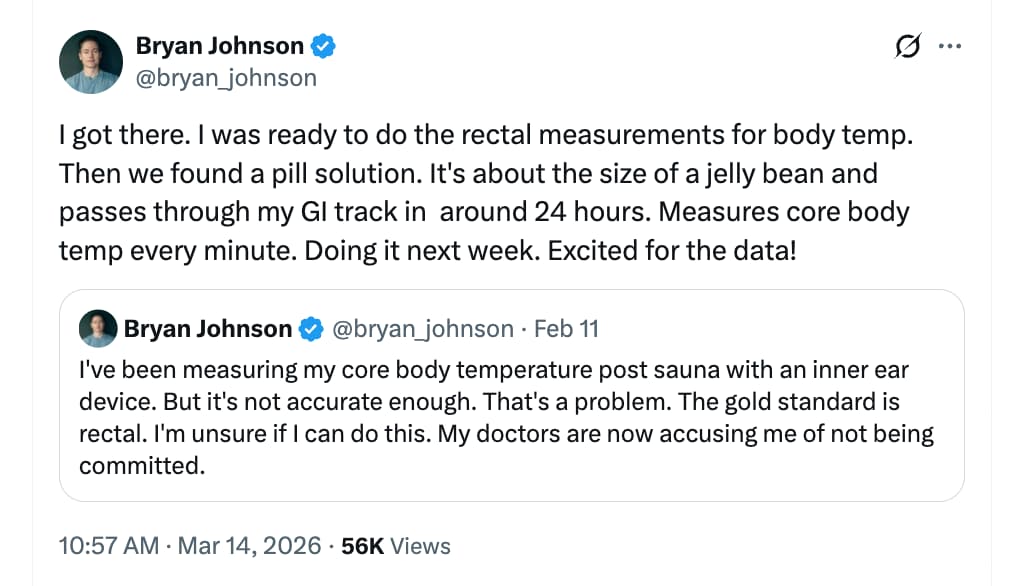
Body Temp Sensor Pill Sources
Identification of Biosensor Pill Manufacturer
The text provided from the X post does not explicitly name the manufacturer of the biosensor pill. However, based on the technical parameters described—an ingestible, jelly bean-sized device measuring core body temperature via the gastrointestinal (GI) tract with an approximate 24-hour transit time—the device aligns with the exact specifications of the primary clinical-grade ingestible core temperature sensors utilized in advanced biohacking and clinical research.
Primary Candidates
- HQ Inc. (Manufacturer of the CorTemp Sensor)
- Device: CorTemp Ingestible Core Temperature Sensor.
- Specifications: Measures 23 mm x 8.6 mm (routinely compared in clinical literature to the size of a large jelly bean). It houses a telemetry system, a micro-battery, and a quartz crystal temperature sensor. It transmits real-time core temperature data to an external receiver.
- Background: Originally engineered in partnership with NASA and Johns Hopkins University to monitor astronaut physiology during spaceflight.
- BodyCap (Manufacturer of the e-Celsius Performance Pill)
- Device: e-Celsius Performance / e-Celsius Medical.
- Specifications: Measures 17.7 mm x 8.9 mm. It records temperature data continuously (typically every 30 to 60 seconds) and features internal memory capable of storing data points even when temporarily disconnected from the external monitor.
- GI Transit: Both devices typically pass through the human GI tract within 24 to 48 hours, heavily dependent on the subject’s individual gastric motility and diet.
Knowledge Gap and Uncertainty
Treating this assessment with strict accuracy, the exact brand cannot be definitively confirmed from the isolated quote provided. To achieve absolute verification, additional data is required: either a subsequent statement from the user identifying the brand, or visual identification of the external data logger utilized in the protocol (e.g., the CorTemp Data Recorder versus the BodyCap e-Viewer).
Actionable Insights for Longevity Applications
In longevity and extreme physiological optimization protocols, continuous core body temperature monitoring serves several practical functions:
- Circadian Rhythm Optimization: Precise core temperature telemetry dictates sleep architecture. A steep drop in core temperature is required to trigger and sustain slow-wave sleep. Tracking this allows for environmental and dietary interventions to force optimal sleep staging.
- Metabolic Efficiency Tracking: Chronic, fractional drops in baseline core temperature are an established biomarker of altered metabolic rate and improved mitochondrial efficiency, frequently observed in rigorous caloric restriction regimens.
- Hormetic Stress Calibration: Continuous thermometry ensures precise dosing of thermal stress. During sauna use or cold-water immersion, it provides objective data to ensure the subject achieves the necessary physiological threshold for heat shock protein (HSP) or cold shock protein expression, without risking clinical hyperthermia or hypothermia.
Would you like an analysis of how continuous core thermometry data is utilized to measure mitochondrial uncoupling in human longevity trials?
2 Likes