Melatonin megadoses?

This is my response from chatGPT

3 Likes

Thank you very much for this detailed review of the information about cardiac arrythmias and the role of melatonin.
My observation was correct: in predisposed individuals melatonin may cause bradycardia and worsening of Sick Sinus Syndrome, which happened to me. Abnormal MT-1 receptors may also be a predisposing factor.
It is very unfortunate because I do believe in antioxidant and other great qualities of melatonin.

I’ve recently read about this link between melatonin and increased risk of heart failure. I’ve been taking small doses of melatonin for a few years, but this is something that I am trying to reduce. Certainly the massive does of melatonin some here are taking are concerning.

Not concerning to me.

1 Like

When you make a statement like that, please include the source.

The source was cite above by @RapAdmin , but in case you missed it, here it is again:

New study links melatonin and heart failure, but experts say don’t panic yet

https://archive.ph/6Vagd#selection-385.0-423.445

1 Like

The study cited has many critics. Name me any drug or supplement, and I can find a negative statistical association without causation.

The research behind these headlines, which has not yet been peer-reviewed, is early and does not prove that the supplement causes heart problems.”

The most problematic part” of the study, said David Neubauer, a sleep expert at Johns Hopkins University who was not involved in the research, “is we don’t know whether or not those people in the control group were taking melatonin.”

“While the association we found raises safety concerns about the widely used supplement, our study cannot prove a direct cause-and-effect relationship.”
“This preliminary data (Nnadi et al.) must be interpreted with extreme caution. It is not proof of causation and is heavily confounded by the underlying insomnia.”

"A substantial body of preclinical and human trial data supports a cardioprotective role for melatonin, particularly in acute cardiovascular events. Its potent antioxidant, anti-inflammatory, and mitochondria-protecting properties have been validated in human meta-analyses. These studies demonstrate that melatonin administration can attenuate heart dysfunction, significantly improve left ventricular ejection fraction (LVEF), and reduce myocardial damage (measured by troponin) in patients following acute cardiac events. Furthermore, meta-analyses of randomized controlled trials (RCTs) confirm a modest but statistically significant blood pressure-lowering effect.

In summary, preclinical studies clearly suggest the cardiovascular health benefit of both endogenous and supplementary melatonin. Melatonin is an important safe molecule with a wide range of physiological functions in animals and humans, with a strong therapeutic potential in CVDs.

3 Likes

I’m going with Matthew Walker on this. Around 22 minutes he speaks firmly against the use of megadoses of melatonin (10-20mg and more). We are all free to disagree or not.

I am not going to bother listening to the video. I would spend some time reading any written arguments, but I have heard Matthew Walker on this before.

Looking at my records I started averaging over 1g of Melatonin a night in July 2024. I continue doing weekly blood draws. I see reasons to continue and no reason to stop. This may not apply to anyone else, but I make my own decisions.

1 Like

Melatonin suppresses glycolysis and coordinately disrupts DNA repair via targeting the YAP1-NAMPT signaling in breast cancer 2025

Highlights

  • Melatonin inhibits glycolysis and aggressiveness in TNBC.
  • Melatonin downregulates YAP-NAMPT expression.
  • Melatonin suppresses the crosstalk between glycolysis and DNA repair signaling.
  • Combined treatment with melatonin and Olaparib enhanced therapeutic effectiveness.
3 Likes

The one paper I’ve seen, across years of seeing positive melatonin trials, that made my heart skip a beat as a heavy melatonin user

But I’m balls deep, been taking high dose melatonin for years and am a firm believer in it. It would take me disruption and time to get off it. This would be like being married to and believing in a spouse and hearing a unfaithful rumor

Fortunately, again, it’s the one negative paper I’ve ever seen on the substance, and you immediately drew on another paper right after it pointing to heart health High-Dose Melatonin Reverses Artery Hardening by "Waking Up" the SIRT6 Longevity Gene - #8 by RapAdmin

so I will pretend like I didn’t see it

Yeah, so many of these trials on these meds dont take into account the problems of the people needing them in the first place. Like possibly statins have ‘no affect on lifespan’, but is it people with dyslipidemia taking statins to get where normal people already are and not folks in the longevity scene using it to get to low levels. The people taking melatonin may have needed it due to a underlying insomnia that was wrecking their health

1 Like

I started high dose melatonin again recently. I’ve noticed significantly increased dream recall.

What is your definition of “high dose”?

I’ve got 100g of pure melatonin powder, in it I have a 1/4 teaspoon scoop. I don’t know how much this weighs but it is significantly more than a standard supplement dosage.

1 Like

When do you take the melatonin?

Right before I go to bed.
Also one night I woke up to urinate, I took another scoop and went back to bed. Not sure if that was necessary.

678mg I just weighed.
That is a lot more than I thought, I’m going to get a smaller scoop!
I feel sleepy quite early the next day but this is just a temporary thing I’m cycling for brain health.

Just checked my smallest scoop, it is 55-60mg. This is a bit more of a reasonable dose to experiment with.

I think I’m going to go to 10mg capsules at night before bed and find some 1-3mg lozenges to have by my bedside to take if I wake up and can’t sleep.

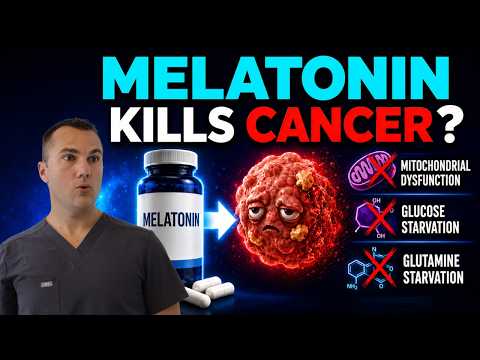
Melatonin as a Cancer Metabolic Disruptor — Key Points

  • Far more than a sleep hormone. Melatonin functions as a mitochondrial and metabolic signaling molecule with documented effects on cancer cell energy metabolism, inflammation, hypoxia signaling, and multiple oncogenic pathways — drawing comparisons to vitamin D in the breadth of its systemic impact.
  • It’s a “glycolytic” — it counteracts the Warburg effect. Cancer cells preferentially ferment glucose to lactate even when oxygen is present (the Warburg effect). Melatonin acts as a glycolytic agent that causes cancer cells to abandon aerobic glycolysis and shift back to mitochondrial oxidative phosphorylation for ATP production. This metabolic switch is a core mechanism of its anti-cancer action. Uthscsa
  • Melatonin targets glucose metabolism at multiple nodes. It downregulates glucose transporters (GLUTs), hexokinase, PFKFB, lactate dehydrogenase A (LDHA), lactate transporters, and PDK — effectively disrupting glycolysis at nearly every major step along the pathway.
  • The PDK axis is particularly important. PDK (pyruvate dehydrogenase kinase) blocks pyruvate from entering the mitochondria, trapping cancer cells in glycolysis. Melatonin reduces the HIF-1α/PDK axis, which normally inhibits the pyruvate dehydrogenase complex (PDH), thereby restoring the flow of pyruvate into mitochondria as acetyl-CoA — the same mechanism exploited by the drug dichloroacetate (DCA). ScienceDirect
  • HIF-1α destabilization is central. HIF-1α is the master transcription factor driving hypoxic metabolic adaptation in tumors. HIF-1α stabilization rewires cellular metabolism to a phenotype that promotes tumor growth, invasion, and metastasis by promoting glycolysis, stimulating the pentose phosphate pathway, supporting angiogenesis, and acidifying the extracellular microenvironment through lactate release. Melatonin directly counteracts this by destabilizing HIF-1α. MDPI
  • c-Myc inhibition cuts off glutamine. The oncogene c-Myc is a major driver of glutamine uptake and utilization in cancer cells. Longer-term melatonin treatment reduces c-Myc protein expression, suppressing glycolysis via downregulation of hexokinase 2 (HK2) and LDHA. By inhibiting c-Myc, melatonin simultaneously starves cancer cells of both glucose-derived and glutamine-derived fuel. PubMed
  • AKT/PI3K/mTOR pathway suppression. AKT sits at the center of the PI3K–AKT–mTOR signaling axis, which coordinates both glucose and glutamine metabolism. Melatonin’s inhibitory effect on AKT adds another layer of metabolic interference, compounding the effects of HIF-1α and c-Myc suppression.
  • Mitochondrial quality improves under melatonin. In lung cancer studies, melatonin treatment was accompanied by higher ATP production, elevated oxygen consumption, higher mitochondrial membrane potential, lower lactate secretion, and improved activity of electron transport chain complexes I and IV — a profile consistent with restored normal cell energetics rather than cancer-type metabolism.
  • Light at night is a “darkness deficiency” that undermines this system. Cancer cells use cytosolic aerobic glycolysis to actively proliferate, avoid apoptosis, and readily metastasize. When nocturnal melatonin rise is suppressed by artificial light exposure, this protective metabolic switching doesn’t occur — leaving cancer cells operating in their pathological metabolic state around the clock. Uthscsa
  • Broader signaling reach. Beyond the pathways covered in the video, melatonin also modulates AMPK, PPAR, IGF-1, STAT3, VEGF, and NF-κB — suggesting its anti-cancer metabolic influence is unusually broad for an endogenous molecule.

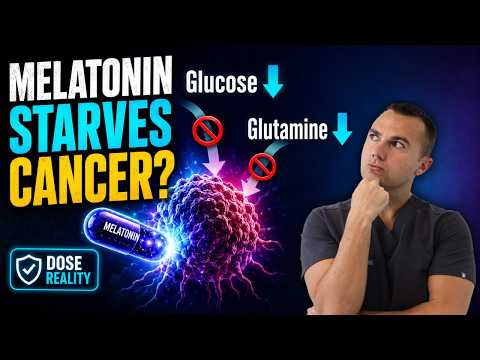
Melatonin & Cancer Fuel Starvation — Dosing Reality Check

  • The key question isn’t can melatonin starve cancer cells — it’s at what concentration. Cell studies consistently show melatonin reducing glucose and glutamine uptake, but almost all use 0.1–1 millimolar concentrations in a dish. The video’s central argument is that this concentration gap is the most important and least-discussed issue in the melatonin/cancer literature.
  • Glucose suppression data is striking at high concentrations. In prostate cancer cell lines, 1 mM melatonin reduced glucose uptake by 79% (lymph node metastasis model) and 37% (bone metastasis model). Ewing’s sarcoma cells showed 19–32% reductions. These are dramatic numbers — but they’re at the 1 mM benchmark.
  • Glutamine suppression is similarly dose-dependent. In osteosarcoma cells, 1 mM melatonin reduced glutamine uptake 37–40% and cut glutaminase enzyme expression by 33–45%. A 2026 paper identified a previously unknown mechanism: melatonin suppresses the glutamine transporter SLC38A5 via PI3K/AKT inhibition, reducing transporter expression by 30–50% and blocking anoikis resistance and lung metastasis in animal models.
  • Pancreatic cancer data adds breadth. A 2025 paper found melatonin simultaneously suppresses SLC1A5 (the classical glutamine transporter), glutaminase, and SLC7A11 (the cystine/glutamate transporter known as the “Achilles heel” of cancer) — collapsing the redox homeostasis system cancer cells use to survive oxidative stress.
  • The pharmacokinetic math is sobering. To reach 1 mM in the bloodstream via oral dosing requires an estimated 250–500 grams of standard melatonin — essentially impossible. Even the lower 0.1 mM threshold would require 25–50 grams orally. Liposomal formulations improve this by roughly 3–5x but don’t close the gap at the 1 mM level.
  • The mitochondrial concentration multiplier is the saving grace. Melatonin concentrates approximately 100-fold inside mitochondria relative to blood levels. Accounting for this, reaching the 0.01 mM threshold intramitochondrially requires only ~5–10 mg orally (standard doses), and 0.1 mM intramitochondrially requires roughly 250–500 mg orally — achievable with high-dose supplements.
  • Practical dosing implication. The 0.01–0.1 mM intramitochondrial range is realistically attainable and still produces meaningful effects: ~27% reduction in glucose uptake and 12–15% reduction in glutamine uptake. The dramatic 37–80% reductions seen at 1 mM are likely out of reach for most people. Doses in the 250–1,000 mg/day range (using 120 mg+ capsules or liposomal formulations) are probably where meaningful metabolic interference begins.
  • Boosting endogenous melatonin remains underrated. The video flags that a future discussion will cover endogenous melatonin optimization — implying that darkness discipline and red/infrared light exposure may compound the effects of supplemental dosing without requiring gram-level oral doses.
3 Likes