That all makes sense. I guess this means you are not in the US, if you are, let me know and I’ll tell you how to get it cheaper.
Have you ever tried pilling him? (With your homemade capsules)
I have two cats I can pill. It would be too traumatic for my third cat, so unless something was life saving, it wouldn’t do that to him.
I’m happy to do a FaceTime and teach you how to pill him if you think that would help (you buy a little cheap tool and approach from behind and go in the side of his mouth, so he never sees it coming). I just taught a fried how to pill their cat last week and their jaw was on the floor over how quick and easy it was.
FWIW I give rapa to my dog in tablet form (enteric coated) buried in a small chunk of cheese. She eats it so quickly I don’t thing she crunches the tablet (I don’t hear a crunch).
hello everyone I am in the U.K. I have a 13 year old Italian greyhound who weighs 6.5 kgs and we have been having significant issues with him in the last few months. He has two degenerative discs which are causing him no end of issues and I am keen to start him on rapamycin could anyone advise me on where is best to get the tablets what brand of tablets and the dose/dosing regime
It’s so easy to give a pill to a dog if you know the technique. Make your dog sit, open her/his mouth, put pill on the base of tongue, close the mouth and while holding it closed rub the dog’s under the chin area downward. It promotes swallowing. Works with any dog, any size.
I’m not in the UK, but generally it’s harder to get rapamycin (sirolimus) in the UK than in the US or India, etc. Here are some links for sources and approaches to getting rapamycin:
Started our rapamycin this past Saturday and we gave it to our 3 pups as well. My wife and myself started out on 3 mg each. I only ordered 1g tablets and 3 mg tablets. I gave our 3 year old 15 lb female chihuahua 1 mg, our 10 year old 50 lb female pit bull 3 mg, and our 9 year old 75 lb male pit bull 3 mg. Should I lower the does on the first 2 females to half a mg and 2 mg?
Just like for a human, I would start them out on lower doses and ramp up.
I’d also not start the male on 3mg either… I’d go back down to 1 and then ramp up… especially because you won’t know if they have side effects as you would for yourself. My IM vet advised this and it’s what most here advise for people, too, fwiw.
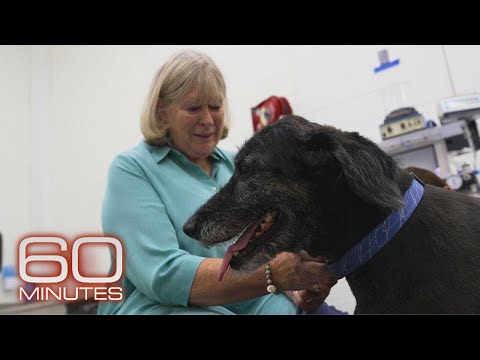
Research to help dogs live longer, healthier lives could unlock secrets for people to age better too
I. Executive Summary
The core thesis presented in the transcript centers on the Dog Aging Project (DAP) and the emergence of companion dogs as the primary high-fidelity model for human geroscience. Traditional longevity research suffers from a 90% translational failure rate when moving from murine (mouse) models to humans. The DAP seeks to bridge this “translational gap” by leveraging the shared environment (exposome), complex genetics, and compressed lifespans of domestic dogs to identify actionable interventions for age-related pathologies, specifically Cognitive Dysfunction Syndrome (CDS) and general senescence.
Key findings from the longitudinal study (n=50,000+) indicate that environmental variables—specifically social companionship and physical activity—are potent modifiers of healthspan. Dogs lacking regular exercise exhibit a six-fold increase in dementia risk. Pathologically, canine brains exhibit beta-amyloid plaques and microglial inflammation strikingly similar to human Alzheimer’s Disease, providing a more accurate substrate for pharmacological testing than transgenic rodents.
The pharmacological focus is currently on Rapamycin (Sirolimus), an mTOR inhibitor. While murine data suggests up to a 60% increase in lifespan, early-stage canine trials (TRIAD study) focus on cognitive preservation and inflammatory reduction. Results from pilot studies show a measurable decrease in teal-colored microglial cells (inflammatory markers) in Rapamycin-treated subjects. Simultaneously, the biotech startup Loyal is navigating the FDA’s conditional approval pathway for drugs targeting the IGF-1 pathway (LOY-001) and metabolic health (LOY-002), aiming for an incremental increase of one “healthy year” of life.
The consensus among the featured experts (Kaeberlein, McGrath, Keane) is that aging is a conserved biological process. By treating aging as a modifiable medical condition in dogs, the project aims to establish a regulatory and scientific precedent for human longevity therapeutics. However, significant knowledge gaps remain regarding long-term safety, optimal dosing, and the distinction between delayed senescence versus true lifespan extension in non-controlled environments.
II. Insight Bullets
The Murine Translational Gap: Approximately 90% of interventions successful in mice fail in human clinical trials, necessitating an intermediate, complex model like the companion dog.
Shared Exposome: Dogs share human environments, including water, air quality, and activity patterns, making them superior to lab-controlled animals for studying environmental impacts on longevity.
Accelerated Longitudinal Data: Canine lifespans compress 80 years of human aging into 10–15 years, allowing for rapid assessment of longevity interventions.
Social Determinants of Health: Longitudinal DAP data suggests that dogs living with other conspecifics (socialization) correlate with lower disease incidence.
Exercise and Neurodegeneration: A lack of physical exercise is associated with a 600% (6x) increase in the risk of developing canine dementia.
Neuropathological Homology: Canine dementia (CDS) presents with beta-amyloid plaques and brain atrophy (shrunken cortex, enlarged ventricles) nearly identical to human Alzheimer’s pathology.
Rapamycin Mechanism: Rapamycin functions by inhibiting the mTOR (mechanistic Target of Rapamycin) pathway, which regulates cell growth and protein synthesis.
Neuro-inflammatory Reduction: Pilot data indicates Rapamycin reduces microglial activation, the primary driver of neuro-inflammation in the aging brain.
FDA Regulatory Shift: The FDA has signaled a “reasonable expectation of effectiveness” for longevity drugs (Loyal), creating a new regulatory category for “aging” as a treatable condition.
IGF-1 Pathway Targeting: Loyal’s LOY-001 focuses on reducing the Insulin-like Growth Factor-1 (IGF-1) levels, particularly in large-breed dogs where high IGF-1 is linked to accelerated aging.
Public Data Access: The DAP maintains a public database for global researchers, accelerating the identification of longevity biomarkers across 50,000+ subjects.
Prevention vs. Rescue: Experts emphasize that longevity therapeutics are intended for preventative use (starting mid-life) rather than “deathbed” rescue missions.
Economic Viability: The canine longevity market is viewed as a multi-billion dollar proof-of-concept for eventual human application.
Biomarker Identification: MRI and blood sample analysis in the DAP are identifying early markers of cognitive decline before clinical symptoms manifest.
IV. Actionable Protocol (Prioritized)
High Confidence Tier (Level A/B Evidence)
Consistent Physical Activity: Implement daily exercise to mitigate neurodegeneration risks. In canine models, sedentary behavior is the strongest predictor of dementia Bray et al., 2022.
Social Integration: Maintain high levels of social interaction. Pro-social environments are correlated with lower morbidity in the DAP longitudinal cohort Levy et al., 2023.
Weight & Metabolic Management: Given the link between the IGF-1 pathway and aging, maintaining a lean body mass is a verified method to reduce the “rate of aging” Kealy et al., 2002.
Experimental Tier (Level C/D Evidence)
Rapamycin (Low-Dose/Intermittent): Based on the TRIAD pilot and murine data, low-dose Rapamycin may reduce neuro-inflammation.
IGF-1 Modulation: Targeting the growth hormone axis (via LOY-001 or similar mechanisms) to slow senescence in large-body phenotypes. Source unverified in live search for human longevity RCTs; canine data is in ongoing Phase 2/3 trials.
Red Flag Zone (Safety Data Absent)
Direct Translation of 60% Lifespan Extension: The “60% increase” cited in the transcript is based on mouse models. It is speculative and highly unlikely to translate to the same magnitude in humans or dogs.
Late-Stage Intervention: Longevity compounds are not “rescue” drugs. Administering these to subjects already in advanced failure/end-of-life provides zero confirmed benefit.