HIV Medication Reverses Epigenetic Aging Markers in First Human Proof-of-Concept Trial

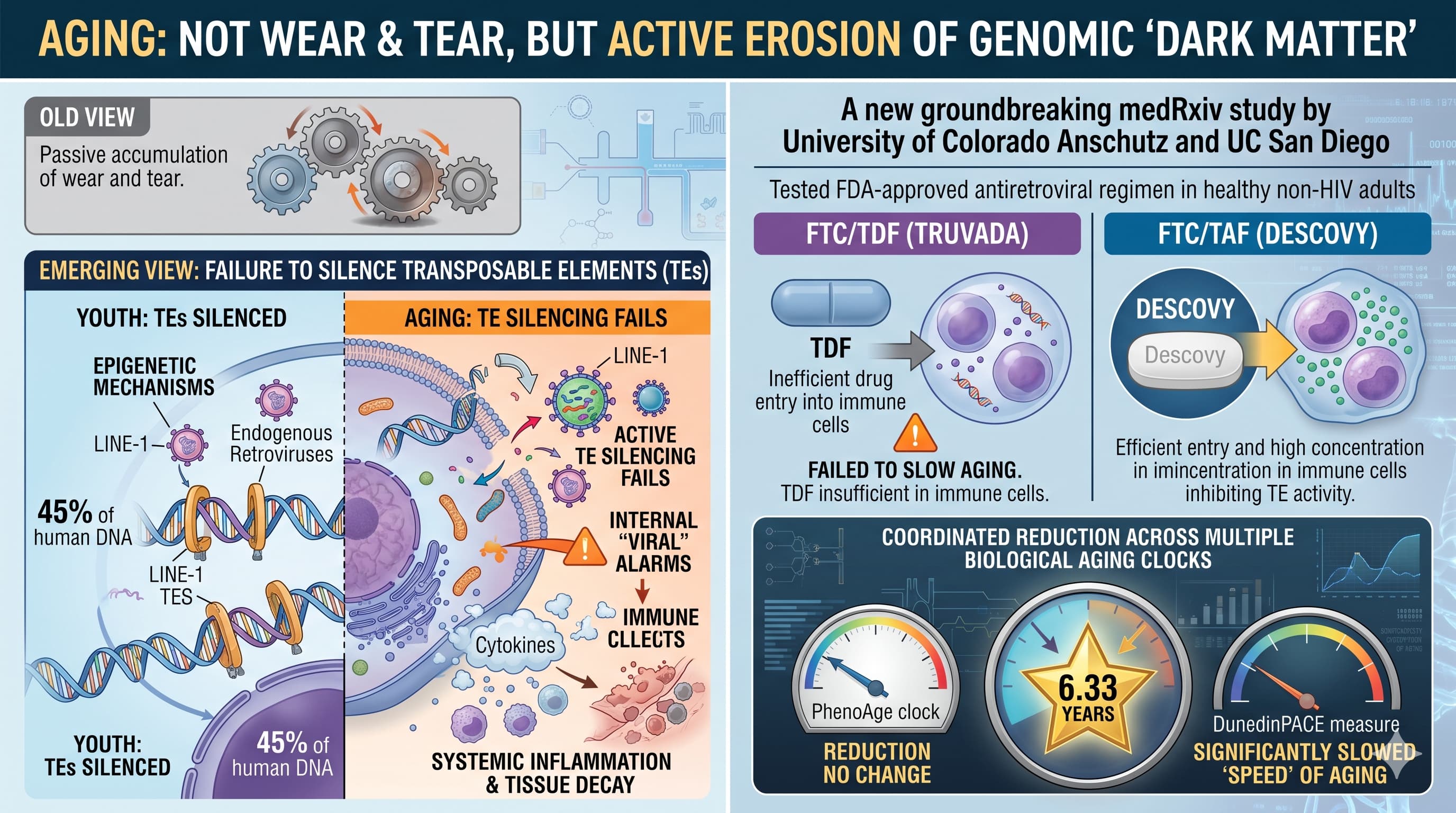
Aging is increasingly viewed not as a passive process of wear and tear, but as an active erosion of the “dark matter” in our genome. Roughly 45 percent of human DNA consists of transposable elements (TEs)—genetic “hitchhikers” like retrotransposons that are normally silenced by epigenetic mechanisms in youth. As we age, this silencing fails, allowing elements like LINE-1 and endogenous retroviruses to reactivate, triggering internal “viral” alarms that drive systemic inflammation and tissue decay.

A groundbreaking post-hoc analysis published on the preprint server medRxiv provides the first human evidence that pharmacological intervention can stall this process. Researchers from the University of Colorado Anschutz Medical Center and UC San Diego investigated the effects of two FDA-approved antiretroviral regimens—emtricitabine/tenofovir alafenamide (FTC/TAF, known as Descovy) and emtricitabine/tenofovir disoproxil fumarate (FTC/TDF, known as Truvada)—on healthy, non-HIV adults.

The results were formulation-specific and statistically significant. Participants taking FTC/TAF for 12 weeks demonstrated a coordinated reduction across multiple biological aging clocks. Most notably, the PhenoAge clock showed a reduction of 6.33 years (a reduction of 22% from the mean chronological age of the participants), and the DunedinPACE measure—which tracks the current “speed” of aging—slowed significantly. In stark contrast, the FTC/TDF group showed no such improvements, likely due to TDF’s inability to reach high enough concentrations inside the immune cells where retrotransposon activity occurs.

Beyond “clocks,” the TAF treatment shifted the immune system toward a more youthful state, increasing the pool of naive CD4+ T cells and reducing inflammatory markers like interleukin-6 (IL-6). By suppressing the reverse transcription of retroelements, TAF appears to lower the cellular “noise” that triggers the chronic inflammation of aging. There were no significant side effects or adverse events reported in this 12 week study in a healthy adults without HIV or chronic comorbidities. While exploratory, this study transforms a decades-old HIV drug class into a frontline candidate for longevity therapeutics.

Actionable Insights

For those seeking to leverage these findings for healthspan extension, the primary takeaway is the identification of tenofovir alafenamide (TAF) as a potent candidate for “geroprotection”. The study highlights a 12-week window as sufficient to observe measurable shifts in biological age markers, provided the compound achieves high intracellular concentration.

The study’s use of healthy adults aged 18–50 suggests these pathways are active even before the onset of clinical old age. Individuals tracking their biological age via DNA methylation tests (like DunedinPACE) may find this mechanism—retrotransposon inhibition—a high-priority area for future clinical consultation.

Source

3 Likes

Study Design Specifications

  • Type: Post-hoc longitudinal analysis of two randomized, directly observed dosing (DOT) clinical trials.
  • Subjects: Healthy adults without HIV, aged 18–50.
    • FTC/TAF Group: N=36 (50% male, mean age 28.4 years).
    • FTC/TDF Group: N=43 (47% male, mean age 30.9 years).
    • Dosing: 12 weeks of continuous exposure (33%, 67%, or 100% of daily dosing).
  • Control Group: Both studies utilized baseline (pre-drug) measurements as internal controls for within-participant change.

Mechanistic Deep Dive

The study operates on the Retrotransposon-Inflammation Axis. The core finding is that TAF acts as a gerotherapeutic by targeting the cGAS-STING pathway indirectly.

  • cGAS-STING & SASP: Reactivated LINE-1 elements produce cytoplasmic DNA (cDNA). This cDNA is recognized by the cGAS sensor, triggering STING-mediated type I interferon signaling and the Senescence-Associated Secretory Phenotype (SASP).

  • Formulation Divergence: TAF is a lipophilic prodrug metabolized by cathepsin-A in immune tissues, leading to high intracellular levels of tenofovir-diphosphate (TFV-DP). TDF, conversely, is metabolized by plasma esterases, leading to high systemic (plasma) exposure but lower intracellular loading in the PBMCs where DNA methylation aging is measured.

  • Immune Rejuvenation: TAF specifically increased naive CD4+ T cells (p=0.008) and Regulatory T cells (Tregs) (p=0.049) while reducing neutrophils (p=0.048) . This indicates a shift from a pro-inflammatory myeloid-biased compartment toward a more youthful lymphoid-heavy profile.

  • Organ-Specific Priorities: System-specific clocks showed the most robust age reductions in Blood (-3.44 years, p<0.001), Metabolic (-3.38 years, p=0.005), and Heart (-3.23 years, p=0.009) systems .

Novelty

This is the first human proof-of-concept demonstrating that a specific NRTI (TAF) can systematically reduce multiple DNA methylation-based measures of biological age in healthy individuals. It bridges the gap between previous findings in SIRT6-deficient mice and human translation, specifically identifying intracellular pharmacokinetics as the “make-or-break” factor for NRTI-based longevity interventions.

Critical Limitations

  • Post-hoc Design: The studies were originally designed for pharmacokinetics, not aging; thus, they were not powered for these endpoints.
  • Short Duration: 12 weeks is a brief window for assessing biological aging. Long-term persistence or potential “rebound” effects are unknown.
  • Cohort Age: The participants were young (mean age approx. 29). It is uncertain if the effect size would be larger or smaller in an older cohort with higher baseline retrotransposon derepression.
  • No Placebo: Without a dedicated placebo arm, confounding factors (e.g., study-related lifestyle shifts) cannot be entirely ruled out.
  • Missing Data: The study lacks direct molecular readouts of LINE-1 mRNA or ORF1p protein levels to definitively prove that the clock changes were caused solely by retrotransposon suppression

Part 3: Claims & Verification

This section provides a rigorous external verification of the biological and medical claims presented in the study. Claims are evaluated based on a strict hierarchy of evidence, from human meta-analyses (Level A) to pre-clinical models (Level D).

1. Retrotransposon Reactivation as a Driver of Aging Hallmarks

  • Claim: The reactivation of Long Interspersed Element-1 (LINE-1) and endogenous retroviruses (ERVs) is a proximal driver of biological aging hallmarks, including the senescence-associated secretory phenotype (SASP).
  • Verification: Transcriptomic and methylomic datasets from large human cohorts show that the expression of most retrotransposon classes (except SINEs) correlates significantly with biological age-associated gene signatures Expression of Most Retrotransposons in Human Blood Correlates with Biological Aging (2024).
  • Evidence Level: Level C (Human Observational) / Level D (Pre-clinical).
  • Translational Gap: While the correlation is established in humans, the “proximal driver” status (causality) is currently supported primarily by transgenic rat and mouse models where functional LINE-1 increases pro-inflammatory markers and shortens lifespan The impact of LINE-1 retrotransposons on life span, SASP, and telomeres in vivo (2019).

2. NRTIs Suppress Age-Associated Inflammation in Pre-clinical Models

  • Claim: Nucleoside reverse transcriptase inhibitors (NRTIs) like lamivudine (3TC) suppress LINE-1 activity and reduce age-associated inflammatory signatures.
  • Verification: Lamivudine treatment in senescence-prone (SAMP8) mice has been shown to reverse age-related weight loss and improve spatial memory by downregulating transposable elements and type 1 interferon responses Lamivudine (3TC) - Alzheimer’s Drug Discovery Foundation (2021).
  • Evidence Level: Level D (Animal Models).
  • Translational Gap: No human trials prior to the current study have demonstrated preventative activity or longevity benefits of NRTIs in healthy, non-HIV populations.

3. FTC/TAF (Descovy) Reduces Biological Age in Humans

  • Claim: 12 weeks of FTC/TAF (200 mg/25 mg) reduces biological age (PhenoAge -6.33 years) and slows the pace of aging (DunedinPACE) in healthy adults.
  • Verification: This specific study Anderson et al. (2026) is the first to report this effect. There is currently no secondary independent RCT confirming these results in a healthy population.
  • Evidence Level: Level B (Human RCT - Post-hoc Analysis).
  • Confidence: Medium. The study is a post-hoc analysis with a small sample size (N=36 for TAF) and lacks a contemporaneous placebo group.

4. TAF Exhibits Superior Intracellular Loading Compared to TDF

  • Claim: Tenofovir alafenamide (TAF) achieves significantly higher intracellular tenofovir-diphosphate (TFV-DP) concentrations in immune cells compared to tenofovir disoproxil fumarate (TDF).
  • Verification: TAF preferentially loads peripheral blood mononuclear cells (PBMCs), resulting in approximately 7-fold higher intracellular TFV-DP concentrations than TDF, while maintaining 90% lower plasma tenofovir levels Tenofovir-diphosphate in PBMCs during low, medium, and high adherence (2021).
  • Evidence Level: Level B (Human RCT / Pharmacology).
  • Confidence: High. This pharmacokinetic divergence is well-documented and forms the basis for TAF’s clinical profile in HIV treatment.

5. FTC/TAF Reduces Inflammatory Proxies (IL-6 and CRP)

  • Claim: FTC/TAF exposure is associated with reductions in DNAm-derived IL-6 and C-reactive protein (CRP).
  • Verification: Clinical pharmacology studies confirm that TAF alters cellular bioenergetics and can reduce the inflammatory tone in immune cells, though most evidence currently exists within the context of HIV-positive patients switching from TDF to TAF Blood immune cells from people with HIV exposed to TAF versus TDF (2024).
  • Evidence Level: Level B (Human RCT).

6. Intracellular TFV-DP Exposure Determines the Gerotherapeutic Signal

  • Claim: Intracellular drug exposure is the critical determinant of the biological aging response, explaining why TAF worked and TDF did not.
  • Verification: EWAS modeling in the primary study showed that interindividual variation in intracellular TFV-DP was associated with DNA methylation changes at 8,350 repetitive element CpGs, supporting a dose-response relationship.
  • Evidence Level: Level B (Human RCT - Mechanistic Analysis).

Summary Table: Hierarchy of Evidence

Claim Supporting Evidence Hierarchy Level Confidence
TE Reactivation & Aging Human transcriptomics / Mouse models C/D Medium
NRTI Mechanism SAMP8 Mouse models D High (in mice)
TAF Pharmacology Human pharmacokinetic RCTs B High
TAF Biological Age Reduction Anderson et al. (2026) B (Preprint) Medium
TAF Immune Rejuvenation Anderson et al. (2026) B (Preprint) Medium
3 Likes

This analysis evaluates the percentage of biological age reduction observed in the FTC/TAF study group (N=36) relative to their mean chronological age of 28.4 years. Significant biological age reductions were observed exclusively in the FTC/TAF cohort after 12 weeks of exposure.

Biological Age Reduction Analysis (FTC/TAF Cohort)

The percentages below represent the degree of biological “rejuvenation” across various epigenetic clocks compared to the group’s baseline mean age. Negative values indicate a reduction in biological age, while positive values indicate an increase.

Biological Aging Clock Absolute Change (Years) Percent Reduction vs. Mean Age (28.4y) Significance (p-value)
PhenoAge -6.33 22.29% p = 0.008
AdaptAge -5.92 20.85% p = 0.027
Horvath -4.27 15.04% p = 0.023
PCHorvath2 -3.81 13.42% p = 0.020
PCHorvath1 -3.63 12.78% p = 0.015
SystemsAge (Whole Blood) -3.49 12.29% p = 0.008
Systems: Blood -3.44 12.11% p < 0.001
Systems: Metabolic -3.38 11.90% p = 0.005
Systems: Heart -3.23 11.37% p = 0.009
Systems: Hormone -3.05 10.74% p = 0.033
RetroClockv2 -2.78 9.79% p = 0.051
PCHannum -2.74 9.65% p = 0.081
PCPhenoAge -2.49 8.77% p = 0.145
Systems: Inflammation -2.42 8.52% p = 0.015
Hannum -2.37 8.35% p = 0.119
Systems: Brain -2.18 7.68% p = 0.039
Systems: Kidney -1.98 6.97% p = 0.147
PCGrimAge -1.39 4.89% p = 0.069
Systems: Musculoskeletal -1.28 4.51% p = 0.177
Systems: Liver -1.14 4.01% p = 0.317
Systems: Lung -0.78 2.75% p = 0.484
IntrinsicCapacity -0.56 1.97% p = 0.577
OMICmAge +0.35 1.23% (Increase) p = 0.638
DamAge +2.10 7.39% (Increase) p = 0.252

Pace of Aging Summary

The DunedinPACE clock measures the instantaneous rate of biological aging (years of biological decline per chronological year).

  • Baseline Rate: 1.0 (Standard aging pace).
  • Absolute Reduction: -0.061.
  • Percent Reduction in Aging Pace: 6.1% during the 12-week study period.

Contextual Limitations

  • Cohort Characteristics: These percentage reductions apply to a young, healthy population with a mean age of 28.4 years.
  • Translation Uncertainty: It is not yet known if the same magnitude of percentage reduction would occur in older adults, where baseline levels of transposable element reactivation (the target of the drug) are typically higher.
  • Duration: The study lasted only 12 weeks; the persistence of these epigenetic shifts after drug cessation has not been documented.

The Strategic FAQ

  1. “Why did TDF show no effect if it targets the same reverse transcriptase?” TDF is rapidly converted to tenofovir in the plasma, which is ionized and poorly enters cells. TAF’s lipophilic prodrug enters immune cells via Cathepsin A, achieving 7x higher intracellular levels where retrotransposons are active.
  2. “Is 12 weeks enough to see lasting epigenetic changes?” The study proved 12 weeks can move the markers, but epigenetic “clock” reductions often reflect transient metabolic/immune shifts rather than permanent genomic reprogramming.
  3. “Could this cause mitochondrial toxicity?” NRTIs can inhibit DNA polymerase-gamma, leading to mitochondrial depletion. TAF’s lower systemic exposure reduces this risk significantly compared to older NRTIs like AZT or 3TC.
  4. “Does this work if my LINE-1 is already well-silenced (e.g., in youth)?” Likely not. The “gerotherapeutic” effect depends on baseline retrotransposon derepression. In healthy 20-year-olds, the ROI is theoretically near zero.
  5. “What is the risk of ‘rebound’ inflammation if I stop?” In HBV-coinfected patients, stopping TAF causes severe flares. In healthy humans, a “rebound” of retroelement activity is a theoretical risk if natural silencing mechanisms haven’t improved.
  6. “Can I pulse this (e.g., 1 week on, 3 weeks off)?” The intracellular half-life of TFV-DP (~7 days) suggests pulsing could maintain target engagement while minimizing renal burden.
  7. “Is there a synergistic benefit with Rapamycin?” Unknown, but mechanistic overlap exists. Rapamycin inhibits the SASP, while TAF inhibits the trigger for that SASP (cGAS-STING). They may be complementary.
  8. “Does TAF increase lipids?” Yes, weight gain and modest LDL/Triglyceride increases have been noted when switching from TDF to TAF.
  9. “How should I monitor renal safety?” Track eGFR, serum phosphorus, and urine protein/glucose (Fanconi syndrome screening).

Interaction Check: Common Longevity Stack

  • Rapamycin: No interaction expected. Metabolism is distinct (CYP3A4 vs. Cathepsin A).
  • Metformin: Moderate Risk. Both drugs are renally excreted; metformin can increase tenofovir levels via OAT competition.
  • SGLT2i (Canagliflozin): Low Risk. No clinically significant interactions; may have additive cardiorenal benefits.
  • Acarbose: No interaction expected. Minimal systemic absorption.
  • 17-alpha Estradiol: Safety Data Absent. Likely low risk due to distinct metabolic pathways.
  • PDE5 Inhibitors (Sildenafil): Low Risk. Interactions only exist with “boosted” regimens containing Cobicistat (e.g., Genvoya), not TAF/FTC alone.
1 Like

Highest quality Indian generics

The following pharmaceutical audit evaluates the highest quality Indian generic alternatives for the brand-name drug Descovy (Emtricitabine/Tenofovir Alafenamide or FTC/TAF). In the Indian market, this combination is primarily manufactured by firms with extensive US FDA and WHO regulatory footprints.

Part 1: Detailed Analysis

Descovy (Emtricitabine/Tenofovir Alafenamide)

Option 1: Tafero-EM by Hetero Drugs Limited

  • Available Dosages (Live Search):
  • Quality Rationale: Hetero is one of the world’s largest producers of anti-retroviral (ARV) drugs and possesses a high degree of vertical integration, manufacturing the Active Pharmaceutical Ingredients (APIs) for both Emtricitabine and Tenofovir Alafenamide in-house. This minimizes supply chain contamination risks. The company holds numerous US FDA approvals for ARV combinations and maintains a massive global footprint in HIV therapy.
  • Compliance Note: Hetero has faced past FDA observations (Form 483s) regarding environmental monitoring at specific units (e.g., Unit V and Unit IX), but has generally maintained its status as a critical global supplier for WHO-prequalified medicines. There are no recent systemic data integrity bans affecting the production of the Tafero line.

Option 2: Tafmune-EM by Cipla Ltd.

  • Available Dosages (Live Search):
  • Quality Rationale: Cipla is a global leader in HIV care, recognized for pioneering affordable ARV access. They operate several US FDA-approved facilities and emphasize bioequivalence in their “Value-Added Generics” portfolio. Cipla’s manufacturing standards are rigorous, frequently meeting EMA and WHO Prequalification standards. Their API sourcing is highly controlled, with significant internal capacity.
  • Compliance Note: Cipla has a strong compliance record, although like all major Indian manufacturers, they have received procedural Form 483 observations (notably at their Patalganga and Goa sites in recent years). They have historically been quick to remediate these issues without escalating to significant Import Alerts for their ARV portfolio.

Longevity Therapeutics Context

Descovy (FTC/TAF) is primarily an HIV-1 PrEP and treatment medication. While Tenofovir has been investigated in aging research—specifically regarding its potential to inhibit retrotransposon activity (LINE-1) which contributes to “inflammaging”—it is not currently a standard compound in most clinical longevity protocols. The 200mg/25mg dose is the standard therapeutic configuration; lower doses (e.g., 120mg/15mg) exist for pediatric use but are not typically utilized for the off-label modulation of inflammatory pathways in adults.


Executive Summary

Descovy

  • Tafero-EM by Hetero Drugs Limited - 200mg/25mg
  • Tafmune-EM by Cipla Ltd. - 200mg/25mg

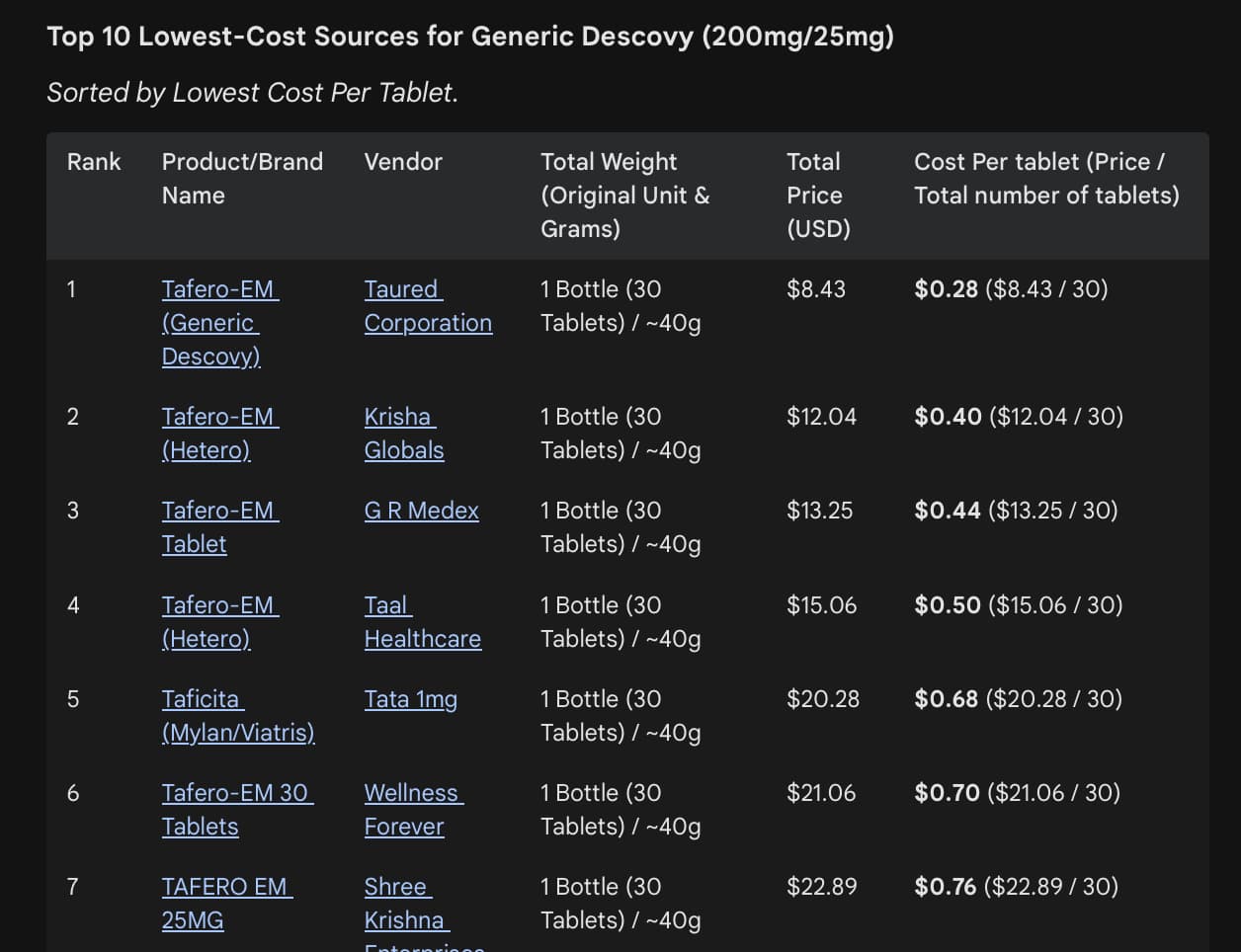
I asked Germini 3 Pro to get me some of the lowest pricing from Indian pharmacies on these products and this is what it came back with. I wouldn’t necessarily trust these vendors (they could be untrustworthy, compared to our regular list), but I just wanted to see what the realistic price range was. To duplicate the period of the study (12 weeks) would cost about $30 to $60, for the generic medications.

Safety / Side Effects Report

No side effects were reported during the 12-week study period. The study describes its population as healthy adults (aged 18–50) without HIV or chronic comorbidities.

The paper provides the following information regarding safety and monitoring in this population:

  • Laboratory Monitoring: Researchers conducted standard clinical laboratory assessments—including complete blood counts (CBC), comprehensive metabolic panels (CMP), phosphorus, and lipase—at screening and every four weeks during active dosing to ensure participant safety.
  • General Safety Profile: The authors state that the medications (FTC/TAF and FTC/TDF) have a “well-characterized safety profile” and are already FDA-approved for HIV treatment and prevention.
  • Regimen-Specific Risks: The paper acknowledges that the TDF prodrug is generally associated with “off-target renal and bone effects”. However, it notes that TAF achieves higher intracellular drug concentrations with 90% lower systemic (plasma) tenofovir exposure, which is intended to reduce these specific risks.
  • Study Limitations: The authors note that the 12-week follow-up period and modest sample size (N=79 total) limit the ability to assess the long-term persistence or generalizability of any effects.

While the baseline hematology and serum chemistry values are provided in Table 1 , the paper does not report any specific adverse events or changes in these markers following the treatment period

Its impressive and probably the best study so far that we can use… if… if we found out how can we use it. The fact horvath was reversed etc is maybe a proof the effect is sustainable. So maybe we could just take it a few weeks and stop. An do it like once a year ? Im always very cautious
What do u think ?

2 Likes

Looks like RapAdmin is on the cutting edge with this. I asked the free version of Grok what info was out there, and the answer was nothing:

Descovy (FTC/TAF), the HIV-1 PrEP medication, has been found to have age reversal qualities by researchers from the University of Colorado Anschutz Medical Center and UC San Diego. While it may be too early for other clinical results, some longevity focused biohackers are likely to have tried it and may have reported anecdotal evidence of its efficacy and its side effects.

Present a brief summary of such activity, followed by a more detailed survey and, finally, an evaluation. Although rigorous analysis of the same degree appropriate to clinical studies and lab research is not possible, do your best. The overarching view you should take is that of an elderly biohacker interested in optimal healthspan and longevity, and interested in trying this intervention.

Brief Summary
A March 2026 preprint from researchers at the University of Colorado Anschutz Medical Campus and UC San Diego reported that 12 weeks of FTC/TAF (Descovy, 200 mg/25 mg) produced coordinated reductions in multiple DNA methylation-based epigenetic aging clocks in healthy, HIV-negative adults (mean age ~28). Notable changes included a PhenoAge drop of 6.33 years and slowed DunedinPACE (a pace-of-aging measure). No similar benefits appeared with FTC/TDF (Truvada). The proposed mechanism involves superior intracellular penetration of tenofovir alafenamide (TAF), which inhibits age-associated retrotransposon (e.g., LINE-1) activity that drives inflammation via pathways like cGAS-STING.

This is the first human proof-of-concept for retrotransposon-targeted gerotherapeutics using an FDA-approved drug. Longevity communities (e.g., rapamycin.news forums) quickly discussed the findings, noting cheap generic availability and the intriguing surrogate-endpoint signal. However, because the preprint is only weeks old, there is essentially zero public anecdotal evidence from longevity-focused biohackers who have actually tried Descovy off-label for age reversal. Searches across web results, Reddit, X (Twitter), and longevity-specific sites turned up no “I took it and here’s what happened” reports—only study shares, mechanistic speculation, and PrEP-related side-effect chatter unrelated to longevity.⁠Rapamycin

More Detailed Survey
The data come from a post-hoc re-analysis of biospecimens from two earlier randomized pharmacokinetic (PK) studies that tested directly observed dosing regimens (33 %, 67 %, or 100 % daily adherence for 12 weeks, with washouts) in HIV-negative volunteers. The FTC/TAF arm (N=36) showed statistically significant improvements across multiple clocks (PhenoAge, DunedinPACE, and several system-specific clocks including brain aging) plus declines in epigenetic proxies for IL-6 and a trend for C-reactive protein. The comparator FTC/TDF arm (N=43) showed none of these changes, consistent with TAF’s better ability to reach therapeutic levels inside immune cells where retrotransposons are active. No adverse events were reported in the original short PK protocols.⁠Medrxiv

Key limitations (explicitly acknowledged by the authors):

  • Not a dedicated anti-aging trial; no placebo arm in the re-analysis; young, healthy cohort; short duration.
  • Epigenetic clocks are strong correlates of chronological age and mortality risk but are not yet validated as surrogates for clinical healthspan or lifespan extension.
  • Mechanism is plausible (NRTIs have long been known to block LINE-1 reverse transcriptase in cell assays), but direct retrotransposon readouts were not measured here.
  • Prospective, placebo-controlled studies in older adults with clinical endpoints are explicitly called for.

On the biohacker/anecdotal front, the landscape is silent. Longevity forums have noted the preprint and discussed sourcing low-cost Indian generics (e.g., Tafero-EM or Tafmune-EM, ~$30–60 for 12 weeks), but no users have posted self-experiment results, before/after epigenetic tests, side-effect logs, or subjective “youthfulness” reports. PrEP user communities (primarily on Reddit) discuss standard Descovy side effects—mild GI upset (diarrhea, nausea, abdominal pain), headache, fatigue—but these are in the context of HIV prevention, not longevity dosing, and most resolve quickly. Established PrEP safety data (DISCOVER trial and post-marketing) show Descovy is generally well-tolerated, with a better bone/kidney profile than Truvada but potential for modest weight gain and lipid shifts in some users. Rare serious risks (kidney impairment, lactic acidosis, liver issues, HBV flare if unscreened) require baseline and periodic lab monitoring. No long-term data exist for chronic use in healthy older adults.

Evaluation (from the perspective of an elderly biohacker optimizing healthspan)
At my stage of life, I’m pragmatic: I want interventions with a favorable risk–benefit ratio, measurable real-world payoff (function, disease-free years), and minimal downside. This Descovy signal is genuinely exciting on mechanistic grounds—retrotransposon derepression is an emerging hallmark of aging, and a cheap, oral, already-approved drug hitting it in humans is rare. The effect size on surrogates (roughly 20–25 % “reversal” relative to baseline age in just 12 weeks) would be eye-catching if it held in older people and translated to harder outcomes. The differential pharmacology versus TDF is clean and biologically coherent.

That said, this is still very early-stage. I would not rush to self-experiment. Reasons:

  1. Evidence gap — Surrogate clocks in young volunteers do not equal proven healthspan extension in the elderly. I’ve seen plenty of “promising” biomarkers that failed to deliver clinically.
  2. Safety in my demographic — My kidneys, liver, and mitochondria are not what they were at 28. Even though TAF is the “gentler” tenofovir, chronic NRTI exposure carries theoretical mitochondrial and metabolic risks; lipid/weight shifts could matter more when baseline cardiovascular risk is higher.
  3. Practical hurdles — Requires a prescription (off-label use), reliable sourcing if going generic, and serial labs (kidney function, lipids, liver, possibly repeat epigenetic testing). Drug–drug interactions with common elderly polypharmacy are uncharted.
  4. Opportunity cost — I already have higher-confidence levers (resistance training, Zone 2 cardio, protein timing, sleep optimization, rapamycin or metformin if tolerated). Adding an unproven NRTI would need to clear a higher bar.

Bottom line for me personally: I’m glad this paper exists and I’ll follow the inevitable follow-up trials closely—especially any that recruit older adults or measure functional outcomes (grip strength, gait speed, cognition, frailty indices). If a well-designed RCT ever shows durable clinical benefits with an acceptable safety margin, Descovy (or a refined retrotransposon inhibitor) could join my stack as a low-cost, low-burden add-on. Until then, it stays in the “intriguing but not yet actionable” column. For any fellow elderly biohacker considering it: get a physician partner, baseline everything, and treat it as an N=1 experiment only after weighing the unknowns. Right now, the data are too preliminary—and the real-world anecdotes too nonexistent—to justify routine use for longevity.
2 Likes

This is too out there for me at this time. But I find it interesting that something else is popping up intended for HIV management, just like Maraviroc but completely different from it in mechanism, that seems to work for aging broadly speaking.

1 Like

Also a note of caution: Tenofovir impairs enzyme that stops cells ageing | aidsmap

Measured biological markers that showed improvements:

  • IL-6 (decrease)
  • hs-crp (decrease)
  • A1c (decrease)
  • Naive CD4+ Tcells (increase)
  • Regulatory T cells (increase)
  • neutrophils (decrease)
2 Likes

Curious how this might compare to maraviroc. This is data from humans vs maraviroc data for brain and muscle health from mice.

1 Like

I’ve never heard of this drug, so wanted to understand how it is typically used, how long it’s been used, and by how many people it has been used by. So, basically, how much do we really know about the drug and how much experience do the medical professionals have with the drug. Here is the result I got. Basically it’s been on the market for about a decade, it’s typically used on a daily basis by millions of people, on an ongoing basis (likely for years). Side effect profile seems pretty benign.

Descovy (emtricitabine 200 mg / tenofovir alafenamide 25 mg) is a nucleoside reverse transcriptase inhibitor (NRTI) fixed-dose combination. It serves as a “backbone” for antiretroviral therapy (ART) and a primary option for Pre-Exposure Prophylaxis (PrEP).

FDA Approval History

Descovy’s approval history is defined by its transition from an HIV treatment component to a preventative blockbuster.

  • April 4, 2016: Initial FDA approval for the treatment of HIV-1 infection in adults and pediatric patients (12 years and older, weighing ≥ 35 kg), to be used in combination with other antiretroviral agents.
  • September 2017: Expanded indication for HIV-1 treatment to include pediatric patients weighing between 25 kg and 35 kg.
  • October 3, 2019: FDA approval for Pre-Exposure Prophylaxis (PrEP) . This was indicated for at-risk adults and adolescents (≥ 35 kg) to reduce the risk of sexually acquired HIV-1, with a specific exclusion for those at risk from receptive vaginal sex due to lack of clinical data in that population at the time.
  • January 2021: Further expansion of pediatric treatment indications to include children weighing at least 14 kg to <25 kg (using a lower-strength 120 mg/15 mg tablet).

Typical Prescription Practices

Descovy is favored in clinical practice over its predecessor, Truvada (TDF/FTC), due to its improved safety profile regarding bone mineral density and renal function.

1. Dosage and Administration

  • Standard Adult/Adolescent Dose: One tablet (200 mg emtricitabine / 25 mg TAF) taken orally once daily , with or without food.
  • HIV Treatment: Must be used as part of a complete regimen (e.g., with an integrase inhibitor like dolutegravir). It is not a standalone treatment for HIV.
  • PrEP: Taken as a standalone daily pill.

2. Clinical Requirements & Duration

  • Renal Monitoring: Not recommended for patients with an estimated creatinine clearance (CrCl) below 30 mL/min .
  • HIV Testing (PrEP): Prescribers must confirm a negative HIV-1 status immediately before initiation and at least every 3 months during use.
  • Duration: * Treatment: Lifelong, as HIV is a chronic managed condition.
    • PrEP: Continued as long as the individual remains at high risk for HIV acquisition.

Estimated Number of People Treated

As of early 2026, Descovy remains one of the most widely prescribed HIV medications globally, particularly in high-income markets.

Category Estimated Patient Count (Approx. 2025-2026) Source/Context
U.S. PrEP Users ~270,000 – 300,000 Based on ~600,000 total PrEP users in the US with Descovy holding a ~45% market share.
U.S. HIV Treatment ~300,000 – 400,000 Gilead’s TAF-based regimens hold >52% of the US HIV treatment market.
Global Reach Millions (Cumulative) Gilead reports that over 10 million people in low-to-middle-income countries use their HIV therapies; Descovy is a primary component of these regimens globally.
1 Like

Side Effect Profile and Incidence

The following table summarizes the incidence of adverse reactions reported in the pivotal DISCOVER trial (PrEP) and broader HIV-1 treatment studies.

Adverse Reaction Frequency (Incidence) Clinical Context
Nausea 4% – 10% Most common “startup” symptom; occurs in early treatment weeks.
Diarrhea 5% Generally mild and transient.
Headache 2% Often associated with the initiation phase.
Fatigue 2% Reported primarily in PrEP populations.
Abdominal Pain 2% Includes upper abdominal discomfort.
Weight Gain Variable TAF is associated with a mean gain of 1–2 kg more than TDF over 48–96 weeks.
Lipid Elevations Significant Increases in total cholesterol, LDL, and triglycerides (vs. TDF).

Resolution and Duration

Most common side effects are categorized as “startup” symptoms.

  • Timeline: Symptoms like nausea, headache, and gastrointestinal distress typically manifest within the first 1 to 4 weeks of therapy.
  • Resolution: For the vast majority of patients, these side effects resolve spontaneously as the body adapts to the medication. Clinical guidelines often recommend “weathering” the first month before considering a switch, as symptoms rarely persist beyond the initial phase.
  • Permanent Effects: Metabolic changes (weight and lipids) and bone/renal markers are persistent throughout treatment and do not “resolve” over time while the drug is continued.

Discontinuation Rates in Clinical Studies

Descovy demonstrates exceptionally high retention rates in controlled environments.

  • DISCOVER Trial (PrEP): Only 1% of participants discontinued Descovy due to adverse events (AEs) over a 96-week period, compared to 2% for Truvada.
1 Like

I find this intervention very interesting and compelling because it seems low risk (older, well-used drug with millions of users who use it for years at a time, mild side effect profile, low cost, easily purchased) and with some very measurable endpoints that we can individually monitor.

The biggest risk is probably if someone (friend, significant other or family member) sees the drug in your medicine cabinet and suddenly thinks you’re HIV+…

What is especially interesting to me is that we can very easily replicate the essence of this study ourselves by simply taking the drug, measuring our biomarkers (many of us here already use PhenoAge on a regular basis, as well as some of the other BioAge clocks), so can very quickly validate the results in a broader population cohort, share our data here, and move the science forward.

I really liked @argonaut 's AI analysis of the “fit” of this drug to his specific situation. That seems like a good analysis that everyone can relate to.

For me, the biggest issue is the potential for drug-drug interactions, or drug-supplement interactions, that I may run into. Because of this concern, I developed this prompt that I devised (see the full prompt posted in the “Prompts” thread here: Using AI for Health and Longevity and Research - Your Favorite Prompts - #144 by RapAdmin

Given the results of this prompt (see below) I can see that I’d likely want to pause a few supplements like curcumin, perhaps pause empagliflozin, perhaps pause rapamycin for a month or more, and do monthly blood testing to track renal function.

Mechanistic Conflict & PD Analysis

Transporter Competition (P-gp and BCRP)

TAF is a substrate of P-glycoprotein (P-gp) and Breast Cancer Resistance Protein (BCRP). Several compounds in your stack, most notably Curcumin (Meriva) and Rapamycin, are known inhibitors or substrates of these transporters. Curcumin significantly inhibits P-gp and BCRP in vitro, which may increase the systemic bioavailability of TAF, potentially increasing the risk of dose-dependent toxicities.

Renal Clearance Bottleneck

While TAF is significantly less nephrotoxic than its predecessor (TDF), it still requires renal monitoring. Your stack includes Empagliflozin (SGLT2i), Bempadoic Acid (which can increase serum creatinine by inhibiting OAT2), and Pravastatin. The cumulative burden on renal tubular secretory pathways (OAT1/3, OCT2) creates a theoretical bottleneck.

PD Conflict: Mitochondrial Health vs. NRTI Mechanism

A significant geroscience conflict exists here. Nucleoside Reverse Transcriptase Inhibitors (NRTIs) like FTC and TAF are known to inhibit DNA polymerase-gamma (Polγ), the enzyme responsible for mitochondrial DNA (mtDNA) replication.

  • Effect: This can lead to mtDNA depletion and mitochondrial dysfunction.
  • Longevity Antagonism: Your use of Rapamycin and Empagliflozin aims to optimize mitochondrial mitophagy and metabolic efficiency. Chronic NRTI use may partially negate these benefits by inducing subclinical mitochondrial stress.

3. Risk Stratification Table

Interaction Pair Risk Level Mechanism Potential Clinical Outcome Recommended Action
TAF + Curcumin (Meriva) Medium P-gp and BCRP inhibition by Curcumin increases TAF absorption. Increased systemic TAF exposure; potential for increased renal/bone toxicity. Monitor Cystatin-C and serum creatinine. Consider spacing doses.
FTC/TAF + Empagliflozin Medium Additive renal hemodynamic changes and competition for tubular secretion. Potential decline in eGFR; altered drug clearance. Baseline and quarterly BMP; monitor for glycosuria changes.
TAF + Rapamycin Medium Both are P-gp substrates; potential for competitive inhibition. Unpredictable fluctuations in Rapamycin trough levels. If Rapamycin is used for longevity (weekly), ensure TAF is stable; monitor Rapamycin levels.
Bempadoic Acid + FTC/TAF Medium Bempadoic acid inhibits OAT2; potential minor competition with TFV (OAT1/3). Elevation in serum creatinine, masking actual changes in eGFR. Use Cystatin-C instead of Creatinine for more accurate GFR tracking.
NRTI Mechanism + Longevity Stack Medium Inhibition of Polγ vs. mTOR/SGLT2-mediated mitogenesis. Antagonism of mitochondrial optimization goals. Monitor biomarkers of mitochondrial health (Lactate/Pyruvate ratio).
1 Like

Is Truvada looking promising for the aging markers?
Seems quite safe from your posts about it.

1 Like

It didn’t seem effective (and has more renal problems than Descovy) in this study.

2 Likes

This is probably a top 5-10 longevity drug as of right now. The population of the study is actually humans, that are free of diseases, and are relatively young. The markers that this claim to improve can be measured by laymen at any decent lab, and results can be seen in under 6 months. Very few longevity drug candidates fit that criteria. Interestingly to me, improvements were made even in this relatively young population.

2 Likes

I agree. Not only where these gains made in a young population, they were very significant gains. I would think it would be harder to move the needle in a young healthy group.

1 Like

Seems like we’d hear about it somehow if AIDS patients taking the drug were getting younger.

1 Like