I take donotage’s sirt 6 activator and sirt 6 is said to lower ldl too… and this month I’m looking at getting on retatrutide finally - and that is said to too
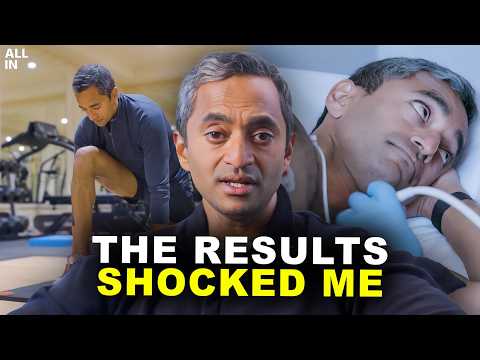
The video documents a high-net-worth individual’s deliberate effort to prevent the fate of his father and a close friend—both of whom died of cardiac disease—by aggressively interrogating his own cardiovascular and systemic health. The narrative frames modern preventive medicine as a proactive, data-driven discipline centered on advanced imaging, lipid management, and early detection rather than waiting for symptoms or events.
He consults with an interventional cardiologist who placed him on statins after detecting early plaque a decade earlier. The video highlights public confusion around statins, including online debates, but the cardiologist emphasizes focusing on data rather than opinions. A CT angiogram reveals a zero calcium score (excellent) while also showing a 370% increase in total non-calcified plaque over 10 years—evidence that he is genetically predisposed to atherosclerosis despite a clean lifestyle and low risk scores. Statin therapy appears to have cut his annual plaque progression from ~24% to ~10%, aligning with larger clinical literature.
Beyond the heart, he undergoes a prenovo full-body MRI, which identifies normal brain perfusion but mild muscle mass loss, reinforcing the importance of maintaining muscle into midlife to protect long-term function. The video explores how AI-enhanced imaging and research-grade hardware can detect early cancers, organ abnormalities, and subclinical disease in thousands of patients.
The ultimate conclusion: there is no finish line. Preventive health is an ongoing process requiring continuous monitoring, early testing, and informed decision-making. He chooses to remain on statins and continue aggressive screening—arguing that proactive intervention beats reactive medicine every time.
BULLET SUMMARY (18 bullets)
Personal motivation driven by father’s unhealthy lifestyle and friend’s sudden cardiac death.
Cardiologist previously initiated statins after identifying early plaque.
Online controversy around statins creates noise; decision should be evidence-based.
Many people avoid testing due to fear of discovering issues.
CT angiogram used to visualize coronary arteries with contrast.
Imaging data fed into ML models for enhanced plaque pattern analysis.
Meanwhile, RFK seems like he will provide a full employment act for cardiologists going forward… Anyone want to create a Polymarket bet that cardiologist billable hours will be going up for the next 3 years?
RFK Jr. says new dietary guidelines coming soon: ‘We’re ending the war on saturated fats’
“We’re ending the war on saturated fats in this country. So, we’re going to publish dietary guidelines that are going to stress the importance of protein and saturated fats. And those will come out, I think, next month. And I think that will really revolutionize the food system in the country, the food culture in this country,” Kennedy said.
Based on this seemingly strong study published 1 month ago, such a change in dietary fats would increase non-HDL-C levels and subsequently increase dementia rates as well:
Dietary fat choice has a large effect on non-HDL-C levels. i.e replacing SFA with PUFA reduces non-HDL-C by a lot.
“Osteoarthritis (OA) is the most common joint disease characterized by joint inflammation and cartilage deterioration. Though disrupted cholesterol metabolism has been implicated in the pathogenesis of OA, the underlying mechanisms remains unclear. Here we demonstrate that increased cholesterol in joint is a crucial activator of the cGAS-STING pathway in cartilage during OA. Subchondral osteocytes, which contact with blood vessel and cartilage, increase their uptake of cholesterol and transfer mitochondria to cartilage to trigger its inflammatory pathway. This process is mediated by increased cytosolic mitochondrial DNA (mtDNA) in chondrocytes, and is further amplified through enhanced mitochondrial transfer between chondrocytes. Mechanistically, we identify a mitochondrial subpopulation in osteocytes that enriched in Nudt8, which act as a key regulator of metabolic-inflammatory crosstalk. Nudt8 alters cholesterol metabolism by degrading coenzyme A, leading to an accumulation of cytosolic mtDNA and subsequent activation of the cGAS-STING pathway in chondrocytes. Pharmacological targeting osteocyte mitochondrial Nudt8 by supplementing pantethine ameliorate inflammation in cartilage and joint pain in OA mice, offering a potential therapeutic strategy for OA.”
They mention in the introduction a couple studies showing population-level associations between hypercholesterolemia and osteoarthritis, but those studies are not great quality IMO. Here is perhaps the best:
Multivariable ordinal logistic regression analysis showed that among the metabolic diseases, only hypercholesterolemia was positively correlated with knee pain in the OA group (OR 1.24; 95% Confidence Interval 1.02–1.52, p = 0.033).
It’s a large population, based out of Korea. But the odds ratio is fairly small, and it only just scrapes statistical significance. I reckon is there was a super strong signal, we’d probably know it by now.
One other tidbit is that people with familial hypercholesterolemia do tend to get joint problems. Though I always understood that was from tendons rather than cartilage.
I also thought it was quite interesting that pantethine supplementation was helpful, given that it is also sometimes used as a mild LLT, which has been discussed on this site in the past.
I found this story extremely surprising, given the guy’s age. I think the take-home message is to be sure to do your own regular cardiovascular risk screening; lipid panel, HbA1c, high-sensitivity CRP, lipoprotein(a), etc.
Influencer Ben Bader’s Cause of Death at Age 25 Revealed as ‘Coronary Atherosclerosis’ in Autopsy Report
Analysis from CGPT5.1:
Ben Bader
What is known: cause of death & contributing factors
Based on the autopsy and reporting, here is a summary of the confirmed details, caveats, and possible contributing elements.
Confirmed cause of death
According to the Palm Beach County Medical Examiner, Ben Bader died of “coronary atherosclerosis due to arteriosclerotic cardiovascular disease”. (People.com)
Body was found unresponsive on 23 October 2025 at the gym in the private community of Admiral’s Cove, Jupiter, Florida. He had apparently just used a treadmill minutes before collapse. (New York Post)
No significant trauma or acute drug toxicity identified. (New York Post)
The examiner noted that genetic factors likely played a role in his early-onset atherosclerosis. (The Sun)
Key contributing/associated items
Age: He was just 25 years old, which is highly unusual for fatal coronary atherosclerosis. (People.com)
Reported recent physical complaints: His mother indicated he had been treated for back and shoulder pain (physical therapy), though reportedly he was otherwise “relatively good health”. (People.com)
Exercise at moment of collapse: Surveillance footage showed him running on treadmill and appearing fine “minutes before” collapse. (People.com)
The reports emphasise that even young people can harbor significant coronary plaque and that early atherosclerosis is increasingly recognised in younger adults. (New York Post)
What we do not know or cannot confirm
Absence of disclosed details on other cardiovascular risk factors (e.g., family history beyond “genetic factors likely”, lipid levels, blood pressure, smoking history, metabolic syndrome, etc.).
While he appeared fit and active, presence of atherosclerosis does not correlate perfectly with visible fitness. The degree of plaque burden or whether acute plaque rupture, thrombosis, or arrhythmia triggered collapse is not publicly detailed.
Putting it into context: why this matters
From a longevity/health-span viewpoint, this case highlights several important lessons:
Young age alone is not protective from advanced coronary artery disease. Autopsies in younger adults increasingly show significant plaque burden.
Atherosclerosis often begins silently decades earlier; visible fitness or apparent health doesn’t guarantee absence of pathology.
Genetic predisposition may accelerate plaque formation—family screening becomes relevant.
In someone presenting with relatively minimal symptoms (back/shoulder pain only) and apparently normal activity, cardiovascular screening may still be warranted if risk factors exist.
Diet & lifestyle speculation (with caveats)
Given his influencer persona (lifestyle + fitness advises), one might infer he engaged in regular exercise and possibly tracked nutrition—but there is no documented account confirming his macro/micronutrient intake, supplementation, or caloric surplus/deficit.
Cardiovascular disease in a 25-year-old implies unusually rapid progression of plaque. Diets high in saturated fats, simple carbohydrates, low in fibre, or with systemic inflammation could accelerate this, but we have no evidence whether he had these exposures.
Chronic subtle inflammation, insulin resistance, dyslipidaemia, hypertension or smoking—all accelerate atherosclerosis—but we have no public data to confirm or deny these in his case.
For applied take-away: in any young adult (especially under 40) engaging in heavy training or visible fitness, obtaining baseline cardiovascular risk screening (lipid panel, HbA1c, high-sensitivity CRP, lipoprotein(a) if family history etc) is prudent.
Summary
Cause of death: coronary atherosclerosis / arteriosclerotic cardiovascular disease, natural death. (People.com)
Contributing factors: extremely early onset—genetic predisposition likely, he was apparently exercising right before collapse, otherwise apparently healthy.
Unknown: Specific diet, detailed biomarkers, lifestyle factors such as smoking, exact plaque burden or mechanism of sudden collapse.
For longevity specialists: This emphasises the stealth of subclinical coronary disease and the importance of early screening, even in apparently healthy young adults.
This is a wild result, and I wonder about the implications. What about people who don’t have more weight to lose, and if other risk factors are controlled? Would some oral GLP-1 agonist weak on weight loss have synergistic or additive effects with other treatments and risk factor control? I.e that it will be normal to take such a drug in addition to other treatments.
I have no idea who this person was, but at 25, it is most likely familial hypercholesterolemia. Very sad, because this death was entirely preventable.
I have the heterozygous form, with one copy of the bad gene. My LDL-C is around 220mg/dl when untreated. A person with homozygous (2 copies) can easily have LDL-C of >400mg/dl.
This is exactly why I tested my kids, and one of them, when aged 6, had an LDL-C of ~150mg/dl. She will start treatment so that she can avoid a fate like this guy.
He probably had a blood test many years ago, and then learned on YouTube that “LDL cholesterol doesn’t matter”. “LMHR”, I’m not sure if it would make a large difference, but it could. If you test high randomly that isn’t recently induced that means you’ve had it for long.
The only way to know what your arteries look like is to have a catheter angiogram. Very few people have this procedure because it is invasive. I had an MI and required 2 stents to open 80 and 90% blockages so now I have a picture of what my arteries look like.
It’s not surprising there are natural factors in everyone that cause atherosclerosis if most people had lower CVD risk in the past. Few had hypertension, obesity, type 2 diabetes, were inactive, modern apoB levels from eating saturated fats from dairy products and domesticated cattle. Nowadays people are loading up for dinner or even three times a day of processed butter, dairy, and fattened up cattle or pigs. The same people even think we falsely believed they were unhealthy!
I haven’t seen much about this lately, but I have a question for those of you who are in the know.
My cardiologist’s office called and they wanted to schedule me for a stress test/echo. There is nothing new going on with me. This is just my ol’ elevated risk due to my high CAC score from a decade ago.
It would be 3k to do the stress test. I’m not inspired to spend 3k when I have no symptoms, but maybe this is the prudent thing to do?
If I’m going to do anything, it makes me want to reconsider getting a CCTA w CLEERLY, an idea I shelved last year.
My two main questions are:
We know that CLEERLY does a better job than a CCTA alone on those who have a high plaque burden. But does it do well enough that it’s worth doing? AI says it’s better but it’s still an issue.
Lastly, what am I missing out by doing the CCTA w/ CLEERLY over the stress test echo. (I did google and it seems CCTA doesn’t look a the strength of your artery wall, but I don’t know how important this is).
Any thoughts would be appreciated.
PS, I’m fully medicated and my ApoB is in the 40s. This is why I scrapped the CCTA idea last year because it seemed it was more for curiosity than for an action plan.
In my experience (with family members) this is useless. Someone in my family had it done and they passed it with flying colors (test/echo) to then have CCTA scan couple weeks later (the one they put die in one’s veins) and his arteries were really clogged (one 65%, one 55%, and another one 30%). so, if I were you, I’d save $3k and opt for CCTA about $400-$500.
Yeah, I’m doing the Cleerly this year… actually next year but soon. Dr. agreed to prescribe the CCTA and Medicare is supposed to cover Cleerly. I just signed up for medicare but haven’t gotten my card yet. I’ll let you know if this works. I’m just guessing but doesn’t it seem like if Medicare covers it then so should insurance? Not all insurance is equal.
3 grand for a stress test is robbery. I pay less than $2000/year and get 4 pretty complete labs/year and one stress test. He throws in a bunch of other crazy tests once a year that I haven’t figured out, and once you hit medicare you get Boston Heart evaluation. But I live in the sticks.
The echocardiogram is really designed to detect heart abnormalities (enlargement, leaky valves, etc) so it is very useful for that. No one is getting it to detect plaque or anything.

 Chinese paper:warning:, but quite interesting.