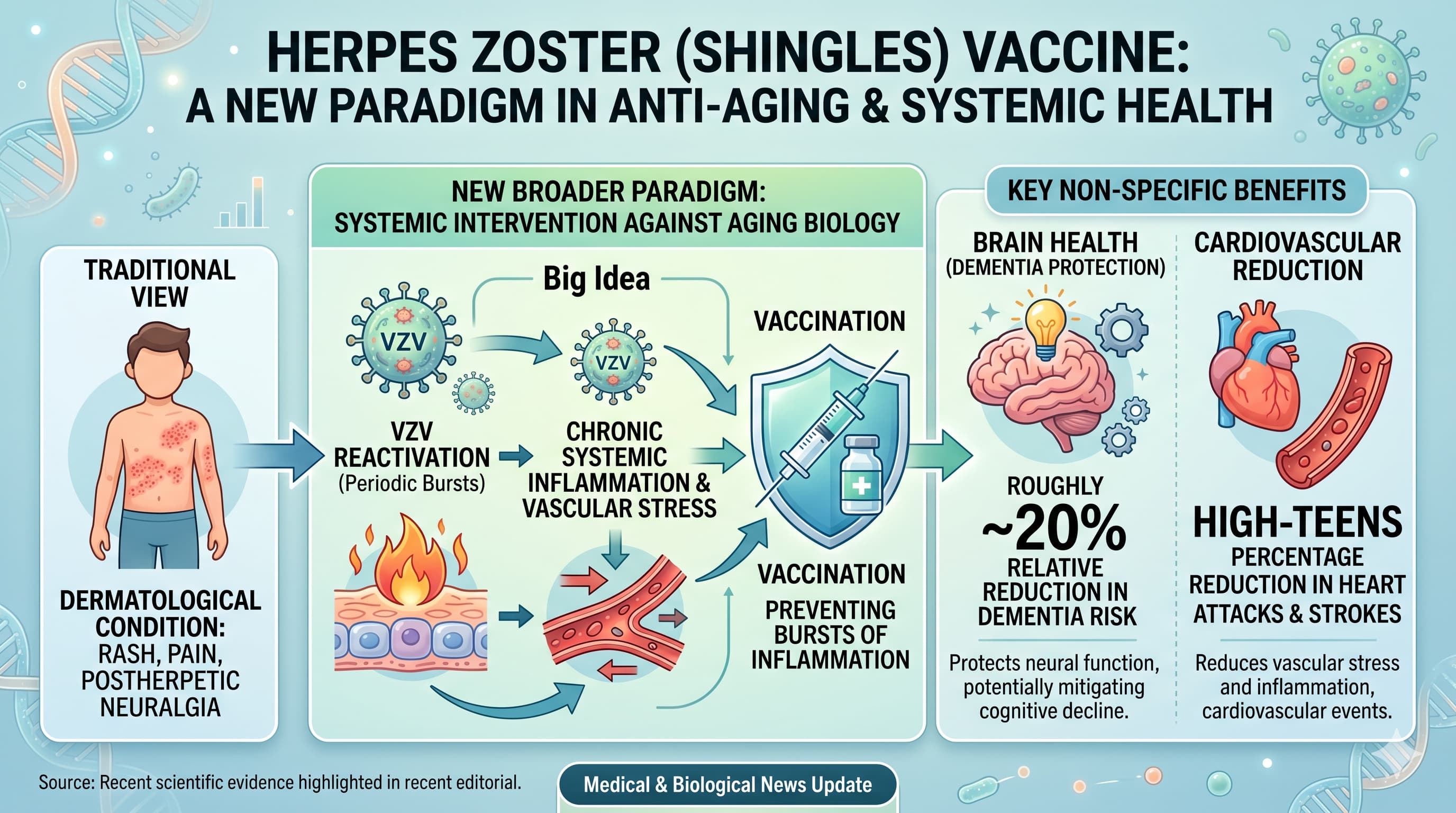
The traditional view of the herpes zoster (shingles) vaccine as a mere preventative measure against a painful dermatological condition is being replaced by a broader paradigm: vaccination as a systematic intervention against aging biology. Recent evidence, highlighted in this editorial, suggests that the vaccine provides significant “non-specific” benefits, most notably a roughly 20% relative reduction in dementia risk and a high-teens percentage reduction in heart attacks and strokes.
The “Big Idea” presented here is that varicella-zoster virus (VZV) reactivation acts as a chronic systemic inflammatory and vascular stressor. By preventing these periodic “bursts” of inflammation, the vaccine may indirectly protect the brain and cardiovascular system. This transition from association to quasi-experimental inference is supported by “natural experiments,” such as birth-date eligibility cutoffs in Wales, which help eliminate the “healthy-user bias” typically found in observational studies.
Crucially, new research by Kim and Crimmins interrogates the biological “middle layer”. Their analysis of adults aged 70+ indicates that shingles vaccination is associated with lower systemic inflammation, slower epigenetic aging, and slower transcriptomic aging. While the vaccine does not appear to directly alter Alzheimer’s-specific biomarkers like amyloid or tau, it likely shifts the “upstream” drivers—such as endothelial dysfunction and neuroinflammatory cascades—that accelerate cognitive and vascular decline.
Actionable Insights
-
Longevity Prioritization: For individuals over age 50 (or those eligible for RZV/Shingrix), the shingles vaccine should be viewed not just as rash prevention, but as a low-risk intervention to lower systemic “inflammaging” and neurovascular risk.
-
Vascular Protection: The vaccine is associated with a statistically significant reduction in myocardial infarction and stroke. This makes it a relevant consideration for those with high cardiovascular risk profiles.
-
Timing of Efficacy: Molecular aging advantages (epigenetic and transcriptomic) appear most pronounced within the first three years post-vaccination, while improvements in innate immunity and inflammation may take several years to manifest.
-
Mechanism Awareness: The lack of association with pTau181 or Aβ42/40 suggests that the cognitive benefits are likely mediated through immune regulation and vascular health rather than direct anti-amyloid pathways.
Source
- Paywalled Paper: From rash to resilience: how herpes zoster vaccination may influence inflammation, aging biology, and dementia risk
- Institution: Saint Camillus University.
- Country: Italy.
- Journal Name: The Journals of Gerontology, Series A: Biological Sciences and Medical Sciences.
- Impact Evaluation: The impact score (JIF) of this journal is approximately 5.1 (2024 data), therefore this is a High impact journal within the specific field of gerontology and aging biology.