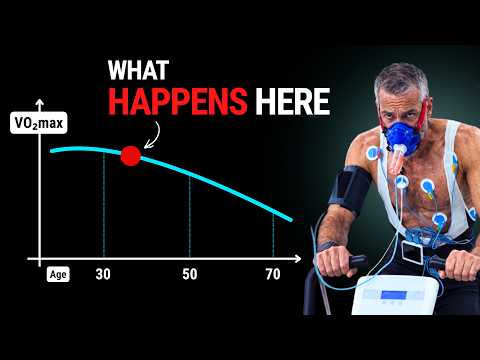
Maximal oxygen uptake (VO2max) is a universally acknowledged biomarker for human longevity and functional capacity. While the age related decline in this metric has historically been attributed primarily to diminished maximal cardiac output, a new multifactorial analysis of human data reveals a different primary limitation. Peripheral resistance to oxygen diffusion and utilization nearly doubles between the ages of 20 and 80. This finding shifts the focus of age related aerobic decline from central cardiovascular pump mechanics to the skeletal muscle and its mitochondrial networks.
The classical physiological paradigm dictates that the progressive drop in VO2max across the human lifespan is driven by cardiovascular decay, specifically a reduction in maximal cardiac output. However, this central limitation model fails to fully account for the observed rate of aerobic decline. Researchers applied a multifactorial model of VO2max limitation to cross sectional data from healthy males spanning six decades of life. The model conceptualizes the oxygen cascade from ambient air to mitochondria as a series of resistances that must be overcome.
The findings indicate that while maximal cardiac output steadily drops with age, the fractional limitation imposed by the cardiovascular system actually decreases from 0.77 at age 30 to 0.56 by age 85. Symmetrically, the fractional limitation imposed by peripheral factors increases from 0.23 to 0.44 over the same period. This peripheral limitation encompasses the progressive failure of skeletal muscle to extract and utilize oxygen.
The data reveal that the maximal oxygen extraction coefficient drops from 0.80 in twenty year olds to 0.60 in octogenarians. This decay is driven by the onset of sarcopenia, the loss of muscle capillarity, and severe mitochondrial dysfunction. Furthermore, mitochondrial synthesis, respiratory capacity, and ATP production rates plummet even in active individuals, creating a metabolic bottleneck.
This analysis strongly suggests that attempting to preserve VO2max exclusively through central cardiovascular conditioning is an incomplete strategy. As age advances, the limiting factor for aerobic capacity shifts significantly toward the periphery. The structural and metabolic degradation of the muscular compartment is equally responsible for the catastrophic loss of aerobic power seen in aging populations.
Actionable Insights
The practical implication of this paper is that maintaining a high VO2max requires distinct, targeted interventions for the peripheral muscle compartment, rather than relying solely on classical cardiovascular endurance training.
By age 70, VO2max decreases by approximately 46 percent relative to age 20. If this decay were solely due to cardiac output decline, the drop would only be 31 percent. The remaining 15 percent deficit is driven by an estimated 100 percent increase in peripheral resistance to oxygen extraction.
To counter this massive peripheral decay, longevity protocols must prioritize interventions that increase capillary density and mitochondrial efficiency. This necessitates rigorous resistance training to combat sarcopenia, alongside high intensity interval training (HIIT) to stimulate mitochondrial biogenesis. Central adaptations generated by steady state cardio are insufficient if the skeletal muscle cannot successfully extract the delivered oxygen.
Context/Source
- Paywalled Paper: Cardiovascular and peripheral factors affecting the decay of maximal oxygen uptake across the spectrum of age in humans.
- Institution: University of Milano, University of Brescia, University of Udine, University of Verona.
- Country: Italy.
- Journal: European Journal of Applied Physiology.
- Impact Evaluation: The impact score of this journal is roughly 2.8, evaluated against a typical high-end range of 0 to 60+ for top general science, therefore this is a Medium impact journal.