15-PGDH: The "Gerozyme" Switch: Restoring Youth by Blocking the Drain

A new paradigm in longevity science has emerged from the lab of Dr. Helen Blau at Stanford: the identification of “gerozymes”—enzymes that actively degrade youth-preserving molecules as we age. This review consolidates a series of breakthrough findings centered on one specific culprit: 15-prostaglandin dehydrogenase (15-PGDH).

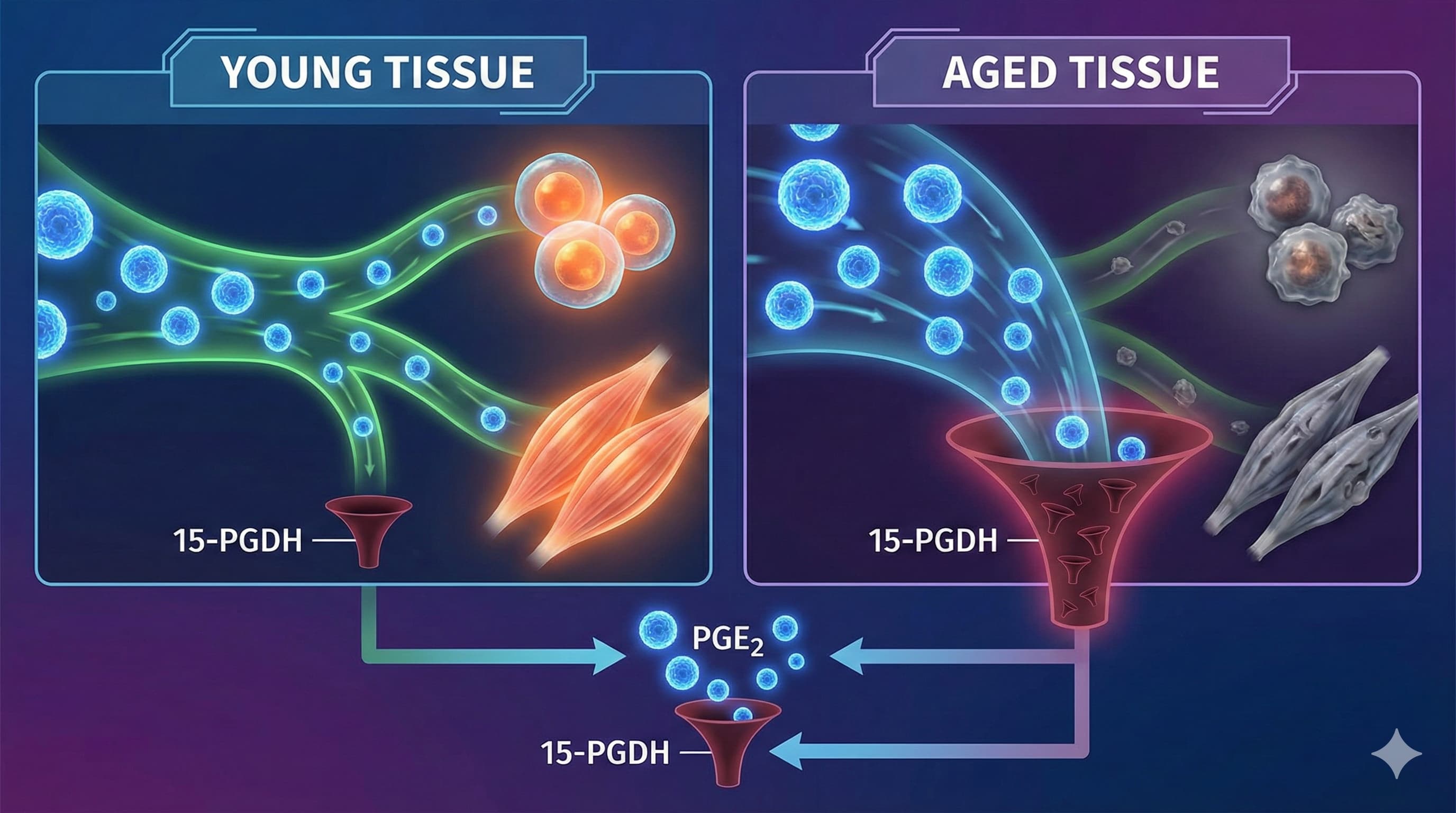
The “Big Idea” is that aging is not just a failure of production, but an acceleration of destruction. 15-PGDH acts as a metabolic drain, aggressively breaking down Prostaglandin E2 (PGE2), a critical signaling molecule essential for stem cell function, muscle repair, and mitochondrial health. In young tissues, 15-PGDH levels are low, allowing PGE2 to orchestrate repair. In aged tissues (muscle, brain, cartilage), 15-PGDH levels skyrocket, depleting PGE2 and locking cells into a senescent, dysfunctional state.

Blocking this enzyme with a small molecule (SW033291 or the clinical candidate MF-300) achieves systemic rejuvenation. The intervention restores withered muscle mass and strength Inhibition of 15-PGDH rejuvenates aged muscle (2021), tightens the leaking blood-brain barrier to improve cognition Inhibiting 15-PGDH blocks blood–brain barrier deterioration (2025), and—in a breakthrough late-2025 finding—regenerates hyaline cartilage in osteoarthritic joints Inhibition of 15-PGDH promotes cartilage regeneration (2025). This is not just slowing decline; it is the functional reversal of sarcopenia, neurovascular breakdown, and osteoarthritis by “plugging the drain” on the body’s own repair signals.

Source:

  • Open Access Narrative Review Paper: From Cell Reprogramming to Tissue Rejuvenation: Countering Aging by Targeting a Gerozyme
  • Date: Volume 66, 2026
  • Institution: Stanford University School of Medicine (USA) Journal: Annual Review of Pharmacology and Toxicology Impact Evaluation: The impact score of this journal is 13.1 (2024), evaluated against a typical high-end range of 0–60+ for top general science; therefore, this is a High impact journal (ranking within the top tier of the Pharmacology & Toxicology category).

Related Reading:

5 Likes

Part 2: The Biohacker Analysis

Study Design Specifications

  • Type: Review Article summarizing multiple In vivo (Murine) and In vitro (Human Ex Vivo) primary studies.
  • Subjects:
    • Species: Mice (Mus musculus).
    • Strain: C57BL/6 (Standard wild-type background).
    • Age Groups: Young (2–4 months) vs. Aged (24 months). Note: 24 months is widely accepted as “old” but not “geriatric.”
    • Human Data: Ex vivo analysis of human muscle myotubes and osteoarthritic cartilage samples.
  • Lifespan Analysis:
    • Findings: The primary papers reviewed here (Science 2021, Science 2026) focused on Healthspan (grip strength, treadmill endurance, cartilage thickness) rather than maximum lifespan extension.
    • Control Verification: The “900-Day Rule” (Pabis et al., 2023) warns that interventions often look successful only because control groups die prematurely (<800 days). The C57BL/6 controls in Blau’s studies were healthy at 24 months (~730 days). While not a full longevity study, the healthspan data is robust because the treatment reversed established frailty rather than just delaying death. It is crucial to note that 15-PGDH knockout mice are reported to live a “normal lifespan,” suggesting this pathway compresses morbidity rather than extending maximum life 15-PGDH inhibitors for tissue repair (2017).

Mechanistic Deep Dive

  • The Pathway: PGE2 / EP4 Receptor Axis.
    • Young State: High PGE2 → Binds EP4 Receptor → cAMP/CREB signaling → Mitochondrial biogenesis (via PGC1 alpha) + TGF-β suppression.
    • Aged State: High 15-PGDH → Low PGE2 → Mitochondrial dysfunction + TGF-β fibrosis.
  • Organ Priorities:
    1. Skeletal Muscle: Reverses sarcopenia by restoring mitochondrial geometry and function.
    2. Joints: Promotes hyaline cartilage regeneration (the “good” cartilage) over fibrocartilage (scar tissue).
    3. Brain: Tightens the Blood-Brain Barrier (BBB) and reduces neuroinflammation, independent of amyloid plaques.

Novelty

The paper flips the script on inflammation. Biohackers typically view Prostaglandin E2 (PGE2) as “bad” (pro-inflammatory, pain-causing) and use NSAIDs to block it. This research proves that physiological levels of PGE2 are mandatory for regeneration. The problem in aging is too little PGE2 in local stem cell niches, not too much. It introduces “Gerozymes” as a new target class: enzymes that are upregulated with age and must be inhibited (unlike sirtuins, which we try to activate).

Critical Limitations

  • The “NSAID Paradox”: The intervention increases PGE2. Chronic high PGE2 is a known driver of pain and, critically, tumorigenesis (colon cancer). The study claims safety, but long-term systemic elevation of PGE2 in humans carries a theoretical cancer risk that short-term mouse studies may miss.
  • Translational Gap: Mice have different metabolic rates and prostaglandin handling than humans. The “rejuvenation” seen in mice is rapid (1 month); human repair cycles are slower.
  • Route of Administration: The mouse studies often use intraperitoneal (IP) injection. Oral bioavailability of second-generation inhibitors (MF-300) is claimed but data is proprietary.

Part 3: Claims & Evidence Hierarchy

1. Claim: Inhibition of 15-PGDH rejuvenates aged muscle mass and strength.

2. Claim: 15-PGDH inhibition regenerates hyaline cartilage in osteoarthritic joints.

3. Claim: 15-PGDH inhibition protects the Blood-Brain Barrier (BBB) and cognitive function.

4. Claim: The molecule is safe and non-toxic at therapeutic doses.

  • Hierarchy: Level B (Phase 1 Clinical Trial)
  • Verification: Phase 1 trial of MF-300 (Epirium Bio) in healthy volunteers showed safety. Epirium Bio Phase 1 Results (2025)
  • Note: “Safe” means lack of acute toxicity (NOAEL), not long-term cancer safety.

Part 4: Actionable Intelligence

The Translational Protocol (Rigorous Extrapolation)

  • Compound: SW033291 (Research Chemical) or MF-300 (Clinical Candidate - Epirium Bio).
  • Human Equivalent Dose (HED):
    • Mouse Efficacious Dose: 10 mg/kg (daily, IP/Oral).
    • Conversion Factor: Mouse Km​ (3) / Human Km​ (37) ≈ 0.081.
    • Calculation: 10 mg/kg×0.081=0.81 mg/kg.
    • For a 75kg Male: ≈60 mg daily.
    • Warning: The specific potency of MF-300 may differ from SW033291 by orders of magnitude (SW033291 Ki​=0.1 nM). This is a theoretical starting point for calculation, not a prescription.
  • Pharmacokinetics (PK/PD):
    • Half-life: Short (requiring daily dosing).
    • Mechanism: Reversible inhibition.
    • Toxicity Signals: Monitor for GI ulceration (excess PGE2 mimics NSAID-withdrawal rebound) and Clubbing of fingers (hyper-PGE2 phenotype, though rare).
  • Biomarker Verification Panel:
    • Primary Target Engagement: Urinary PGE-M (PGE2 metabolite). Expect a decrease in PGE-M and increase in serum PGE2.
    • Efficacy Markers:
      • Muscle: Grip strength (dynamometer), DEXA scan (lean mass), Serum Creatine Kinase (low levels indicate reduced damage).
      • Inflammation: hs-CRP (Must monitor closely; if CRP spikes, the “pro-inflammatory” side of PGE2 is dominating).
  • Feasibility & ROI:
    • Sourcing: SW033291 is available as a research chemical (~$100–300/mg). NOT FOR HUMAN USE.
    • Cost/Effect: High cost currently. If approved, likely priced as a premium sarcopenia/osteoarthritis drug.
    • Contraindications: History of Colon Cancer (PGE2 promotes polyp growth), Chronic Inflammation(Rheumatoid Arthritis - might exacerbate pain), Use of NSAIDs (Advil/Aspirin will directly antagonize the effect).

Part 5: The Strategic FAQ

1. “Wait, isn’t Prostaglandin E2 (PGE2) inflammatory? Why would I want to INCREASE it?”

Answer: [Confidence: High] Context is everything. High chronic PGE2 drives inflammation and pain (which is why we take Aspirin). However, acute pulses of PGE2 are strictly required for stem cell activation and tissue repair. In aged tissues, PGE2 is so low that repair never starts. This therapy aims to restore youthful physiological levels, not induce pathological excess.

2. “Will this protocol cancel out my daily Aspirin or Ibuprofen?”

Answer: [Confidence: High] Yes, and vice versa. NSAIDs (COX inhibitors) stop the production of PGE2. This drug stops the destruction of PGE2. If you take NSAIDs, you are turning off the tap; inhibiting 15-PGDH blocks the drain. If the tap is off, blocking the drain does nothing. You cannot combine this protocol with chronic NSAID use.

3. “Does increasing PGE2 raise my risk of cancer, specifically colon cancer?”

Answer: [Confidence: Medium] This is the biggest safety red flag. High levels of 15-PGDH are actually protectiveagainst colon cancer (because they degrade tumor-promoting PGE2). Inhibiting 15-PGDH could theoretically accelerate polyp growth in predisposed individuals. Safety Data Absent for long-term cancer risk in humans. Avoid if you have polyps or family history.

4. “How does this compare to Rapamycin?”

Answer: [Confidence: High] They are complementary opposites. Rapamycin (mTOR inhibitor) mimics a “low energy” state to induce autophagy and cleanup. 15-PGDH inhibitors mimic a “repair/growth” signal. You likely wouldn’t take them simultaneously. A pulsed protocol (e.g., Rapamycin for cleanup, then 15-PGDH inhibitor for regrowth) is a plausible biohacker strategy.

5. “Is this just ‘localized’ for muscle, or does it rejuvenate the whole body?”

Answer: [Confidence: Medium] The mouse data shows systemic effects from systemic dosing (IP injection). Benefits were seen in muscle, liver, bone marrow, and brain. However, PGE2 has short half-life, so effects might be strongest in tissues with high turnover or active injury.

6. “Can I buy SW033291 now?”

Answer: [Confidence: High] Only as a research chemical (unregulated, untested for purity). Epirium Bio (the license holder) is moving MF-300 into Phase 2 trials. It is not FDA approved.

7. “Does it extend maximum lifespan?”

Answer: [Confidence: High] No evidence yet. The 15-PGDH knockout mice live a “normal” lifespan, not an extended one. This is a morbidity compression tool (staying strong until the end), not a life-extension drug like Rapamycin might be.

8. “What happens if I stop taking it? Is there a rebound?”

Answer: [Confidence: Low] Unknown. Theoretically, 15-PGDH levels would rise again, and PGE2 would drop, returning you to the “aged” slow-repair state. It does not appear to create dependency, but the benefits are likely dependent on continued (or pulsed) use.

9. “Does it work for skin aging?”

Answer: [Confidence: Medium] Likely. PGE2 is involved in wound healing and collagen synthesis. While the paper focuses on muscle/joints, the mechanism suggests potential for skin thickening and repair, though topical delivery challenges exist.

10. “Is this better than Stem Cell therapy?”

Answer: [Confidence: Medium] It might be more practical. Stem cell therapy is expensive, invasive, and often fails because the “old host” environment kills the new cells. This drug fixes the environment (the “niche”), making your ownendogenous stem cells work again. It’s “endogenous stem cell therapy” in a pill.

2 Likes

Collagen type I production decreases with aging, leading to wrinkles and impaired skin function. Prostaglandin E2 (PGE2), a lipid-derived signaling molecule produced from arachidonic acid by cyclo-oxygenase, inhibits collagen production, and induces matrix metallopeptidase 1 (MMP1) expression by fibroblasts in vitro. PGE2-induced collagen expression inhibition and MMP1 promotion are aging mechanisms. This study investigated the role of E-prostanoid 1 (EP1) in PGE2 signaling in normal human dermal fibroblasts (NHDFs). When EP1 expression was inhibited by EP1 small interfering RNA (siRNA), there were no significant changes in messenger RNA (mRNA) levels of collagen, type I, alpha 1 (COL1A1)/MMP1 between siRNA-transfected NHDFs and siRNA-transfected NHDFs with PGE2. This result showed that EP1 is a PGE2 receptor. Extracellular signal-regulated kinase 1/2 (ERK1/2) phosphorylation after PGE2 treatment significantly increased by ~2.5 times. In addition, PGE2 treatment increased the intracellular Ca2+ concentration in NHDFs. These results indicated that PGE2 is directly associated with EP1 pathway-regulated ERK1/2 and inositol trisphosphate (IP3) signaling in NHDFs.

2 Likes

A new preprint out of the Stanford team working on this “gerozyme”.

Rebuilding Old Muscle: A Gerozyme Brake on Strength, and the Drug That Releases It

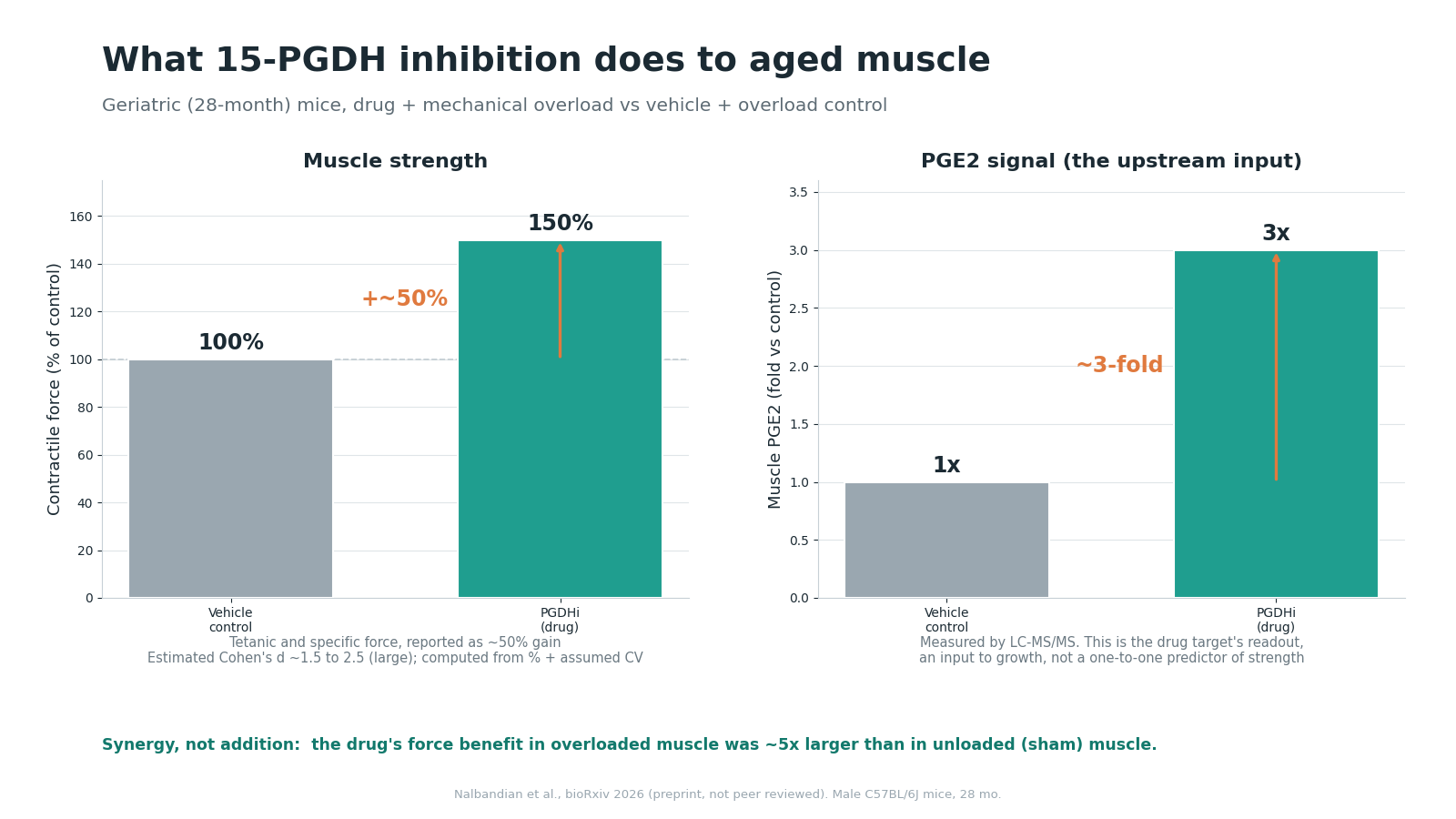
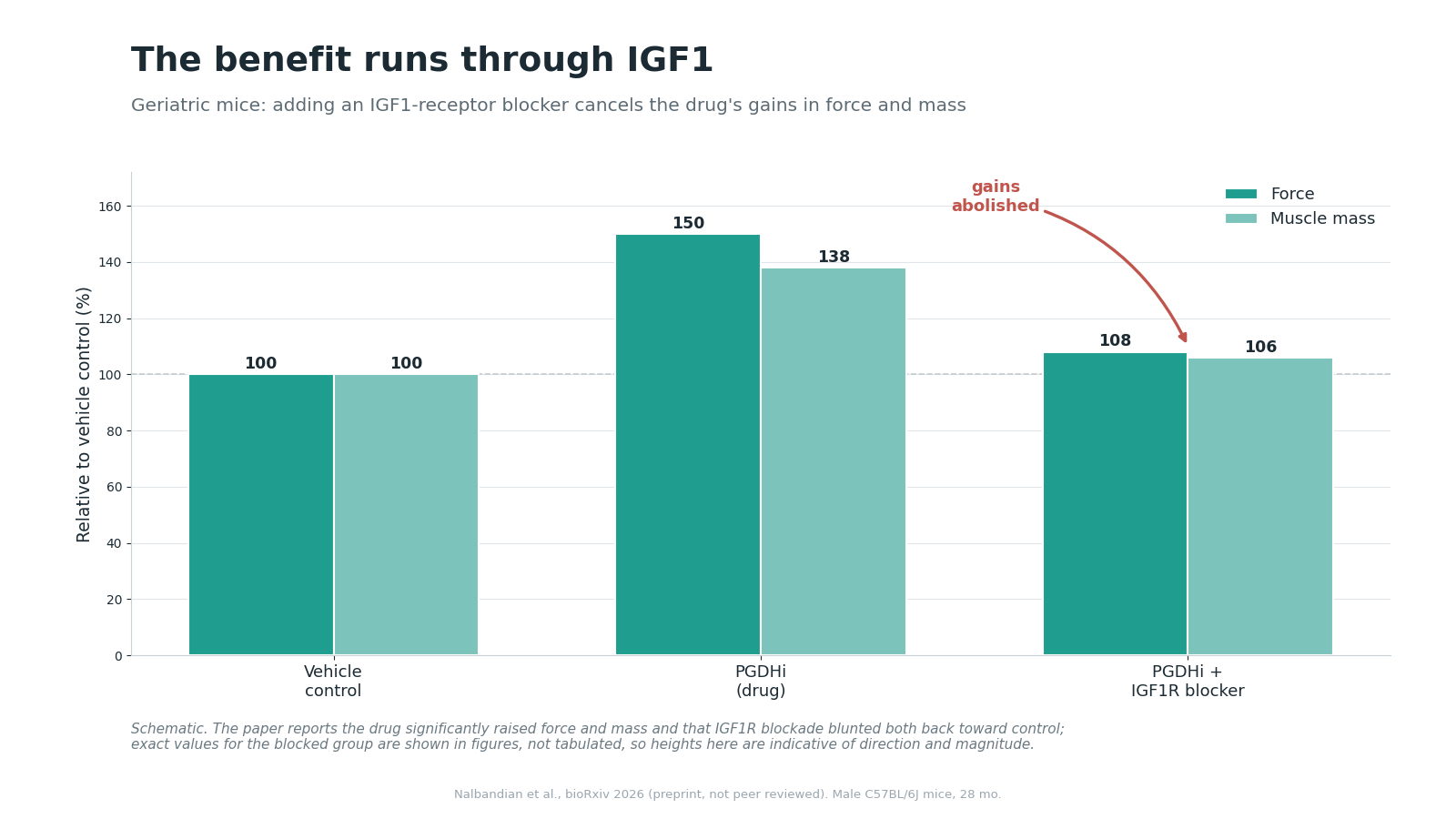
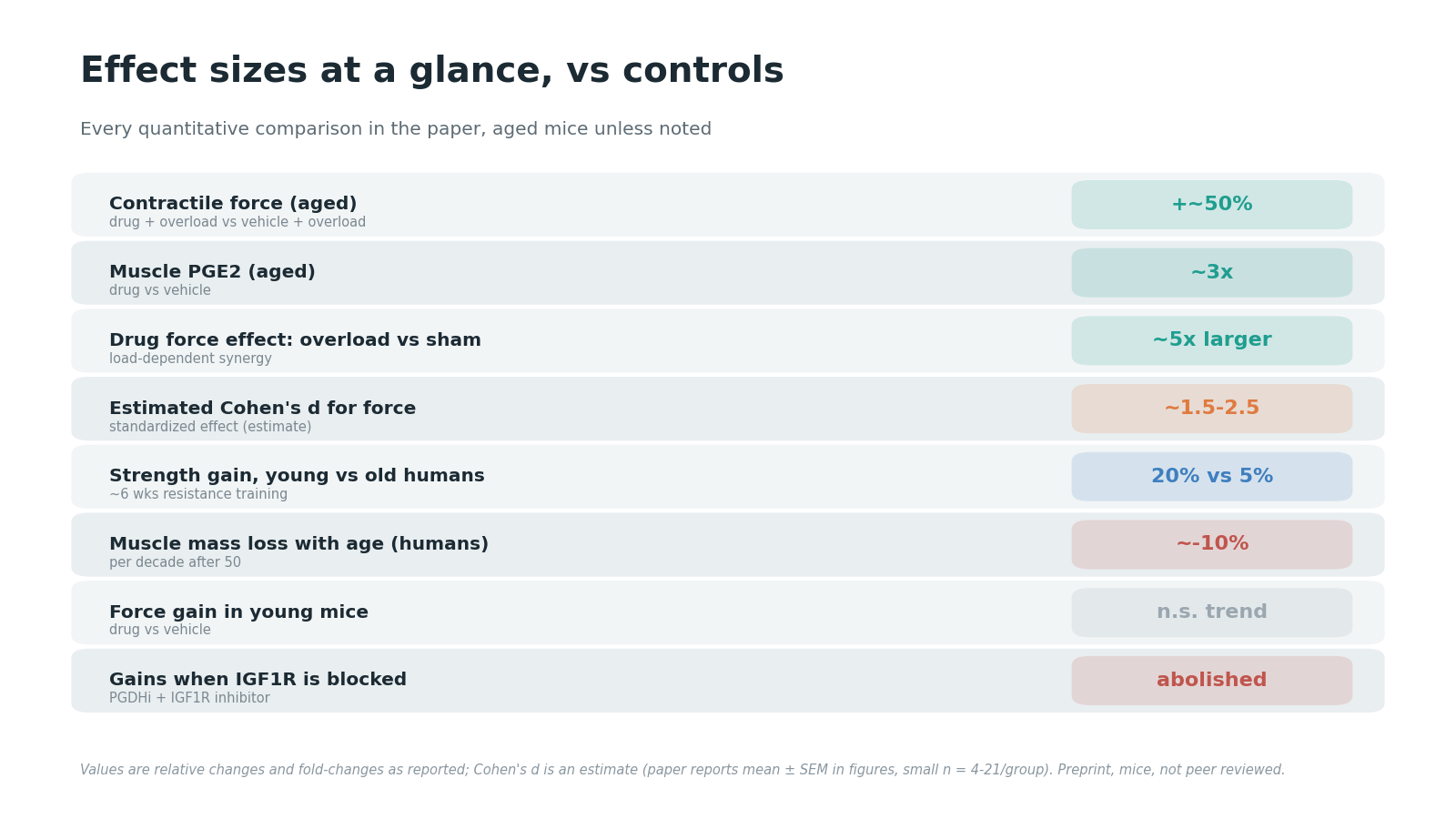
Aged muscle largely stops responding to the mechanical stress of resistance exercise, a problem called anabolic resistance. A Stanford team shows that a single enzyme that rises with age, 15-PGDH, is a major cause. This enzyme destroys prostaglandin E2 (PGE2), a local signaling lipid that muscle needs to grow. Blocking the enzyme with a small molecule (SW033291) in 28-month-old mice roughly tripled muscle PGE2, and when combined with an overload stimulus it restored muscle growth and increased contractile force by about 50 percent versus untreated controls. The drug worked by switching on an IGF1-driven communication circuit between muscle fibers and their neighboring cells. Blocking the IGF1 receptor erased the benefit, confirming the mechanism.

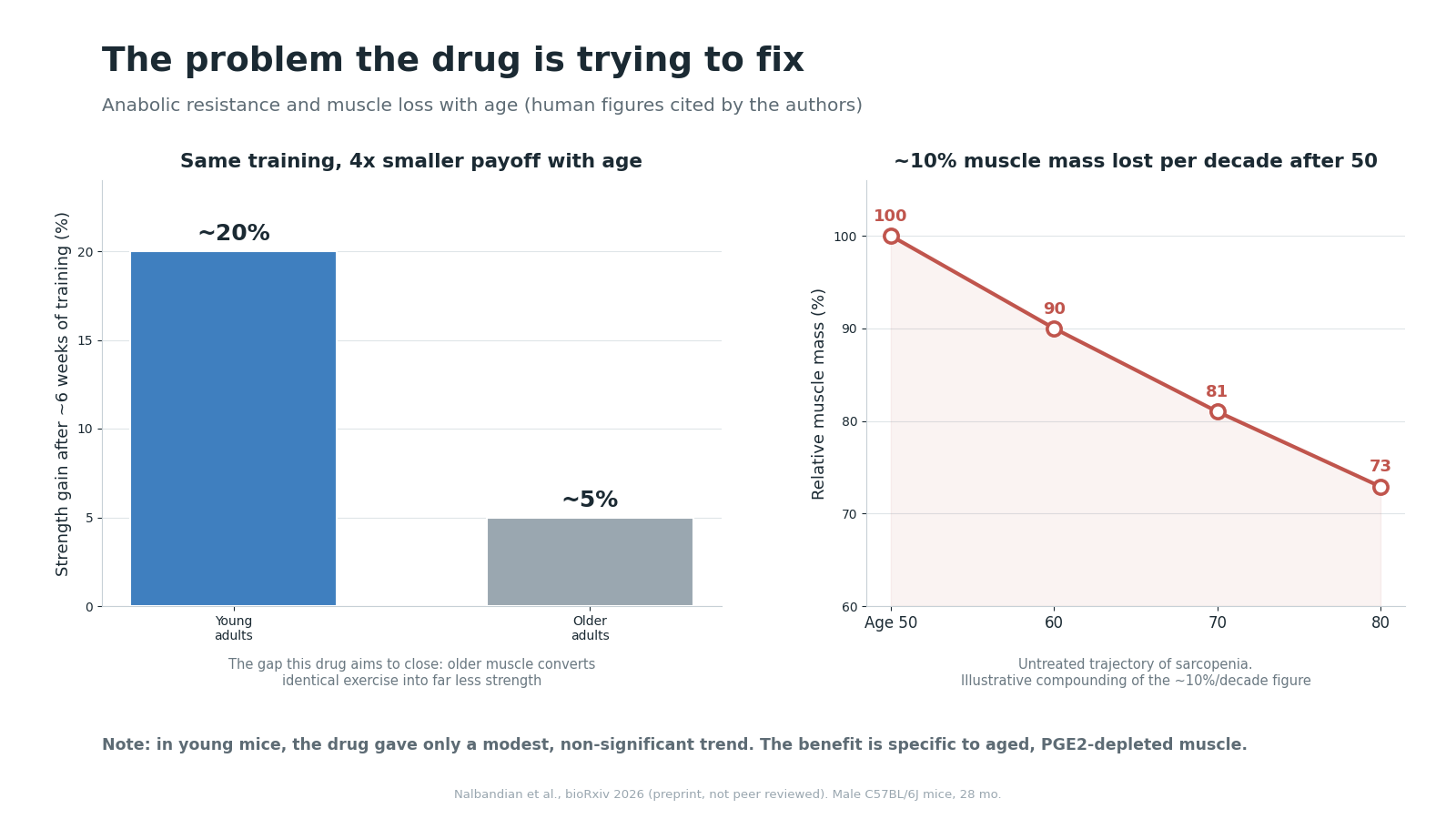
For anyone who has watched an older relative lose the ability to rise from a chair, the biology behind it is frustratingly stubborn. Younger people who lift weights for six weeks typically gain around 20 percent in strength. Older people doing the identical program often gain only about 5 percent. Muscle in later life simply stops listening to the signals that tell it to grow, a phenomenon researchers call anabolic resistance. Until now there has been no approved drug that fixes it.

A new preprint from Helen Blau’s laboratory at Stanford points to a specific molecular culprit and, more interestingly, a way around it. The team focused on prostaglandin E2, or PGE2, a short-lived signaling molecule that muscle releases when it is worked hard. PGE2 helps orchestrate repair and growth. The problem is an enzyme called 15-PGDH, which breaks PGE2 down. This enzyme accumulates with age across many tissues, and the group had previously flagged it as a hallmark of aging. In old muscle, the researchers found a double failure: the tissue makes less PGE2 to begin with, and it degrades what little it makes faster.

The experiment tested whether tipping that balance back could restore youthful growth. Using 28-month-old mice, roughly equivalent to humans in their late seventies to eighties, the team surgically overloaded a small calf muscle to mimic resistance training, then gave a daily injection of SW033291, a drug that blocks 15-PGDH. The intervention raised muscle PGE2 about threefold. On its own this did little. Combined with the overload stimulus, it produced roughly a 50 percent increase in muscle force compared with untreated overloaded muscle, along with larger fibers and more muscle stem cell activity. The authors describe the drug as an exercise amplifier rather than a replacement for exercise, because the two together produced far more than either alone.

Digging into the mechanism, the team sequenced about 200,000 individual cell nuclei and traced the signal. PGE2 prompted a specific class of fast-twitch fibers, the type IIb fibers, to pump out IGF1, a well known growth factor, which then signaled outward to stem cells, blood vessel cells, connective tissue, and immune cells to coordinate growth. When they blocked the IGF1 receptor, the drug stopped working. That closes the logical loop and identifies a druggable target. The caveats are substantial, and the work is a non-peer-reviewed preprint in mice, but the direction is promising.

Actionable Insights

The single practical message is old but reinforced here: keep doing resistance training into old age, because the drug in this study does nothing without a mechanical stimulus to amplify. Nutrition and loading remain the foundation.

On effect sizes, it helps to translate the numbers. In this study the drug plus overload raised muscle force by about 50 percent relative to overload alone. To picture the scale of the underlying aging problem, recall the human baseline the authors cite: young trainees gain roughly 20 percent strength over six weeks of lifting while older trainees gain about 5 percent, a fourfold gap. An intervention that closes a meaningful fraction of that gap would be clinically important. The drug also tripled the local level of PGE2, the growth signal, though a threefold change in a signaling molecule does not translate one to one into a threefold change in strength.

The honest take home is that this is a mouse study of a molecule you cannot yet buy. SW033291 is a research compound, not a supplement or approved medicine. There is no human dosing, no safety data in people, and no long term data here. The durable, evidence backed action remains progressive resistance training plus adequate protein, with this paper offering reason for optimism that a future pill could make that training work better in old age.

Context and Source
2 Likes

I was curious about the eariler study that used in-vivo data (Kristiansen et al) to suggest that IGF1 was preserved in old muscle, and thus that anabolic resitance was coming from something in the environment ( blunted JNK to SMAD2 sensitivy): Why Old Muscle Still Hears the Growth Signal but Goes Deaf to the Repair Signal

AI says:

2 Likes