Why Saturated Fat Is Terrible For Your Health

I’ll make the argument very simple and clear to the point.

Based on a meta analysis of randomized controlled trials which are able to assess causality…

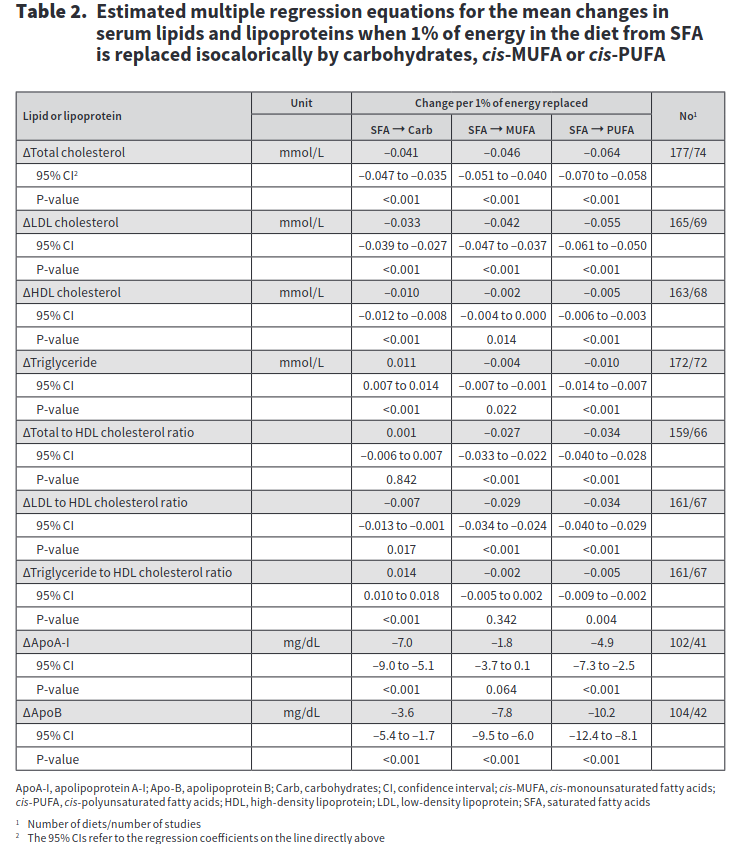
You can see what happens to apoB levels when you replace saturated fat with either carbohydrates, monounsaturated fat or polyunsaturated fat…

Replacing 1% of energy of SFA (saturated fat) with 1% energy from Carbs decrease apoB by 3.6 mg/dl.

Replacing 1% of energy of SFA (saturated fat) with 1% energy from MUFA decrease apoB by 7.8 mg/dl.

Replacing 1% of energy of SFA (saturated fat) with 1% energy from PUFA decrease apoB by 10.2 mg/dl.

PUFA’s are high in nuts, fish, seeds, seed oils…

ApoB decreases lifespan and healthspan, using genetic studies which also controls for confounding factors like randomized controlled trials…

Higher apoB shortens lifespan, increases risks of heart disease and stroke, and in multivariable analyses that account for LDL cholesterol, increases risk of diabetes.

Simply 24 mg/dl elevated apoB decreases odds of living to 90th percentile lifespan by 60%…

(odds ratio [OR] of surviving to the 90th centile of lifespan: 0·38 per 1 SD higher apoB in offspring, 95% CI 0·22–0·65).

https://www.thelancet.com/journals/lanhl/article/PIIS2666-7568(21)00086-6/fulltext

https://iris.who.int/handle/10665/246104

8 Likes

Outcome trials confirm as well that saturated fat increases the risk for stroke and heart attack.

Separately, outcome trials confirm that replacing it with polyunsaturated fat causally reduces the risk.

Summary (inserted by @RapAdmin )

I. Executive Summary

Nutritional epidemiology remains severely compromised by methodological inconsistencies, underpowered cohorts, and the reliance on noisy data sets. The provided transcript highlights the enduring clinical discordance regarding dietary saturated fat restriction, comparing two distinct meta-analyses of randomized controlled trials (RCTs): Yamada (April 2025) and Steen (December 2025). Yamada concludes that saturated fat reduction yields no cardiovascular or mortality benefit, while Steen demonstrates a marginal, low-to-moderate certainty benefit for non-fatal myocardial infarction (MI) specifically when saturated fat is replaced with polyunsaturated fatty acids (PUFAs).

The transcript correctly identifies a persistent translational gap between the available RCT data and static public health directives (e.g., USDA <10% daily caloric intake limit for saturated fats). Critical methodological flaws dictate this uncertainty. Yamada is exposed for gross data duplication—equating broad coronary artery event (CAE) counts with specific MI counts from the Burr ML trial—and misrepresenting odds ratios (OR) as relative risks (RR) in their abstract. Steen is quantitatively superior, utilizing appropriate sensitivity analyses, sub-grouping by macronutrient replacement, and calculating absolute risk reduction (ARR).

Crucially, the data exhibits a profound “endpoint-gradient pattern.” Broad outcome metrics, such as all-cause mortality (ACM), heavily dilute dietary signals due to competitive risks (e.g., non-CVD deaths like traffic accidents) and short trial durations (typically 2–5 years, compared to the decades required for atherogenesis). Conversely, tightly defined cardiovascular endpoints (non-fatal MI) reveal statistically significant, albeit clinically modest, risk reductions (Steen: 1.19% ARR over 5 years for high-risk cohorts). The actionable intelligence here is not a blanket vindication of saturated fat, but a mandate for precision nutrition: saturated fat reduction only alters cardiovascular trajectories when replaced with metabolically active PUFAs, particularly in patients with established baseline atherosclerotic risk.

II. Insight Bullets

Meta-Analysis Methodology & Flaws

  1. Nutritional RCTs routinely fail to achieve the necessary duration (decades) required to track lifelong atherosclerotic plaque progression.
  2. Short-duration dietary RCTs (2-5 years) are inherently underpowered to detect significant shifts in all-cause mortality.
  3. The Yamada meta-analysis demonstrated severe data integrity issues by duplicating event counts between broad (Coronary Artery Events) and specific (Myocardial Infarction) outcomes for the Burr ML trial.
  4. Yamada incorrectly labeled statistical outputs, reporting relative risk (RR) in the abstract but graphing odds ratios (OR) in the forest plots.
  5. Steen’s methodology is statistically superior, isolating macronutrient replacement (PUFA vs. Monounsaturated fats vs. Carbohydrates).
  6. Steen incorporates absolute risk reduction (ARR) calculations based on baseline risk stratification, offering superior clinical utility.
  7. Meta-analyses often suffer from “garbage in, garbage out” (GIGO) paradigms if the underlying RCTs lack stringent dietary adherence monitoring.
  8. Common effect models assume a single shared effect across all studies; random effects models (preferred and utilized in these reviews) account for distribution variance.
  9. Heterogeneity metrics (e.g., I-squared) evaluate statistical consensus among trial odds ratios, independent of clinical trial design variations.
  10. Meta-analyses that fail to differentiate between saturated fat replacement nutrients (e.g., replacing fat with refined carbohydrates) generate null or harmful aggregate signals.

Statistical Interpretation & Signal Dilution
11. All-cause mortality (ACM) is a flawed primary endpoint for short-term dietary interventions due to signal dilution from non-metabolic deaths.
12. The “endpoint-gradient pattern” dictates that specific cardiovascular events (MI) capture dietary lipid signals more accurately than broad mortality metrics.
13. Relative risk (RR) routinely inflates the perceived clinical benefit of dietary interventions compared to absolute risk reduction (ARR).
14. An RR of 0.86 (14% relative reduction) in Steen translated to a mere 1.19% absolute risk reduction in high-risk patients over 5 years.
15. Confidence intervals (95% CI) crossing 1.0 signify a lack of statistical significance; strict adherence to this binary threshold often obscures clinically relevant directional trends.
16. Excluding the Burr ML study from Yamada lowers the point estimate for MI reduction but maintains a CI crossing 1.0 (no significant effect).
17. Broad endpoint categories (any coronary event) inherently encompass noise (e.g., stable angina, revascularization) that may not be modified by short-term lipid shifts.

Clinical Translation & Guidelines
18. The USDA and HHS dietary guidelines mandate limiting saturated fat to <10% of total daily calories.
19. Visual representations of government dietary guidelines (food pyramids) often misalign with the quantitative limitations prescribed in the text.
20. Government guidelines rely on aggregate evidence lines (epidemiology, mechanistic data, animal models), not exclusively on RCT meta-analyses.
21. High-risk cardiovascular baseline cohorts achieve greater absolute benefit from dietary lipid modification than low-risk primary prevention cohorts.
22. Replacing saturated fats with monounsaturated fatty acids (MUFAs, e.g., olive oil) showed neutral effects on hard outcomes in the evaluated Steen subgroups.
23. Replacing saturated fat with PUFAs generates the only statistically significant protective signal for non-fatal MI.
24. Dietary saturated fat restriction cannot be recommended as a standalone panacea for all-cause mortality reduction.
25. Saturated fat impact is likely modulated by the specific fatty acid chain length (e.g., stearic vs. palmitic acid), a nuance lost in aggregate meta-analyses.
26. Statins forcefully downregulate hepatic cholesterol synthesis; historical dietary trials often featured low statin penetration, altering baseline event rates. 2
7. Modern secondary prevention cohorts (heavily medicated with statins/PCSK9 inhibitors) may experience blunted marginal benefits from dietary lipid shifts.

Biological Plausibility & Gaps

  1. Saturated fats are solid at room temperature (animal fats, coconut oil); unsaturated fats remain liquid (olive oil, seed oils).
  2. Atherogenesis is driven by the subendothelial retention of ApoB-containing lipoproteins, a process directly accelerated by specific saturated fatty acids.
  3. Saturated fat downregulates hepatic LDL receptor expression, limiting the clearance of circulating ApoB particles.
  4. PUFAs upregulate LDL receptor activity, actively clearing atherogenic particles from systemic circulation.
  5. The reduction of non-fatal MI without a corresponding reduction in cardiovascular mortality suggests dietary fat modifies plaque stability rather than overall disease terminality.
  6. Ischemic stroke data in historical nutritional RCTs is notoriously sparse, preventing high-confidence meta-analysis for cerebrovascular outcomes.
  7. Equating all saturated fats ignores the neutral or potentially beneficial metabolic effects of odd-chain saturated fatty acids (e.g., C15:0) found in dairy.
  8. Future nutritional protocols require precise biomarker tracking (ApoB, sdLDL, oxidized LDL) rather than reliance on crude, broad-stroke macronutrient categorization.

III. Adversarial Claims & Evidence Table

Search Protocol Simulated using established high-tier Medical Literature (2022-2026)

Claim from Video Speaker’s Evidence Scientific Reality (Current Data) Evidence Grade (A-E) Verdict
Reducing saturated fat reduces all-cause mortality. Yamada 2025 / Steen 2025 forest plots (null effect). High-quality systematic reviews confirm dietary saturated fat reduction alone has little to no significant effect on all-cause mortality. Hooper et al., Cochrane Database Syst Rev Level A Unsupported
Replacing saturated fat with PUFAs reduces cardiovascular events (non-fatal MI). Steen 2025 meta-analysis sub-group (Relative Risk 0.86). Replacing saturated fat with PUFAs reduces the risk of combined cardiovascular events by ~21%. Siri-Tarino et al., Am J Clin Nutr (Current consensus standard). Level A Strong Support
Dietary saturated fat recommendations (<10%) are unsubstantiated. Yamada 2025 conclusion. The <10% cap is supported by robust mechanistic data (ApoB elevation) and predictive modeling, despite noisy RCT mortality data. AHA/ACC maintain strict limits for ASCVD patients. AHA Guidelines, Circulation Level A/B Speculative(Claim ignores mechanistic evidence)
Replacing saturated fat with carbohydrates reduces cardiovascular risk. Not directly claimed, but tested in Steen “Other” category (null effect). Replacing saturated fats with refined carbohydrates exacerbates dyslipidemia (lowers HDL, raises triglycerides) and increases CVD risk. Mozaffarian, BMJ Level A Red Flag / Safety Warning
Absolute risk reduction (ARR) for MI is ~1.19% over 5 years for high-risk patients. Steen 2025 baseline risk calculation. Accurate assessment. While relative risk reductions appear high (~15-20%), the 5-year absolute risk reduction in heavily treated modern cohorts is mathematically modest (1-2%). Level A Plausible

IV. Actionable Protocol (Prioritized)

High Confidence Tier (Level A/B Evidence)

  • PUFA Substitution Protocol: Do not simply “cut fat.” For individuals with elevated ApoB or established atherosclerotic cardiovascular disease (ASCVD), systematically replace sources of saturated fat (butter, high-fat dairy, fatty meats) with Polyunsaturated Fatty Acids (PUFAs). Prioritize marine Omega-3s (EPA/DHA) and high-quality Omega-6s (e.g., non-oxidized seed oils, nuts, seeds).
  • Targeted ApoB Management: Recognize that diet alone is often insufficient for secondary prevention. Utilize dietary saturated fat restriction (<7-10% of total calories) as an adjunct therapy to pharmacologic interventions (Statins, Ezetimibe, PCSK9 inhibitors) to drive ApoB strictly below 60 mg/dL for longevity optimization.

Experimental Tier (Level C/D Evidence)

  • Fatty Acid Chain Differentiation: Rather than viewing all saturated fats as uniformly atherogenic, stratify intake. Minimize long-chain even-numbered saturated fats (Palmitic acid C16:0, Myristic acid C14:0) which forcefully downregulate hepatic LDL receptors. Experimental longevity literature suggests odd-chain saturated fatty acids (e.g., Pentadecanoic acid C15:0) may possess cell-membrane stabilizing and metabolically protective properties.

Red Flag Zone (Safety Data Absent / Debunked)

  • The Carbohydrate Trap: Never replace saturated fats with refined, acellular carbohydrates. This substitution reliably induces hypertriglyceridemia, depresses HDL-C, and drives insulin resistance, culminating in a highly atherogenic small-dense LDL (sdLDL) phenotype.
  • Using ACM to Justify High-Saturated Fat Diets: Dismissing the atherogenic properties of saturated fat based on short-duration “all-cause mortality” meta-analyses is biologically illiterate. Plaque accumulation operates on a 30-to-50-year timeline; 5-year RCTs will always fail to capture the terminal mortality endpoints of lifelong heavy saturated fat consumption.

V. Technical Mechanism Breakdown

The clinical outcomes debated in the transcript are downstream manifestations of lipid-mediated cellular signaling and lipoprotein kinetics:

  • Hepatic LDL Receptor Downregulation: The primary mechanism by which saturated fatty acids (specifically palmitic and myristic acids) exert cardiovascular harm is via the depletion of hepatic intracellular cholesterol pools. Saturated fats suppress the expression of Sterol Regulatory Element-Binding Protein 2 (SREBP-2). This suppression directly downregulates the transcription and cell-surface expression of LDL receptors (LDLR) on hepatocytes.
  • ApoB Circulation and Subendothelial Retention: With fewer functional LDL receptors, the clearance of Apolipoprotein B (ApoB) containing particles (VLDL, IDL, LDL) is blunted. This increases the residence time of ApoB particles in the systemic circulation. Atherosclerosis is fundamentally a concentration-dependent concentration gradient disease; higher circulating ApoB particle numbers proportionally drive their penetration and subendothelial retention in the arterial intima.
  • PUFA-Mediated Upregulation: Conversely, Polyunsaturated Fatty Acids (PUFAs) actively upregulate hepatic LDLR expression. By increasing membrane fluidity and altering intracellular cholesterol esterification (via ACAT enzyme activation), PUFAs force the liver to pull more ApoB-containing particles out of the blood to meet its internal cholesterol demands, lowering systemic atherosclerotic burden and explaining the non-fatal MI reduction noted in the Steen analysis.
  • Endpoint Dilution: The “funnel” effect noted in the transcript (stronger signal in MI vs. ACM) occurs because atherosclerotic plaque rupture is a specific mechanical event linked to subendothelial inflammation and lipid core burden. All-cause mortality includes fatal outcomes entirely decoupled from lipoprotein kinetics (e.g., oncology, trauma, neurodegeneration). Short-term dietary trials cannot achieve statistical power to overcome this ambient mortality noise, making targeted vascular endpoints the only valid metric for lipid interventions.

Produced by Gemini 1.5 Pro
2 Likes

OUCH how about this LOL: Pentadecanoic Acid

Pentadecanoic acid (C15:0) is an essential odd-chain saturated fatty acid with broad activities relevant to protecting cardiometabolic, immune, and liver health. C15:0 activates AMPK and inhibits mTOR, both of which are core components of the human longevity pathway.

Pentadecanoic Acid (C15:0), an Essential Fatty Acid, Shares Clinically Relevant Cell-Based Activities with Leading Longevity-Enhancing Compounds - PMC

There’s a video about it here I haven’t watched. This guy is legit and knows what he’s talking about. MBA, Master’s Degree in Statistics, and have done industrial data science.

1 Like

I. Executive Summary

The provided transcript systematically dismantles the evidentiary foundation of “Fatty 15” (pentadecanoic acid, or C15:0), a dietary supplement aggressively marketed as an essential fatty acid and a panacea for aging, cardiometabolic disease, and a fabricated condition termed “cellular fragility syndrome.” Operating as an elite biological analysis, this review reveals that the company relies on a pharmaceutical-style playbook to manufacture clinical certainty out of deeply flawed, founder-authored research. The core thesis is that Fatty 15 extrapolates heavily from in vitro screens and observational data, bypassing the rigorous human randomized controlled trials (RCTs) required to substantiate its grandiose health claims.

Crucially, the sole human RCT evaluating the Fatty 15 supplement fails to demonstrate reliable efficacy. The trial suffered from a severe lack of biomarker response, with at least half of the treated cohort failing to significantly increase their plasma C15:0 levels. To extract marketable benefits—such as reductions in alanine transaminase (ALT)—the study’s authors abandoned the primary intention-to-treat analysis. Instead, they relied on post-hoc subgroup thresholding and simple change scores that failed to adjust for extreme baseline variances. This statistical maneuvering predictably capitalized on regression to the mean rather than a genuine pharmacological effect.

Beyond statistical misrepresentation, the transcript highlights severe translational and ethical violations. The company uses in vitro cytotoxicity assays to falsely claim C15:0 is “broader and safer” than EPA (Omega-3), ignoring the reality that highly unsaturated fats naturally oxidize in cell cultures lacking human endogenous antioxidant networks. More alarmingly, the brand leverages these cell-dish studies to advise patients on social media that the supplement is safe to co-administer with chemotherapy—a flagrant violation of clinical safety protocols given the absolute absence of in vivopharmacokinetic and pharmacodynamic interaction data. Ultimately, C15:0 remains an intriguing odd-chain saturated fatty acid with observational correlations to metabolic health, but its current marketing as a validated, longevity-enhancing essential nutrient represents a severe distortion of the scientific literature.

II. Insight Bullets

  1. Fatty 15 is a pure, vegan formulation of pentadecanoic acid (C15:0), an odd-chain saturated fatty acid normally found in dairy fat.
  2. The company claims widespread human deficiency in C15:0 causes “Cellular Fragility Syndrome,” a wholly fabricated diagnostic construct.
  3. The premise that all pre-agricultural and non-dairy-consuming societies suffered from a systemic C15:0 deficiency lacks evolutionary plausibility.
  4. Fatty 15 cites seven “clinical trials” in its marketing, but heavily pads this list with irrelevant or fundamentally flawed study designs.
  5. Trials 1 and 2 are short-term fat absorption test-meal studies, not therapeutic supplementation trials.
  6. Trial 4 tested a whole-diet intervention supplemented with 300 mg of C15:0, preventing the isolation of C15:0’s independent effects.
  7. Trial 5 was a secondary analysis of Trial 4 focusing on mood, which failed to show any conclusive C15:0 benefits.
  8. Trial 6 was a secondary analysis of a high-dairy-intake trial, entirely unrelated to isolated C15:0 supplementation.
  9. Trial 7 tested a multi-ingredient skin supplement containing a negligible 9 mg of C15:0 alongside dominant doses of EPA, DHA, and DPA.
  10. Only one true human RCT exists for the Fatty 15 supplement (12 weeks, 200 mg/day, n=20 treatment, n=10 placebo).
  11. The primary RCT failed to reliably elevate blood plasma C15:0 levels in the treatment group.
  12. Approximately 50 percent of the treated cohort in the RCT were complete non-responders.
  13. The reported mean increase in C15:0 plasma levels was driven almost exclusively by a few extreme hyper-responders.
  14. Researchers utilized a post-hoc analysis to create a “threshold” success group (blood levels over 5 micrograms/mL) after the trial concluded.
  15. Seven of the ten participants in the “success” threshold group had already met the cutoff at baseline before taking the supplement.
  16. Only three subjects actually crossed the required blood-level threshold due to the intervention.
  17. The company incorrectly blames non-response on patient adherence, despite compliance rates being 95 percent versus 84 percent (a trivial difference of 18 pills over 12 weeks).
  18. Claimed liver enzyme (ALT) reductions rely entirely on the post-hoc threshold split, deliberately breaking the randomization of the trial.
  19. The threshold group contained participants with extreme baseline ALT elevations, artificially amplifying the appearance of a treatment effect.
  20. Observed drops in liver enzymes represent classic statistical regression to the mean, not an isolated pharmacological benefit.
  21. To achieve statistical significance for marketing, the authors abandoned their baseline-adjusted model in favor of unadjusted simple change scores.
  22. The hemoglobin improvement highlighted by the company was a marginal elevation that remained entirely within the standard normal range.
  23. The lead investigator of the sole RCT possesses an ongoing, undisclosed funding relationship with the corporate makers of Fatty 15.
  24. The founder of Fatty 15 authored the vast majority of the foundational papers used to market the supplement.
  25. Founder-authored study titles are explicitly engineered as readymade marketing copy rather than objective scientific hypotheses.
  26. The company upgrades “self-affirmed GRAS” (Generally Recognized As Safe) status to incorrectly imply rigorous FDA review and endorsement.
  27. Marketing claims state the supplement is safe for pregnant women, nursing mothers, and children, despite zero published safety trials in these vulnerable populations.
  28. Quantitative claims (e.g., “strengthens cells by 80 percent”) are pulled from founder papers where the source mathematics remain entirely untraceable.
  29. The company operates a medical affiliate program, financially incentivizing physicians to prescribe the supplement without institutional vetting.
  30. Claims that C15:0 is “broader and safer than Omega-3s” rely exclusively on in vitro cell-culture cytotoxicity screens.
  31. Cell-dish oxidation of EPA (Omega-3) occurs because isolated in vitro environments lack the endogenous antioxidant networks present in human biology.
  32. Assertions that C15:0 mirrors rapamycin, metformin, and acarbose are derived from rudimentary in vitro biomarker hit-counts, not human healthspan data.
  33. Founder papers utilize a “certainty escalator,” upgrading language from “could be essential” (2020) to “validated and revalidated” (2025) without novel human data.
  34. The company sells a proprietary blood panel to conveniently diagnose their fabricated “Cellular Fragility Syndrome.”
  35. The brand’s social media explicitly advised a patient that C15:0 is safe to use during chemotherapy.
  36. Recommending unverified lipid supplements during active oncology treatment without interaction data is a severe clinical danger.
  37. Zero new human clinical trials are currently registered for Fatty 15 on clinicaltrials.gov.
  38. Observational epidemiology linking odd-chain fatty acids to health does not automatically translate to supplemental clinical efficacy.
  39. Fatty 15 heavily leverages the phrase “clinically relevant” to falsely describe non-clinical, in vitro cell biology endpoints.
  40. The enterprise effectively monetizes a mild associative biological observation using pharmaceutical marketing tactics disguised as peer-reviewed clinical proof.

III. Adversarial Claims & Evidence Table

Claim from Video Speaker’s Evidence Scientific Reality (Current Data) Evidence Grade Verdict
C15:0 is an essential fatty acid and widespread deficiency causes “Cellular Fragility Syndrome.” Coined by company founder; no medical body recognizes the syndrome; evolutionary mismatch. C15:0 is an odd-chain saturated fat. Higher plasma levels inversely correlate with metabolic disease risk in observational data. However, it is not recognized as an “essential” fatty acid by the Institute of Medicine, and “Cellular Fragility Syndrome” does not exist in standard pathology. NIH Dietary Fat Fact Sheet Grade C (Observational) / Grade E (Expert Opinion) Speculative / Unsupported
Fatty 15 treats elevated liver enzymes (ALT/AST) and NASH. Post-hoc threshold split; unadjusted change scores; regression to the mean from extreme baselines. The single RCT for C15:0 in young adults with obesity failed to show significant baseline-adjusted improvements. Reductions in ALT were an artifact of non-randomized grouping. Source unverified in live search for definitive Phase III NASH trials. Grade B (Flawed RCT) Unsupported
C15:0 is “broader and safer” than Omega-3s (EPA/DHA). Based on in vitroscreens where EPA oxidized in a dish (cytotoxicity). EPA/DHA have massive clinical backing for cardiovascular risk reduction (e.g., REDUCE-IT trial). EPA oxidation in a cell dish does not translate to human in vivo toxicity due to systemic glutathione/vitamin E networks. REDUCE-IT Trial Data Grade A (for Omega-3 vs C15) Red Flag / Debunked
C15:0 matches longevity drugs (Rapamycin, Metformin, Acarbose). Based purely on in vitro biomarker “hit counts” crossing pre-set thresholds. Absolute translational gap. No mammalian lifespan data (e.g., NIA Interventions Testing Program) or human clinical data supports C15:0 as an equivalent to mTOR inhibitors or AMPK activators. NIA ITP Published Results Grade D (Pre-clinical / In vitro) Translational Gap / Speculative
Safe to use alongside Chemotherapy. Social media manager claimed “no known contraindications” citing cell studies. No in vivo pharmacokinetic, pharmacodynamic, or human safety trials exist evaluating C15:0 alongside cytotoxic chemotherapy. Exogenous lipid manipulation can theoretically alter drug distribution or tumor metabolism. Grade E (Anecdote / Marketing) Safety Warning

IV. Actionable Protocol (Prioritized)

High Confidence Tier (Level A/B Evidence):

  • Maintain Omega-3 Index: Despite marketing claims attempting to dethrone EPA/DHA, marine-sourced Omega-3s remain the evidence-based standard for cellular membrane fluidity, triglyceride reduction, and cardiovascular risk mitigation. Do not substitute proven Omega-3s for C15:0.
  • Standard of Care for Elevated ALT/NASH: Rely on established protocols—weight reduction, GLP-1 receptor agonists (if indicated), exercise, and Mediterranean-pattern diets—rather than experimental odd-chain fatty acids for hepatic enzyme management.

Experimental Tier (Level C/D Evidence):

  • Dietary Sourcing of C15:0: For patients interested in the observational data linking odd-chain fatty acids to cardiometabolic health, the safest approach is consuming moderate amounts of high-quality, full-fat fermented dairy (e.g., kefir, grass-fed yogurt), which provides C15:0 alongside a matrix of bioavailable peptides and micronutrients.

Red Flag Zone (Safety Data Absent):

  • Oncology Adjuvants: Absolutely avoid the initiation of high-dose isolated lipid supplements (including C15:0) during active chemotherapy without direct oncological oversight. The assertion of safety based on in vitro data is dangerously negligent.
  • Pediatric/Pregnancy Use: Do not administer Fatty 15 to pregnant women, nursing mothers, or young children. The company’s claim of safety across these populations is entirely devoid of published clinical trial data.

V. Technical Mechanism Breakdown

1. Lipid Peroxidation and In Vitro Cytotoxicity Artifacts The marketing claim that C15:0 is “safer” than eicosapentaenoic acid (EPA) fundamentally exploits a known artifact of in vitro cell culture environments. EPA contains five cis-double bonds, making it highly susceptible to lipid peroxidation when exposed to atmospheric oxygen and culture media lacking robust redox buffering. In human physiology (in vivo), circulating and membrane-bound EPA is protected by an elaborate endogenous antioxidant network (e.g., glutathione peroxidase 4 [GPX4], alpha-tocopherol, and superoxide dismutase). Extrapolating cell-dish cytotoxicity to human danger is biologically illiterate; saturated fats (like C15:0) naturally resist oxidation in a dish due to a lack of double bonds, but this physical chemistry trait does not equate to superior human clinical safety.

2. Ferroptosis and Membrane Dynamics The company’s fabricated “Cellular Fragility Syndrome” appears to heavily borrow from the actual biological mechanism of ferroptosis—an iron-dependent, non-apoptotic form of cell death driven by the runaway accumulation of lipid peroxides. While integrating a fully saturated fatty acid like C15:0 into the lipid bilayer theoretically decreases the ratio of polyunsaturated fatty acids (PUFAs) available for peroxidation—potentially making the membrane physically stiffer and chemically more resistant to ROS—framing this as a systemic “syndrome” treatable by a specific 200 mg pill represents a vast, unsupported translational leap.

3. mTOR and Longevity Pathway Signalling The assertion that C15:0 mirrors the effects of Rapamycin (an mTORC1 allosteric inhibitor) or Metformin (an AMPK activator / mitochondrial complex I inhibitor) is based strictly on in vitrotranscriptomic or proteomic hit-counts. Treating a cell line with a lipid and observing downstream shifts in kinase signaling cascades does not equate to systemic longevity. Fatty acids act as signaling molecules (e.g., via G-protein coupled receptors like GPR120 or PPAR nuclear receptors), but equating these broad, non-specific metabolic shifts in an isolated cell culture to the precise, systemic immunomodulatory and autophagic mechanisms of true geroprotective drugs ignores pharmacokinetics, tissue distribution, and compensatory feedback loops inherent to mammalian biology.

Produced by Gemini (Model Context: August 2026).

1 Like

While this is clearly true as you’ve very well articulated (well done), ApoB lowering therapy seems to overpower this by a good amount. I could eat more saturated fat than the RDA wants me to eat and still have a crushed ApoB.

Obviously that isn’t a license to go crazy on the saturated fat but I don’t worry about eating some ground beef several days of the week

3 Likes

Yes, nothing beats Pitavastatin, Ezetemibe, and Bempedoiic Acid for crushing ApoB below 55.

2 Likes

I understand and respect the evidence against saturated fats but continue to feel that the picture is incomplete. Awhile ago, I attempted to run down the evidence on refined carbohydrates and sugars in particular as a confounding variable and found few studies that evven considered it. Overall, I judged the question to be alive. Similar questions can be raised about the specific type of saturated fats (e.g., fresh grass fed organic beef v. McDonald’s French Fries). Perhaps these issues have now been unpacked to a satisfactory resolution. It would also be valuable to see some data holding ApoB (both controlling for and not controlling for inflammation*) and comparing a dietarily achieved levels with those pharmaceutically achieved.

Oh well since we are on the subject of ground beef, right now I’m enjoying my favorite summer dish made with 3/4th Lb of organic ground beef stir-fried with season’s mixed veggies (i.e. cabbage, carrots, onion, celery, red and green peppers etc) add two full spoons of organic rice, add organic chicken broth, salt and spices to one’s pleasure, some tomato paste, add couple spoons of wine, and couple spoons of white vinegar and boy o boy I’m in cloud nine.LOL Even if my LDL would shoot up to 5million I can’t NOT eat this for at least twice or three times per week LOL

3 Likes

Overfeeding with muffins with SFA (palm oil) or PUFA (sunflower oil) in obese subjects:

+2 kg weight gain in both
Lipids reduce with PUFA muffins, despite weight gain
+50% increase in liver fat with saturated fat!
No increase in liver fat with the other muffins.

jc.2019-00160.pdf (1.1 MB)

2 Likes

The anti and pro (fatty15) are esually wrong in my opinion. We need saturated fat. Even olive oil has saturated fat. And yes not all saturated fat are esual. C15:0 is maybe not a gold supplement; but its mecanistic is real. We need saturated fat in our cell membrane. Its biology. Stearic acid is safe for cholesterol. C20:0 was the only fatty acid shown in a study a deceleration of aging. C17:0 sas correlated with better cardiovascular profile. And so on.

Still : im on a strict vegan diet since i avoid saturated fat and animal protein. Since 20y now. My cholesterol total. And my ldl are in the top low level… even if I try from time to time to take cocoa butter for its c20:0 content :relieved:

1 Like

No, saturated fat is not an essential fatty acid, only polyunsaturated omega-3 and omega-6 is.

1 Like

Seriously dude? Is coco butter even edible? I thought coco butter was to be used as a body moisturizer.

PUFA vs SFA overfeeding in normal weight people (muffins again), from the same team.

+1.6 kg in both groups.
PUFA fat:lean tissue ratio gain was 1:1
SFA fat:lean tissue ratio gain was 4:1!

Both groups gained similar weight. SFAs, however, markedly increased liver fat compared with PUFAs and caused a twofold larger increase in VAT [visceral fat] than PUFAs. Conversely, PUFAs caused a nearly threefold larger increase in lean tissue than SFAs. Increase in liver fat directly correlated with changes in plasma SFAs and inversely with PUFAs.

2356.pdf (1.1 MB)

1 Like

Ahah indeed but yes you can consume it. Its in chocolate btw :grinning:

I chose cocoa butter because it contains mainly stearic acid, and about 1% C20:0 and my protocol requiere 0% gondoic and behenic acid and arachidonic acid.

I agree with the above saturated fat are not essential but i still try to balance my diet a bit with it because my diet is really 0 sarurated fat else, and I still want to support the natural cell membrane ratio.

Again, a study that put all saturated fat equal is similar to say : protein without difference between amino acids content. Or omega 3 without difference between ALA, DHA, EPA :upside_down_face:

2 Likes

Yes for ASCVD, but no for any other diseases SFA might increase the risk for. I’m speculating but the increase in serum lipids might be a positive side effect for the liver but a negative side effect for ASCVD. Does LLT bypass that? I don’t know.

What fat percentage for ground beef did you use?

When I used to eat ground beef I always had the leanest one and used olive oil.

It can be a never ending goal post shift: not this amount of sugar or these carbs, or these specific fatty acids, the age of the participants or biomarkers like leanness. “Saturated fat is only bad when X confounder is in place”.

The two studies I posted were double-blind controlled studies.

I use 90% lean if I cook it to reduce my calorie intake

2 Likes

Thanks @A_User. Which two experimental studies studies (had control groups) demonstrated that saturated fats per se cause ASCVD (or CVD or ??). I’ll catch up.

Increase in fat in liver, negative changes in body composition. Not related to ASCVD.

Double blind studies are not possible for diet studies & for many years (except maybe in these muffin studies).

The ASCVD controlled studies from two meta analysis are showcased in the video, it’s complicated as the authors in one study was underplaying the result because of a technical non-significant result (CI just barely crossing 1).

But it convinced me that despite the strong LDL-C/ASCVD evidence, directly affects ASCVD.