I just find it really difficult to care about all the minute details of diets. If you look at the population, the largest problem we face is very simple: massive over-consumption of calories. Probably the second largest problem is under-consumption of vegetables. Both are quite easily fixed by any number of nutrition strategies.
I think humans are omnivores, and extremely restrictive diets like vegan diets, carnivore diets, chugging coconut oil, or organ meat, or things like that are blatantly not sensible IMO.
Personally, I eat for a mixture of nutrition/sustenance, pleasure and social activity. I reckon everybody here should be able to largely agree on what a “healthy” food is and what an “unhealthy” food is. For example, at breakfast I mostly have oats with some fresh fruit, nuts, milk or yoghurt. Only an extremist will say the dairy is bad. A second tier breakfast would be some sort of granola out of a packet. And the trash tier would be grabbing a hot dog from a convenience store or eating a Mars bar.
You can bet if I had a really nice meal at a good restaurant with my wife or friends and they offer chocolate brownie with ice cream for desert, I’m going to say yes, because that’s part of what makes life worth living There’s just no way I could be happy if I’m literally worrying about how many grams of what type of fat I am intaking. I doubt my diet is “perfect” but I’ve always managed to maintain a healthy weight, a good body composition, and all I really do is practice some moderation.
Plant-based isn’t the same thing as vegan. There are vegan dairy foods based on fermentation, and cultivated (i.e lab grown) meat is in a research stage.
I agree. Plant based isn’t the same as vegan. IMO, “plant based” is pretty sensible. Vegan is definitely a highly restrictive diet if you won’t consume dairy, eggs or any meat.
I would probably call myself “plant centric”, but I have no problem with dairy, eggs, fish, meat etc in reasonable quantities.
Experts Who Advised on Diet Guidelines Say RFK Jr.'s Version Is Full of Errors
— New dietary guidelines riddled with mistakes, sloppy language, and cherry-picked evidence
Christopher Gardner, PhD, an expert in diabetes and nutrition at Stanford University in California, and Fatima Cody Stanford, MD, MPH, MPA, an obesity medicine physician at Harvard University in Boston, both worked on the 2025-2030 Dietary Guidelines Advisory Committee (DGAC) report. It was more than 400 pages long with a 1,000-page supplement, and was submitted just before President Donald Trump started his second term.
While the government doesn’t have to follow the DGAC report, its recommendations are usually strongly incorporated into the final federal nutrition guidelines.
When Gardner and Stanford looked at the new guidelines, they found them riddled with mistakes. For instance, xylitol is described as a non-nutritive sweetener when it is actually a sugar alcohol.
The guidelines encourage consuming healthy oils that include essential fatty acids, which are compounds that the body needs but can’t produce, namely linoleic and linolenic acid. “The three examples they gave were olive oil, butter, and beef tallow. None of those have linolenic or linoleic acid in any appreciable amounts,” Gardner said.
Stanford said she “was stressed by the volume of errors.” She initially was going to annotate the guidelines pointing out the errors, but the volume was so immense that she stopped.
“We would have never allowed this type of work to be put forth,” Stanford said, noting that the people who put together the guideline clearly weren’t the nation’s top nutrition experts. “There was a cherry picking of data, as opposed to a systematic review.”
It’s amateur hour, anyone with some basic knowledge of nutrition would spot this problem. Olive oil doesn’t have much of them. But they are going to increase nutritional training for doctors?
It might be because of “SEED OILS!”, which have both essential fatty acids in substantial amounts and nukes atherogenic lipoprotein levels when replacing saturated fats. It’s not enough to limit SFA you need to up primarily PUFA.
It’s ideology pandering to the 1% of population on X, populism for something false. Some canola oil, cold pressed or not, over salad is healthy. Sesame seed oil has been used for thousands of years.
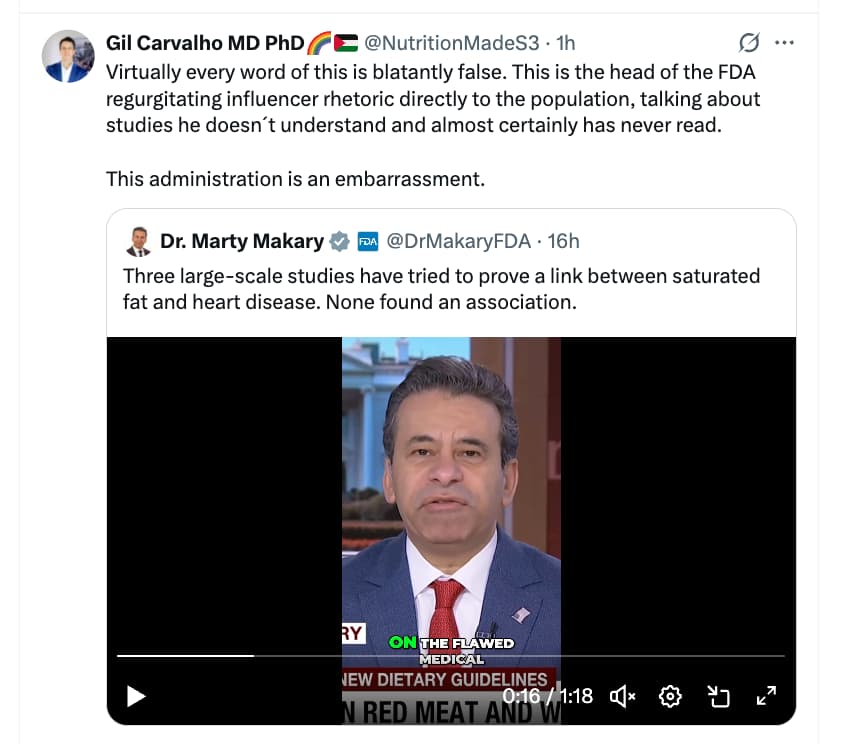
Gil Carvalho is a Research Scientist at USC and UCLA. Gil has an MD from the University of Lisbon and a PhD in Biology from Caltech, where he studied nutritional effects on health and longevity. Gil has authored a number of peer-reviewed studies in the scientific literature and recently launched the YouTube channel Nutrition Made Simple, focusing on educational videos breaking down the science of nutrition for everyday use.
It’s so uninformed. Saturated fats have a powerful negative effect on longevity. I found part of this information from the last surgeon general’s report. They are not only messing with people’s lives, they are robbing people of this information.
I agree with some of what you are saying. The amount of calories consumed in the average American and British diet are ridiculously high, and the glycemic index is as well; we are literally eating ourselves to death. Worrying about what exactly one eats all the time is also no way to live, this stress must put cortisol levels up, very unhealthy! We should be relaxed and easy going and enjoy our food!
However, we live in extraordinary times, never in human history has so much knowledge been so easily available to us all, so why not avail ourselves of it, to gradually overtime, and a relaxed manner, refine and personalise our diet to improve our general wellbeing?
Personally, I have benefitted from this approach, for example both my wife and I used to suffer from dreadful bronchitis every winter. We read that cutting out cows milk could help. This was about thirty years ago, and we have not had bronchitis since and we now consume goat and sheep milk. I would also add something that strikes me as obvious. Some people can eat almost anything and remain very healthy, others are just the opposite. One persons body will deal with a banana very differently than another’s. So for me it makes sense to instigate gradual personalisation, an enjoyable education that need not be stressful.
I would also eat a chocolate brownie after a good meal at a resteraunt!
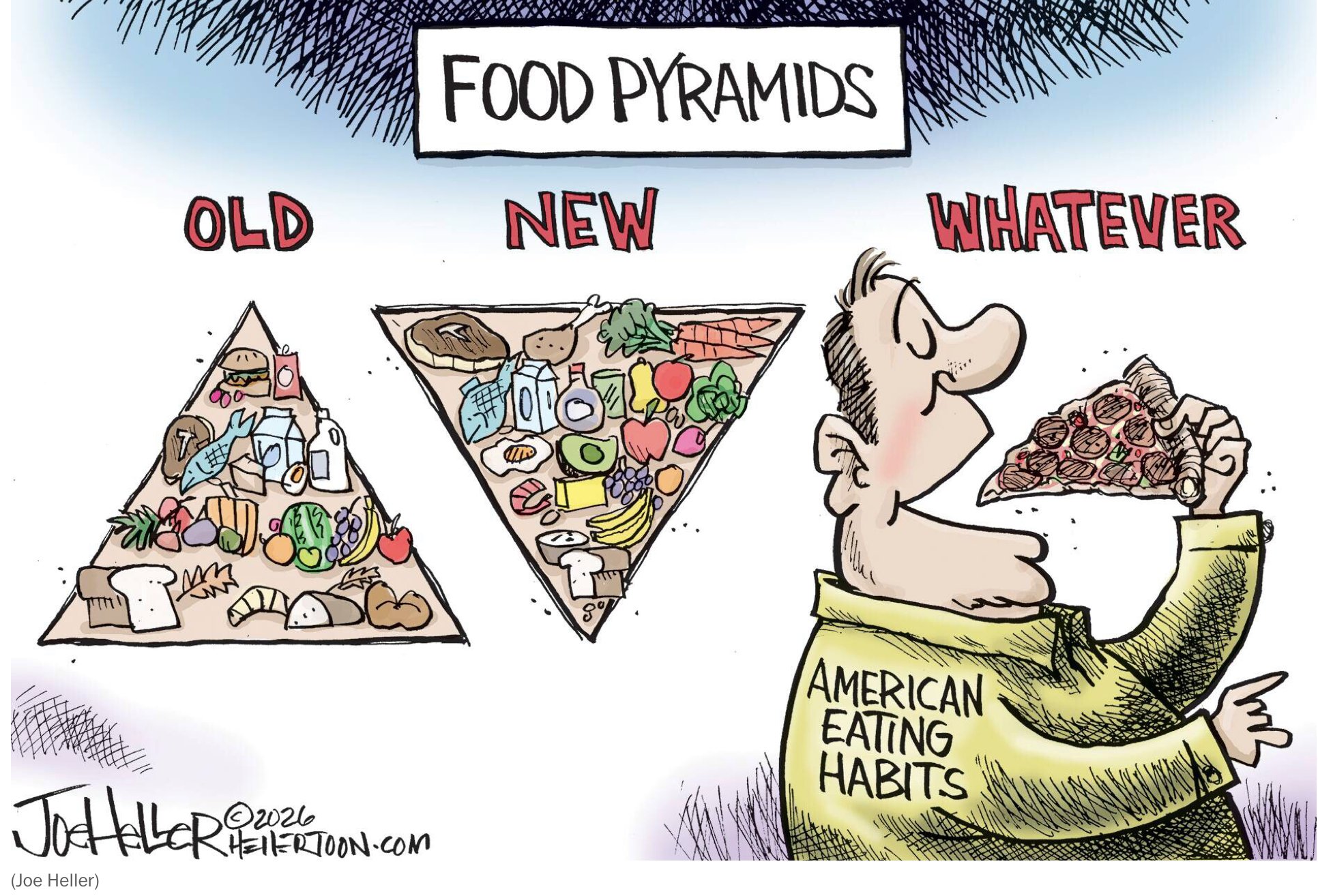
Others here have already done a good job showing that the new food pyramid is based on a mixture of good science and unsubstantiated beliefs, many of which suffer from the weight of considerable counterevidence. I did appreciate one feature of the new pyramid document. When compared with its lengthy predecessors, the new document is clear, concise, and intelligible to a broad audience. Acknowledging its significant empirical shortcomings, it would nonetheless not surprise me if it turns out to have a more positive impact on national health than the last document.
One aspect of this problem not addressed in the new document, or generally acknowledged in discussions about it, is the role played by an historical shift in the business models of the food industry. The new PBS Horizon show explores this, along with a deconstruction of the new pyramid. MAHA has a plan to clean up the American diet. Will it work? | PBS News
Separately, can anyone tell me where this full fat cows milk cabal came from?
Full fat milk tastes better therefore it’s good, i.e it’s more rewarding and palatable, like a donut. Some mumbo jumbo about serum cholesterol and the brain presumably.
Health governing based on feelings. The feelings health administration.
This is the Justin Biebler of nutrition, there are more interesting things in this field if we get past this and recognize SFA is actually bad for most. (Maybe rejuvenation therapies is a step change above).
Mostly ideology I think. Skimmed or semi-skimmed milk is a bit liberal/woke, and people want to boast about full fat in the same way they like to boast about their car getting terrible milage or having high emissions.
Biology-wise, I’ve heard that the higher fat content helps with the vitamin absorption. But personally, I don’t think drinking skimmed milk matters in the bigger picture of daily consumption. Full fat milk is 3.5-4.0% fat, which isn’t exactly “high fat” compared to lots of other food. If you drink a reasonable amount of milk (500ml) per day, you would be drinking 325kcal if full fat, or 190kcal if fully skimmed. That 135kcal saving is a rounding error on a typical day of eating and activity. It’s not going to make or break anything IMO.
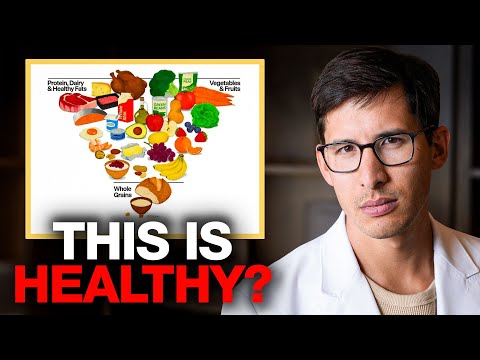
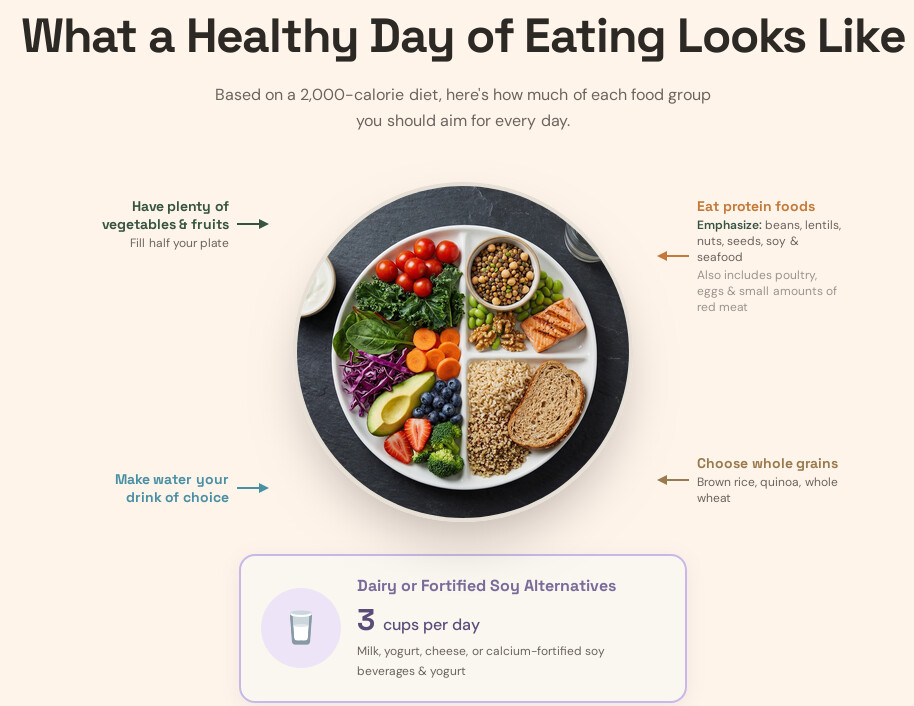
Of course I support being educated on things. But I think my point is that for things like this food pyramid, it’s a general guidelines designed to give a big picture recommendation. Worrying about tiny details isn’t that productive. Most people in the general population still just eat way too much in total, and much of it consists of blatantly unhealthy garbage. If everybody tomorrow started eating exactly according to the pyramid, we’d probably still be better off. Perfect? No. But definitely better because at least there are no hotdogs, pizza rolls, chocolates or cans of coke on the pyramid!
By the way - if you’re interested in your individual responses to food, try wearing a CGM for two weeks. It’s extremely insightful.
On the milk issue, there is a decent amount of evidence to suggest that, for some reason, it can be helpful.
My general take on it is that not all saturated fat is equal and that from dairy is not at all the same as that from consuming beef - even if that seems unlikely. So there absolutely might be some other explanation.
There are concerns about the fat removal process and even more so the fat adding process for the 1 and 2% versions. This concern is at least 16 years old as my son was on full fat dairy as a toddler. Whether these concerns are real is unclear but certainly fits with the overall vibe of processed foods are bad. For adults, that line of thinking really means you shouldn’t drink milk at all since no other mammals do and we didn’t until fairly recently. It also go against the general concept of not drinking calories since it allows excess calories easier.
From a population benefit, the greater consumption of calories from fat will displace clearly harmful processed carbs. It also should reduce overall calories given the greater satiety impact of fats. I think olive oil would be better but also somewhat unaffordable.
So I don’t put full fat dairy in at all the same place as chest thumping beef tallow. It also doesn’t mean I am buying more butter although it does really help some dishes. I haven’t seen anything positive in the literature regarding butter.
Over a year ago, I was listening to Simon Hill and Dr B (the gut health doc) and Simon said he switched to coconut yogurt because sat fat that is in something fermented doesn’t raise lipids (fast forward, I think he changed his tune on that comment)
I excitedly drank coconut keifer and then ran labs and my lipids had jumped up.
So, I do believe people who are not sensitive to sat fat can have some… but if you are, form doesn’t seem to matter much.
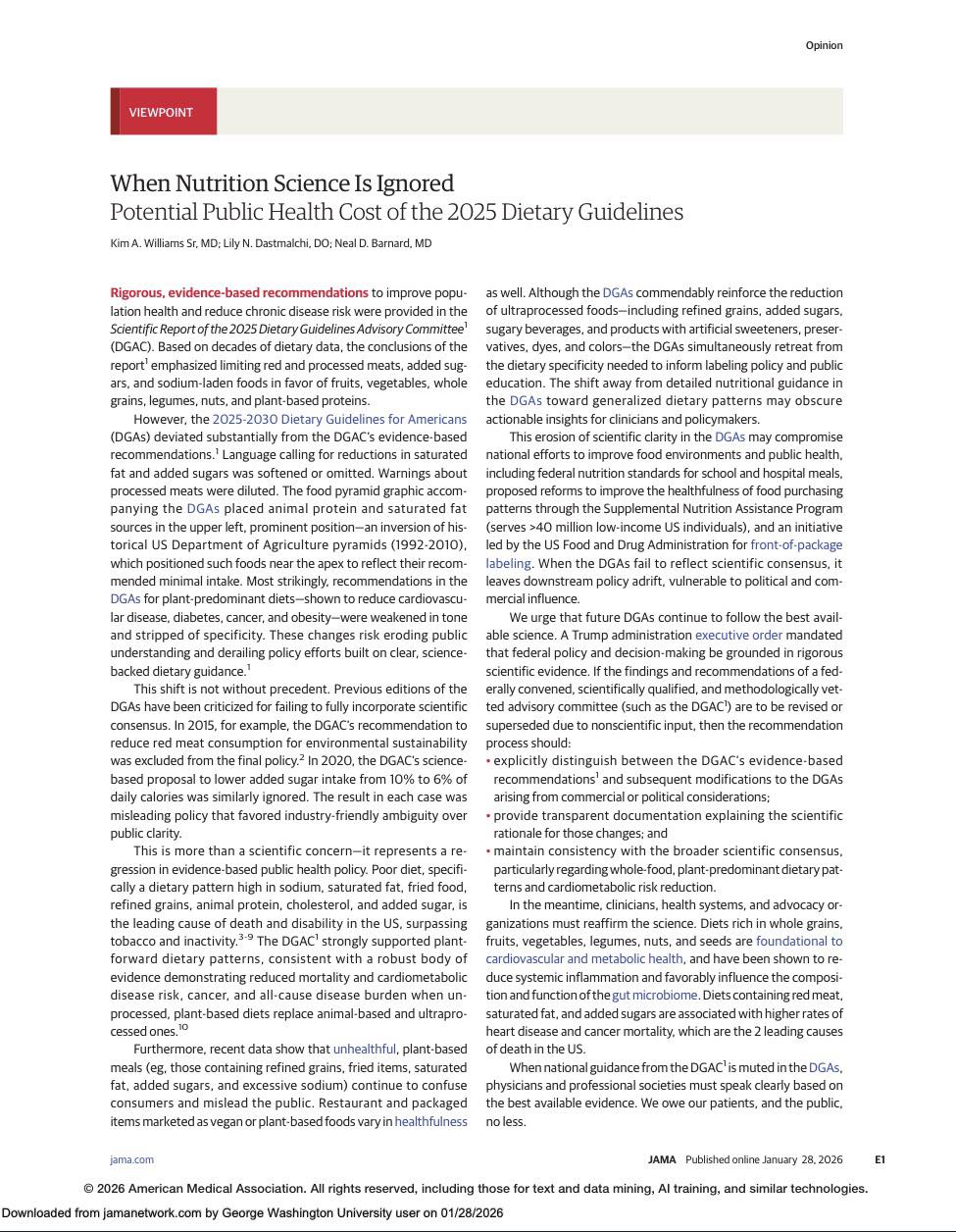
A viewpoint published in JAMA by nutrition experts about the recently released food pyramid. They disagree and reinforce a plant forward diet for cardiovascular health and cancer prevention…
 There’s just no way I could be happy if I’m literally worrying about how many grams of what type of fat I am intaking. I doubt my diet is “perfect” but I’ve always managed to maintain a healthy weight, a good body composition, and all I really do is practice some moderation.