Nice catch! Thanks for sharing. Soon everyone will be on statin + ezetimibe (+ obicetrapib?) + GLP-1RA + SGLT2i. Easy win.
5 Likes
I know of Yurpeak, which is sold at about the same price as Mounjaroo in the US.
1 Like
I don’t think that’s true. The mouse studies show greater benefits with higher doses and we haven’t even found the dose that is too high for mice. Since they take a lot relative to humans I don’t think that’s suggestive of small margin of error. I don’t think rapamycin has a narrow therapeutic range, and for people that are concerned about getting in the range of taking too much, just stay on the safe side and take a very moderate dose.
In general, the lower the dose you take the lower the chances that any benefits will be small enough to not reach significance. However the lower the dose, the higher the chances of the benefit/risk ratio being higher.
5 Likes
Sirolimus is associated with impaired spermatogenesis and, as a corollary, may reduce male fertility.Moreover, the fathered pregnancy rate (pregnancies/1000 patient years) was 5.9 (95% CI, 0.8-42.1) and 92.9 (95% CI, 66.4-130.0) in patients receiving sirolimus-based and sirolimus-free regimens, respectively (p = 0.007).
Adverse effects of mTOR inhibitors on spermatogenesis are poorly evaluated but hypogonadism is described under sirolimus. We report the case of a renal transplant 30 years old patient in whom azoospermia was discovered while he was being treated by everolimus.
Rapamycin administration in mice has been shown to cause testicular atrophy, and hypogonadism has been observed in humans as well; the therapeutic window for this drug is quite narrow.
2 Likes
I agree that we need to test higher doses to truly demonstrate rapamycin’s clinical efficacy. Since both 1mg and 6mg doses have failed to show results, we need clinical data for 10mg, 15mg, and 20mg. I recall there are already relevant clinical trials underway for these.
Furthermore, the current once-weekly dosing regimen is quite flawed; we need to rethink not only the dosage but also the dosing interval.
1 Like
We could even conduct an N-of-1 trial on our own to determine an truly effective protocol. This would require your current anti-aging stack to remain constant while you adjust the rapamycin dosage and dosing interval, followed by rigorous monitoring. For instance, those with tumors could track whether tumor progression is suppressed, while elderly individuals could monitor gait speed, inflammatory markers, vascular health, cardiac function, and frailty indices. Patients with Type 2 diabetes could track insulin sensitivity. Whether we see deterioration or improvement, sharing these findings would be invaluable.
1 Like
Well if 6mg per week is enough to suppress exercise benefits, I wouldn’t want to take more. Also, dose frequency is probably the biggest mystery here.
2 Likes
Yes - caloric restriction does the same thing, (evolution prioritizes survival over fertility during times of scarce food - no big surprise there), and rapamycin mimics many aspects of caloric restriction, and everything comes back when food level rises again (caloric restriction goes away).
There are lots of papers about organ transplant patients going off rapamycin (moving to other drugs) and then having children.
More details here: Possible Rapamycin Risks for Healthy Humans (Part 2)
5 Likes
How would we even measure successful results when it comes to Rapamycin if longer lifespan is the goal? It doesn’t seem to improve many lab markers. And for what it’s worth, it doesn’t seem to make people younger on those biological age tests from what I have observed.
1 Like
Yes, it’s impossible right now for the individual person, given the tools we have today. All we can do is measure our biomarkers and make sure things are not going out of whack, and at the same time wait for the larger clinical trials now under way.
1 Like
Cancer survival and prevention rates. If rapamycin doesn’t provide a statistically strong benefit there, I’d consider that conclusive evidence. Ideally you have several groups taking 6mg, 10mg, 20mg and 30mg once weekly, once biweekly and once per month.
1 Like
Exactly correct. Unless you are planning on having children imminently, this is a desired effect, exactly as in CR - it indicates the drug is at a dose where it is having an actual effect. Of course, transplant patient dosing protocols are rather different from the way people take it for life/health purposes.
The rat testicle atrophy was a talking point for Chris Masterjohn in his article deprecating rapamycin a couple of years ago, and we discussed it on the site at the time (overall unfortunately the article was poorly written and unconvincing). So the whole thing is old, old news with rapamycin, regularly rediscovered by people who only started reading up on rapamycin/yawn/.
The fertility tradeoff is very common for a lot of longevity interventions, which doesn’t mean we should always welcome it (eunuchs, anyone, lol?), but it’s a bog standard mechanism. That said, in CR it was always a matter of intense discussion. I remember some 20-25 years ago on the email list for CRONies, there was extensive discussion when the men on more severe CR reported a drop or outright disappearance of the sex drive. The group broke into two camps - for some it was a regrettable side effect. For others it was a genuine benefit, they felt peaceful without the intrusive sexual thoughts and urges, generally lower aggression levels and a big jump in QOL. But one very prominent CR practitioner and advocate, a founding member of the CR list actually abandoned CR altogether, because his wife gave him an ultimatum: her or CR. He chose his wife. Perhaps rapamycin might split people into similar camps😂.
4 Likes
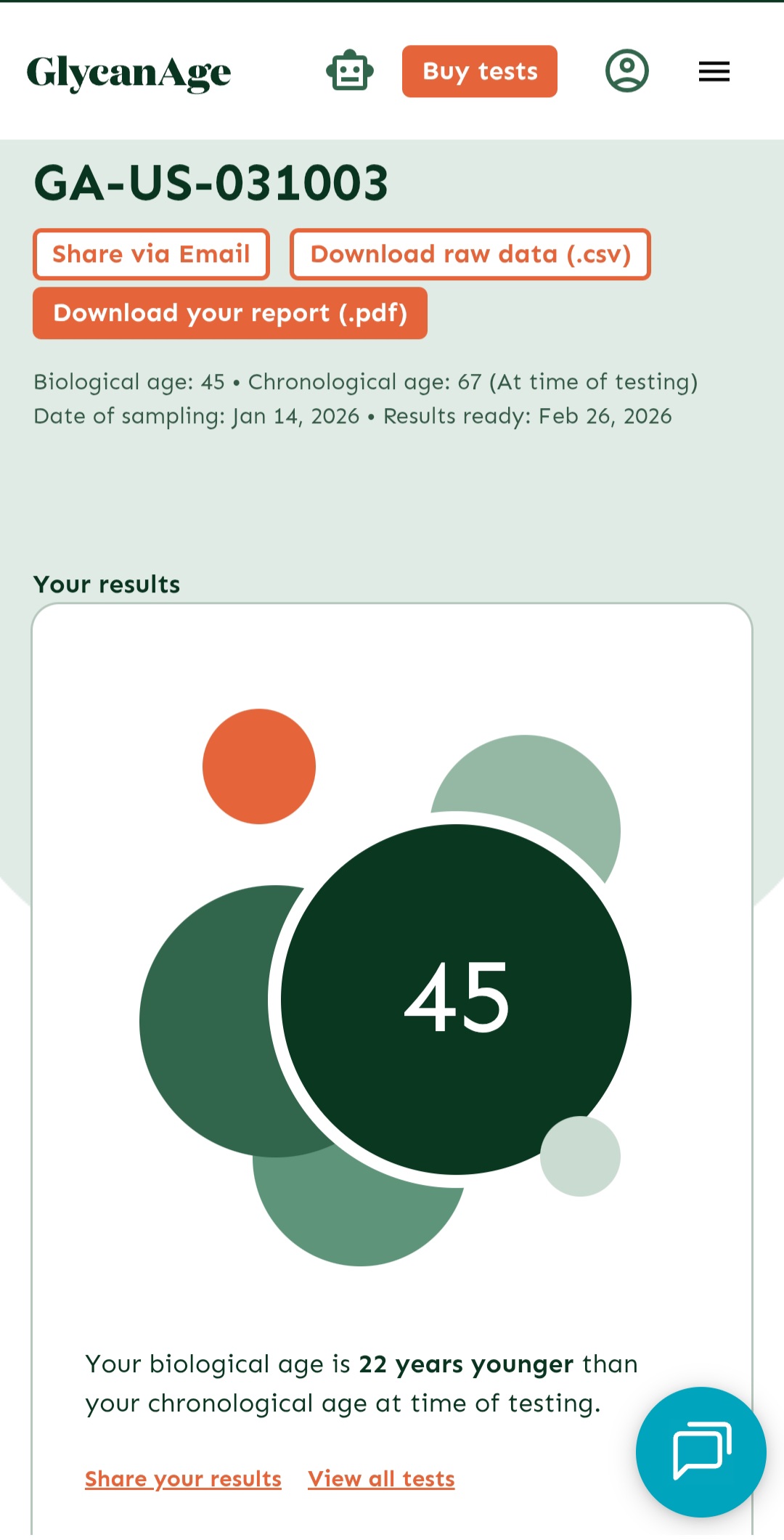
My N=1 Inflammation level is that of someone in their mid-40’s – taking 6mg weekly with water. No other additives. Mostly same dose 5 years. Biological age 22 years younger than my 68 chronological age.
8 Likes
Valid. It’ll take a very long time to run these studies though.
I agree about dose frequency. Did you end up modifying your protocol after this?
Not to be the grammar police but the term is Moot point  but there I was with my badge on LoL!
2 Likes
This is a phrase where the meaning is different between english english and american English
How did that happen?
It’s a long story.
Well, I looked it up and saw how it could happen.