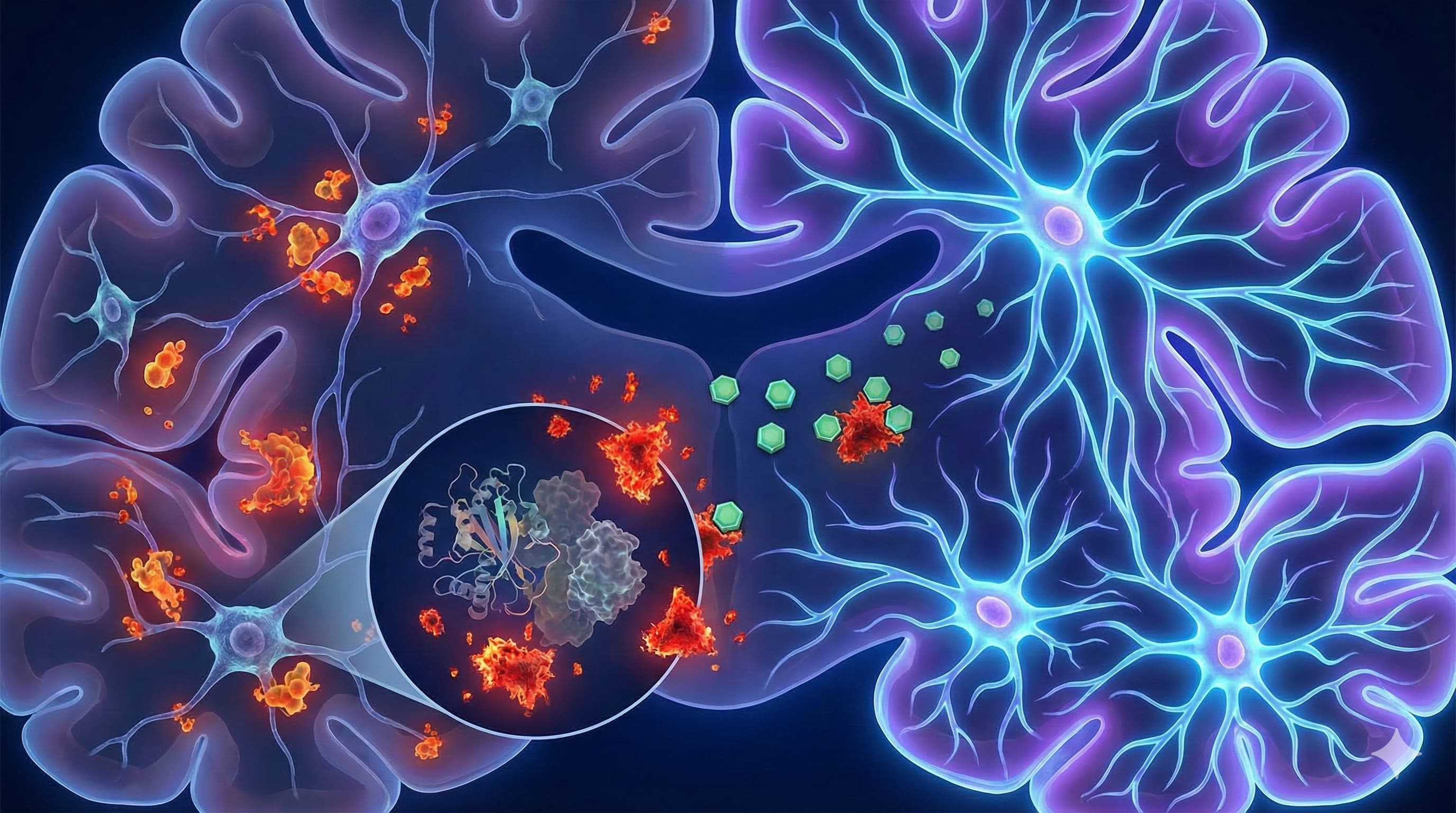
The Immuno-Neuro Dialogue: A 5-Point Playbook for Rewiring the Aging Brain

In a comprehensive 2026 review published in Cells, Dr. Masaru Tanaka presents a strategic “roadmap” that shifts the longevity paradigm from merely suppressing inflammation to actively reprogramming the dialogue between the immune system and the brain. The “Big Idea” here is that age-related cognitive decline isn’t just about neurons dying; it’s about the “niche” environment—specifically microglia—stopping the conversation that tells stem cells to build new neurons. Tanaka argues that microglia don’t just become “inflamed” with age; they lose their specific “pro-neurogenic” programming, effectively shutting down the brain’s repair shop.

The paper identifies five critical “gaps” that currently block the translation of longevity science into human therapy: the lack of longitudinal data (tracking the same brain over time), the undefined heterogeneity of glial cells (not all microglia are the same), the persistence of “innate immune memory” (bad habits stuck in the cell’s DNA), the ignored vascular component, and the poor alignment between mouse models and human biology.

Tanaka proposes a “playbook” to bridge these gaps, highlighting NLRP3 inflammasome inhibitors and epigenetic editing as the most promising near-term interventions. He argues that by selectively inhibiting the NLRP3 pathway (which drives the “sterile inflammation” of aging), we can break the maladaptive feedback loops without compromising the immune system’s ability to fight infection—a crucial distinction for life-extension strategies.

Source:


Part 2: The Biohacker Analysis

Study Design Specifications:

  • Type: Review & Theoretical Perspective (Not a primary in vivo study).
  • Subjects: Synthesizes data from Murine (Mouse/Rat) models and Human clinical pathology.
  • Lifespan Data: Cites external data (e.g., progeroid mice lifespan extension with NLRP3 inhibitors) but presents no new lifespan curves of its own.

Mechanistic Deep Dive:

  • The Core Shift: The paper details the transition of the “Neurogenic Niche” from a Supportive State (Young) to a Toxic State (Old).
    • Young: Microglia secrete BDNF, IGF-1, and IL-4, actively stimulating Neural Stem Cells (NSCs) to proliferate.
    • Old: “Inflammaging” causes a switch. Microglia pump out IL-1β and TNFα. Crucially, IL-1β suppresses neurogenesis directly by locking NSCs in a quiescent (dormant) state or forcing them to become astrocytes (scar tissue) instead of neurons.
  • The Pathway: The NLRP3 Inflammasome is identified as the central engine of this toxicity. It senses “danger signals” (cellular debris, mitochondrial DNA) accumulating in the aging brain and triggers the release of IL-1β.
  • Organ Priority: Hippocampus (Dentate Gyrus)—the seat of memory and spatial navigation, and one of the few places humans grow new neurons.

Novelty: What distinguishes this paper is the “5 Gaps” Framework. Instead of just saying “inflammation is bad,” Tanaka systematically categorizes why anti-inflammatory trials fail (e.g., lack of spatial resolution, cross-species mismatch) and proposes Glial Reprogramming—using CRISPR or specific inhibitors to “reset” microglia to their youthful, BDNF-secreting state rather than just killing them or shutting them off.

Critical Limitations:

  • Review Status: This is a synthesis of other people’s work. It generates hypotheses, not data.
  • The “Microglia” Conundrum: The paper admits that distinguishing “resident microglia” from “infiltrating macrophages” is technically difficult in humans. Treatments targeting one might inadvertently suppress the other, impairing peripheral immunity.
  • Translational Gap: While it hypes NLRP3 inhibitors, it relies heavily on mouse data where high doses (200mg/kg) are used. The specific “reprogramming” protocols (CRISPR for microglia) are years away from clinical viability.

Part 3: Actionable Intelligence

Actionable Intelligence (Deep Retrieval & Validation Mode) Instruction: Extrapolating the paper’s focus on NLRP3 inhibition to the leading clinical candidate, Dapansutrile (OLT1177).

The Translational Protocol (Rigorous Extrapolation):

  • Compound: Dapansutrile (OLT1177) (Oral, selective NLRP3 inhibitor). Note: Do NOT use MCC950 (hepatotoxic).
  • Human Equivalent Dose (HED):
    • Mouse Data: Effective neuroprotection/lifespan extension seen at ~200 mg/kg (i.p.) or dietary equivalent (~3.75 g/kg diet).
    • Calculation: 200 mg/kg (mouse) × (3/37) ≈ 16.2 mg/kg (human).
    • For 70kg Human: ~1,135 mg/day.
    • Clinical Trial Reality: Phase 2 trials for acute gout use 1,000 mg BID (2,000 mg/day) or a loading dose of 2,000 mg.
    • Longevity Protocol (Speculative): Lower chronic dosing (e.g., 300–500 mg/day) is hypothesized by biohackers but untested for safety.
  • Pharmacokinetics:
    • Bioavailability: High (>90% in humans).
    • Half-life: ~22–26 hours (Supports once-daily dosing).
    • Brain Penetration: Yes, crosses the Blood-Brain Barrier (Crucial for neurogenesis).

Safety & Toxicity Check:

  • Safety Profile: OLT1177 is considered safe in Phase 1/2 trials, unlike its predecessor MCC950.
  • Toxicity Signals:
    • Liver: No significant hepatotoxicity observed in trials (major advantage over MCC950).
    • Immunity: Potential increased risk of infection (it dampens the innate immune response). Monitor for signs of upper respiratory infection.
    • Contraindications: Active infections (bacterial/viral).

Biomarker Verification Panel:

  • Efficacy Markers:
    • hsCRP & IL-6: Should decrease. (Dapansutrile blocks IL-1β, which drives IL-6).
    • Fibrinogen: inflammatory marker often reduced by IL-1 blockade.
  • Safety Monitoring:
    • CBC (Complete Blood Count): Watch for neutropenia (rare but possible with immune modulation).
    • LFTs (Liver Function Tests): Essential baseline and monthly check, despite “clean” profile, due to novelty.

Feasibility & ROI:

  • Sourcing: Difficult. Dapansutrile is a patented clinical-stage drug (Olatec Therapeutics). It is not available as a supplement. It is occasionally found as a “Research Chemical,” but purity is a major risk.
  • Cost: High. Synthesis is complex.
  • Population Applicability: Best for those with elevated baseline inflammation (hsCRP > 1.0) or family history of Alzheimer’s/Parkinson’s. Avoid if immunocompromised.

Part 4: The Strategic FAQ

1. Is this just another “anti-inflammatory” like Ibuprofen? Answer: No. NSAIDs (Ibuprofen) inhibit COX-1/COX-2 enzymes. Dapansutrile targets the NLRP3 inflammasome upstream of the cytokine storm. It stops the production of IL-1β and IL-18 specifically, without blocking the beneficial “housekeeping” inflammation needed for tissue repair.

2. Why does the paper mention MCC950 if it’s toxic? Answer: MCC950 is the “tool compound”—it proved the mechanism works in mice. However, it causes liver toxicity in humans. The paper cites it to validate the target, but biohackers must avoid MCC950 and look for Dapansutrile or Selnoflast.

3. Does this conflict with Rapamycin? Answer: Likely complementary. Rapamycin inhibits mTOR (mimicking calorie restriction), while NLRP3 inhibitors stop sterile inflammation. In fact, mTOR overactivation drives NLRP3. Combining them could theoretically offer synergistic neuroprotection. [Confidence: Medium].

4. Can I just take Curcumin or Quercetin to block NLRP3? Answer: You can, but they are “dirty” inhibitors with low potency and poor bioavailability compared to OLT1177. They hit dozens of targets weakly. The paper argues for precisionmodulation to fix specific gaps, which supplements likely cannot achieve.

5. What is the “Innate Immune Memory” mentioned in the gaps? Answer: This is the concept that your microglia “remember” past infections or insults (like a concussion or severe flu) and stay permanently “primed” to overreact. Tanaka suggests we need epigenetic tools (like HDAC inhibitors) to “erase” this memory, not just suppress the current inflammation.

6. Is there a blood test to see if I need this? Answer: Indirectly. High IL-1β is hard to measure in blood (it degrades fast). However, high IL-18 and IL-6 alongside elevated hsCRP suggests inflammasome overactivation.

7. Did the paper show lifespan extension? Answer: Not this specific paper (it’s a review). However, external studies cited (e.g., on progeroid mice) show that NLRP3 inhibition can extend lifespan by ~30% in sick animals. Healthy lifespan extension data is still preliminary.

8. What about the “Vascular Gap”? Answer: The paper notes that inflammation damages the Blood-Brain Barrier (BBB). If your BBB is leaky, toxic blood proteins enter the brain and trigger microglia. Fixing the BBB (e.g., via vascular health, Zone 2 cardio) is a prerequisite for NLRP3 inhibitors to work long-term.

9. Is this relevant for young biohackers (under 40)? Answer: Probably not, unless you have a history of TBI (Traumatic Brain Injury). In youth, microglia are naturally trophic (BDNF-secreting). Suppressing them prematurely might hinder synaptic plasticity. This is a >45 strategy.

10. What is the “Moonshot” intervention mentioned? Answer: Glial Reprogramming. Using CRISPR/Cas9 to edit the DNA of microglia in living brains to force them into a regenerative state. This is currently sci-fi/lab-bench tech, but it is the “Horizon 3” goal of the paper.


References:

Related Reading:

Dapansutrile_UPDATE2_(drug_in_development).pdf (507.2 KB)

If you want to block the NLRP3 inflammazone what about just taking ketone salts? Doesnt BHB block the the inflammazone?

Sort of, but not completely and not nearly as well as the NRLP3 inhibitors (from what I can tell).

Here is a little of the Gemini response:

Yes, but with a critical “Biohacker Trap” warning.

The metabolite β-Hydroxybutyrate (BHB) —produced during fasting or ingested via Ketone Esters —is one of the most potent endogenous inhibitors of the NLRP3 inflammasome .

In a landmark 2015 study published in Nature Medicine , researchers (Youm et al.) discovered that BHB blocks the NLRP3 inflammasome at a specific mechanistic step: it prevents the efflux of Potassium (K+) from cells, which is the “trigger” that tells the inflammasome to assemble. This explains why fasting, ketogenic diets, and high-intensity exercise are profoundly anti-inflammatory.

However , recent human data (Neudorf et al., 2019) has introduced a complexity: Exogenous Ketones (supplements) taken acutely might not always replicate the anti-inflammatory effects of endogenous (fasting-derived) ketosis, and in some contexts (like the presence of bacterial toxins), they may transiently increase immune reactivity.

Part 2: The Biohacker Analysis (Deep Dive)

1. The Mechanism (The “Youm” Pathway)

Unlike general anti-inflammatories (NSAIDs) that block enzymes like COX-2, BHB acts on the upstream machinery of inflammation.

  • Target: The NLRP3 “Sensor.”
  • Action: When cells are stressed, they normally leak Potassium (K+). This leak causes the NLRP3 proteins to clump together (oligomerize) with ASC adaptor proteins. BHB puts a “stop” to this clumping.
  • Specificity: It is highly specific. BHB does not inhibit other inflammasomes (like NLRC4 or AIM2), meaning it dampens sterile aging inflammation (inflammaging) without completely disarming your defense against pathogens.
  • Independency: This effect happens independently of GPR109A (the niacin receptor) and independently of histone acetylation (HDAC inhibition). It is a direct structural interference with the inflammasome assembly.

Analysis: Dosing & Pharmacokinetics – OLT1177 vs. Ketones

Part 1: The Executive Summary

The “Stability Gap” is massive. If OLT1177 (Dapansutrile) is a thermostat, Exogenous Ketones are a match.

  • OLT1177 has a half-life of ~24 hours, allowing for stable, around-the-clock NLRP3 inhibition with just one or two doses per day.
  • Ketone Esters have a half-life of ~1.5 to 2 hours . To replicate the steady-state anti-inflammatory coverage of the drug, you would need to redose expensive esters every 3–4 hours or hook yourself up to a continuous IV infusion.

For the biohacker, this means Exogenous Ketones are not a viable chronic replacement for an NLRP3 inhibitor drug unless you are also in a state of metabolic ketosis (fasting/diet). They are “pulse” tools, not “maintenance” tools.


Part 2: The Pharmacokinetic Head-to-Head

Feature Dapansutrile (OLT1177) Ketone Esters (HVMN/DeltaG) Ketone Salts
Half-Life (t1/2​) 24 Hours ~2 Hours ~1–2 Hours
Time to Peak (Tmax​) 2–4 Hours 1 Hour 1 Hour
Duration of Effect >24 Hours 3–5 Hours (Return to baseline) 2–3 Hours
Bioavailability >90% (Oral) High (Rapid hydrolysis) Moderate
Dosing Frequency Once Daily (QD) or BID 4–6x Daily (to match drug coverage) Not feasible (Sodium toxicity)
Steady State Easy to maintain (flat curve). “Sawtooth” pattern (extreme spikes/crashes). Unreachable safely.

Export to Sheets


Part 3: The Biohacker Analysis

1. OLT1177: The “Set and Forget” Profile

In Phase 2 clinical trials (e.g., for Gout or Heart Failure), OLT1177 is typically dosed at 100 mg to 1,000 mg either once daily or twice daily.

  • Why it works: Because the half-life matches the circadian cycle (~24h), a single morning dose provides significant coverage while you sleep.
  • The Benefit: You get continuous suppression of IL-1β and IL-18. The “sterile inflammation” of aging never gets a chance to rebound between doses.

2. Ketones: The “Sawtooth” Problem

When you drink a Ketone Ester (e.g., 25g of DeltaG), your blood BHB shoots up to 3.0–5.0 mM within 60 minutes. This creates massive NLRP3 inhibition temporarily.

  • The Crash: By hour 4, levels crash back to near baseline (0.1–0.2 mM).
  • The Rebound: When BHB drops, the “brake” on the NLRP3 inflammasome is released. If your background inflammation (LPS, stress, toxins) is high, the inflammasome reactivates immediately.
  • The Cost: To mimic OLT1177, you would need to drink ~$100 worth of esters every single day, dosed every 4 hours.

First up I take potassium bhb so the sodium toxicity bit doesn’t apply. Secondly if you combine it with a diet which is reasonably ketogenic then presumably you have a continuous baseline level of ketones. Thirdly according to Dom D’Agostino on his latest Peter Attia interview the salts give a more even level… he mentioned delayed gastric absorption…so less of the ester style spikes. I need to get myself a CKM and then we will see exactly what is going on! At the moment i randomly use the urine sticks.

1 Like

And yes the esters are crazily expensive. The salts are cheap.

1 Like

What bhb products do you use?

PureBulk BHB potassium. Its really limited what you can get in the UK. I have to order it from the US and suppliers who will deliver it to the UK limits the choice.

1 Like

How bad is the taste?

The taste of potassium salts dissolved in water is, funnily enough, a bit like drinking very faintly salty water. I guess the extent you can taste it at all depends on the concentration. So if it really bothered you then just dilute it down more. There are various offerings with added flavour but personally I prefer it plain.

1 Like

Another question - as with many of these strategies - is it good to continuously inhibit the inflammazone or better to cycle it? I have a faint recollection of a Buck study in mice showing cycling ketosis was better? My mind is heading down the 15-pgdh inhibition discussion and whether inhibiting the inflammazone inhibits PE2…

But if ketones inhibit the adaptive effects of exercise which include PE2 and ketosis is induced by exercise then surely something doesnt add up…