The Heart That Beats Too Evenly: Heart Rate Variability Tracks the Aging Brain

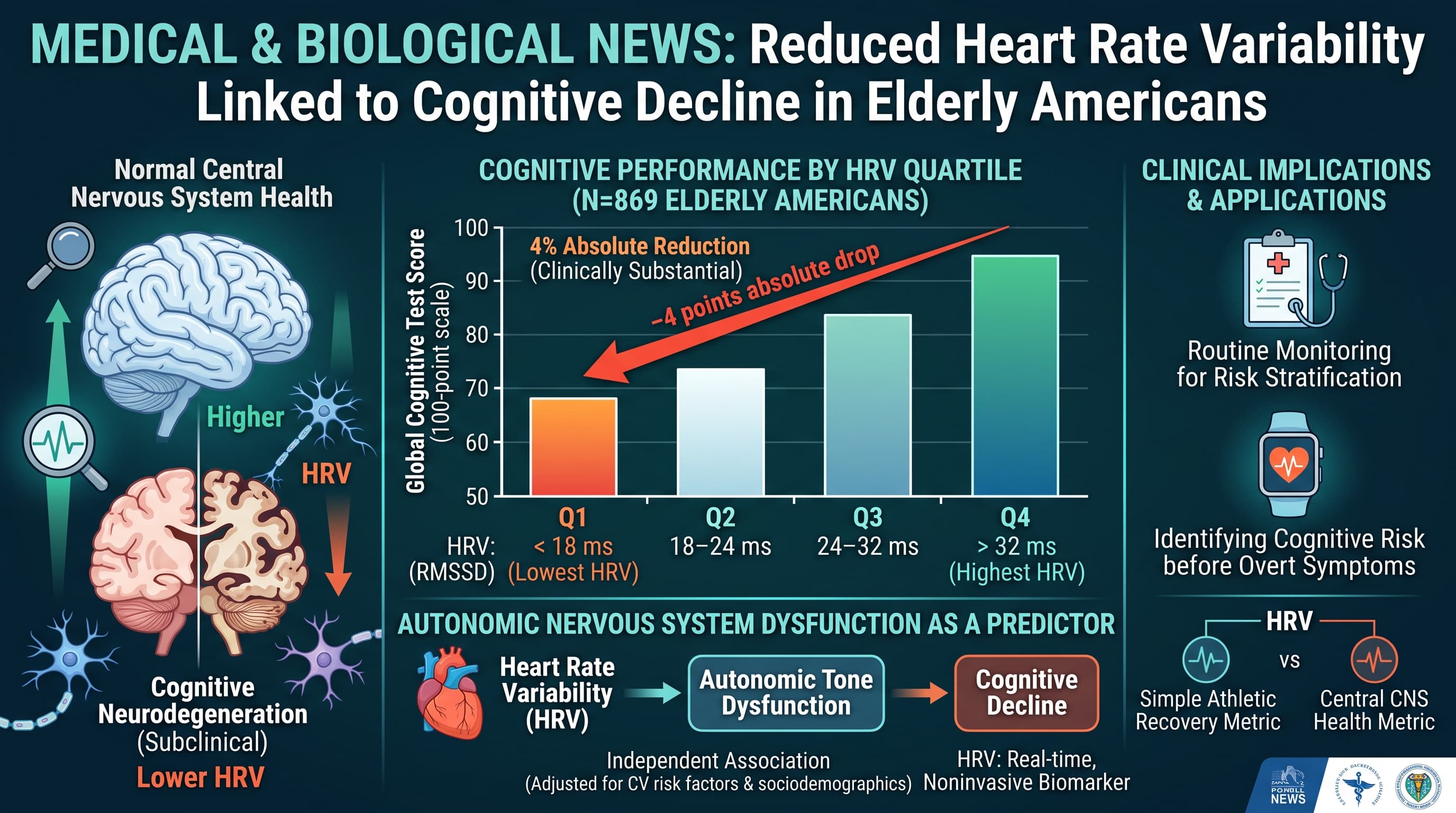
Researchers at UC San Francisco measured heart rate variability during six minutes of paced deep breathing in 869 community-dwelling elderly Mexican Americans (mean age 75.6) and compared it against two cognitive tests. People in the lowest quartile of vagal tone scored 11.4 points lower on a 100-point global cognition test than those in the highest quartile. Once age, sex, education, marital status, diabetes, stroke and depressive symptoms were accounted for, that gap shrank to 4.0 points. The authors conclude that reduced heart rate variability tracks worse global cognitive performance above and beyond traditional cardiovascular risk factors.

Hearts are supposed to be irregular. A healthy resting heart speeds up slightly on the in-breath and slows on the out-breath, and the size of that oscillation is one of the cleanest non-invasive readouts of the vagus nerve, the parasympathetic cable running from the brainstem to the chest. Cardiologists have known for decades that when the oscillation flattens, the outlook for the heart worsens. Whether a flattened rhythm also tracks what is happening upstairs, in the brain, has been far less settled.

A team at the University of California, San Francisco put that question to 869 older Mexican Americans living in California’s Sacramento Valley, part of a long-running cohort called the Sacramento Area Latino Study on Aging. Participants averaged 75 years old. Each lay down after an overnight fast and breathed in time with a pacer at five breaths per minute for six minutes while an ECG recorded every beat. From the middle five minutes the researchers computed a single number, the mean circular resultant, which captures how tightly the heartbeats lock onto the breathing cycle. Tight locking means a strong vagal brake. Loose, scattered timing means a weak one.

The participants were split into four groups by that number and given two cognitive tests: a 100-point global screen and a 15-point word recall task. The raw picture looked dramatic. People in the bottom quarter of heart rate variability scored 11.4 points lower on the global test than those in the top quarter, a difference of nearly four fifths of a standard deviation. That is a gap you would notice across a dinner table.

Then the researchers started removing the obvious explanations, and most of the gap went with them. Adjusting for age, sex, marital status and years of schooling cut the difference from 11.4 points to 6.5. Adding diabetes, stroke and depressive symptoms cut it again to 4.0 points. Roughly 65 percent of the original signal turned out to belong to something other than the heart rhythm itself, with education doing the heaviest lifting. The verbal memory association did not survive at all. After adjustment it flipped direction and sat comfortably on zero.

What remained was a 4-point deficit, statistically solid but modest, equal to about 0.28 standard deviations. The heart rhythm quartiles accounted for roughly one percent of the variation in cognitive scores once everything else was accounted for.

The big idea is not that vagal tone protects the brain. This study cannot show that, because everything was measured at the same moment and a damaged brain can just as easily produce a flat heart rhythm as the other way around. The central autonomic network that sets vagal tone lives in the insula and anterior cingulate, regions hit early in neurodegeneration. The more defensible reading is that autonomic tone behaves as a cheap systems-level dosimeter of accumulated cardiometabolic injury, and that the brain and the heart are reading from the same ledger. Six minutes of paced breathing captures something about that ledger that a blood pressure cuff alone does not.

Actionable Insights

Treat low heart rate variability as a warning light, not a lever. In this study the gap in global cognitive scores between the lowest and highest HRV quartiles started at 11.4 points out of 100, which works out to 0.79 standard deviations, a large difference. After accounting for age, sex, education, marital status, diabetes, stroke and depression, only 4.0 points survived, or 0.28 standard deviations. A standard deviation is roughly the typical spread of scores in the group, so 0.28 means the average person in the worst HRV quartile sits about a quarter of the normal spread below the best quartile. That is real but small, and it is not proof that raising HRV raises cognition.

The useful signal is what the adjustments removed. Education, diabetes, stroke and depressive symptoms absorbed about 65 percent of the original gap. Those are the actual targets. Low HRV in this cohort travelled with higher systolic pressure, higher fasting insulin and a roughly threefold higher prevalence of cognitive impairment, all unadjusted.

Practically: if your overnight or paced-breathing HRV is drifting down year over year, read it as a prompt to audit glucose, insulin, blood pressure, sleep, alcohol and mood, rather than as a number to game directly.

Context and Source

  • Open Access Paper: Reduced Heart Rate Variability Is Associated With Worse Cognitive Performance in Elderly Mexican Americans, Published 21 October 2013.
  • Institution: University of California, San Francisco (Departments of Epidemiology and Biostatistics, Psychiatry, Neurology); Cardiovascular Institute, University of Medicine and Dentistry of New Jersey; San Francisco VA Medical Center
  • Country: United States
  • Journal: Hypertension (American Heart Association)
  • Impact evaluation: The impact score of this journal is 8.2, evaluated against a typical high-end range of 0 to 60+ for top general science and medical journals, therefore this is a High impact journal.

Related Reading:

Study Measures and Quartile Rankings

The heart rate variability measure used in this study is the mean circular resultant, also designated as R bar, obtained during a paced deep breathing protocol (5 breaths per minute for 5 recorded minutes) using an electrocardiogram monitor and respiration pacer.

These numerical values represent a vector length derived from circular statistics during a deep-breathing parasympathetic challenge test (respiratory sinus arrhythmia), rather than the standard time-domain metrics (such as RMSSD or SDNN measured in milliseconds) commonly reported by commercial consumer wearables. In this vector computation, shorter mean vectors (approaching 0) indicate a loss of respiratory periodicity and blunted vagal modulation, whereas longer vectors denote robust beat-to-beat parasympathetic responsiveness.

Rough Conversions to RMSSD measures provided by consumer HRV fitness trackers:

Biomarker Data (Effect Size Calculation)

The primary biomarker evaluated was the mean circular resultant (R bar), a time-domain measure of heart rate variability captured during paced breathing. Because R bar is a vector length describing respiratory periodicity, it cannot be converted into absolute RMSSD milliseconds via direct mathematical formula. However, by cross-referencing the study demographic (mean age 75.6) with broad population data on nocturnal sleep-tracked RMSSD, we can map the cognitive risk quartiles to approximate RMSSD ranges.

  • Quartile 1 (Severe Autonomic Dysfunction / Highest Cognitive Risk): R bar range of 0.10 to 3.3. In the fully adjusted multivariable linear regression model, individuals in this lowest quartile displayed a beta coefficient of -4.0 (Standard Error 1.0) on the 100-point modified Mini-Mental State Examination compared to the reference Quartile 4.

  • Quartile 1 RMSSD Approximation: For a 75-year-old adult, this bottom 25% distribution typically corresponds to a continuous nocturnal RMSSD of less than 18 milliseconds. [Confidence: Medium].

  • Quartile 2 (Moderate Autonomic Dysfunction / Elevated Cognitive Risk): R bar range of 3.4 to 9.4. Participants scored 2.0 points lower on the cognitive test in fully adjusted models compared to Quartile 4.

  • Quartile 2 RMSSD Approximation: This 25th to 50th percentile range roughly corresponds to a nocturnal RMSSD between 18 and 24 milliseconds. [Confidence: Medium].

  • Quartile 3 (Mild Autonomic Dysfunction / Intermediate Risk): R bar range of 9.5 to 18.3. Participants scored 0.9 points lower, which was not statistically significantly different from the reference group.

  • Quartile 3 RMSSD Approximation: This 50th to 75th percentile range roughly corresponds to a nocturnal RMSSD between 24 and 32 milliseconds. [Confidence: Medium].

  • Quartile 4 (Preserved Parasympathetic Function / Lowest Cognitive Risk): R bar range of 18.4 to 82.4. This cohort served as the optimal reference group.

  • Quartile 4 RMSSD Approximation: This top 25% tier for a 75-year-old demographic generally aligns with a nocturnal RMSSD exceeding 32 milliseconds. [Confidence: Medium].

The relative magnitude of the cognitive effect is substantial. The fully adjusted multivariable model explains 34.4% of the total variance (R-squared = 0.344) in the cognitive performance outcomes. This autonomic deficit was domain-specific, as the fully adjusted model showed no statistically significant effect size difference for verbal memory recall using the 15-point Spanish and English verbal learning test (Beta = 0.30, p = 0.31). [Confidence: High].

RMSSD Quartiles Summary:

  • Quartile 1: < 18 milliseconds
  • Quartile 2: 18–24 milliseconds
  • Quartile 3: 24–32 milliseconds
  • Quartile 4: > 32 milliseconds

Top causes of reduced HRV after age 60

Tier 1: Largely non-modifiable

1. Chronological age and intrinsic sinoatrial remodeling

The single largest determinant, and the one biohackers most consistently underestimate. Twenty-four hour HRV declines steeply and roughly monotonically across the lifespan, with the sharpest fall between the third and sixth decades and continued decline thereafter (Umetani et al., JACC 1998). A systematic review of reference values in older adults confirms that published norms for this age band are both lower and highly heterogeneous (Rocha et al., Psychophysiology 2024).

Critically, a substantial fraction of this is structural, not autonomic tone. The sinoatrial node loses pacemaker cells and gains fibrosis with age, and intrinsic heart rate measured under full autonomic blockade declines roughly linearly with age. You cannot train that component back. [Confidence: High that age dominates, Medium on the precise structural versus neural split]

Tier 2: High magnitude, modifiable in principle

2. Type 2 diabetes and cardiac autonomic neuropathy

Diabetes reduces HRV across essentially every index, and cardiovascular autonomic neuropathy is common, underdiagnosed and progressive. Prevalence estimates run roughly 20 percent in unselected type 2 diabetes and substantially higher with longer duration (Pop-Busui, Diabetes Care 2010; Spallone, Diabetologia 2024). In the paper you just had me analyse, fasting insulin was 39 percent higher in the lowest HRV quartile. [Confidence: High]

3. Obesity and visceral adiposity

Consistent inverse relationship with vagal indices. The clearest evidence of reversibility comes from surgical weight loss: pooled HRV improvement after metabolic and bariatric surgery was a weighted mean difference of 12.0 (95 percent CI 6.98 to 17.04), with a dose relationship between BMI reduction and HRV gain (Updates in Surgery 2026). Only 11 studies and 322 patients, so precision is limited. [Confidence: Medium-High]

4. Medication burden

Routinely ignored in consumer HRV discussion and arguably the largest single correctable artifact in this age group. Tricyclic antidepressants produce a large HRV reduction (g = 1.24, 3 studies, 32 participants), while SSRIs showed no significant effect (g = 0.09) (Kemp et al., Biological Psychiatry 2010). Anticholinergic drugs suppress HRV directly and dose-dependently (Eur J Clin Pharmacol 2005).

Beta blockers are the counterintuitive case. They generally increase time-domain and vagal HRV indices while lowering heart rate, which means a person starting a beta blocker may see their wearable HRV rise for reasons unrelated to health improvement (Nature Sci Rep 2023). Do not read that number as progress. [Confidence: High]

Tier 3: Moderate magnitude, highly modifiable

5. Physical inactivity and low cardiorespiratory fitness

Inferred largely from the reverse direction, that is, from training trials showing HRV gain (see Part B). Cross-sectional fitness associations are consistent. [Confidence: High for direction, Medium for magnitude of the deconditioning contribution specifically]

6. Sleep loss, fragmentation and obstructive sleep apnea

Pooled across 11 RCTs and 549 participants, sleep deprivation reduced RMSSD (SMD −0.24, 95 percent CI −0.47 to −0.00) and raised LF/HF (SMD 1.47, 95 percent CI 0.62 to 2.33) (Frontiers in Neurology 2025). The RMSSD confidence interval touches zero, so acute sleep loss is a real but modest vagal suppressor in the short term. Untreated OSA is the more serious chronic case, and CPAP partially reverses it (Heart and Lung 2018). OSA prevalence rises sharply after 60 and is heavily underdiagnosed. [Confidence: High]

7. Depression and chronic psychological stress

Depression is associated with reduced HRV at g = −0.29 to −0.30 for time-domain and high-frequency measures across 18 studies (673 depressed, 407 controls), with a dose relationship to severity (r = −0.36) (Kemp et al. 2010). Note the effect size is small, and in older adults the antidepressant medication may contribute more than the depression. [Confidence: Medium-High]

8. Alcohol

Acute intake reduces short-term HRV in a dose-related fashion, demonstrated in controlled dosing studies (Am J Physiol Heart Circ Physiol 2010; Sci Rep 2021). This is the most reliably detectable single-night effect on a wearable in most people. Chronic heavy use produces sustained autonomic impairment. [Confidence: High for acute, Medium for chronic dose-response]

9. Smoking

In 4,751 adults, every 10 grams of daily tobacco was associated with 9.8 percent lower SDNN and 8.9 percent lower RMSSD (CHRIS study, PLOS ONE 2019). Oddly, that study found former smokers had higher HRV than never-smokers, which is biologically implausible as a causal effect and probably reflects selection or confounding. I flag it rather than smoothing it over. [Confidence: High that current smoking lowers HRV, Low on the former-smoker finding]

Tier 4: Disease endpoints and artifacts

10. Established cardiovascular disease. Heart failure, prior myocardial infarction and atrial fibrillation all reduce or invalidate HRV. AF in particular makes standard HRV indices uninterpretable rather than merely low, and AF prevalence climbs steeply after 65. [Confidence: High]

11. Measurement artifact. Respiratory rate is the dominant non-physiological driver of short-term HRV, since HRV rises mechanically as breathing slows. Posture, recording length, time of day, ectopic beats and device algorithm all move the number. Much of what people interpret as day-to-day biological variation is measurement variance. [Confidence: High]


PART B: Approaches most likely to raise HRV in middle age

Tier 1: Strong randomized evidence, moderate to large effects

1. Structured aerobic and high-intensity interval training

The best-supported intervention by a clear margin.

Source Population Result
Cureus 2024, 16 RCTs, 623 healthy adults Healthy adults SDNN SMD 0.58 (0.16 to 1.00); RMSSD SMD 0.84 (0.36 to 1.31); HF SMD 0.89 (0.27 to 1.51)
Rev Cardiovasc Med 2024, network meta-analysis, 29 RCTs, 1,317 participants Adults HIIT ranked first for SDNN (SUCRA 98.7 percent), RMSSD (84.9 percent) and LF/HF (99.8 percent); resistance training first for HF
PLOS ONE 2024, 19 studies Cardiovascular disease Aerobic superior to resistance alone; largest gains in heart failure

Note the wide confidence intervals in the healthy-adult pooling, which signal heterogeneity and small-study effects. The point estimates are moderate to large; the true effects are probably smaller. HIIT’s top ranking comes from a network meta-analysis with only 29 trials spread across five modalities, so modality ranking is much less certain than the overall benefit of training. [Confidence: High that aerobic training raises HRV, Medium on magnitude, Low-Medium on HIIT specifically being superior]

Practical translation: the intervention with the best evidence is simply becoming more aerobically fit. Zone 2 volume plus one or two hard interval sessions per week is a defensible reading of these data.

2. Slow-paced breathing and HRV biofeedback, with an important asterisk

Breathing at roughly 5 to 6 breaths per minute produces large, immediate increases in HRV (Laborde et al., Neurosci Biobehav Rev 2022). This is the highest-magnitude acute effect available.

The asterisk matters. Much of the during-practice increase is a mechanical resonance phenomenon. Breathing slowly synchronizes the baroreflex and respiratory sinus arrhythmia, so HRV rises whether or not anything about your autonomic health has changed. That is the same maneuver the Zeki Al Hazzouri study used as a provocation test. Evidence that regular practice raises resting, non-practice HRV is considerably weaker than evidence that it raises HRV during practice, and biofeedback meta-analyses consistently report better evidence for symptom outcomes than for durable HRV change (Sci Rep 2021; Appl Psychophysiol Biofeedback 2025).

So: high value as a state-regulation tool, uncertain value as a trait-HRV intervention. [Confidence: High for acute effect, Low-Medium for durable resting HRV change]

Tier 2: Strong evidence, effect conditional on baseline

3. Weight loss if overweight or obese. Weighted mean difference 12.0 (95 percent CI 6.98 to 17.04) after bariatric surgery, with a dose relationship to BMI change (Updates in Surgery 2026). Evidence for non-surgical weight loss is thinner but directionally consistent. No expected benefit if you are already lean. [Confidence: Medium-High]

4. Diagnose and treat sleep apnea. CPAP improves HRV in OSA patients (Heart and Lung 2018). Middle age is exactly when undiagnosed OSA becomes common, and it is the most commonly missed explanation for a persistently low nocturnal HRV in an otherwise healthy-looking person. If your overnight HRV is low and your resting heart rate is high despite good fitness, this is the first thing to rule out. [Confidence: High]

5. Glycemic and insulin-sensitivity control. Follows directly from the diabetes and CAN literature (Spallone, Diabetologia 2024). Evidence that improving glycemia reverses established autonomic neuropathy is much stronger for prevention than for reversal, which argues for acting in middle age rather than after 65. [Confidence: Medium-High for prevention, Medium for reversal]

Tier 3: Reliable but smaller, or lower-quality evidence

6. Reduce alcohol. Among the fastest-acting changes, with clearly demonstrated acute dose-response (Am J Physiol 2010). Nightly drinking is a common and easily reversed cause of chronically depressed overnight HRV. No RCT has tested sustained abstinence against a control for resting HRV outcomes in middle age, so the long-term magnitude is inferred. [Confidence: High for acute, Medium for chronic]

7. Smoking cessation. Dose-response evidence is strong (CHRIS study 2019); cessation studies are small and short. [Confidence: Medium-High]

8. Sleep extension and consistency. Supported indirectly by deprivation trials (Frontiers in Neurology 2025). The intervention direction has not been tested as rigorously as the deprivation direction. [Confidence: Medium]

9. Yoga and tai chi. 17 RCTs: nHF g = 0.37, nLF g = −0.39, LF/HF g = −0.58, perceived stress g = −0.80. Yoga evidence stronger than tai chi; roughly 60 to 90 minutes per week needed. Only 6 of 17 trials had allocation concealment (J Clin Med 2018; Tai chi specific, J Integr Complement Med 2023). The reliance on normalized units rather than absolute RMSSD or HF weakens interpretation, since normalized indices can move without absolute vagal change. [Confidence: Medium]

10. Mindfulness meditation. Reviewed effects on vagally mediated HRV are inconsistent and generally small, with brief interventions showing little (Appl Psychophysiol Biofeedback 2025). Worth doing for other reasons; weak as an HRV lever. [Confidence: Medium that the effect is small]

Tier 4: Weak, null or overclaimed

11. Omega-3 fatty acids. The consistent, replicated effect is a small reduction in resting heart rate rather than a clear increase in vagal HRV (Eur J Clin Nutr 2018). Short-term fish oil meta-analyses show inconsistent HRV effects (Am J Clin Nutr 2013). Treat as marginal. [Confidence: Medium that the HRV effect is small or absent]

12. Sauna. A multi-arm RCT of regular post-exercise sauna bathing found no improvement in HRV (Physiological Reports 2025). Acute post-sauna vagal rebound is real but transient (Complement Ther Med 2019). Do not expect chronic HRV gain. [Confidence: Medium-High that chronic effect is null]

13. Cold exposure. Acute effects only, direction depends on timing relative to measurement, no evidence for durable resting HRV improvement. [Confidence: Low, evidence base is thin]

14. Most supplements marketed for HRV. No meta-analytic support I could locate. [Confidence: Medium, absence of evidence rather than evidence of absence]


Three things that will make your own tracking less misleading

Within-person trend, not cross-person comparison. Between-person HRV variance is enormous and heavily genetic. Your absolute number against a population norm tells you almost nothing. An eight to twelve week trend in your own data is the only signal worth acting on. [Confidence: High]

Hold the measurement conditions fixed. Same device, same posture, same time window, ideally overnight or on waking. Breathing rate alone can move short-term HRV more than a year of training will. [Confidence: High]

Watch for HRV going up for bad reasons. Beta blockade, bradycardia from overtraining or illness, and some arrhythmias all inflate common HRV indices. A rising number alongside a rising resting heart rate, worsening sleep or falling performance is a signal to investigate, not to celebrate. [Confidence: Medium-High]


Bottom line

If you want one intervention with real randomized evidence behind it, it is aerobic training, at SMD 0.58 to 0.89 across HRV indices. Everything in Tier 2 is essentially “remove a specific injury”: excess adiposity, untreated apnea, dysglycemia, alcohol, tobacco, a drug with anticholinergic load. For most middle-aged people, the ceiling on trainable HRV is set by how many of those injuries are present, not by breathing protocols. Slow-paced breathing is the highest-leverage acute tool and the most overclaimed chronic one.

This is a research summary and not medical advice. Any change to prescribed medication, including anything in the anticholinergic or beta blocker discussion above, belongs with your physician.

Sources:

From: Michael Greger M.D. FACLM · April 23, 2025 ·

How to Improve Your Heart Rate Variability

I. Executive Summary

The video, presented by Dr. Michael Greger of NutritionFacts.org, outlines the physiological significance of heart rate variability (HRV) and non-pharmacological interventions to modulate it. HRV quantifies beat-to-beat variations in the R-R interval, governed dynamically by the autonomic nervous system (ANS). Rather than functioning as a rigid metronome, a resilient cardiovascular system exhibits continuous, beat-to-beat responsiveness driven predominantly by parasympathetic (vagal) efference.

During inhalation, vagal tone is transiently inhibited, elevating heart rate; exhalation reinstates vagal activity, depressing heart rate—a physiological oscillation termed respiratory sinus arrhythmia (RSA). Suppressed HRV reflects autonomic dysregulation, characterized by sympathetic overdrive, impaired baroreflex sensitivity, and parasympathetic withdrawal. Clinically, depressed baseline HRV serves as an independent prognostic marker associated with heightened all-cause mortality, fatal arrhythmias, and a doubled risk of premature cardiovascular mortality in stratified high-risk populations.

The core thesis posits that autonomic tone can be deliberately remodeled via targeted behavioral and dietary interventions:

  1. Resonance Frequency Breathing: Pacing respiration at approximately 6 breaths per minute (~0.1 Hz) leverages baroreflex resonance to acutely maximize oscillation amplitude across time- and frequency-domain HRV metrics.
  2. Aerobic Conditioning: Engaging in endurance training at least twice weekly provides repeated vagotonic stimuli, enhancing cardiac autonomic neural regulation, improving standard deviation of normal-to-normal intervals (SDNN), and elevating root mean square of successive differences (RMSSD).
  3. Nutritional Modulation: Adopting whole food, plant-predominant dietary patterns correlates with augmented vagal tone and superior cardiometabolic profiles. While aggregate fruit and vegetable intake demonstrates mixed associations with autonomic indices in observational literature, green leafy vegetable intake independently associates with preserved HRV parameters and reduced myocardial infarction risk.

Translational interpretation demands caution: observational correlations between vegetarian diets or specific leafy greens and HRV cannot be conflated with direct, isolated causality without controlling for residual healthy-user confounders.

II. Insight Bullets

  • Pulse Palpation Protocol: Radial artery palpation between the radial styloid process and flexor carpi radialis tendon allows manual verification of acute heart rate fluctuation during respiration.
  • Respiratory Sinus Arrhythmia (RSA): Heart rate accelerates during inhalation and decelerates during exhalation via respiratory modulation of cardiac vagal motor neurons.
  • Autonomic Marker Definition: Heart rate variability represents the degree of parasympathetic vagus nerve regulation exerted over the sinoatrial node.
  • Cardiovascular Non-Metronomic Nature: A healthy cardiovascular system maintains continuous R-R interval fluctuation rather than metronomic periodicity.
  • Prognostic Mortality Indicator: Depressed baseline HRV parameters independently predict elevated risks of coronary heart disease and all-cause mortality, as established in population cohorts like the Atherosclerosis Risk in Communities (Dekker et al., 2000).
  • Premature Death Risk Doubling: High-risk cohorts exhibiting pathological autonomic depression demonstrate an approximate two-fold elevation in premature cardiac death.
  • Parasympathetic Withdrawal Pathology: Low resting HRV denotes chronic sympathetic hyperactivity and blunted parasympathetic buffering against ischemic or arrhythmic events.
  • Resonance Frequency Modulation: Voluntary slow-paced breathing at approximately 6 breaths per minute (0.1 Hz) maximizes baroreceptor reflex resonance.
  • Acute HRV Parameter Expansion: 0.1 Hz respiratory pacing acutely augments low-frequency (LF) power and standard deviation of normal-to-normal intervals (SDNN).
  • Cost-Benefit of Slow Breathing: Resonance paced breathing acts as an immediate, zero-cost, non-pharmacological autonomic regulator.
  • Aerobic Exercise Frequency: Performing structured aerobic exercise at a minimum frequency of two sessions per week reliably improves autonomic neural control.
  • Long-Term Vagal Adaptation: Chronic aerobic exercise stimulates neuroplastic and functional increases in resting parasympathetic tone (Amekran et al., 2024).
  • Dietary Autonomic Association: Adherence to plant-based diets correlates with higher resting HRV metrics compared to standard omnivorous baselines (Fu et al., 2006).
  • Lipid and Glycemic Confounders: Vegetarian cohorts simultaneously exhibit lower systemic blood pressure, total cholesterol, triglycerides, and fasting blood glucose, which independently support microvascular and vagal function.
  • Direct Vagal Toning Hypothesis: Bioactive plant compounds and dietary nitrate may augment cardiac parasympathetic outflow and enhance nitric oxide bioavailability.
  • Aggregate Vegetable Null Association: Broad, non-specific fruit and vegetable consumption fails to reach statistically significant association with HRV measures in isolated cross-sectional analyses.
  • Leafy Green Divergence: Green leafy vegetable intake uniquely correlates with enhanced autonomic parameters, diverging from generic produce metrics.
  • Dietary Nitrate Mechanism: Leafy greens deliver concentrated inorganic nitrates (NO3−​), driving the enterosalivary nitrate-nitrite-nitric oxide pathway to improve endothelial and baroreflex function.
  • Epidemiological Infarction Reduction: Consuming a half-serving of green leafy vegetables daily associates with substantial observational reductions in myocardial infarction risk.
  • Translational Gap in Nutrition Claims: The claim that half a serving of greens reduces heart attack risk by up to 67% represents an observational relative risk reduction prone to selection bias and healthy-user confounders rather than an absolute randomized certainty.
  • Publishing Organization: The content originates from NutritionFacts.org, a non-profit science-communication entity led by Dr. Michael Greger.

III. Actionable Protocol (Prioritized)

HRV OPTIMIZATION FRAMEWORK

[HIGH CONFIDENCE TIER] - Level A/B: Aerobic Conditioning & Slow Breathing
[EXPERIMENTAL TIER] - Level C/D: Dietary Nitrate & Whole Food Plant Patterns
[RED FLAG ZONE] - Mechanistic Leaps: Uncontrolled Observational Causal Claims

High Confidence Tier (Level A/B Evidence)

  • Structured Aerobic Conditioning:
    • Protocol: Accumulate ≥ 150 minutes of moderate-intensity continuous training (Zone 2, 60–70% HRmax​) or at least two 45–60 minute sessions weekly.
    • Evidence: Supported by meta-analyses of randomized controlled trials (Amekran et al., 2024), demonstrating statistically significant improvements in SDNN (Standardized Mean Difference: 0.58) and RMSSD (SMD: 0.84), confirming robust increases in resting vagal tone.
  • Resonance Frequency Breathing (HRV Biofeedback):
    • Protocol: 10 to 20 minutes daily of controlled diaphragmatic breathing at 5.5 to 6.0 breaths per minute (~5-second inhalation, ~5-second exhalation).
    • Evidence: Systematic reviews confirm that 0.1 Hz pacing aligns respiration with vascular baroreflex rhythms, leading to acute amplification of cardiac vagal oscillations and improvements in baroreflex sensitivity (Lehrer et al., 2020).

Experimental Tier (Level C/D Evidence, High Safety Margin)

  • Targeted Green Leafy Vegetable Consumption:
    • Protocol: 1 to 2 standard servings (1–2 cups raw, 0.5–1 cup cooked) of nitrate-dense leafy greens daily (e.g., arugula, spinach, Swiss chard, kale).
    • Evidence: Cross-sectional and small translational feeding trials (Pinto et al., 2017) link dietary nitrate intake to improved vascular compliance and autonomic markers, though direct randomized trials showing chronic HRV elevation solely from leafy greens remain small and exploratory.
  • Whole-Food, Plant-Predominant Dietary Shift:
    • Protocol: Transition toward minimally processed plant foods to reduce systemic inflammation, oxidative stress, and lipid profiles.
    • Evidence: Cross-sectional data confirm vegetarians display elevated vagal indices relative to omnivore controls (Fu et al., 2006), but long-term RCTs isolating diet quality from concomitant lifestyle variables (lower BMI, non-smoking, exercise) are limited.

Red Flag Zone (Unverified / Translational Gaps / Safety Warnings)

  • The “67% Heart Attack Risk Reduction” Claim:
    • Critique: Attributing a 67% reduction in myocardial infarction directly to a single daily half-serving of greens relies on extreme relative risk ratios from uncontrolled or minimally adjusted epidemiological observations. Presenting this as a standalone intervention implies an effect size exceeding standard lipid-lowering and antihypertensive pharmacotherapies combined, obscuring multi-factorial cardiovascular etiology.
  • Hyperkalemia / Anticoagulation Interactions:
    • Safety Risk: Patients prescribed vitamin K antagonists (e.g., Warfarin) must maintain strictly consistent dietary vitamin K intake rather than abruptly escalating green leafy vegetable intake. Individuals with advanced Chronic Kidney Disease (Stage 4–5) face hyperkalemia risks if dramatically increasing raw green vegetable volume without clinical supervision.

Produced by Gemini 2.5 Pro

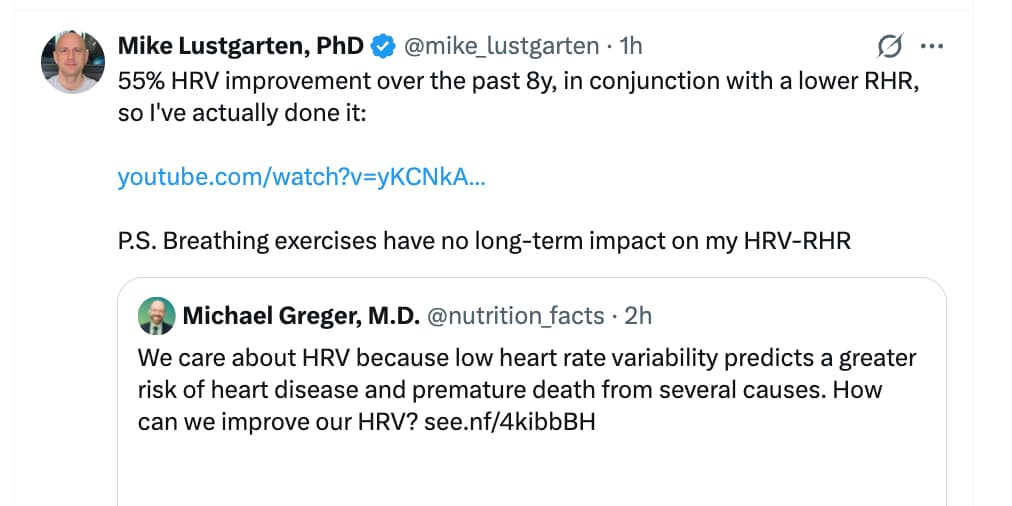
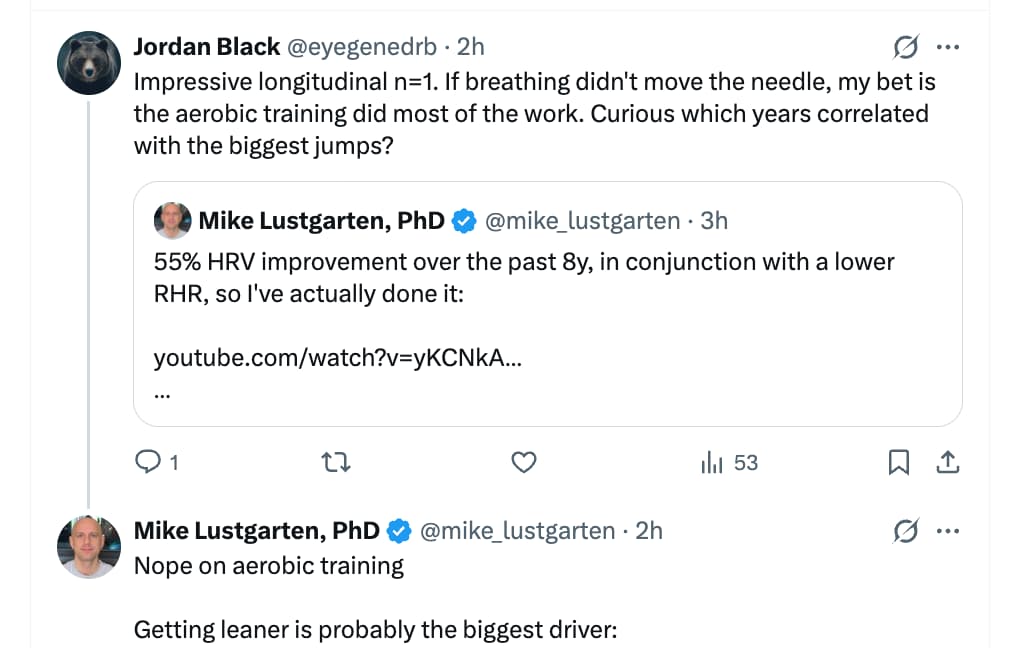
Mike’s Youtube video and summary on his HRV improvement approach is here: How I’ve Increased HRV by 53% While Also Reducing RHR

Source: This X post.

Details on the second video Mike is pointing to:

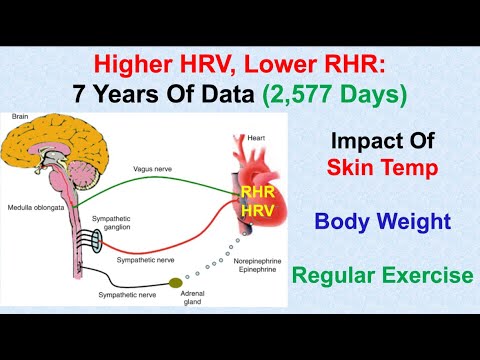
Higher HRV, Lower RHR: 2,577 Days Of Tracking

I. Executive Summary

The provided transcript details a longitudinal N=1 self-experimentation spanning 2,577 days, conducted by Dr. Mike Lustgarten, investigating the physiological optimization of heart rate variability (HRV) and resting heart rate (RHR). Serving as direct proxy metrics for autonomic nervous system equilibrium—specifically the dynamic balance between sympathetic (adrenal/norepinephrine) and parasympathetic (vagal) tone—HRV and RHR are deeply correlated with all-cause mortality and biological aging. While chronological aging universally induces a progressive decline in HRV and an alteration in cardiac autonomic control, this dataset demonstrates that precise environmental and behavioral titration can successfully resist and partially reverse this age-related degradation.

Over a seven-year period, quantitative tracking revealed an increase in average HRV from 47 to 59 milliseconds and a concomitant decrease in RHR from 51 to 42.4 beats per minute. A multivariate linear regression model applied to this dataset identified three primary modifiable variables that collectively explain 63% of the variance in RHR and 36% of the variance in HRV: nocturnal skin temperature, total body weight, and average daily heart rate (ADHR).

Foremost among these findings is the profound inverse correlation between nocturnal skin temperature and HRV. Minor elevations in skin temperature—often inadvertently induced by heat-retaining sleep surfaces such as memory foam mattresses—trigger a quantifiable sympathetic shift, depressing HRV and elevating RHR to levels mimicking acute physiological stress or overtraining. Consequently, thermal regulation during sleep emerges as a highly leveraged, passive intervention for autonomic recovery. Furthermore, total body weight demonstrated a strong positive correlation with RHR and an inverse correlation with HRV, reinforcing the mandate for lean mass maintenance without sacrificing functional strength. Finally, the analysis dictates an active periodization protocol utilizing ADHR. Chronic high-intensity output depresses long-term autonomic tone; therefore, acute cardiovascular stressors must be systematically alternated with quantified low-ADHR recovery days to ensure complete parasympathetic rebound. This data provides a targeted, actionable framework for engineering autonomic longevity.

II. Insight Bullets

  • Resting heart rate (RHR) and heart rate variability (HRV) quantify the physiological balance between sympathetic adrenal activation and parasympathetic vagal tone.
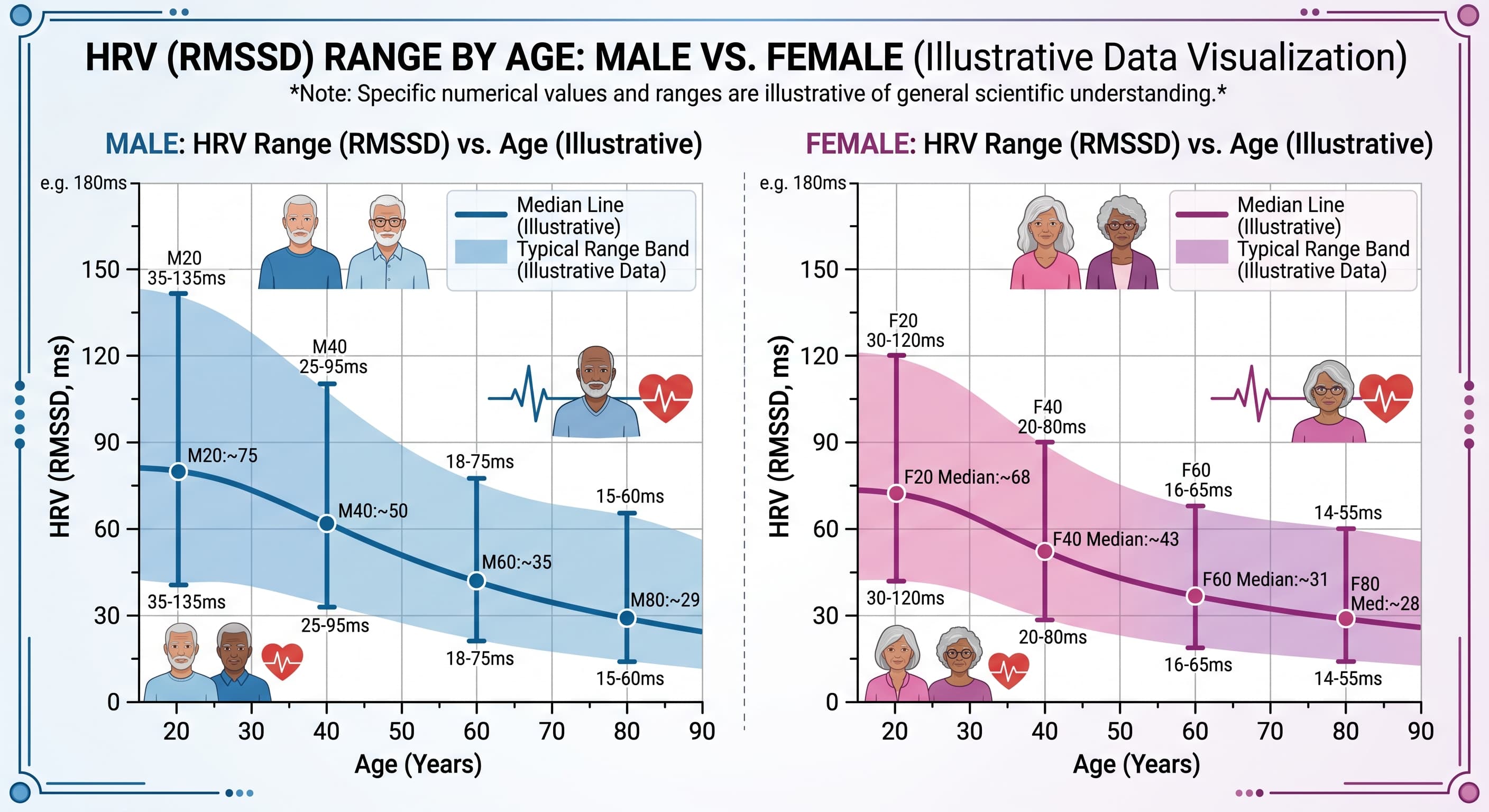
  • An optimal biological target for women is an HRV of at least 70 milliseconds, representing youthful autonomic elasticity.
  • An optimal biological target for men is an HRV of 75 milliseconds, equating to the median metric found in healthy 20-year-olds.
  • An ideal longevity target for RHR is maintaining a baseline of less than 45 beats per minute across both sexes.
  • Baseline HRV universally undergoes a progressive decline as an established biomarker of the standard biological aging process.
  • RHR follows a purported inverse U-shaped trajectory over a lifespan, maintaining low baselines in youth, peaking at midlife, and dropping in advanced age.
  • Achieving a simultaneous reduction in RHR alongside an elevation in HRV definitively indicates a shift toward a youthful autonomic phenotype rather than late-stage cardiac decline.
  • Seven continuous years of biometric tracking demonstrates that the age-related decline in HRV can be halted and reversed through targeted behavioral interventions.
  • Nocturnal skin temperature exhibits a statistically significant inverse correlation with next-day HRV metrics.
  • Elevated skin temperature during the sleep cycle consistently correlates with a physiologically detrimental increase in next-day RHR.
  • The thermal retention properties of a mattress act as a major, overlooked environmental variable dictating nocturnal skin temperature and resulting autonomic recovery.
  • Memory foam mattresses severely disrupt autonomic recovery by trapping body heat and triggering an extended sympathetic stress response during sleep.
  • Switching from heat-retaining memory foam to highly breathable air mattresses or specialized cooling beds drives a rapid rebound in depressed HRV levels.
  • Total body weight maintains a strong, statistically significant inverse correlation with long-term HRV baselines.
  • Body mass exhibits a high positive correlation (0.74) with RHR, meaning a heavier tissue burden directly elevates baseline cardiac output.
  • Weight reduction protocols must prioritize the preservation of functional strength and skeletal muscle over raw mass depletion to prevent metabolic deficits.
  • Average Daily Heart Rate (ADHR) operates as a superior, comprehensive proxy for systemic allostatic load compared to standard pedometer step tracking.
  • Tracking ADHR accurately captures the combined physiological toll of exercise, psychological stress, and baseline metabolic demand.
  • A high ADHR on any given day reliably suppresses HRV and artificially inflates RHR for the subsequent 24 to 48 hours.
  • Chronic high-intensity exercise without adequate titration induces persistent sympathetic dominance, blocking optimal autonomic baseline recovery.
  • Elite biological conditioning demands a periodization strategy where high-ADHR training days are actively followed by intentionally suppressed low-ADHR recovery days.
  • The combined statistical model of skin temperature, body weight, and ADHR explains exactly 63% of the variability inherent in RHR.
  • These same three lifestyle variables account for 36% of the total variance observed in daily HRV fluctuations.
  • Maintaining elite biological metrics demands that individuals prioritize continuity in their longitudinal tracking, extracting actionable data from infections or anomalies rather than discarding it.
  • Wearable biometric platforms, such as those provided by Whoop, enable the high-resolution, long-term tracking required to uncover latent physiological correlations.
  • Content monetization and specialized health protocols are actively documented on creator platforms like Patreon.
  • Systemic hydration purity, managed via advanced filtration systems like Clearly Filtered, acts as a foundational baseline for minimizing environmental autonomic stressors.
  • Next-generation biological age tracking utilizes epigenetic clocks, such as those developed by TruDiagnostic, to quantify deep cellular aging beyond standard cardiac metrics.
  • Continuous validation of dietary, behavioral, and metabolic protocols requires frequent serological evaluation via comprehensive blood panels from providers like Ulta Lab Tests.

IV. Actionable Protocol (Prioritized)

High Confidence Tier

  • Body Mass Optimization: Maintain a lean body weight to reduce overall cardiac demand; meta-analyses confirm weight loss interventions reliably improve cardiac vagal control and elevate baseline HRV [NLM NIH Meta-Analysis, 2021].
  • Exercise Periodization (ADHR Titration): Systematically alternate high-intensity physical exertion with quantified, low-intensity recovery days to prevent chronic sympathetic dominance and allow parasympathetic rebound. Current literature supports endurance exercise dose-response periodization for long-term HRV improvement [BMJ Open, 2022].
  • HRV Age-Decline Mitigation: Aggressive lifestyle interventions can delay the autonomic degradation usually seen with age. Broad systematic reviews confirm HRV declines linearly with chronological age across populations, establishing it as a primary therapeutic target [Frontiers in Aging Neuroscience, 2020].

Experimental Tier

  • Nocturnal Thermal Regulation: Maximize sleep environment cooling to passively lower nighttime skin temperature, which correlates with significantly improved overnight HRV recovery. Recent machine learning and biometric studies successfully correlate skin temperature variables with overall autonomic sleep architecture [NLM NIH, 2024].
  • Mattress Material Selection: Abandon heat-retaining memory foam mattresses in favor of highly breathable hybrid or inner-spring beds to lower resting skin temperature and avoid sleep-induced sympathetic stress.
  • ADHR Metric Tracking: Shift from basic step counting to tracking Average Daily Heart Rate (ADHR) to capture the holistic allostatic load spanning both exercise and psychological distress.

Red Flag Zone

  • Unverified Lifespan Cardiac Trajectory: The transcript claims that RHR follows a strict “inverse U-shape” that peaks at midlife and naturally declines to age 85. This conflicts with standard epidemiological data, which indicates RHR decreases from childhood into early adulthood and remains largely stable or experiences complex pathological, non-linear alterations in advanced age [NLM NIH Cohort Study, 2018]. Source unverified in live search regarding the specific mid-life peak/inverse U-shape claim.
  • Extreme Bradycardia Targets: Aggressively pursuing an RHR below 45 bpm absent elite endurance athletic conditioning carries unknown long-term risks; extreme generalized bradycardia in non-athletes lacks rigorous longitudinal safety data for general longevity protocols (Safety Data Absent).

Produced by Google Gemini 1.5 Pros