Testosterone: The "Metabolic Messenger" Rehabilitation

In a significant shift from its reputation as merely a reproductive hormone or a bodybuilding drug, a new major review in Nature Metabolism (Institution: Harvard Medical School & Tulane University, USA) redefines testosterone (T) as a critical “metabolic messenger.” Authored by heavyweights Franck Mauvais-Jarvis and Shalender Bhasin, this paper argues that T is essential for systemic homeostasis, regulating glucose, lipids, and energy balance across multiple organs.

The “Big Idea” here is the integration of T into the longevity pharmacopoeia not for lifespan extension per se, but for healthspan preservation. The authors dismantle the outdated view of T as purely “anabolic/androgenic,” highlighting its dual mechanism: it signals directly through the Androgen Receptor (AR) and indirectly via conversion to 17β-estradiol (E2) acting on Estrogen Receptors (ER). This “crosstalk” is vital for insulin sensitivity in muscle, lipolysis in adipose tissue, and beta-cell function.

Crucially, the paper leverages data from the landmark TRAVERSE trial to quell fears regarding cardiovascular (CV) toxicity, arguing that maintaining physiologic T levels in hypogonadal men is metabolically protective. However, for the longevity biohacker, the distinction is critical: while T fixes metabolic “broken parts” (hypogonadism, insulin resistance), it has not been proven to extend maximum lifespan in rigorous wild-type animal models, unlike its metabolite 17α-estradiol.

Source:

  • Open Access Paper: Metabolic Messengers: testosterone
  • Impact Evaluation: The impact score of Nature Metabolism is 20.8, evaluated against a typical high-end range of 0–60+ for top general science, therefore this is an Elite impact journal.

Part 2: The Biohacker Analysis

Study Design Specifications:

  • Type: Review / Perspective (Synthesizes data from Preclinical Models and Clinical Trials, including the TRAVERSE study).
  • Subjects: N/A (Review). Discusses C57BL/6J mice and Humans (Hypogonadal Men).

Mechanistic Deep Dive:

  • The Dual-Pathway: T is a “pro-hormone.”
    1. AR Signaling: Increases muscle mass (glucose sink) and reduces visceral fat (lipolysis).
    2. Aromatization to E2: Essential for vascular health and preventing fat accumulation. Blocking conversion (via Aromatase Inhibitors) negates many of T’s metabolic benefits.
  • Organ Priorities:
    • Muscle: Enhances mitochondrial biogenesis and insulin signaling.
    • Liver: Suppresses steatosis (fatty liver).
    • Pancreas: Protects β-cells from glucotoxicity (via AR).

Novelty: This paper formally codifies the shift from “T for libido” to “T for metabolic syndrome.” It integrates the TRAVERSE trial safety data to argue that T therapy is a viable tool for reversing pre-diabetic phenotypes in men, provided hematocrit is managed.

Critical Limitations:

  • Translational Gap: The benefits in hypogonadal men (restoring deficiency) do not prove efficacy in eugonadalmen (supra-physiological biohacking).
  • The Neutrophil Problem: A concurrent 2025 study (e.g., Nature Communications, Svedlund Eriksson et al.) suggests T exacerbates cardiac injury after acute myocardial infarction by increasing neutrophil infiltration. This contradicts the “cardioprotective” narrative in the acute setting.
  • Missing Data: Long-term data on T’s effect on aging rates (methylation clocks) is absent.

Part 3: Claims & Verification

Claim 1: “Testosterone therapy improves insulin sensitivity and glycemic control in men.”

  • Verification: Confirmed. Meta-analyses show T reduces fasting glucose and HbA1c in hypogonadal men with Type 2 Diabetes.
  • Hierarchy: Level A (Meta-analysis of RCTs).
  • Source: Diabetes Care Meta-Analysis

Claim 2: “Testosterone is safe for the cardiovascular system (MACE events).”

  • Verification: “Safe” is relative. The TRAVERSE trial showed non-inferiority (did not cause more heart attacks than placebo) in a high-risk population. However, it did increase rates of atrial fibrillation and pulmonary embolism.
  • Hierarchy: Level B (Large Scale RCT - TRAVERSE).
  • Confidence: [Medium - Specific risks exist].

Claim 3: “Testosterone reduces visceral adiposity.”

  • Verification: Strongly supported. T stimulates lipolysis and inhibits triglyceride uptake in adipocytes via AR.
  • Hierarchy: Level A/B.

Claim 4: “Testosterone extends lifespan.”

  • Verification: FALSE / UNPROVEN in wild-type organisms. It improves healthspan in disease states (hypogonadism), but fails ITP lifespan tests.
  • Hierarchy: Level D (Animal Data - Negative Result in ITP).

Part 4: Actionable Intelligence

The Translational Protocol (Rigorous Extrapolation):

  • Human Equivalent Dose (HED):
    • Note: Do not use animal conversion for T; use established clinical TRT dosing.
    • Standard TRT: 100mg Testosterone Cypionate per week (IM/SubQ).
    • HED Math (for reference): A mouse dose of 10mg/kg/week ≈ 0.81 mg/kg human dose. For a 75kg male, this is ~60mg/week. (Clinical doses are often higher to overcome SHBG binding).
  • Pharmacokinetics (PK/PD):
    • Bioavailability: Oral T is useless (liver destruction). Must be Injectable, Transdermal, or Pellet.
    • Half-life: Cypionate/Enanthate esters have a half-life of ~8 days. Weekly or twice-weekly dosing is required to prevent “troughs” that trigger mood instability.
  • Safety & Toxicity Check:
    • Erythrocytosis (Thick Blood): T stimulates erythropoietin (EPO). TRAVERSE trial confirmed significant increases in hematocrit. Action: Phlebotomy if Hematocrit > 54%.
    • Prostate: Does not cause cancer, but will accelerate growth of existing androgen-dependent tumors.
    • Liver: Injectable/Transdermal bypasses the liver (unlike oral 17-alkylated androgens).
    • Cardiovascular: WARNING: Avoid if recent MI (<6 months). Recent 2025 data suggests T worsens neutrophil-mediated damage post-MI.
  • Biomarker Verification Panel:
    • Efficacy: Free Testosterone (calc), SHBG, HbA1c (target <5.0%), Fasting Insulin (target <5 uIU/mL).
    • Safety: CBC (Hematocrit), PSA (Prostate), Estradiol (sensitive LC/MS), Lipid Panel (T may lower HDL).
  • Feasibility & ROI:
    • Cost: Generic T-Cypionate is Cheap (~$20/month).
    • ROI: High for quality of life/body composition. Low/Null for absolute lifespan extension.

Part 5: The Strategic FAQ

  1. Q: Does Testosterone actually extend life, or just make the engine run hotter?
  • A: Likely the latter. It is pro-growth (mTOR). Longevity generally favors maintenance (autophagy) over growth. T improves quality (healthspan) but likely trades off against maximum duration (lifespan).
  1. Q: How does this interact with Rapamycin?
  • A: Potentially Synergistic. Rapamycin inhibits mTORC1 (longevity), while T stimulates mTOR (muscle). Cycling them or using them together might allow “anabolic maintenance”—keeping muscle mass while preserving autophagy.
  1. Q: Should I block the conversion to Estrogen (use an AI)?
  • A: NO. The review emphasizes that T’s metabolic benefits (insulin sensitivity, vascular health) rely partly on aromatization to Estradiol. Crashing E2 ruins the metabolic ROI.
  1. Q: Is there a conflict with Metformin?
  • A: Potential blunting. Metformin can blunt the exercise-induced mitochondrial adaptations that T supports. However, for pure glycemic control, they are additive.
  1. Q: Why did the ITP find 17α-estradiol extends life but Testosterone doesn’t?
  • A: 17α-E2 improves glucose tolerance and lowers inflammation without the anabolic/androgenic load of T. It suggests the “feminizing” (or at least non-androgenic) pathway is the pro-longevity one.
  1. Q: Does T therapy mimic the “Neutrophilia” risk seen in the recent MI study?
  • A: Possibly. The mechanism (CXCL12 downregulation in bone marrow) appears intrinsic to Androgen Receptor activation. If you have a heart attack while on T, the damage might be worse.
  1. Q: What is the “Sweet Spot” for trough levels?
  • A: [Confidence: High] aim for the upper quartile of “youthful” normal (e.g., 700–900 ng/dL Total, 15–25 ng/dL Free). Supraphysiological levels (>1500 ng/dL) dramatically increase hematocrit/CV risk.
  1. Q: Can women use this “Metabolic Messenger”?
  • A: Yes, but dosing is critical (1/10th male dose). T is essential for female metabolic health, muscle, and bone density, though often ignored.
  1. Q: Does T worsen Sleep Apnea?
  • A: Yes. It is a known side effect. Hypoxia from apnea + T-induced erythrocytosis is a dangerous stroke cocktail.
  1. Q: Is this “Biohacking” or just “Medicine”?
  • A: For hypogonadal men, it’s medicine. For eugonadal men seeking optimization, it’s biohacking with real risks (infertility, dependency). The review supports the medical correction of metabolic syndrome via T.
5 Likes

Related Reading:

3 Likes

Lots of interesting data on the use of testosterone for weight loss in hypogonadal men

Effects of long-term treatment with testosterone on weight and waist size in 411 hypogonadal men with obesity Classes I-III: Observational data from two registry studies

Conclusions Testosterone therapy appears to be an effective approach to achieve sustained weight loss in obese hypogonadal men irrespective of severity of obesity. Based on these findings we suggest that T therapy offers safe and effective treatment strategy of obesity in hypogonadal men

https://www.researchgate.net/publication/280588923_Effects_of_long-term_treatment_with_testosterone_on_weight_and_waist_size_in_411_hypogonadal_men_with_obesity_Classes_I-III_Observational_data_from_two_registry_studies

Differential effects of 11 years of long-term injectable testosterone undecanoate therapy on anthropometric and metabolic parameters in hypogonadal men with normal weight, overweight and obesity in comparison with untreated controls: real-world data from a controlled registry study

Based on these findings we suggest that long-term TTh in overweight and obese hypogonadal men produces progressive and sustained clinically meaningful weight loss and that TTh may contribute to reductions in mortality and incident major adverse cardiovascular events.

4 Likes

Wow… big change in perspective from when I started TRT 6 years ago - cypionate 200 mg… 1 ml weekly. I added rapamycin a year later. I feel they work well together, my N=1.

Testosterone definitely took off some fat that first year of use… built muscle.

Rapamycin started clearing my visceral fat after 3 months use… by another 20 pounds. Giving me a shredded … toned physique.

“This paper formally codifies the shift from “T for libido” to “T for metabolic syndrome”.

Like Matt Kaeberlein said in a recent podcast, one of the best changes he’s made in his health protocols… testosterone and rapamycin.

I concur!

3 Likes

Notice your dose is double what is cited above.

2 Likes

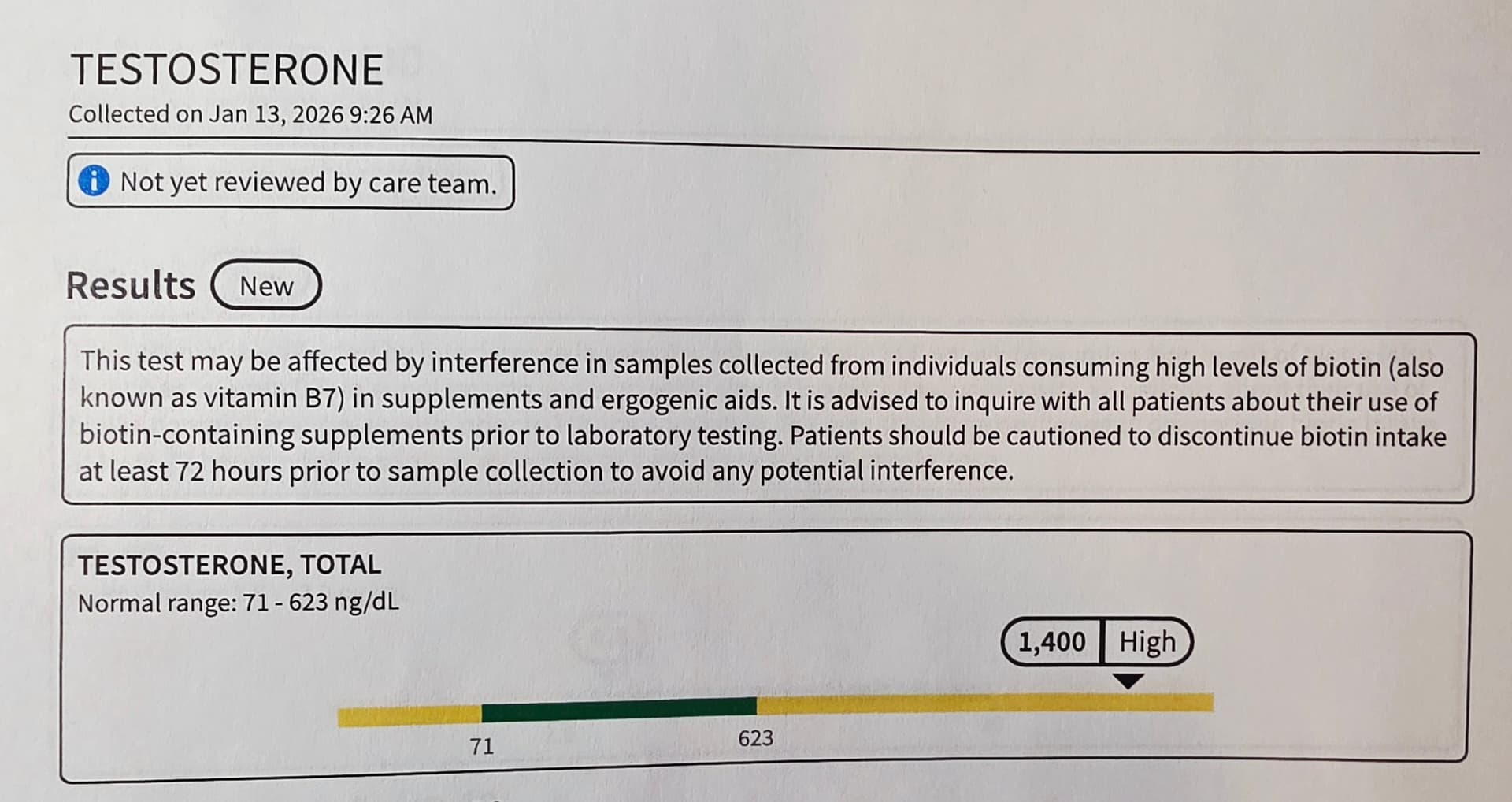
Blood tested yesterday… after my injection I am at 1400.

My physician adjusted to high normal. I am still in capacity of body normal… granted someone in their 20’s.

In his chart high normal 1200 - 1400. Been at this range 6 years. Feeling amazing in musclescand strength… 68 years in 3 months.

2 Likes

Pretty typical for someone in their 60’s . Once a week injection.

Blood tested yesterday… after my injection I am at 1400.

My physician adjusted to high normal. I am still in capacity of body normal… granted someone in their 20’s.

In his chart high normal 1200 - 1400. Been at this range 6 years. Feeling amazing in muscles and strength… fat control and skin quality - 68 years in 3 months.

1 Like

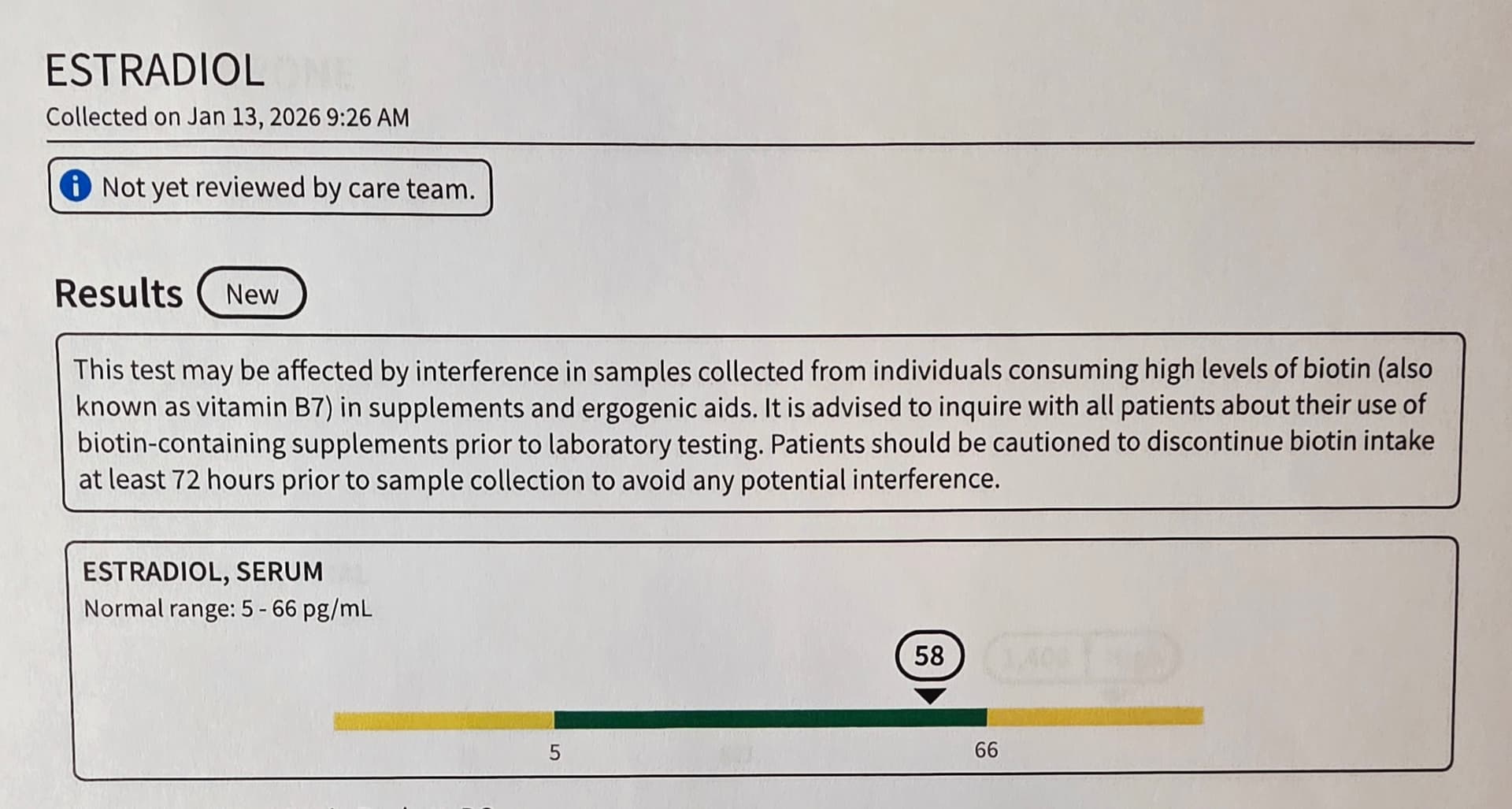
How is your Estradiol with that level of testosterone?

1 Like

Estradiol I am killing it at 58.
Estradiol, a key estrogen, is vital for male health, supporting libido, bone density, mood, and cognitive function, even though it’s often seen as a “female” hormone; it’s made from testosterone, and both too little and too much can cause issues like low sex drive, fatigue, bone loss (low), or gynecomastia (high), highlighting the need for hormonal balance in men.

Why men need estradiol

  • Sexual function: Regulates libido, erectile function, and sperm production.
  • Bone health: Essential for maintaining bone integrity and preventing osteoporosis, notes this study.
  • Metabolism & Body Comp: Helps with glucose metabolism and reducing fat mass.
  • Mood & Cognition: Influences mood, energy, and cognitive function.

When estradiol levels are off

  • Low levels (deficiency): Linked to fatigue, depression, anxiety, bone loss, increased fat, and low libido.
  • High levels (excess): Can cause erectile dysfunction, gynecomastia (breast tissue growth), infertility, and increased body fat.

Causes of imbalance

  • Low: Aging, low testosterone, aromatase inhibitor medications.
  • High: Obesity (more testosterone converted to estrogen), alcohol, marijuana use, certain medications, tumors.

Balance is key

  • Estradiol is produced when testosterone is converted (aromatized) in the body, so managing testosterone levels also affects estrogen.
  • Hormone replacement therapy for men sometimes involves testosterone to naturally raise estrogen, while other treatments, like aromatase inhibitors, can lower estradiol if it’s too high, explains this source.
  • Testing estradiol levels helps doctors understand the root cause of symptoms, as many issues attributed to low testosterone are actually due to low estradiol.


Testosterone at 623… isn’t good normal… 900 is getting better.

  • Normal Range: For adult men, typical total testosterone levels usually fall between 300-1000 ng/dL, though this varies with age and time of day, peaking in the morning.
  • Above Normal: Levels above 1000 ng/dL are considered high, with 1400 ng/dL being significantly elevated.

Free Testosterone still out.

2 Likes

Also remember that if someone is only injecting once a week, the levels of testosterone and estradiol will peak 24-48 hours later and then will be significantly lower one week later before the next injection. I wouldn’t obsess too much over the numbers given that they fluctuate so much in one week. If I were taking 200 mg a week, I would split it in two weekly injections just to keep the levels stable.

3 Likes

I’m sorry I have to laugh that on a longevity forum we are supporting 200mg T per week with a serum T >1400. And the “Free T” you posted is T3. Your thyroid hormone. Not your free testosterone.

2 Likes

Hahaha… you are right Shady. My bad. The Free Testosterone is a new request in my panel.

Free Testosterone still out… many of these labs were back literally in hours.

As to levels… huge difference in high normal 200 mg weekly at 1400ng/dL and steroid abuse at 8,000 weekly. What is considered high normal goes back and forth yearly.

But hey, you’re fairly young at 31- 40… I might have the same attitude. Or, maybe take a close look at your dad. He is probably my close to my age… hows his muscles, skin quality… gym workout strength… bone quality. Doing my best to slow down age and have quality health for life.

I started at age 62 years. Maybe we can compare notes when you’re 60 and I am 90. :wink:

And, online Men’s Health June 19, 2025 'Finding Your Ideal Dosing - typical dose: 100 - 200 mg cypionate per week. I am kinda typical.

3 Likes

This one I think:

1 Like

No disrespect, since we are all self experimenters, but I still don’t believe we should normalize a serum T of 1400 with an unknown free T level. The honest answer is, it isn’t normal. The Men’s Health article doesn’t even have an author listed. If 100-200mg/week was the standard dose needed in men then why does Xyosted come in dosages of 50, 75, 100mg? The reason is that for Xyosted to gain FDA approval they had to perform dose finding studies and they settled on 50, 75, and 100mg because that put 93% of men between 300-1000ng/dl. The highest “normal range” I could find was 1200ng/dl with most using the 1000ng/dl threshold. You are another 20-40% above this. I can pull the population serum T papers later, but I’d be surprised if outliers in those papers even reached 1400ng/dl.

I don’t doubt you feel good. High T feels great. Honestly, though in regards to longevity we have no data to support that dose. Also no data to support safety. The TRAVERSE study supplemented to ~25% of your level. Even in the studies that show benefits to “high” testosterone they are looking at upper tertile or quartile which still renders a serum T <1000ng/dl. If we have data on levels >1200ng/dl, I’d be interested to see it?

In regards to your comment on steroid abuse, yes pro bodybuilders (think Olympia level) use massive doses. But a standard 1st cycle of steroids for a new user is often ~400mg T per week. Your dose is not as far from steroid user doses as you think. This dose has been shown to add muscle even in the absence of strength training. 8g of anabolics is not common in your average gym steroid user. I also agree with Luke, if I was injecting 200mg/week I’d definitely be splitting it up.

From a clinical perspective, I’ve never seen a serum T of 1400 outside of exogenous hormones. I’ve seen a handful of men ~1100 and have never needed much over 100mg to achieve therapeutic levels. Consistent with the Xyosted dose studies.

Ultimately, do as you please and I’m glad you feel well but forum readers shouldn’t get the impression that 1400 is normal or even the correct target when it comes to testosterone replacement therapy.

4 Likes

Yes that’s the article…

1 Like

I understand… and each person is different. Measured caution is good. I have been tweaking my health for about 10 years… since I hit 58 years old.

For example, my response to rapamycin seems to be a super responder… in fat burning… strength, knocking down senescent cells and inflammation… skin quality, building immune resistance to allergies and such. There are those that seem to get no benefits, and many that say no to rapamycin at any dose. Same with HGH no dose. Understandable. I have found testosterone, rapamycin and HGH synergistic. A lot different from solo rapamycin, solo testosterone or solo HGH. That’s my qualitative physical feeling.

I do monitor my health more than most on this site with full blood panels every 4 months and body scans DEXA, Coronary Calcium Scans… as often as insurance permits… and do private pay Glycan and Methylation test every 6 month. Working with my physician to maximize all aspects… including D and B12 levels. Which are high normal.

So yeah, one size diet, workout or supplements doesn’t fit all. Or it would be easy. Chronological age can also have a lot to do with your plan. I’d be doing half my doses or less, if I were under 40 for rapamycin, TRT, HGH and other supplents.

Many do fine with testosterone at 600 or 900 ng/dL. Great. Or rapamycin at 2 mg weekly… or 12 mg…I believe is too high.

With my physician, I think I do fine a bit higher on testosterone. Not really a lot of good research on TRT. But, the attitude on supplemental testosterone for aging health has pivoted 360 from bad… to beneficial.

I have had several doctor’s my age in their earlier 60’s that would not support any anti-aging protocols at all… aging is normal accept it. They are looking their advanced age and seek retirement. I am catching my second wind.

Fortunately, you get the benefit of what is being learned now… through us. I took the leap on TRT and Rapamycin as an early adopter when these were :100: negative. I like my choices.

As Blagosklonny said… from Seth Godin… If you wait until you are ready … its almost certainly too late." A little higher dose is a safe bet for me.

I don’t have the luxury of youthful years that you have… to wait and see. And, monitoring and health/biological testing tell me… stay the course. But, my course shouldn’t be yours. Almost everyone in the field says this… Kaeberlein Attia, etc.

4 Likes

I agree but I’ll also say the truth is that we don’t really know if 1400 ng/dL from injectable testosterone is harmful or not. You could make the case for some other hormones that a slightly higher than normal level could be ideal.

With the limited data we have now, I’d say 800-900 is a good target until we know more. We don’t really know if the normal range on injectable testosterone should be the same as the range for people who are not on TRT.

That being said, we also don’t know that 1400 extends lifespan either so your point is valid. The question is where the cut off is.

1 Like

We identified 7,790 males aged 18 or older with mortality data. Of those, 7,715 had testosterone <1000 and 75 men had testosterone > 1000. Among all patients in our cohort, 643 died of all causes, and 199 died of MACE. In the multivariable logistic regression adjusted for potentially confounding variables, we found testosterone >1000 was associated with all-cause mortality (OR 2.59, 95% CI 1.29-5.20, p=0.007).

https://academic.oup.com/jsm/article/21/Supplement_1/qdae001.281/7600971

4 Likes

Thanks for sharing

1 Like

Well going for quality living and longevity.

Let’s see how it is working at 80… I am no hurry. Hahaha :laughing: