Different kind of cancer, but just shows we should never ignore discomfort …which I’m guilty of doing.
4 Likes
Yeah, ovarian cancer is a nasty one because there’s no screening test, there are few symptoms at the early stages, and from what I understand it’s even fairly difficult to diagnose based on things like ultrasound which you might have routinely for other reasons.
3 Likes
On the subject of colon cancer I just posted a new thread that has a very strong correlation with this I Found the Philosopher’s Stone! Death begins in the colon - and so we must not ignore it!
Dried Plums Drive Gut Microbiome Shifts but Fail to Halt Colon Carcinogenesis in Rats
The relationship between dietary fiber, gut microbiota, and colorectal cancer (CRC) prevention remains a highly debated topic in nutritional oncology. A recent in vivo study investigated whether the consumption of prunes (dried plums)—a food rich in fermentable fibers, sorbitol, and polyphenols—could mitigate tumor development in a chemically induced colon cancer model. Over a 32-week feeding trial, male Wistar rats were administered weekly injections of the carcinogen 1,2-dimethylhydrazine and fed either a matched basal diet, a 5% prune diet, or a 10% prune diet.
The primary hypothesis was that the highly fermentable components of prunes would increase the production of short-chain fatty acids (SCFAs), specifically butyrate, thereby reducing colonic tumorigenesis. While the prune-supplemented diets did indeed radically alter the gut microbiome and significantly elevate total cecal SCFAs and butyrate levels, these physiological changes failed to reduce the incidence, count, or volume of colonic tumors.
Notably, the data revealed a non-significant trend toward fewer small intestinal tumors in the prune-fed cohorts, suggesting that the protective effects of fermentable fibers like pectin may be highly localized. Furthermore, the prune diets decreased epididymal fat pad weights without altering total caloric intake, pointing toward an uncoupled metabolic benefit likely driven by intestinal viscosity. Ultimately, this data challenges the prevailing assumption that merely elevating colonic butyrate via dietary fermentation is sufficient to yield chemopreventive effects against CRC, highlighting a critical knowledge gap in our understanding of microbiome-metabolite-host interactions.
Context
- Open Access Paper: Prune (dried plum) consumption does not reduce colonic tumor formation but drives beneficial changes in the gut microbiome of rats
- Institution: University of Minnesota, St. Paul, MN.
- Country: United States.
-
Journal: Food & Function (Royal Society of Chemistry).
Impact Evaluation The impact score of this journal is approximately 5.4, evaluated against a typical high-end range of 0–60+ for top general science, therefore this is a Medium impact journal.
Part 2: The Biohacker Analysis
Study Design Specifications
- Type: In vivo (chemically induced carcinogenesis model).
- Subjects: Male Wistar rats.
- Total N: 81.
-
Cohorts: * Basal Control: n=29.
- 5% Prune Diet: n=25.
- 10% Prune Diet: n=24 (tumor analysis) / n=21 (metabolite analysis).
Mechanistic Deep Dive
-
Epigenetic Regulation via Butyrate: Butyrate is an established histone deacetylase (HDAC) inhibitor, a mechanism widely speculated to confer chemoprotection by preventing the epigenetic silencing of tumor suppressor genes. This study successfully achieved a linear, dose-dependent increase in cecal butyrate via prune supplementation. However, the failure of this elevated butyrate to attenuate colonic tumors suggests that either the localized concentration was insufficient, or that endogenous fermentation-derived butyrate lacks the chemopreventive efficacy frequently observed in in vitro cell culture models. [Confidence: Medium].
-
Inflammatory Pathways (NF-kB & Wnt/beta-catenin): The researchers investigated colonic mucosal markers, specifically looking for suppression of the pro-inflammatory transcription factor NF-kB and the Wnt-pathway regulator beta-catenin. Prune consumption yielded no significant modulation of these proteins, nor did it reduce systemic calprotectin.
-
Organ-Specific Aging Priorities (Metabolic Tissue): Interestingly, the 5% prune cohort exhibited significantly reduced liver and epididymal fat pad weights despite identical caloric intake and terminal body weights. This indicates a potential modulation of lipid metabolism and adiposity, likely mediated by the soluble fiber (pectin) content altering nutrient absorption kinetics.
Novelty This paper isolates the limits of dietary prebiotics in cancer prevention. It demonstrates that driving beneficial shifts in the microbiome—such as increasing the abundance of Lachnospiraceae (Blautia , Coprococcus ) and the archaeon Methanosphaera —does not automatically translate to halted carcinogenesis. The positive correlation between Methanosphaera and total SCFA production is a highly novel finding, warranting further investigation into the role of archaea in human longevity and metabolic health.
Critical Limitations
-
Translational Uncertainty: 1,2-dimethylhydrazine is a potent, synthetic DNA-alkylating agent. While it reliably produces tumors, it bypasses the chronic, low-grade inflammatory etiology that drives most spontaneous human colorectal cancers. [Confidence: High].
-
Absence of Inflammatory Baseline: The control diet did not mimic a standard “Western Diet” (i.e., it was not high-fat or high-sugar). The lack of baseline inflammation likely masked any potential anti-inflammatory properties of the prune polyphenols, rendering the NF-kB data inconclusive.
-
Confounding Variables in Diet Design: The basal diet utilized non-fermentable cellulose as its sole fiber source, while the prune diets introduced highly fermentable pectin. Consequently, the study actually measures the difference between fermentable and non-fermentable fibers, rather than isolating the specific polyphenol or micronutrient effects of the prunes themselves.
2 Likes
So many supplements and medicines that are supposed to prevent colon polyps have been a complete failure for me. Maybe they prevented the old style polyps but not the new style.
I think the key here is that there are 2 types of colon cancer - the traditional cancer that develops in older adults and the newer cancer that develops in younger adults. These two types of colon cancer also form in different parts of the colon. The new type develops in the rectum and the side of the colon closest to the rectum. Traditional colon cancer forms in the middle and the side closest to the small intestine.
The only way to definitely prevent both is with a colonoscopy.
3 Likes
This sort of experiment is not very useful IMO. Chemically inducing tumours really doesn’t have any relevance to the way that humans develop cancers.
If you know anything about statistics, this study is MASSIVELY underpowered. They’ve got ~25 rats per group, with the highest tumour incidence of 86%. So in order to actually detect a significant change in tumour formation, with 80% power at a = 0.05… you’d need almost 60 rats per group, not 25. In order to detect a p ≤ 0.05 significant change in tumour incidence, they’d need to see a 60% reduction in tumour formation, which is almost impossible. So a negative result isn’t a surprise, and it doesn’t actually tell us anything about prunes and colon cancer anyway.
Plus, they seem to have a huge number of end points: tumour incidence, count, volume, in multiple locations, fat pad weights, the microbiome, fecal analyses… so basically it’s very likely that they’ll find something significant to talk about, which is exactly what they did with the butyrate etc.
4 Likes
And I can’t imagine eating enough prunes to really make a difference - I have started leaving most of the skin on the green banana I put in my Jade Smoothie (I just peel off the very outer layer) the fibrous peel is strangely satisfying to chew on once blended. That or a plate of cooked and refrigerated lentils or potatoes gives a lot more bulk for your colon to ferment than a few prunes would.
1 Like
I don’t disagree about the colonoscopy but I hadn’t heard about two kinds of tumours? I thought it was pretty clear that most were at the distal end.
No. Based on my research there appears to be two types, early and late onset, but they are usually clumped together as colon cancer. The difference is where and when the polyps appear. Early onset is much more dangerous IMHO due to people waiting to screen until it is too late.
1 Like
This is more “science” than “medicine / translation”, but very interesting:
Naturally Occurring Bacteria Completely Eradicate Tumors in Mice With a Single Dose
In experiments using a mouse model of colorectal cancer, researchers observed an extraordinary outcome after administering E. americana through a single intravenous injection. The treatment completely eliminated tumors in every case, resulting in a 100% complete response (CR) rate. This level of effectiveness was far greater than what is typically seen with established cancer therapies such as immune checkpoint inhibitors (anti-PD-L1 antibody) and the chemotherapy drug liposomal doxorubicin (chemotherapy agent).
4 Likes
A new take on the causes and solutions to the increasing risk in youth of colorectal cancer:
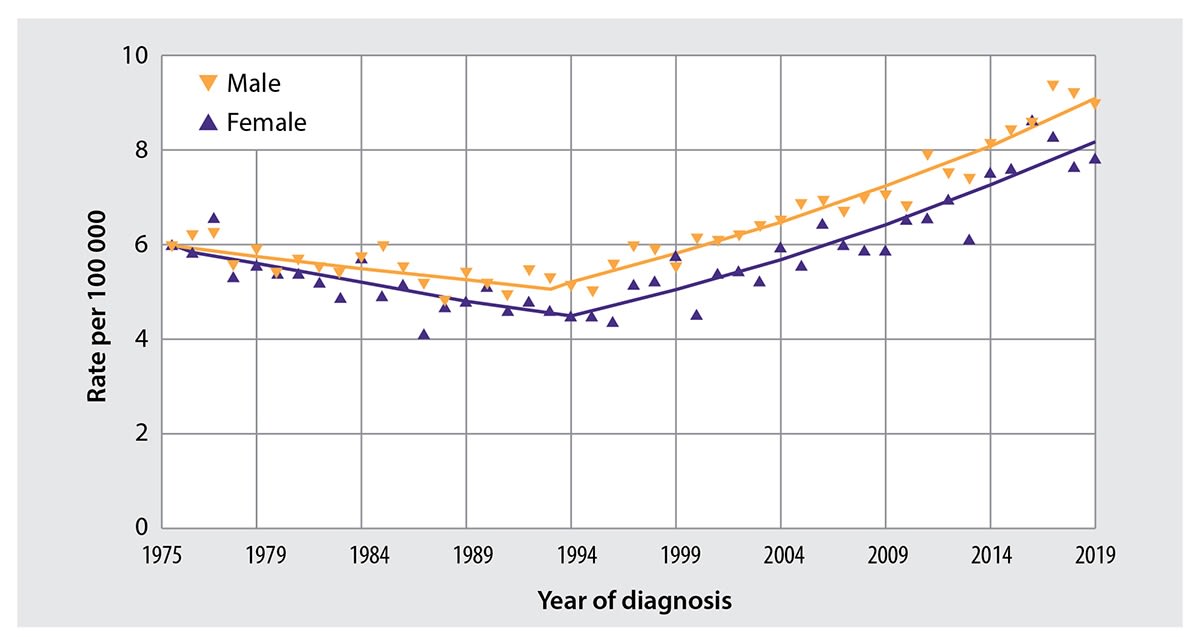
Why are early-onset colorectal cancer rates spiking?
You may have heard that early onset colorectal cancer has doubled in the past 30 years. This claim is true, but undersells the phenomenon - “early onset” is medically defined as “under the age of 50.” If you focus only on colorectal cancer in children (individuals under 18 years of age), there has been a ~400% increase in incidence1.
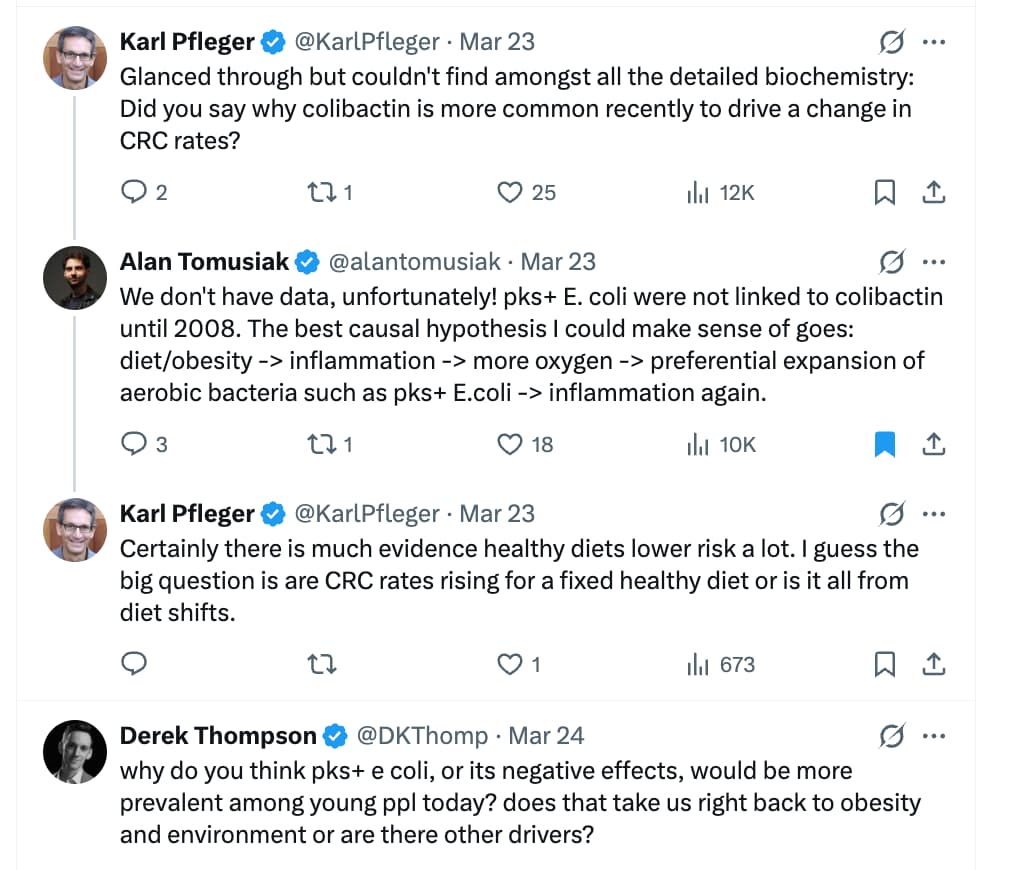
Why? To some extent the answer to this question is unknowable2, but a wide range of explanations have been proposed, from obesity to microplastics to dietary changes. Many of these influence colorectal cancer risk by affecting the microbiome, shifting it away from an enrichment of symbiotic bacteria and towards a higher ratio of aggressive, pro-inflammatory microbes.
But how does changing the microbiome cause cancer? The answer, in many cases, is very direct.
Read the full story: Why are early-onset colorectal cancer rates spiking?
Related:
Source: https://x.com/alantomusiak/status/2036138383584665964?s=20
1 Like
Young colon cancer linked to specific fats in ultra-processed foods
A few new clues are emerging.
At the annual American Society of Clinical Oncology conference in Chicago this week, several presenters coalesced around the idea that young-onset colorectal cancer is a distinct disease from the kind that tends to hit people in their late 60s or early 70s.
Too much oil and grease, not enough nuts and fish
Dr. Ning Jin at The Ohio State University has gone straight to the source to better understand young colon cancer. She’s investigated a small set of 16 tumors from young-onset colorectal cancer patients and compared them to 26 older patients’ tumors. Her work has pinpointed 11 cancer genes that are more prevalent in young people, revealing what she calls a new genetic “fingerprint” for young colon cancer.
“Our study showed that early-onset colorectal cancer is a biologically unique disease,” Jin told Business Insider. “The cancer behaves differently.”
4 Likes
Even when polyps are removed during colonoscopy, your risk of CRC may remain elevated for a decade or more. This could be due to the microbiome.
Long-lasting gut microbiome and fecal metabolome alterations after colorectal adenoma removal and their relationship to colorectal cancer
https://www.cell.com/cell-host-microbe/fulltext/S1931-3128(26)00177-0
Pop-sci article:
Gut changes linger years after polyp removal and may signal colorectal cancer risk
6 Likes
Targeting peripheral 5-HT2AR enhances antitumor immunity in colorectal cancer
Highlights
• Lysergic acid diethylamide inhibits colorectal cancer progression through 5-HT2AR activation
• A non-brain-penetrant 5-HT2AR agonist, IHCH-8110, selectively targets peripheral 5-HT2AR
• IHCH-8110 activates 5-HT2AR on enteric glial cells and promotes antitumor immunity
• IHCH-8110 sensitizes immune-cold colorectal cancer to PD-1 blockade therapy
Summary
Cancer remains a leading cause of morbidity and mortality worldwide. While classical psychedelics have been used clinically to treat cancer-associated psychiatric disorders, their impact on tumor progression is unclear. Here, we show that by targeting the serotonin receptor 5-HT2AR, lysergic acid diethylamide (LSD) enhances CD8+ T cell-mediated antitumor immunity and suppresses colorectal cancer (CRC) growth. To harness this activity while avoiding psychedelic effects, we developed IHCH-8110, a non-brain-penetrant 5-HT2AR agonist that selectively targets peripheral 5-HT2AR. We show that IHCH-8110 inhibits CRC progression by activating 5-HT2AR on enteric glial cells, thereby inducing CXCL10 and interleukin (IL)-18 expression to promote CD8+ T cell recruitment and effector polarization within the tumor microenvironment. By converting immune-cold CRC into a more immunologically responsive state, IHCH-8110 enhances the efficacy of PD-1 blockade. Together, our findings identify enteric 5-HT2AR signaling as a regulator of antitumor immunity and support peripheral 5-HT2AR agonists as a therapeutic strategy for CRC immunotherapy. Full paper: https://www.cell.com/cell/fulltext/S0092-8674(26)00826-3
3 Likes
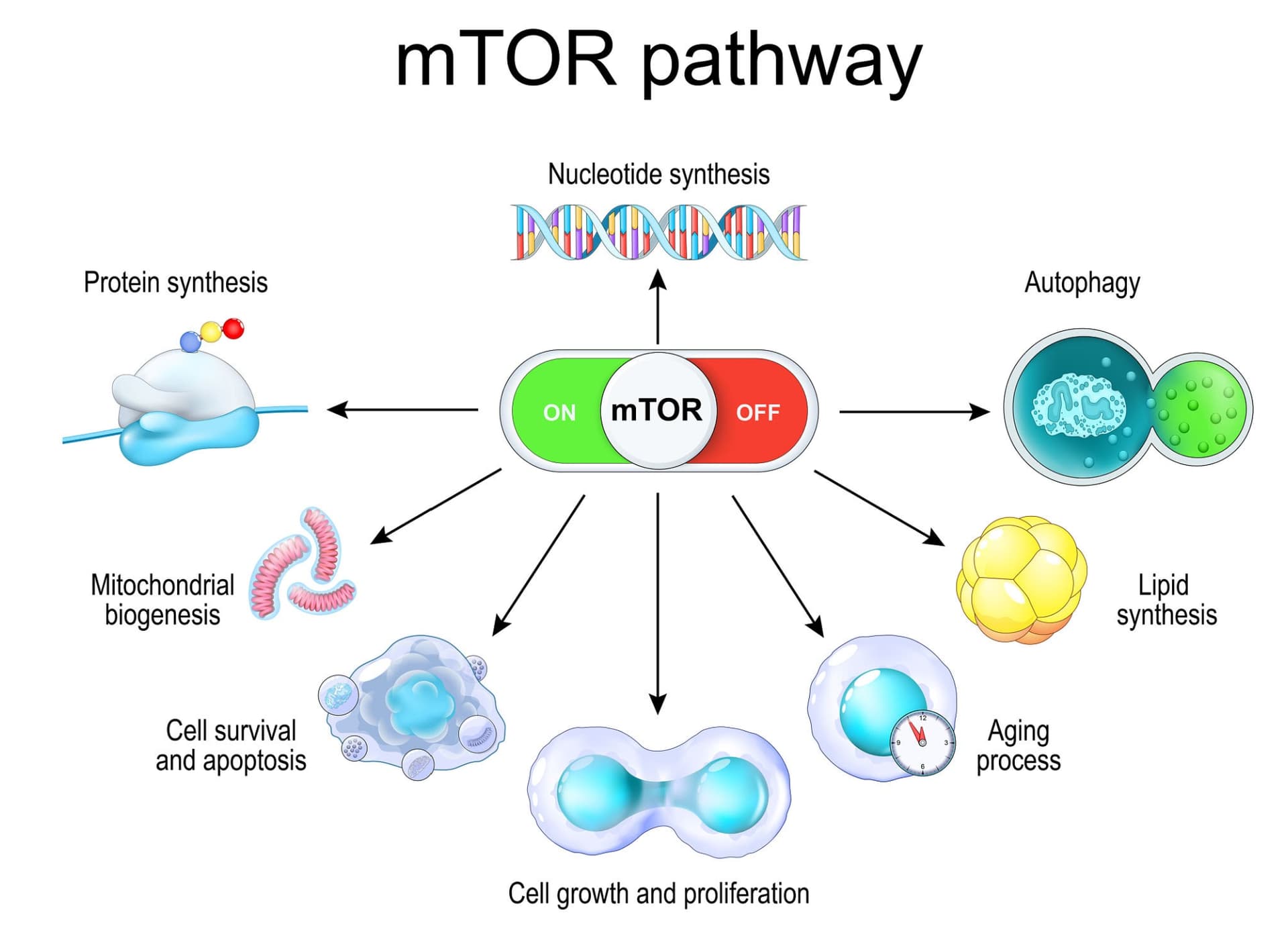
Maybe a little reminder of why rapamycin extends life in animal studies:
“The Interventions Testing Program (ITP): The landmark study demonstrating that rapamycin robustly extends both median and maximal lifespan in genetically heterogeneous mice, primarily by delaying the onset of spontaneous, age-related cancers (Harrison et al., 2009).”
And those particularly concerned about colon cancer:
Transgenic Cancer Models: Research showing that systemic mTOR inhibition via rapamycin profoundly suppresses polyp formation, delays progression to dysplasia, and improves survival in mice genetically engineered with Apc mutations to develop severe intestinal cancers (Hardiman et al., 2014).
Gemini Pro 3.1:
The most compelling data for rapamycin as a cancer preventative comes from extensive rodent studies, particularly those measuring natural lifespan and spontaneous disease.
- The Interventions Testing Program (ITP): In the National Institute on Aging’s gold-standard ITP trials, rapamycin consistently extended the median lifespan of genetically heterogeneous mice by up to 26%. Crucially, because the vast majority of laboratory mice die from spontaneous age-related cancers (such as lymphomas and sarcomas), extending their lifespan inherently requires delaying cancer. Autopsies of these mice confirmed that rapamycin significantly delayed the onset and reduced the overall incidence of these terminal tumors.
- Transgenic Cancer Models: Researchers have engineered specific mouse strains that are genetically predisposed to develop certain cancers. When given rapamycin, these mice show dramatic improvements. For example, in APC^min mice (predisposed to intestinal polyps and colon cancer) and mice engineered to develop breast or prostate cancers, rapamycin heavily suppresses tumor burden and significantly delays the age at which the tumors first appear.
- p53 Mutant Mice: The p53 gene is a critical tumor suppressor. Mice lacking functional p53 usually develop aggressive tumors early in life. Administering rapamycin to these highly cancer-prone mice slows down tumor development and extends their survival, proving that mTORC1 inhibition can partially compensate for the loss of primary tumor-suppressing genes.
Getty Images
6 Likes
Out of sheer nosiness, I am wondering if this story ever had a resolution?
@DeStrider It seems people agree with your earlier post!
This makes a lot of intuitive sense too. We know that one of the biggest risk factors for getting cancer is previously having had cancer. There’s something called the “field effect”, where basically you’ve proven that a certain tissue can give rise to a tumour already, and it’s more likely to occur again than in a naive tissue. That’s certainly the case for skin cancers and breast cancer, and I’d assume for colorectal cancer too.
And I think for people who do have polyps removed, the standard practice is already recommending to screen them more frequently than somebody with a totally clean colonoscopy, for this exact reason. So it’s nice to better understand the reason why, but I think we’d cottoned onto this one already in general practice.
2 Likes
Right. Although it can be a nuanced thing. Sometimes it matters how any given tissue got to be that way. As an example, I had a BCC on my back in 2011 and removed in 2012. Usually the pattern is that if you’ve had one, you’ll have more skin cancer (BCC or SCC) as well as recurrence of the removed growth (e.g. by Moh’s). In my case, I know for a fact that I had several events where I was sunburned on my back as a kid falling asleep on the beach. And decades later I got a BCC on my back. So it’s not necessarily that the tissue is prone to cancer by itself, rather that an insult caused these changes which in time resulted in cancer. And in my case, so far - 14 years later - I’ve had neither a recurrence of the original cancer or any new instances. Of course, I get annual whole body dermatological exams, but it started out as every 6 months, now it’s down to once a year. Statistics say, that if you have not had a recurrence 10 years later, your risk is no longer elevated. Perhaps just that one specific area on my back was affected that badly by UV and once removed, there’s no more vulnerable tissue - but that may be overly optimistic. My point is, it matters how the tissue got to be vulnerable to carcinoma. Because something with a strong genetic background which you cannot change, like a Lynch Syndrome, might be different from a polyp that developed as a result of dietary factors which can be changed.
However it is also true that statistically people who have for example BCC, have elevated odds of getting completely different cancers:
Common skin cancer can signal increased risk of other cancers
4 Likes
is there any research that links colon cancer with splicing isoform changes
chatGPT(6AstraMaxPaid):
Yes. There is substantial research linking colon cancer to changes in splice isoforms, including experiments showing that particular isoforms help drive tumour growth, invasion and treatment resistance. Much of this research uses the broader term colorectal cancer (CRC).
Here are some informative examples:
| Gene / isoforms | Findings | Primary study |
|---|---|---|
| RAC1 → RAC1B | Inclusion of an extra exon produces RAC1B. Higher RAC1B expression was associated with aggressive cancer and poorer survival. Removing this isoform reduced tumour formation in mice; blocking its splicing increased sensitivity to cetuximab in resistant human tumour organoids. | Gudiño et al., Nature Communications, 2021 |
| CD44 and NUMB | Changes in the splicing regulator ESRP1 favoured CD44s and NUMB2/4 isoforms. Functional experiments linked these isoforms to increased invasion and metastasis; patient analyses associated them with poorer survival. | Xu et al., eLife, 2022 |
| TIMP1: full-length versus an isoform lacking exons 4–5 | The shorter isoform was reduced in CRC and suppressed tumour growth and metastasis when experimentally restored. SRSF1 favoured inclusion of exons 4–5; experimentally redirecting splicing towards their exclusion restrained tumour growth. | Sun et al., Genome Medicine, 2023 |
| KRAS isoforms regulated by SRSF1 | Researchers found widespread splicing changes following loss of the tumour suppressor APC. SRSF1-controlled KRAS splicing helped cancer cells acquire less differentiated, stem-like properties. Reducing SRSF1 impaired invasion in a mouse model. | Hall et al., Nature Communications, 2022 |
There is also a particularly relevant connection to RNA polymerase II and transcription speed. A 2022 study examined ZO-1, a protein involved in cell junctions. Researchers found that:
- GLTSCR1 slowed transcription of the ZO-1 gene.
- This provided more time for splicing machinery to recognise weak splice sites and include exon 23.
- The exon-23-containing isoform suppressed migration and invasion of colorectal cancer cells.
- In 64 paired human samples, tumours showed less exon 23 inclusion than neighbouring normal tissue.
This provides a concrete example of transcription kinetics influencing isoform choice and, through that, cancer behaviour. In this particular case, slower transcription favoured the protective isoform. Han et al., Journal of Molecular Cell Biology, 2022
The distinction is between finding an isoform associated with cancer and demonstrating that changing the isoform changes cancer behaviour. Several studies above provide the latter evidence in experimental models. They support a causal contribution to progression, but do not establish that splicing changes initiated the original human cancer—or that insufficient acetyl-CoA was their upstream cause.
There is an interesting question as to whether splicing itself slows down transcription
It can, but splicing does not invariably slow RNA Pol II. The feedback works both ways: spliceosome activity can produce local pauses, while successful spliceosome assembly can also help Pol II continue transcription.
Three findings clarify this:
-
Splicing can trigger temporary pauses. In yeast, researchers found Pol II pausing near the ends of introns. The pause disappeared when splicing was disrupted by an intron mutation and returned when the splicing defect was corrected. This supports feedback from splicing to transcription. Alexander et al., 2010
-
Defective spliceosome assembly can slow transcription. In human cells, inhibiting U2 snRNP, which recognises the intron’s branch site, prolonged Pol II pausing near gene starts and reduced early elongation speed. Recruitment of P-TEFb, a factor that helps release paused polymerase, also fell. Here, functioning splicing machinery helped transcription proceed. Caizzi et al., 2021
-
Pol II does not have to wait for every intron to be removed. Splicing can occur on RNA behind the advancing polymerase, and some finishes after transcription has ended. Experiments with engineered genes in human cells found that adding introns did not measurably slow Pol II elongation in that system. Brody et al., 2011
The useful distinction is between temporary pauses associated with normal splicing, prolonged pauses caused by defective assembly, and splicing that proceeds while Pol II continues downstream. Consequently, slower production of finished, spliced mRNA does not necessarily mean slower movement of Pol II.
In the ZO-1 colon-cancer example above, the demonstrated direction was slower Pol II elongation changing splice-site selection. That study alone does not establish that splicing caused the slowdown. Han et al., 2022
1 Like
Mitochondrial metabolism determines chemotherapy sensitivity in colorectal cancer
https://www.nature.com/articles/s42255-026-01578-w
Despite its widespread use in colorectal cancer (CRC) treatment, resistance to 5-fluorouracil (5FU) remains poorly understood. As an antimetabolite, 5FU imposes substantial metabolic stress, forcing cells that survive treatment to rapidly adapt. We explored acute 5FU-driven changes in mitochondria, the organelle critical for coordinating metabolic stress responses. Here we demonstrate in a range of CRC models that 5FU treatment promotes mitochondrial biogenesis and increases mitochondrial function in surviving cells. Furthermore, we show that targeting mitochondrial metabolism, particularly by inhibiting Complex I, sensitizes CRC cells to 5FU, resulting in delayed tumour growth and prolonged survival in preclinical models.
Here, we focused primarily on the acute mitochondrial impact of 5FU, and although we arrived at the combination of 5FU and mitochondrial inhibitors (more specifically, 5FU and metformin) somewhat serendipitously, we have now generated evidence to support the use of 5FU and metformin combinations not only in patients with resistant or relapsed disease as previously suggested by others, but also in treatment-naive, first-line chemotherapy settings.
1 Like
Colonoscopy Intervals and Colorectal Cancer Incidence after Adenoma Removal
https://www.nejm.org/doi/full/10.1056/NEJMoa2603816?query=TOC
In this ongoing noninferiority trial conducted in eight European countries, we randomly assigned patients with high-risk adenomas (defined as ≥1 adenoma with a diameter of ≥10 mm, high-grade dysplasia, or villous growth or 3 to 10 adenomas of any kind) to undergo a first colonoscopy at 5 years after polyp removal or at 3 years; surveillance at 3 years is currently recommended in guidelines. The 3-year group also underwent colonoscopy at 5 years. The primary end point is the cumulative incidence of colorectal cancer at 10 years, with a prespecified noninferiority margin of 0.7 percentage points for the upper boundary of the confidence interval for the difference between the two groups.
1 Like