u just do a colonscopy every 10y, thats the gold standard
fecal occult stool test help as well but those often have false positives…i had blood detected when i repeated it 5x…3x out of 5x it detected blood in my stool…but it was actually from the rectal opening lol
the polyps need 5-10y to develop into cancer so if u do every 10y ur safe from colon cancer
What do you exactly mean by this? Are you suggesting that colon cancer is so rare that it only happens 1 in 10million cancers? Can you post a link as I think it is way more common than that. I just so happened I know two people who passed away from it.
Colon cancer affects 1 in 23 men and 1 in 25 women. Not horrible odds, but not great either. You have about a 4.2% chance of getting it, but it seems the odds are rising.
Wow, I was in the procedure room for just over 1 hour. They woke me up and I felt a little “drunk” for less than 30 minutes and was totally normal afterwards. They gave the usual warnings of “don’t drive or ride a bike” etc nevertheless. A little bit of a sore throat that night and the next morning, and a bit gassy. Overall nothing unpleasant or long-lasting at all. Amazing that your experience can differ so much!
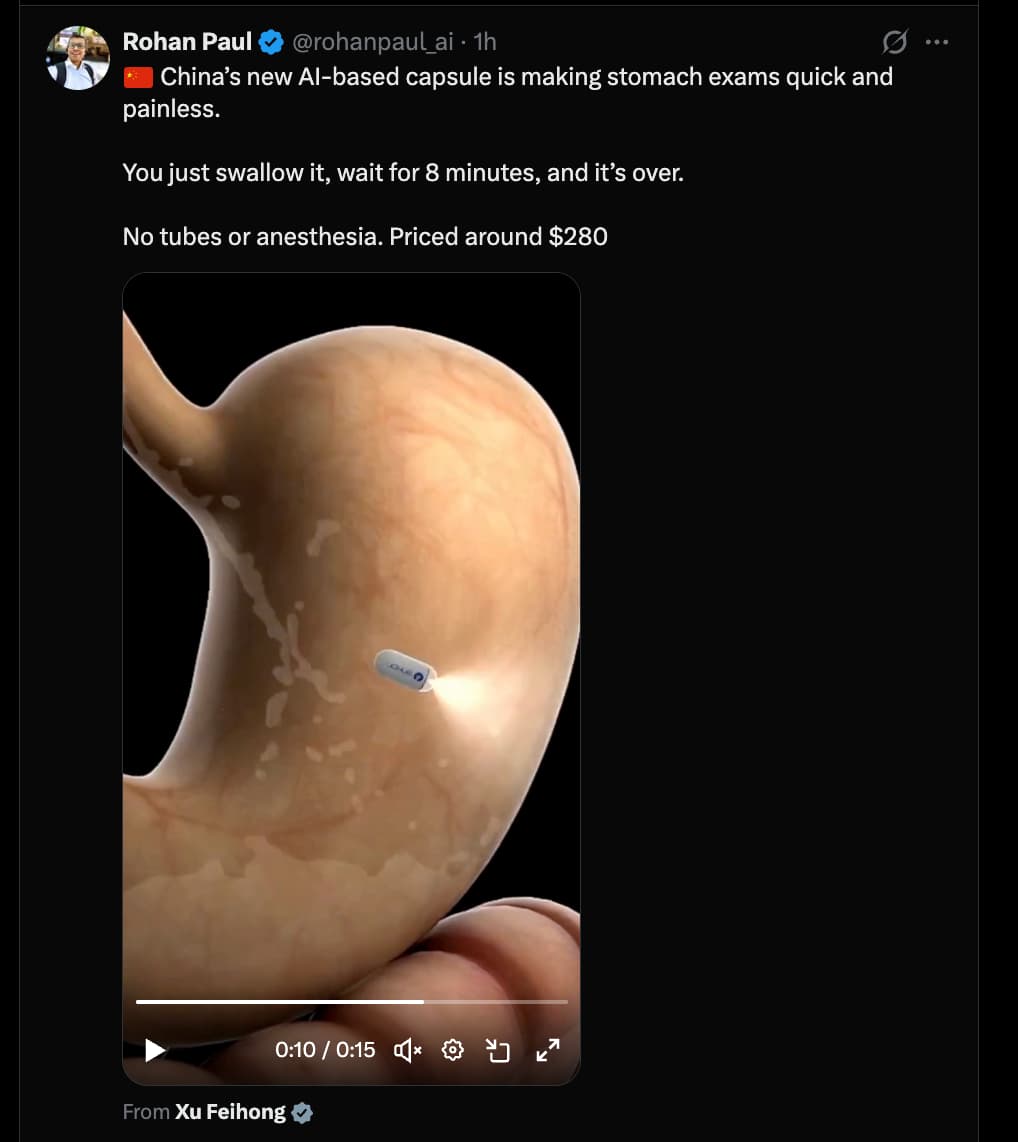
I do like the idea of swallowing the camera pill and then having AI read the images though.
The numbers I have:
20-30% of 40yo have a polyp of any sort. Rises to almost 50% by age 60.
~10% of 40yo have the “pre-cancerous” adenoma type
Out of those adenomas, only a fraction actually will go on to form a tumour, and that takes several years. Still, clearly some people (like James Van Der Beek) were very unlucky and must have had polyps in his 30’s, pre-cancerous by 40, and full-blown incurable stage 3 by age 46.
Lifetime risk is 4-5%, and rising, particularly in younger people. It’s definitely not 1 in 100 million
So, if you want to be risk adverse, colonoscopy every 5y should be extremely effective. Every 10 years is most likely fine - but there is a chance you missed something in the first scan, or you have a rapidly progressing adenoma.
IMO, I just don’t see any point in the stool tests unless you can’t access, or really don’t want to do, a colonoscopy. A negative FIT/stool test doesn’t inspire much confidence, since it can’t detect much in the early stage. And, a positive test result has many explanations, as you found out. Only colonoscopy can give you the proper peace of mind.
I’m on the 2-3 year schedule as every colonoscopy they remove 2-3 pre-cancerous polyps that each have a 10% chance of turning into cancer. Since I’ve been doing this for 15 years, that’s 10-15 polyps that had a 10% chance (each!) of turning into cancer over 10 years. I don’t like those odds at all.
If I hadn’t had my colonoscopies, I wouldn’t be here now.
This effect is underaccounted for. We have the tech to do genetic analysis to find out most of the clearing pathways, but our worsening medical system doesn’t have the time or interest – the incentives aren’t there.
The result: some of us a pay a health tax because we don’t clear medications as fast as others do, and the differences are profound. There are a bunch of compounds (mostly drugs, some supplements) that I can’t take in therapeutic quantities without paying a day or days-long clearing cost.
I agree. I had colonoscopy without anesthesia - was unpleasant but tolerable and educational (I watched the screen). I asked for endoscopy without anesthesia and was explained that no doctor would do it without it. So I haven’t done it yet.
That makes me think that they are just looking to overcharge patients with unnecessary procedures.
Endoscopy done in the Uk involves just a numbing throat spray. i’ve had two done like this. i remember the spray tastes like aniseed. Nothing unpleasant.
I had similar procedure in Russia long ago without sedation. In the U.S. it’s not possible - I tried. They don’t offer even TNE (trance nasal endoscopy) with thinner scope. Clinics are set up for sedated procedures — staffing, scheduling, and recovery rooms are built around it. That’s why it so expensive!
Actually, I never thought about it. They just did it as part of the procedure. They used:
Twilight anesthesia, formally known as conscious sedation or Monitored Anesthesia Care (MAC), is a technique that uses mild doses of drugs to induce a state of deep relaxation and temporary memory loss while allowing you to remain conscious."
Unlike general anesthesia, you are not fully “put under”; you can typically breathe on your own, respond to verbal cues, and follow simple instructions during the procedure."
I have had this 4 times, once for a hernia repair, once for cataract surgery, and twice for colonscopies. I like it. It felt pleasant to me and had no side effects (that I know of).
It was odd in the effect that on two of these occasions, I asked when we were going to start, and the procedure had already happened.
I’ve done most of mine without anesthesia, but the last one I did with because the doctor wouldn’t let me do it without and I didn’t want to bother to find a new doctor!
It aligns well with a mission of proactive, high-definition health optimization: it provides direct visualization of the colon (without sedation or radiation) and can serve as a practical “first-pass” assessment for patients who want to go beyond stool-based tests—helping determine whether a traditional colonoscopy is truly necessary for biopsy or polyp removal.
While PillCam COLON 2 is FDA-cleared for specific indications in the U.S., this “triage/filter” approach has already been deployed at scale in the UK, including NHS pathways and evaluations involving over 10,000 patients, and the broader PillCam platform has been used in millions of procedures worldwide.