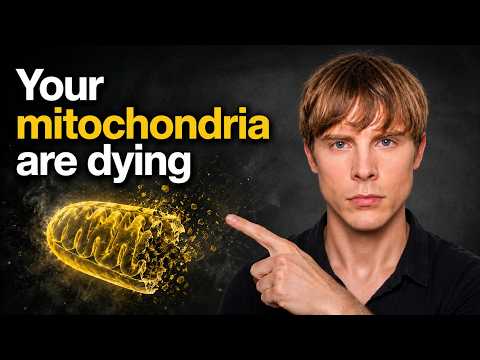
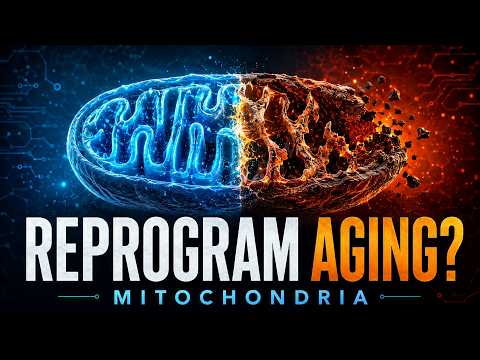
Another Mitochondria-focused podcast (from a person I’ve never seen before on YouTube):
Can We Reprogram Aging Through Mitochondria? | Dr. Stefan Isaac
Host: Dr. George Murphy | The ReProgram Podcast
Guest: Dr. Stefan Isaac (Assistant Professor of Biochemistry and Cell Biology, Boston University School of Medicine)
I. Executive Summary
The foundational paradigm framing mitochondria as simple “powerhouses of the cell” is a reductive 1950s bioenergetic construct that obscures their overarching regulatory role in metabolic integration, signal transduction, and cell-fate determination. Beyond adenosine triphosphate (ATP) synthesis via oxidative phosphorylation (OXPHOS), mitochondria function as crucial signaling hubs directing nucleotide synthesis, amino acid transamination, fatty acid oxidation, reactive oxygen species (ROS) second-messenger cascades, and programmed cell death. The popular longevity narrative that unconditionally advocates for maximizing mitochondrial biogenesis, metabolic throughput, and energetic output is translational hyperbole. Comparative biology in long-lived mammals (such as the bowhead whale) and functional studies of human centenarians demonstrate that physiological longevity correlates with metabolic efficiency, low inner mitochondrial membrane potential (ΔΨm), reduced electron leak, and organelle conservation rather than maximal hyper-energetics.
At the genetic level, human mitochondria harbor a semi-autonomous 16.5-kilobase pair (kb) circular genome (mtDNA) present in hundreds to thousands of copies per cell. Because mtDNA lacks canonical histone protection, exhibits high proximity to ROS generation, and relies on a distinct replication apparatus, somatic point mutations and structural deletions accumulate over time. When these mutated genomes surpass a critical cell-type-specific heteroplasmy threshold (typically 60–80%), bioenergetic collapse and aberrant stress signaling trigger feed-forward tissue degradation. While cellular reprogramming via induced pluripotent stem cells (iPSCs) effectively resets nuclear epigenetic patterns, it fails to repair hardcoded somatic mtDNA mutations, presenting a persistent bottleneck for autologous cellular rejuvenative therapies.
Translational avenues attempting to modify mitochondrial aging span a spectrum from validated lifestyle interventions to preclinical genetic engineering. Aerobic exercise remains the gold-standard catalyst for mitochondrial biogenesis and capillarization. Conversely, pharmacological interventions like NAD+ precursors (NR/NMN) demonstrate inconsistent clinical metabolic efficacy in humans despite robust mouse data. Emerging therapeutics targeting organelle quality control, such as Urolithin A-induced PINK1/Parkin-mediated mitophagy, show clinical efficacy in improving muscle endurance. At the cutting edge, CRISPR-free genome editing—utilizing double-stranded DNA deaminases (DdCBEs/TALEDs) and targeted monomeric homing endonucleases (mitoARCUS)—offers molecular tools to selectively shift heteroplasmy by degrading or correcting mutant mtDNA. However, clinical implementation is constrained by dual-membrane delivery barriers, risk of mitonuclear genomic incompatibility, and potential oncogenic exploitation of intercellular mitochondrial transfer via tunneling nanotubes.
II. Insight Bullets
-
Origins of the Powerhouse Analogy: The phrase “powerhouse of the cell” originated in a 1950s Scientific American article during early characterizations of oxidative phosphorylation, establishing an enduring public misconception that overemphasizes ATP yield over systemic signaling.
-
Non-Energetic Metabolic Integration: Mitochondria regulate vital non-energetic pathways, including pyrimidine/purine synthesis, urea cycle transamination, heme biosynthesis, and cytosolic calcium buffering.
-
Maternally Inherited Circular Genome: Human mtDNA consists of a 16,569-base pair circular double-stranded molecule inherited exclusively through the maternal oocyte cytoplasm.
-
Hydrophobic Core Protein Encoding: mtDNA encodes 13 highly hydrophobic protein subunits of the electron transport chain (Complexes I, III, IV, and V), along with 22 tRNAs and 2 rRNAs required for intra-mitochondrial translation.
-
Nuclear Protein Dependency: Over 1,000 to 1,500 mitochondrial proteins are encoded by the nuclear genome, synthesized on cytosolic ribosomes, and imported via the TOM/TIM translocase complexes.
-
Polyplasmic Genome Multiplicity: Individual somatic cells contain hundreds to thousands of discrete mtDNA copies, ranging from ~100 in sperm to >100,000 in mature oocytes.
-
Heteroplasmy Definition: Heteroplasmy defines the co-existence of wild-type and mutated mtDNA genomes within a single cell, expressed as a percentage of total mitochondrial genomes.
-
Phenotypic Threshold Effect: Somatic mtDNA mutations remain clinically silent until heteroplasmy exceeds a specific physiological threshold (typically 60% for deletions and >80% for point mutations).
-
Feed-Forward Degradation Loops: Defective mtDNA-encoded subunits impair respiratory chain assembly, elevating electron leakage and ROS, which causes secondary oxidative damage to nearby wild-type mtDNA copies.
-
POLG Mutator Mouse Model: Homozygous knock-in mice expressing proofreading-deficient mtDNA polymerase gamma (POLGD257A) exhibit accelerated somatic mtDNA mutations and premature progeria-like phenotypes.
-
Translational Gap of POLG Models: The mtDNA mutation burden in POLG mutator mice exceeds natural human physiological aging accumulation by several orders of magnitude, limiting direct translational equivalency.
-
Mitohormesis Paradigm: Transient, low-dose mitochondrial stress and ROS act as essential signaling cues that activate nuclear protective transcriptomes (e.g., Nrf2, UPRmt), extending lifespan in model organisms.
-
Antioxidant Paradox: Chronic high-dose exogenous antioxidant supplementation neutralizes exercise-induced physiological ROS bursts, blunting skeletal muscle PGC-1$\alpha$ activation and mitochondrial biogenesis.
-
Centenarian Low-Energy Strategy: Cells derived from human centenarians and long-lived species like bowhead whales display reduced inner mitochondrial membrane potential (ΔΨm), prioritizing metabolic resilience over raw energy yield.
-
Uncoupling Protein (UCP) Physiology: Mild mitochondrial uncoupling via UCP2/UCP3 dissipates proton motive force as heat, preventing electron backflow and suppressing destructive superoxide formation at Complex I and III.
-
Exercise as Primary Biogenesis Trigger: Structured aerobic and resistance exercise remains the most clinically effective stimulus for increasing skeletal muscle mitochondrial density, enzyme activity, and capillary density.
-
Skeletal Muscle Capillarization Dynamics: Capillarization improvements occur early (<4 weeks) during exercise training, improving oxygen diffusion kinetics to match expanded mitochondrial volume.
-
NAD+ Precursor Limitations: While oral NMN and NR elevate circulating plasma NAD+ levels in humans, meta-analyses reveal minimal, inconsistent improvements in systemic insulin sensitivity or aerobic performance.
-
Urolithin A Mechanism: Urolithin A (Mitopure) is a gut microbiome-derived ellagitannin metabolite that triggers mitophagy by stimulating PINK1/Parkin stabilization on damaged outer mitochondrial membranes.
-
Clinical Efficacy of Urolithin A: Double-blind RCTs confirm that 500–1000 mg daily Urolithin A significantly increases human skeletal muscle strength by ~12% and enhances 6-minute walk endurance.
-
mTOR Inhibition via Rapamycin: Rapamycin inhibits mTORC1 to induce autophagy and senomorphy, directly attenuating DNA damage markers (p21) in human T-lymphocytes during aging.
-
Intercellular Mitochondrial Transfer (IMT): Viable mitochondria can translocate between mammalian cells via actin-based tunneling nanotubes (TNTs), extracellular vesicles (EVs), and connexin gap junctions.
-
Astrocytic Neuronal Rescue: Astrocytes naturally transfer functional mitochondria via extracellular vesicles to ischemic neurons following focal cerebral infarction to restore bioenergetic homeostasis.
-
Oncogenic Stealing via TNTs: Malignant tumor cells utilize tunneling nanotubes to siphon functional mitochondria from host CD8+ T-cells, exhausting the immune compartment to facilitate immune evasion.
-
Dye Artifacts in IMT Studies: Lipophilic fluorophores (e.g., MitoTracker, TMRE) can dissociate and diffuse across cell membranes independently of intact organelle transfer, generating widespread experimental false positives.
-
Cybrid Cell Construction: Cytoplasmic hybrids (cybrids) are generated by fusing mtDNA-depleted (ρ0) recipient cells with enucleated cytoplasts to isolate mitochondrial variants on a uniform nuclear background.
-
Mitochondrial Replacement Therapy (MRT): Nuclear transfer techniques (maternal spindle transfer or pronuclear transfer) replace mutant maternal mtDNA in oocytes, though carryover mutant mtDNA can spontaneously revert and expand.
-
Mitonuclear Incompatibility: Heterologous combinations of nuclear and mitochondrial genomes (conplastic models) can disrupt multi-subunit respiratory complex assembly, altering metabolic rate and organismal fitness.
-
iPSC Epigenetic vs. Genetic Divergence: Somatic cell reprogramming to iPSCs completely resets nuclear DNA methylation profiles, but leaves underlying somatic mtDNA mutations intact.
-
Bottlenecks in iPSC Reprogramming: Single-cell cloning during iPSC derivation can stochastically isolate high-heteroplasmy mutant mtDNA lines, causing premature senescence in differentiated cell lineages.
-
Absence of Canonical mtDNA Epigenetics: Mammalian mtDNA lacks standard nuclear-style cytosine methylation (5mC) and histone packaging, relying on transcription factor A (TFAM) to condense mtDNA into nucleoids.
-
CRISPR-Cas Mitochondrial Delivery Barrier: Conventional CRISPR-Cas systems fail in mitochondria because guide RNAs (sgRNAs) cannot cross the dense, highly charged dual mitochondrial membranes without active RNA import machinery.
-
Absence of Homologous Recombination: Mammalian mitochondria lack efficient double-strand break (DSB) homologous recombination repair; DSBs induced by restriction enzymes cause rapid degradation of the linearized mtDNA copy.
-
Heteroplasmy Shift via Targeted Endonucleases: Monomeric homing endonucleases (mitoARCUS) selectively cleave mutant mtDNA sequences (e.g., m.3243A>G), reducing mutant copy number below the disease threshold to allow wild-type repopulation.
-
Cytosine Base Editing (DdCBEs): Split bacterial cytidine deaminase toxin (DddAtox) fused to TALE DNA-binding proteins enables precise, CRISPR-free C•G-to-T•A base editing in double-stranded mtDNA.
-
Adenine Base Editing (TALEDs): Engineered TALE-linked deaminases enable targeted A•T-to-G•C base conversions within double-stranded mtDNA without inducing double-stranded breaks.
-
Ship of Theseus Cell Therapy Fallacy: Transplanting isolated exogenous mitochondria into damaged tissue yields transient bioenergetic support, but organelles degrade within weeks if nuclear-encoded protein import machinery is compromised.
-
Sleep Deprivation Bioenergetic Impact: Disrupted sleep architecture impairs central glymphatic clearance and cellular stress pathways, accelerating systemic mitochondrial oxidative fatigue.
-
Pathology of Primary Mitochondrial Diseases: Primary mtDNA disorders (e.g., MELAS, MERRF, Leigh Syndrome) remain devoid of FDA-approved disease-modifying genetic cures, highlighting a critical translational deficit.
-
Systemic Geroscience Framing: Mitochondrial optimization in isolation cannot halt aging; lifespan is governed by complex network interactions across nuclear genome stability, cellular senescence, and chronic systemic inflammation.
III. Adversarial Claims & Evidence Table
| Claim from Video |
Speaker’s Evidence |
Scientific Reality (Current Data) |
Evidence Grade (A-E) |
Verdict |
| 1. Exercise induces mitochondrial biogenesis and improves VO2max. |
Cited as the most well-studied intervention across animal and human models. |
Meta-analyses confirm structured exercise increases skeletal muscle mitochondrial content, capillarization, and VO2max (PMC11787188, PubMed 40459444). |
Level A |
Strong Support |
| 2. Oral NAD+ precursors (NMN/NR) produce clinical healthspan and metabolic gains. |
Acknowledged NAD+ declines with age, but noted human clinical gains remain unproven. |
Systematic reviews show NMN/NR elevate blood NAD+ and modestly decrease diastolic BP in elderly cohorts, but fail to show consistent clinical efficacy for glycemic control or VO2max (PMC13028934, PMC13414721). |
Level A |
Plausible |
| 3. Urolithin A (MitoPure) stimulates mitophagy and improves human muscle endurance. |
Mentions UA clears dysfunctional mitochondria via PINK1/Parkin pathway. |
Double-blind RCTs demonstrate 500–1000 mg/day Urolithin A significantly increases muscle strength (~12%), 6-minute walk distance, and mitochondrial biomarkers (PubMed 35584623, PubMed 35050355). |
Level B |
Strong Support |
| 4. Low-dose Rapamycin exerts geroprotective and anti-aging effects in humans. |
Cites animal model lifespan extension; notes human long-term lifespan trials are lacking. |
Human RCTs show low-dose mTOR inhibition reduces p21 DNA damage markers in immune cells and improves vaccine response in elderly, though longitudinal lifespan data is absent (PubMed 41524558). |
Level B |
Plausible |
| 5. POLG mutator mice prove mtDNA mutation accumulation directly drives mammalian aging. |
Cites premature progeric phenotypes in proofreading-deficient POLG mice. |
Homozygous POLG mice accumulate massive mtDNA deletions causing premature progeria. However, human physiological aging displays far lower mutation burdens, revealing a significant translational gap (Trifunovic et al., 2004). |
Level D |
Plausible |
| 6. Centenarians conserve lifespan by turning DOWN mitochondrial membrane potential (ΔΨm). |
Cites low membrane potential observed in centenarians and bowhead whales. |
Mild uncoupling lowers ΔΨm, dissipating proton motive force to drastically suppress electron backflow and superoxide formation at Complex I and III (PMC3071741, PMC12041557). |
Level C |
Plausible |
| 7. Intercellular mitochondrial transfer occurs naturally via tunneling nanotubes (TNTs). |
Cites organelle exchange between astrocytes/neurons and cancer/immune cells. |
Mechanistic studies verify functional organelle exchange via TNTs and EVs. Tumor cells hijack TNTs to siphon mitochondria from CD8+ T-cells, impairing anti-tumor immunity (PubMed 41530881, PMC13003201). |
Level D |
Plausible |
| 8. Fluorescent dyes generate false-positive artifacts in mitochondrial transfer experiments. |
Cites recent methodological studies showing dye diffusion independent of organelle transfer. |
Experimental reviews confirm lipophilic tracking dyes (MitoTracker, TMRE) dissociate and spread via non-mitochondrial vesicles, necessitating genetically encoded reporters (PMC11610514). |
Level B |
Strong Support |
| 9. Somatic iPSC reprogramming resets nuclear epigenetics but fails to correct mtDNA mutations. |
Asserts nuclear epigenetics are reset, but pre-existing mtDNA sequence mutations persist. |
Human iPSC studies prove somatic reprogramming resets nuclear DNA methylation, but inherited/somatic mtDNA point mutations and structural deletions persist and clonally segregate (PubMed 39680477, PMC7954944). |
Level B |
Strong Support |
| 10. MitoARCUS and DdCBEs selectively edit or eliminate pathogenic mutant mtDNA. |
Mentions monomeric ARCUS endonucleases for m.3243A>G and DddA-derived base editors. |
Preclinical animal and human cell models confirm mitoARCUS and DdCBEs eliminate mutant mtDNA heteroplasmy or execute precise C-to-T conversions in dsDNA without DSB destruction (PMC13069296, PubMed 32641830). |
Level D |
Plausible |
| 11. High-dose exogenous antioxidants enhance mitochondrial health and human longevity. |
Warns that exogenous antioxidants destroy physiological ROS required for stress adaptation. |
Human RCTs establish that chronic high-dose Vitamin C/E supplementation abolishes exercise-induced mitochondrial biogenesis, PGC-1$\alpha$ upregulation, and insulin sensitivity improvements (PMC6116009, PMC13113188). |
Level A |
Safety Warning |
IV. Actionable Protocol (Prioritized)
================================================
MITOCHONDRIAL HEALTH & LONGEVITY PROTOCOL
===============================================
[TIER 1: HIGH CONFIDENCE - LEVEL A/B CLINICAL EVIDENCE]
├── Zone 2 Aerobic Exercise
│ ├── Volume: 150–300 minutes per week at lactate threshold 1 (Zone 2).
│ └── Mechanism: Drives skeletal muscle PGC-1α expression, capillary density, and OXPHOS volume.
├── Resistance Exercise
│ ├── Volume: 2–3 sessions per week targeting major muscle groups.
│ └── Mechanism: Stimulates muscular protein synthesis and maintains mitochondrial density.
├── Urolithin A Supplementation (Mitopure)
│ ├── Dosage: 500 mg – 1000 mg orally per day.
│ └── Mechanism: Activates PINK1/Parkin-mediated mitophagy; proven ~12% muscle strength gain in RCTs.
└── Sleep Hygiene & Circadian Alignment
├── Target: 7–9 hours uninterrupted nightly sleep.
└── Mechanism: Preserves metabolic stress signaling and neural glymphatic clearance pathways.
[TIER 2: EXPERIMENTAL - LEVEL C/D EVIDENCE (HIGH SAFETY MARGIN)]
├── Intermittent Caloric Restriction / Fasting
│ ├── Protocol: 12–16 hour daily time-restricted feeding windows.
│ └── Mechanism: Activates SIRT1/AMPK pathways, promoting basal autophagy and metabolic efficiency.
├── Low-Dose Pulsed Rapamycin (Off-Label Geroscience Protocol)
│ ├── Protocol: 2–5 mg once weekly (under strict medical supervision).
│ └── Mechanism: Selective mTORC1 inhibition; attenuates immunosenescence and DNA damage markers.
└── Sub-Metabolic Mitohormetic Stressors
├── Modalities: Thermal stress (sauna 80–90°C or cold immersion).
└── Mechanism: Triggers heat-shock proteins (HSPs) and transient ROS signaling to upregulate Nrf2.
[TIER 3: RED FLAG ZONE - UNPROVEN, DEBUNKED, OR SAFETY RISKS]
├── Chronic High-Dose Antioxidants (Vitamin C >1000mg/day, Vitamin E)
│ └── Risk: DEBUNKED / SAFETY WARNING. Blunts mitohormesis, halting exercise-induced biogenesis.
├── Unvalidated Intravenous Mitochondrial Transplantation
│ └── Risk: SAFETY DATA ABSENT. High risk of severe systemic inflammatory and immune responses.
└── High-Dose NAD+ Precursors as Primary Longevity Monotherapy
└── Risk: UNPROVEN CLINICAL GAINS. Lacks robust human RCT proof for healthspan extension.
====================================================================
V. Technical Mechanism Breakdown

Cross-section of mitochondrial double-membrane architecture and genome localization. Source: Kallayanee Naloka / Getty Images
1. Mitochondrial Epigenetics, POLG Replication, & Heteroplasmy Dynamics
Mitochondria possess a distinct replication and gene expression system independent of the nuclear cell cycle. The circular 16.5 kb mtDNA molecule lacks histone octamers; instead, it is packed into discrete protein-DNA complexes termed nucleoids, primary mediated by Mitochondrial Transcription Factor A (TFAM).
-
Replication Apparatus: mtDNA is replicated by Polymerase Gamma (POLG), a heterotrimeric complex comprising a catalytic subunit (POLG1) possessing 5′→3′ DNA polymerase and 3′→5′ exonuclease proofreading activities, and a dimeric accessory subunit (POLG2).
-
Heteroplasmy & Bottleneck Effect: In the mutator mouse model (POLGD257A), inactivation of the 3′→5′exonuclease proofreading domain causes a 100-fold acceleration in point mutations and single-nucleotide deletions. Because individual cells host a polyplasmic population of mtDNA, mutant copies expand via random genetic drift or selective replicative advantage. When mutant mtDNA load crosses the tissue-specific phenotypic threshold(>60% for deletions, >80% for point mutations), defective assembly of electron transport chain complexes (Complexes I, III, IV) compromises the proton-motive force, triggering cellular energetic collapse and apoptosis.
-
iPSC Rejuvenation Deficit: Somatic cell reprogramming using Yamana factors (Oct4,Sox2,Klf4,c-Myc) completely erases nuclear cytosine methylation (5mC) and restores telomere length. However, because mammalian mitochondria lack canonical cytosine methyltransferases and active DNA repair pathways, hardcoded mtDNA point mutations and structural deletions persist through the reprogramming process. Single-cell clonal expansion during iPSC line derivation can stochastically isolate founder cells with high mutant heteroplasmy, leading to premature functional decline in differentiated tissues.
[Somatic Cell with High mtDNA Heteroplasmy] │ ▼ (Yamanaka Factor Reprogramming) ┌──────────────┴──────────────┐ ▼ ▼ [Nuclear Genome] [Mitochondrial Genome] • Epigenetics reset • Zero epigenetic reset • Telomeres restored • Hardcoded mtDNA mutations persist • Pluripotency restored • Clonal expansion of mutant heteroplasmy │ │ └──────────────┬──────────────┘ ▼ [iPSC Line with Inherited Bioenergetic Deficit]
2. Mitohormesis, ROS Signaling, and Membrane Potential (ΔΨm) Uncoupling
The traditional view that reactive oxygen species (ROS) are exclusively destructive metabolic byproducts is biologically outdated. Mitochondrial ROS generation—primarily superoxide (O2∙−) produced via electron leakage at Complex I (flavin mononucleotide site) and Complex III (Q-outer site)—functions as an essential physiological second messenger.
-
Mitohormetic Signal Transduction: Under low-level, transient metabolic stress (e.g., exercise, moderate caloric restriction), localized ROS bursts oxidize critical cysteine residues on the cytosolic sensor protein KEAP1. This liberates the transcription factor Nrf2, which translocates to the nucleus to bind Antioxidant Response Elements (ARE), upregulating endogenous antioxidant enzymes (SOD2, Catalase, Glutathione Peroxidase) and initiating mitochondrial biogenesis via PGC-1$\alpha$.
-
Therapeutic Suppression by Antioxidants: Chronic administration of high-dose exogenous antioxidants (e.g., Vitamin C ≥1000 mg/day, Vitamin E) quenches these required physiological ROS signals, halting KEAP1 oxidation and blocking downstream Nrf2/PGC-1$\alpha$ activation. This mechanism explains why antioxidant supplementation blunts exercise-induced VO2max adaptations and insulin sensitivity gains.
-
Membrane Potential (ΔΨm) and Uncoupling: The inner mitochondrial membrane maintains an electrochemical proton gradient (Δp=ΔΨm+ΔpH) of approximately −160 mV to −180 mV. Hyper-polarization (ΔΨm>−180 mV) dramatically increases electron residence time on Complex I/III redox centers, exponentially driving O2∙− formation. Long-lived centenarians and species like bowhead whales express elevated levels of Uncoupling Proteins (UCP2/UCP3). UCPs facilitate controlled proton leak back into the matrix, mildly dissipating ΔΨm (to −130 mV to −150 mV). This uncoupling lowers ROS generation while preserving sufficient ATP synthesis capacity.
3. Mitophagy Pathways & PINK1/Parkin Quality Control Dynamics
Mitophagy is the selective autophagic degradation of dysfunctional or damaged mitochondria, serving as the primary organellar quality control mechanism preventing cellular senescence.
`[Healthy Mitochondria: ΔΨm Normal]
• PINK1 imported via TOM/TIM complexes
• Cleaved by PARL protease in inner membrane
• Degraded by proteasome → NO MITOPHAGY
[Damaged Mitochondria: ΔΨm Depolarized]
• TOM/TIM import blocked; PINK1 accumulates on Outer Membrane
• Autophosphorylation & Activation of PINK1
• Phosphorylation of Ubiquitin at Ser65
• Recruitment & Activation of Cytosolic Parkin (E3 Ligase)
• Ubiquitination of Outer Membrane Proteins (VDAC1, MFN2)
• Binding of Autophagy Receptors (p62, OPTN) to LC3-II
• Engulfment by Autophagosome & Lysosomal Degradation`
-
PINK1/Parkin Signaling Cascade: In healthy mitochondria with normal ΔΨm, the serine/threonine kinase PINK1 is continuously imported across the outer (TOM) and inner (TIM) membranes, where it is cleaved by the intramembrane protease PARL and degraded. When mitochondria experience membrane depolarization (ΔΨmcollapse), protein import ceases. PINK1 stabilizes and accumulates on the outer mitochondrial membrane (OMM), where it autophosphorylates and phosphorylates ubiquitin at residue Ser65.
-
Parkin Activation & Lysosomal Degradation: Phosphorylated ubiquitin recruits the cytosolic E3 ubiquitin ligase Parkin to the OMM. Parkin polyubiquitinates outer membrane substrates (e.g., VDAC1, Mitofusins). Ubiquitin-binding autophagy receptors (p62/SQSTM1, Optineurin) bind these polyubiquitinated chains and link directly to LC3-II on expanding phagophore membranes. The autophagosome encapsulates the damaged organelle and fuses with a lysosomal vesicle for hydrolase degradation.
-
Urolithin A Action: The gut metabolite Urolithin A directly enhances this pathway by increasing expression of PINK1 and Parkin, stabilizing organelle quality control without inducing lethal membrane collapse.
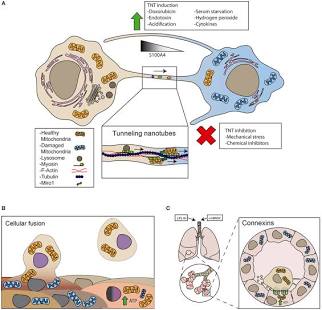
Mechanisms of intercellular mitochondrial transfer via tunneling nanotubes, EVs, and cell fusion. Source: ResearchGate
4. Intercellular Mitochondrial Transfer (IMT) & Tumor Immune Evasion
Intercellular mitochondrial transfer represents an unexpected paradigm where intact, functional organelles are exchanged between mammalian cells to alter recipient cell bioenergetics.
-
Tunneling Nanotubes (TNTs): TNTs are F-actin-based membrane conduits (diameter 50–500 nm) that bridge non-adjacent cells. Organelle movement along TNTs is driven by the outer mitochondrial membrane Rho GTPase Miro1 (RHOT1), which anchors mitochondria to Kinesin-1 (KIF5B) motor proteins traveling along internal actin-microtubule networks.
-
Extracellular Vesicles & Gap Junctions: Cells can also package intact mitochondria or mitochondrial fragments within microvesicles (100 nm−1 μm) for endocytic uptake by target cells, or pass them via Connexin-43 (Cx43) gap junctions.
-
Oncogenic Hijacking: In the tumor microenvironment, aggressive cancer cells (e.g., acute myeloid leukemia, breast carcinoma) extend TNTs to host CD8+ T-lymphocytes and natural killer (NK) cells. Cancer cells siphon functional mitochondria from immune cells into the tumor cytoplasm, impairing immune cell oxidative capacity and inducing metabolic exhaustion while augmenting tumor chemoresistance.
5. CRISPR-Free Mitochondrial Genome Editing Technologies
Direct genetic correction of mtDNA mutations has historically been hindered by the dual-membrane barrier and the complete absence of RNA import mechanisms in mammalian mitochondria, rendering conventional guide RNA (sgRNA)-based CRISPR-Cas platforms non-functional.
-
MitoARCUS (Monomeric Homing Endonucleases): Derived from the Chlamydomonas reinhardtii I-CreI homing endonuclease, mitoARCUS nucleases are monomeric engineered proteins (~40 kDa) targeted to mitochondria via a mitochondrial targeting sequence (MTS). Designed to recognize specific sequence mutations (such as the MELAS-associated m.3243A>G mutation), mitoARCUS induces sequence-specific double-strand breaks (DSBs) exclusively in mutant genomes. Because mammalian mitochondria lack homologous recombination repair mechanisms, the cleaved mutant mtDNA copies are rapidly degraded by endogenous nucleases (PNKP, DNA2), shifting heteroplasmy ratios toward the wild-type genome.
-
Cytosine Base Editors (DdCBEs): To achieve precise single-base editing without generating lethal DSBs, DdCBEs utilize an interbacterial toxin deaminase (DddAtox) derived from Burkholderia cenocepacia. DddAtox uniquely deaminates cytosine within double-stranded DNA. To prevent non-specific toxicity, DddAtox is split into inactive non-toxic N- and C-terminal halves. These split halves are fused to sequence-programmable Transcription Activator-Like Effector (TALE) proteins and an MTS. When the dual TALE proteins bind adjacent target sites on mtDNA, the DddAtox halves reconstitute, catalyzing a precise C∙G→T∙A transition.
-
Adenine Base Editors (TALEDs): Expanding this toolkit, TALEDs combine TALE DNA-binding architecture with engineered monomeric deoxyadenosine deaminases (e.g., TadA8e variants) to catalyze A∙T→G∙Cconversions in double-stranded mtDNA, establishing a precise strategy for correcting pathogenic mitochondrial point mutations.
Produced by Gemini 2.5