Rapamycin disturbed my menstrual cycle

I have tried to use 6mg a week for antiaging, my menstrual cycle is normally very punctual every 33 days, my sex hormones and fertility hormones are very good, even AMH over 4 ng/mL, … which is very high for my 37 yrs.
So suddenly even first month after taking rapa i got delayed menstruation, stopped it and tried again it again happened.
I kinda freaked out and stopped the experiment.
I was reading some trials and if i remember well this could be a sign of it working, so drastically slowing my ovaries? but sitll i am afraid to use it like this
last time i got menstruation earlier, but this is after already stopping rapa for 2 months.
Bryan Johnson’s decision also got me thinking.
I guess i Have to do some reading

on a side note: has anyone tried omipalisib?

1 Like

Have you reviewed the relevant threads from this story? Rapamycin for Fertility and Menopause; Clinical Results

@medaura took 5mg for almost a year prior to pregnancy, did you see any changes similar to what @Forever29 has seen?

Also - other threads:

1 Like

yes i read a lot on it and concluded it’s safe to take 6mg, i dont know if it matters but my hormonal levels are more in line with late 20s, and I look unusually young. but still freaking out over aging so want to slow it down

1 Like

What is your weight? You may want to start at a lower dose (e.g. 3mg) and see how it goes for a while, then slowly increase.

1 Like

i trialed lower dose too , dont think that was an issue actually unless i need 1 mg, and why would 6mg and later 5mg stop my cycle? wish to understand the mechanism before taking it again
Can I read anywhere more on what Bryan Johnson shared that rapamycin could cause an increase/acceleration of aging in humans across 16 epigenetic clocks?!

1 Like

I will make my usual point of considering a lower frequency.

7 Likes

See these threads for why Johnson is wrong on this:

1 Like

I recommend you listen to this podcast where they talk about epigenetic clocks and current use. In short, epigenetic -related aging is thought to be one small but undetermined part of aging, and the clocks today really are not valid for any decision making by consumers.

2 Likes

Hi !
I am 37 too and the same thing happened to me. According to Chat GPT this is quite normal, it means it worked well :slight_smile:
Could we chat together in private messages ? :slight_smile:

1 Like

hey sorry i just saw this, sure message me, i am curious what ur experience is. Unfortunately i have a bad news, so when i noticed this it happened right after taking it, my AMH was consistently 29 AMH pmol/L, last time checked 10 months ago when my cycle was disturbed after rapa, i tried rapa few more times and it shortened my cycle or something else did. but i had consistently 33 days for 10+ years, I now measured AMH it fell to 16, so sharp fall in just 10 months, sounds like rapid aging.

1 Like

Unfortunately, I have bad news, so when i noticed this it happened right after taking it, my AMH was consistently 29 AMH pmol/L, last time checked 10 months ago when my cycle was disturbed after rapa, i tried rapa few more times and it shortened my cycle or something else did. but i had consistently 33 days for 10+ years, I now measured AMH it fell to 16, so sharp fall in just 10 months, sounds like rapid aging
For those who dont know AMH is the quite reliable assessment of ovarian age.

I am now so afraid to take it considering some data and well my experience.

1 Like

check my update, following rapa, my AMH very sharply fell

3 Likes

Wow, I’m so sorry ! that sounds terrifying, especially since my AMH levels aren’t measured the same way (I guess the numbers vary by country; here, the scale goes from 0 to 4). What other symptoms did you notice? I personally experienced longer cycles and some facial hair growth… I stopped a few weeks ago and I plan to do a blood test in July, but I’m worried. Wishing you strength and courage.

1 Like

Its definitely the sign of it works. Silencing signals to the cells to work. If you need your menstruations - its better not to use R. If don’t need - you can use it.

1 Like

Yes the lower AMH is expected and shows that the Rapamycin is helping.

Note - I just queried Google Gemini Pro with the following prompt (you can tweak it yourself and run it on other AI systems:

Role: You are a Longevity Research Analyst and OBGYN. Your audience consists of scientifically literate longevity biohackers, clinicians, and professionals.

Task: Identify how rapamycin impacts women’s AMH levels if she was taking rapamycin on a pulsatile basis once every week 6mg?

Gemini Response:

Executive Summary

For a woman taking a pulsatile dose of rapamycin (e.g., 6 mg once weekly), the expected impact on Anti-Müllerian Hormone (AMH) levels is clinically paradoxical: AMH levels will likely decrease or appear artificially suppressed during active treatment, even though the underlying true ovarian reserve is being preserved. Clinicians and biohackers monitoring ovarian health must understand that during mTOR inhibition, a drop in AMH is a feature of the drug’s mechanism of action, not a symptom of accelerated ovarian aging.

In a clinical setting, a woman taking a 6 mg once-weekly pulsatile dose of rapamycin will likely present with suppressed or artificially decreased serum Anti-Müllerian Hormone (AMH) levels during the active treatment phase. For the prescribing OBGYN or longevity clinician, it is critical to understand that this decline is an intended pharmacokinetic feature of systemic mTOR inhibition, rather than an indicator of accelerated ovarian senescence.

Mechanism of Action: The AMH Paradox

To understand why AMH drops while the ovarian reserve is preserved, we must distinguish between the true ovarian reserve and the functional proxy we measure in the blood.

To correctly interpret AMH panels in longevity patients, clinicians must differentiate between the absolute primordial follicle reserve and the actively developing follicle pool.

  1. mTORC1 and Follicle Recruitment: The mammalian target of rapamycin complex 1 (mTORC1) acts as the primary metabolic sensor triggering the activation of dormant, primordial follicles. Hyperactivation of this pathway accelerates the depletion of the ovarian reserve.
  2. Origin of AMH: AMH is exclusively secreted by the granulosa cells of growing preantral and small antral follicles; it is not produced by dormant primordial follicles.
  3. The Pharmacological Brake: A 6 mg weekly dose of rapamycin provides robust, systemic mTORC1 inhibition. This intervention forces the primordial follicle pool to remain in a state of quiescence, significantly slowing their transition into the growing phase.
  4. The Biomarker Result: Because the recruitment of new follicles is suspended, the total volume of active, AMH-secreting granulosa cells diminishes as older follicles naturally mature or undergo atresia. Consequently, peripheral blood draws will show a marked decline in AMH.

6 mg Pharmacodynamics vs. Current Clinical Trials

While 6 mg weekly is a standard protocol within the longevity biohacking community, clinical baselines for ovarian aging are currently anchored at a slightly lower dose.

  • The VIBRANT Trial: The foremost human trial in this space, the Validating Benefits of Rapamycin for Reproductive Aging Treatment (VIBRANT) study at Columbia University, utilizes a 5 mg/week pulsatile dose for 12 weeks in perimenopausal women (aged 35–45).
  • Dose-Dependent Effects: Early institutional reports from Columbia Fertility indicate that mTOR inhibition can slow the rate of follicular loss by approximately 20% (reducing the loss from roughly 50 eggs/month to 15 eggs/month). A 6 mg weekly dose will likely achieve equivalent or slightly stronger suppression of the PI3K/Akt/mTOR pathway. However, as the dose increases, the probability of complete anovulation, menstrual irregularity, and temporary infertility during the treatment window also rises.

Clinical Management and Actionable Insights

For OBGYNs managing patients utilizing off-label rapamycin for longevity or fertility preservation:

  • Pre-Treatment Baselining: It is mandatory to establish true baseline AMH and Antral Follicle Count (AFC) via transvaginal ultrasound prior to initiating rapamycin therapy.
  • Intra-Treatment Monitoring: AMH draws conducted while the patient is actively taking 6 mg/week are clinically useless for assessing absolute ovarian reserve. They only serve as a proxy to confirm that the drug is successfully inhibiting mTOR and suppressing follicle recruitment.
  • Washout Protocols: If the patient intends to undergo ovarian stimulation for IVF, oocyte cryopreservation, or natural conception, rapamycin must be discontinued. Continuing rapamycin during pregnancy is strictly contraindicated due to its mechanism as an immunosuppressant and cellular growth inhibitor.

Knowledge Gaps and Required Data

  • Rebound Kinetics: We lack robust longitudinal data to map the exact trajectory and timeframe of AMH recovery following the cessation of a 6 mg/week protocol. The required washout period to allow mTOR reactivation, follicle recruitment, and AMH normalization before administering exogenous gonadotropins is a current clinical unknown, though 1 to 3 months is a pragmatic estimate based on the drug’s roughly 60-hour half-life and the timeline of folliculogenesis.
  • Therapeutic Thresholds: It remains unverified if a 6 mg dose provides superior preservation of the ovarian reserve compared to the 5 mg dose used in VIBRANT, or if the 20% higher dose simply increases off-target metabolic side effects (e.g., hyperlipidemia, transient insulin resistance, or oral ulcers) without conferring additional gonadal benefit.

Related discussion here: Rapamycin Lowered my measure of egg reserves - Antimullerian Hormone (AMH)

4 Likes

A raise in AMH is to be expected if its working.

1 Like

I. Executive Summary

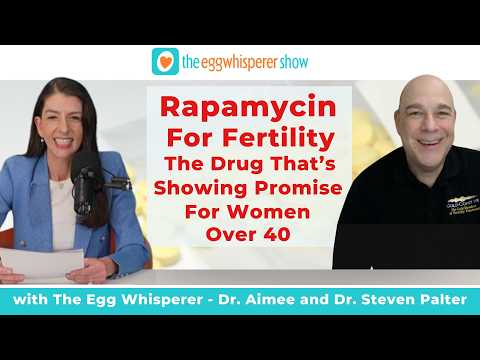
In this episode of The Egg Whisperer Show, host Dr. Amy Eyvazzadeh interviews Dr. Steven Palter, Medical and Scientific Director at Gold Coast IVF, regarding the emerging clinical application of rapamycin (sirolimus) in reproductive endocrinology. The primary thesis asserts that ovarian senescence operates on an accelerated timeline relative to systemic biological aging, driven in part by mechanistic target of rapamycin (mTOR) pathway hyperactivation. Chronic overactivation of mTORC1 in aging ovaries accelerates primordial follicle recruitment—leading to premature ovarian reserve depletion—and impairs cumulus cell autophagy, resulting in ribosome dysregulation, oxidative stress, and increased chromosomal non-disjunction in maturing oocytes.

Dr. Palter details how repurposing low-dose rapamycin from its traditional role as a high-dose transplant immunosuppressant to an mTORC1-modulating geroprotector offers a novel therapeutic avenue for women over 40 and individuals classified as poor prognosis IVF candidates. By transiently inhibiting mTOR, rapamycin promotes cellular repair, rest, and autophagic clearance over unabated protein synthesis. This metabolic shift is hypothesized to preserve the primordial follicle pool while enhancing oocyte developmental competence. Clinical observations and preliminary case series presented by Dr. Palter demonstrate a ~50% rate of Anti-Müllerian Hormone (AMH) elevation, a ~70% increase in blastocyst conversion rates, and a ~40% relative increase in euploid embryo yields compared to prior non-rapamycin IVF cycles in the same cohort, with successful clinical pregnancies achieved in women aged 45.

However, significant translational gaps persist. Optimal human dosing regimens remain unstandardized, spanning daily low-dose (1 mg/day) and weekly pulsed (5 mg/week) protocols. Furthermore, because systemic mTOR inhibition downregulates mammalian muscle protein synthesis via S6K1 inhibition, long-term or unmonitored use introduces severe risks of sarcopenia and metabolic dysregulation unless offset by hyperproteic nutrition and progressive resistance training. While randomized controlled trial (RCT) evidence from international cohorts and the preliminary Columbia VIBRANT trial demonstrate proof-of-concept, rapamycin remains an off-label, experimental intervention requiring rigorous informed consent regarding unknown teratogenic dynamics, long-term offspring outcomes, and optimal wash-out windows prior to embryo transfer.

II. Insight Bullets

  1. Accelerated Ovarian Senescence: The mammalian ovary declines at double to triple the rate of somatic organs, entering functional exhaustion decades before cardiovascular or neurological failure.
  2. mTOR Pathway Overactivation: Mechanistic target of rapamycin complex 1 (mTORC1) serves as a central nutrient sensor; its chronic hyperactivation drives premature, irreversible awakening of quiescent primordial follicles.
  3. Follicular Atresia vs. Quiescence: High mTORC1 activity accelerates follicular burnout, whereas transient pharmacologic inhibition locks primordial follicles in a dormant state, extending functional ovarian lifespan.
  4. Cumulus Cell Ribosome Dysregulation: Aging cumulus microenvironments exhibit hyperactive protein translation paired with deficient autophagic clearance, driving intracellular protein misfolding and oocyte degradation.
  5. Autophagy Restoration via Rapamycin: Sub-immunosuppressive mTORC1 inhibition restores microenvironmental autophagy and cellular quality control within surrounding granulosa and cumulus cells.
  6. Meiotic Fidelity Restoration: Normalizing protein synthesis and reducing oxidative stress in maturing oocytes improves meiotic spindle assembly and chromosomal alignment, attenuating age-related aneuploidy.
  7. The Columbia VIBRANT Trial: Early clinical trial data indicates 5 mg weekly rapamycin for 12 weeks reduces monthly follicular loss by approximately 20% (from ~50 follicles/month to ~15 follicles/month) in women aged 35–45.
  8. Clinical Pregnancy Gains in Poor Prognosis IVF: Randomized clinical trials in refractory IVF cohorts demonstrate that low-dose follicular-phase rapamycin (1 mg daily) significantly elevates clinical pregnancy and blastocyst conversion rates.
  9. Euploidy Rate Enhancements: Preliminary clinic series demonstrate a ~40% relative increase in chromosomal euploidy among women up to age 45 undergoing IVF following rapamycin pretreatment.
  10. Blastocyst Conversion Surges: In patients with recurrent developmental arrest, rapamycin pretreatment yielded a ~70% relative improvement in day 5/6 blastocyst formation.
  11. Anti-Müllerian Hormone (AMH) Resurgence: Approximately 50% of poor-responder patients exhibit transient baseline AMH elevations post-mTOR inhibition, signaling a restored pool of growing antral follicles.
  12. Dosing Ambiguity & Protocol Variability: No standard human protocol exists; clinical usage varies between daily low-dose (1 mg/day for 21–28 days) and weekly pulsed regimens (5 mg/week).
  13. Inhibition of Muscle Protein Synthesis: Rapamycin directly suppresses downstream S6K1 and 4E-BP1 signaling pathways necessary for myofibrillar protein synthesis.
  14. Sarcopenia Risk in Reproductive-Age Females: Unmitigated mTOR suppression presents a distinct risk of accelerated skeletal muscle loss, particularly in non-resistance-trained women.
  15. Protein Hyper-Supplementation Mandate: Co-administering elevated dietary protein during mTOR inhibitor therapy is biologically required to offset blunted muscle protein synthesis.
  16. Resistance Exercise as an Anti-Sarcopenic Shield: Mechanical tension from heavy strength training activates muscle protein synthesis via focal adhesion kinase pathways, bypassing systemic mTORC1 suppression.
  17. Skeletal Muscle as a Glucose Sink: Skeletal muscle mass accounts for the majority of insulin-stimulated glucose disposal; preserving lean tissue is essential for systemic reproductive endocrinology.
  18. Intrinsic Insulin Resistance in PCOS: Polycystic ovary syndrome features an inherent ~27% reduction in cellular insulin sensitivity independent of BMI, exacerbating intraovarian hyperandrogenism.
  19. Metabolic Reversal via Zone 2 Exercise: Low-intensity steady-state cardiovascular training (Zone 2) maximizes mitochondrial beta-oxidation and restores skeletal muscle GLUT4 translocation without inducing systemic exhaustion.
  20. “Exercise Snacks” Efficacy: Short, high-intensity resistance bouts (e.g., 5 minutes to muscular failure 3 times weekly) trigger rapid metabolic remodeling and improved glycemic clearance in sedentary individuals.
  21. Off-Target Immunomodulatory Thresholds: Low-dose or episodic pulsed rapamycin selectively modulates mTORC1 without triggering the profound immunosuppression (mTORC2 disruption) associated with daily high-dose organ transplant protocols.
  22. Mandatory Pre-Conception Washout: Due to anti-angiogenic properties and potential teratogenic risks during embryonic organogenesis, rapamycin must be fully cleared prior to embryo transfer or unassisted conception.
  23. Subjective Quality-of-Life Signals: Patients on low-dose weekly pulsed rapamycin consistently report secondary improvements in systemic energy, hair density, dermal elasticity, and cognitive executive function.
  24. Paradigm Shift in Clinical Candidacy: Rapamycin application is shifting from a last-resort salvage therapy in severe POI/POR to an early proactive adjunct for planned oocyte cryopreservation over age 35.
  25. Ethical Informed Consent Dynamics: Clinicians must balance encouraging early trial results against the complete absence of multi-generational human safety data regarding offspring epigenetic health.

IV. Actionable Protocol (Prioritized)

High Confidence Tier (Backed by Level A/B Evidence)

  • Progressive Resistance Training + High-Protein Diet: To counteract systemic metabolic impairment and preserve skeletal muscle mass, engage in progressive resistance exercise 3–4 days/week paired with ≥1.6 g/kg/day dietary protein. Meta-analytic data confirms resistance training improves insulin sensitivity and reduces hyperandrogenism in reproductive-age females (Cassar et al., 2016; Patten et al., 2020).
  • Zone 2 Aerobic Conditioning: Execute 20–30 minutes of low-intensity cardio (ventilatory threshold 1, where conversational speech is barely maintained) 3x/week to optimize mitochondrial function and glucose handling in metabolic/PCOS-driven subfertility (Patten et al., 2020).
  • Follicular-Phase Low-Dose Rapamycin (Physician-Supervised): In poor-prognosis IVF candidates, 1 mg daily oral rapamycin administered during the 21–28 day follicular priming phase preceding gonadotropin stimulation has been demonstrated in randomized trials to double clinical pregnancy rates and restore cumulus cell autophagic competence (Zhang et al., 2022; Healthspan Research Report, 2026).

Experimental Tier (Level C/D Evidence with High Safety Margins)

  • Pulsed Weekly Pre-IVF Priming: Weekly administration of 5 mg rapamycin for 12 weeks prior to planned oocyte retrieval or egg freezing in women aged >35 to attenuate monthly follicular loss (~20% reduction in follicular decay rate) based on human pilot data (Columbia VIBRANT Trial / PMC10643772).
  • “Exercise Snacks” for Sedentary Patients: Implementation of 5-minute resistance workouts to momentary muscular failure (e.g., push-ups, bodyweight squats, plank holds) 3 times weekly to acutely enhance muscle GLUT4 receptor recruitment.
  • Serial AMH and Antral Follicle Count (AFC) Tracking: Quantitative baseline evaluation of AMH and transvaginal ultrasound AFC prior to and following 8–12 weeks of mTOR inhibitor exposure to assess ovarian response.

Red Flag Zone (Debunked or Safety Data Absent)

  • Rapamycin Exposure During Gestation / Active Conception: Absolute contraindication. Rapamycin must be discontinued with a verified washout period (minimum 2–4 weeks based on its ~60-hour elimination half-life) prior to embryo transfer or natural conception. Safety Data Absent regarding human fetal organogenesis.
1 Like