Ok, if being questioned and disagreed with is annoying to you, maybe take a break.
1 Like
Sure we are. And my statement stands. To quote from my original post:
But note that you’re (doubtless unintentionally) double-counting again: Olshansky’s numbers already account for the complete eradication of not only cancer, but IHD (most of ASCVD) and diabetes (thank you  ). MASH is a particular etiology of insulin resistance: its downstream pathology flows along with diabetes.
I registered to the journal so I was able to access the paper.
Here are my thoughts
As discussed above, it seems to be that a person very dedicated to health and longevity optimization in general can to a very large extent minimize risks of heart disease, stroke, diabetes, fatty liver, kidney issues, frailty, etc.
That shifts a lot of the remaining risk to cancer, and neurodegeneration, where AD is by far the biggest and least controllable.
Still, this consensus paper in a conservative journal maps out that at least 35% of the risks of AD is modifiable and that another 7% of risks is connecting to having ApoE4 or not

So from the start in my case for instance I’m close to the
35% modifiable
7% ApoE 4 (I don’t have, but also likely that we will be able to gene editing in time for many even if they have)
= 42% modifiable that they have calibrations for
And there are a lot of things that are modifiable that they just could not quantify and hence did not include in their calculations above, for instance:
Sleep might promote repair of damage caused by other factors, but given the absence of systematic reviews or enough consistent, high-quality evidence, we have not been able to include sleep in our calculations of PAF.
If you look at other sections on this forum you’ll see a lot of data and reasons for why optimal sleep likely can have a massive impact on neurodegeneration be disease including AD.
There a lot of other things like that, in fact in their own figure below only some of the the things they have quantified even if they show in the figures other things that have an impact.
Including that they similarly to sleep have not calculated what the impact of an optimal exercise regime is. Exercise’s impact on AD is likely huge, even if we don’t have an estimate for how big.
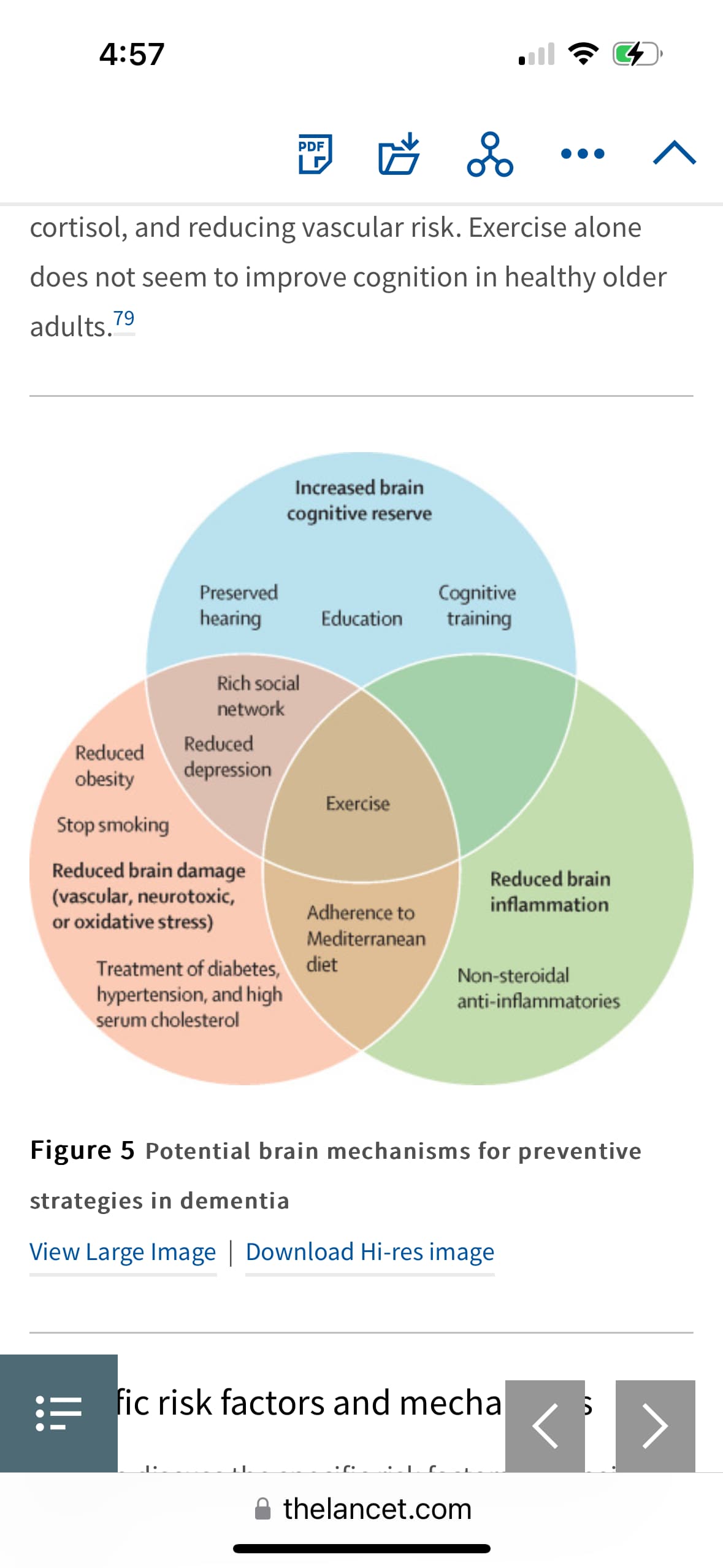
The same is true for food, optimized diets vs crappy average western diets likely have a large impact over decades even on things like AD. Still, they do not include that in either the first figure above or even the somewhat more compressive one elsewhere. (Although they come back to it later in Table 2 where the calculate its modifiable impact to ~8.7%)
They also mention alcohol, pollution/living near major roads, etc impacting AD risk - none which they include in their numbers.
In this world where in for instance my case applying the paper’s known numbers in seem to have taken out 50.2% of the quantified risk for me and I also would score very well on the sleep, exercise, etc, etc categories that they list, but don’t include in their numbers, not to mention a whole range of other categories they don’t even mentioned.
So in this situation - after reading the lancet paper you referred to it seems like the impact for someone like me and others on this that aggressively are optimizing health and longevity and cutting risks of ally the things lost on the intro of this post AND also to a large (r extent that I I tally expected) also of AD, a cure for all cancer really would be huge and in expectation highly like more than 3 years of extra (healthy) life.
3 Likes
One of my biggest points is that his 1990 paper was just based on the average of the then population (and then medical knowledge and treatments) and importantly is not representative for a dedicated, health and longevity optimizers that this forum to a large extent is made up for.
Do you for instance agree or not agree directionally with this point?
Many individuals, even if not on average, would for instance get cancer in their 50s or 60s but not AD until I’m their 80 or perhaps even 90s. So in many cases the cure for cancer could mean 3 to 4 to 5 decades. Not on average perhaps, but in enough cases to matter.
(Of course if they did not materially take down their risk of dying of heart disease, stroke, metabolic disease, etc that they can largely impact [and many of us on this forum are doing], they would often not make it to their 80s, or 90s, but those risks can largely be decreased).
As an aside, I would say that engaging in this forum enhances cognitive ability and reduces the chance of AD.
So remember to take your daily dose of Rapamycin.news.
11 Likes
The Mendelian randomization-derived OR for CHD for a 50 nmol/L higher Lp(a)-apoB was 1.28 (95% CI: 1.24-1.33) compared with 1.04 (95% CI: 1.03-1.05) for the same increment in LDL-apoB. Likewise, use of polygenic scores to rank subjects according to difference in Lp(a)-apoB vs difference in LDL-apoB revealed a greater HR for CHD per 50 nmol/L apoB for the Lp(a) cluster (1.47; 95% CI: 1.36-1.58) compared with the LDL cluster (1.04; 95% CI: 1.02-1.05). From these data, we estimate that the atherogenicity of Lp(a) is approximately 6-fold (point estimate of 6.6; 95% CI: 5.1-8.8) greater than that of LDL on a per-particle basis.
4 Likes
There are a lot of posts on this thread, but I would strongly recommend that everyone get an Lp(a) test along with ApoB. It’s inexpensive and you only need to do it once.
I only tested ApoB and was alarmed that it was 120 in April. I think at the time I had a lot of saturated fat in my diet. At my physical in August my ApoB had dropped to 93 (LDL-C was 109). I think I probably would’ve been happy with that. But because I had had my Lp(a) tested (which was ruinously high) I asked my Primary for a statin and also started seeing a specialist hoping to get a PCSK9 inhibitor. The statin dropped my ApoB to 80 and LDL to 79. It was a long process, but I was finally approved for the PCSK9.
So my advice is test your lp(a).
7 Likes
Why only once for lip(a)?
Lp(a) is more than most things genetically determined and though to change with current medications. So if it’s high it generally will stay high and vice versa.
There are some exceptions though - like test error or that PCSK9i can lower Lp(a) in many individuals by 20-40% - so if you have a high Lp(a) and then start taking PCSK9i you may want to re test Lp(a).
There are a couple of Lp(a) threads on the forum.
And there are several meds in large Phase 2-3 trials that can basically obliterate Lp(a) levels (more than LDL/ApoB meds can lower those) - so the future is very interesting/ exciting here).
2 Likes
It’s inherited and doesn’t change overtime.
2 Likes
Yes, exactly. It is genetic. If you test high, you will want to have your family members tested as well. Hopefully in 5–7 years we will have drugs to counter this. But once you have your test, you don’t necessarily have to test again. I may retest just to see what the effect of, the PCSK9 was but it’s just out of curiosity. It’s not going to make a meaningful change even if I get a 30% reduction. I wish I had retested before I started because it’s likely that the statin raised my level.
The one other thing is that statins can increase Lp(a). The general thinking is that the larger ApoB lowering of the statin still generates a net positive above the smaller Lp(a) increase.
But I’d still test Lp(a) before and after starting a statin and if the Lp(a) effect is large one might consider one is the cholesterol meds that are neutral (eg Eze) or positive (PCSK9i) on Lp(a) - or combine eg those two instead of combos with statins.
(I am very pro statins in general, just talking about the case where someone does not have optimal Lp(a))
@zazim - see above, perhaps consider Eze vs Statin on top of your PCSK9i)
Yes!!! And we may actually have already in 3 years in this case.
1 Like
As discussed in my last 3-4 posts above while this is a directionally correct, is not correct in the context of a dedicated health optimizer/bio hacker.
Besides the 4 ways Lp(a) test results can change that I discussed above, there is also lipid aphaeresis and some other implements, including, Niacin that lowers is (although we don’t not know if that also lowers bad outcomes).
Yes, even with an Lp(a) is in the upper 5%, they only represent about 10% of my circulating lipoproteins. There is a formula if you want to do the math based on your own scores. So, even though I don’t get the full effect of a statin, it is still very useful to treat with a statin.
I also highly recommend the Boston heart balance test. In my case It showed that Zetia would do nothing for me. (I had already started before I got the test. After two months, it reduced my LDL from 109 to 107.) This test is also helpful if you’re doing something wild like supplementing with plant sterols. They could help you or be incredibly harmful, depending on how you fare on this test.
1 Like
My only fear is that these drugs will not initially be approved for primary care patients. I asked one of the doctors involved in one of the studies. The answer was we don’t know.
Once that happens, I will shift off of the PCSK9. Everyone was shocked that my insurance approved. I was prepared to pay out of pocket.
1 Like
I would posit that even the most dedicated bio hacker would not find it valuable to retest. Obviously if you’re doing something like aphaeresis it would change, but absent that none of these other interventions are clinically relevant. For these trials to be successful, they will need a reduction of something like greater than 70%. If you test high, you are high, and there’s really nothing you can do about it for now other than optimize every other risk factor. Hence, my PCSK9 inhibitor.
2 Likes
How high is ruinously high? Mine is 157 nmol/L. High, but I don’t think I win a prize.
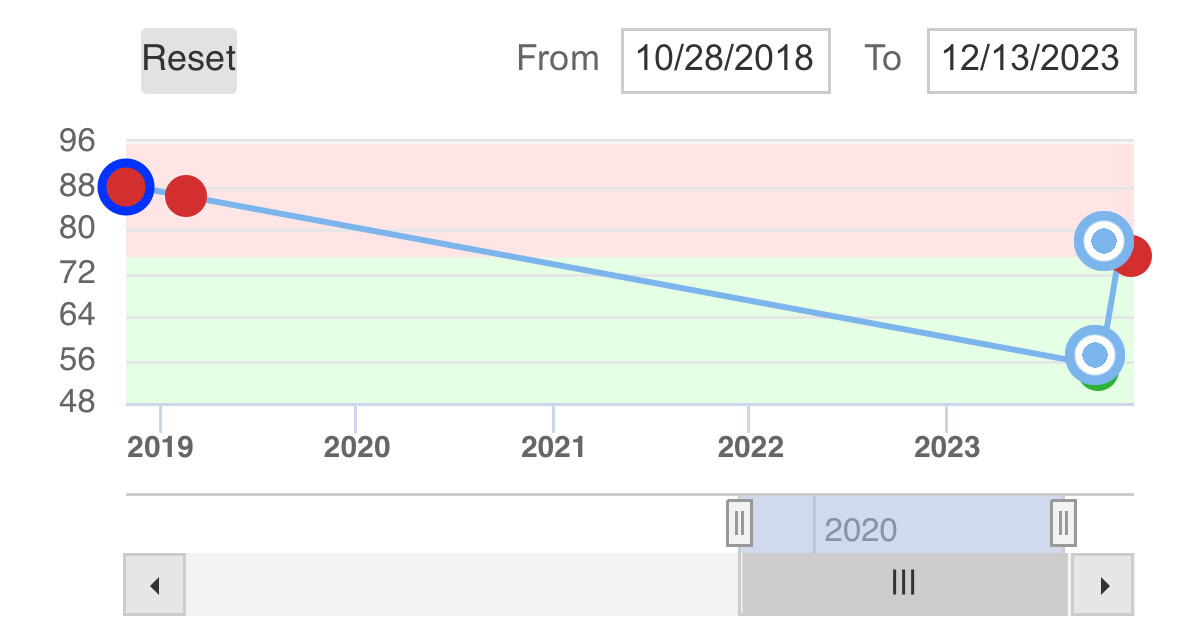
Maybe not. Here is my data from Quest on Lp(a)
And here is my data from LabCorp:
without being on any cholesterol related med:
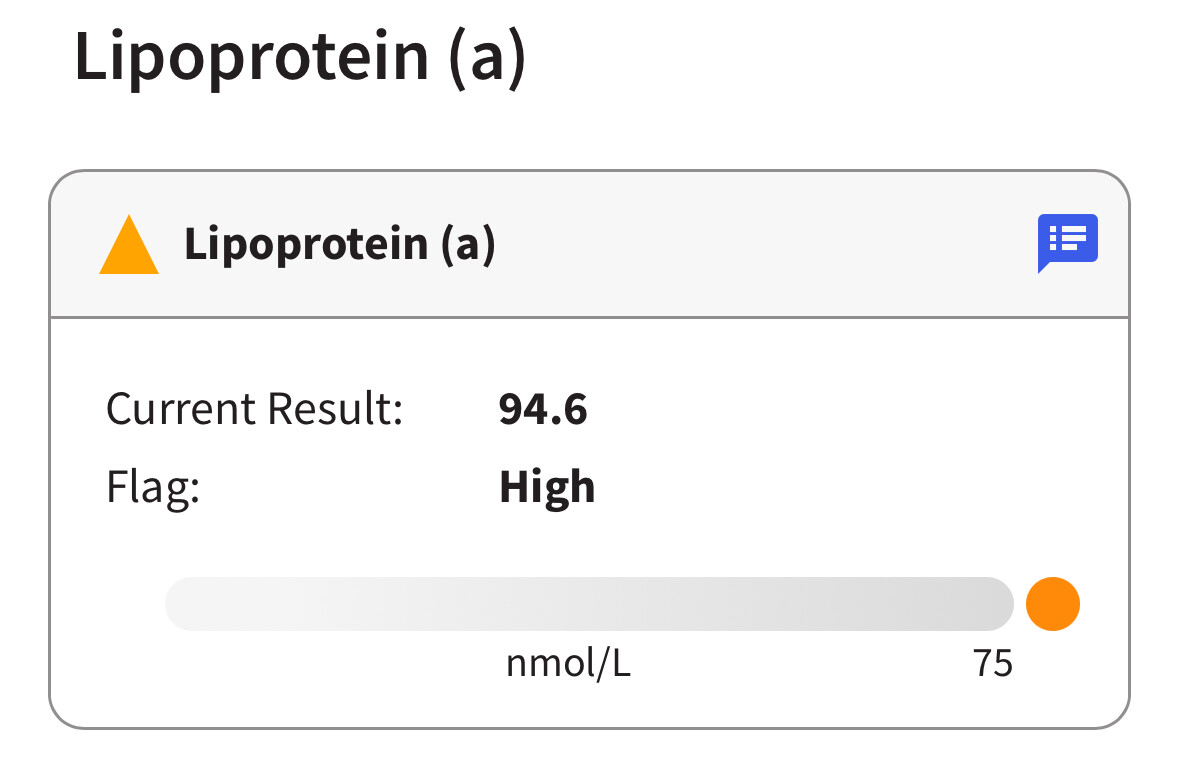
(Have a few other data points around that level from LabCorp)
—
And here is from when being on a half dose of Repatha:
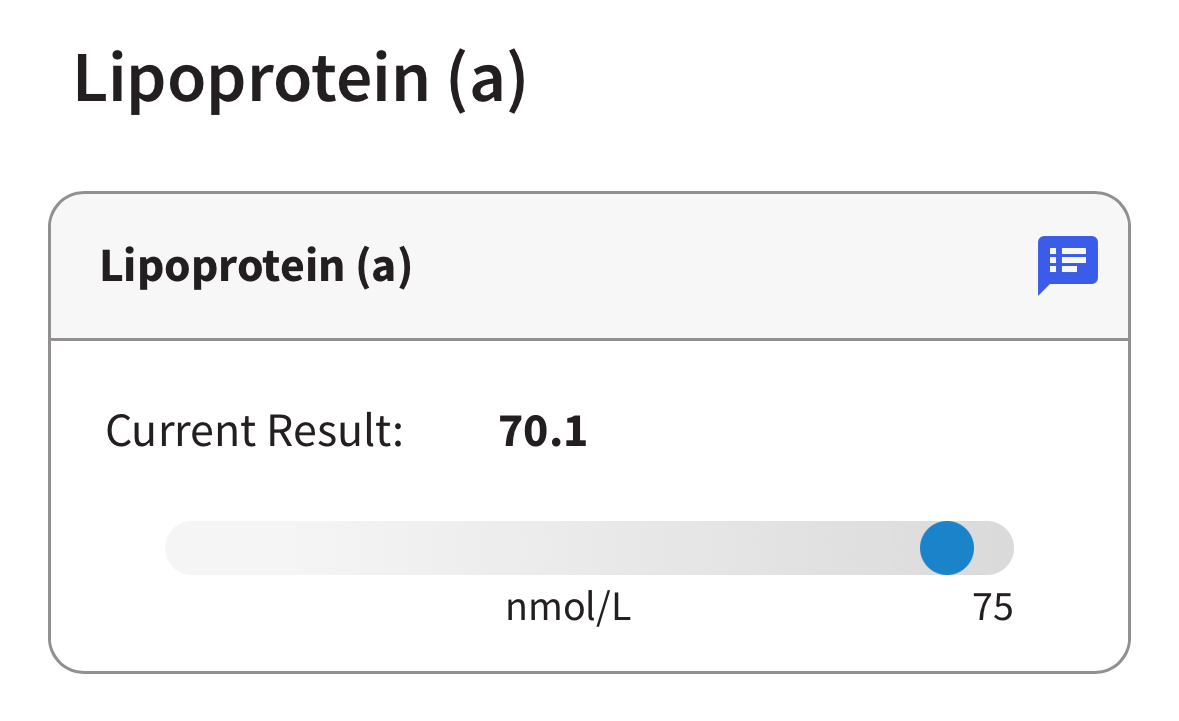
From the last two data points there was enough data for my cardiologist and me to ask ourselves if it might be worth trying a full dose of Repatha instead of the half dose. (A half dose lowered my Lp(a) 25%). This is an experiment we are doing right now.
But what if the only Lp(a) blood test we took was the Quest Diagnostics one from October 2 or 6 2023 where the levels were ~55? Those were BOTH from a period when I had not been on PCSK9i or any cholesterol med for many months.
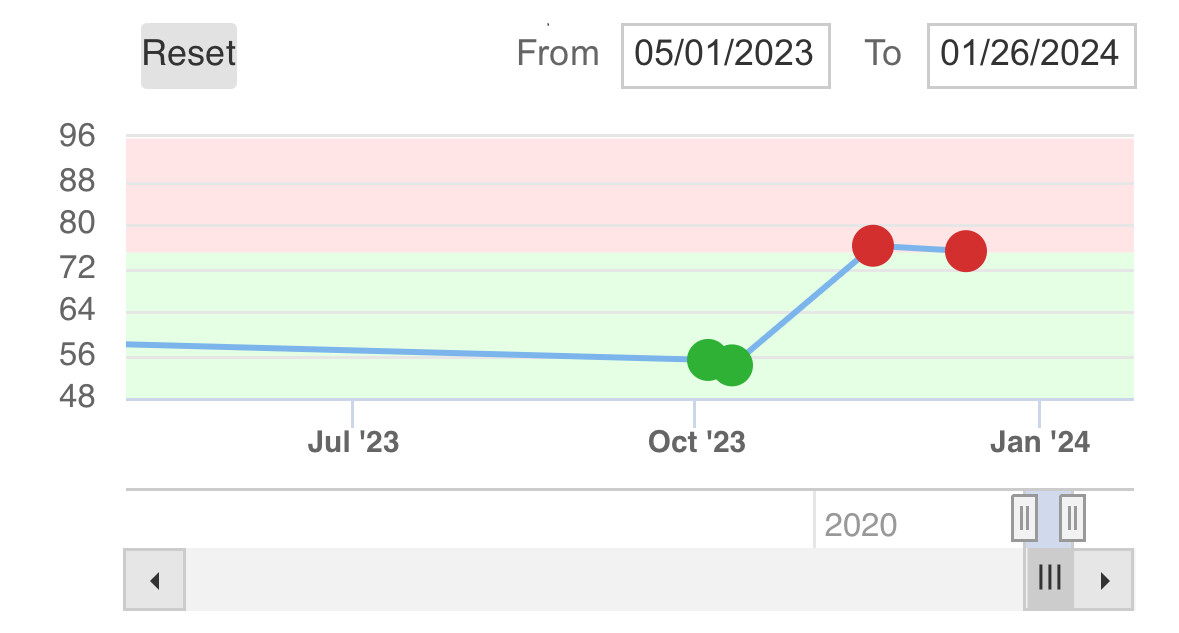
Either I had found some magical way to lower my Lp(a) via diet or exercise or supplemented that there were no know Lp(a) benefits from… or much more likely those two tests has testing errors.
But if we only had one (or even both of those data points) and thought they was my baseline (a) we would be less concern and I may not have pushed for taking PCSK9i and (b) when we then looked at the Quest datapoints from when I was on PCSK9i in November and December at levels around 75 or so, we could have concluded based on data that PCSK9i increased my Lp(a) level by 35-40%….
Clearly when we see all the data points it’s almost certainly that I’m around 85-100 when on no medication, and it goes down by perhaps 25% to 70ish whenever I do decreases level PCSK9i.
This is just one example of why we should rely on more than one data point when gathering data to make decisions on.
There is always an error bar around any blood test, so you have to think about any one data point as being within a confidence interval that generally can be quite wide.
3 Likes
It seems that the Phase 2 data and pre-clinical data makes that very likely to be the case. The bigger question mark I think is was the disease outcome impacts will be from lowering it that much.