You are making it sound simple, very low LDL-C no ASCVD, high LDL-C ASCVD.
I believe you can only take LDL-C into account together with other risk factors. On its own has a poor predictability of ASCVD. And while it might be true that low LDL-C means much lower probability of ASCVD the vice versa is not true. High LDL-C does not automatically mean ASCVD and in older population somewhat higher seems it is even protective (at least this vaguely seems so from large cohort observational studies).
The reduction in overall mortality amongst the very old who take statins may not be related to lipids at all, but rather to a statins ability to induce autophagy.
I never said high LDL-C means automatically ASCVD.
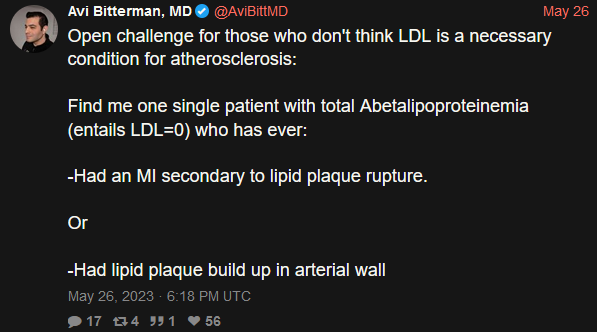
I only said ultra low LDL-C means no ASCVD.
It is the necessary cause.
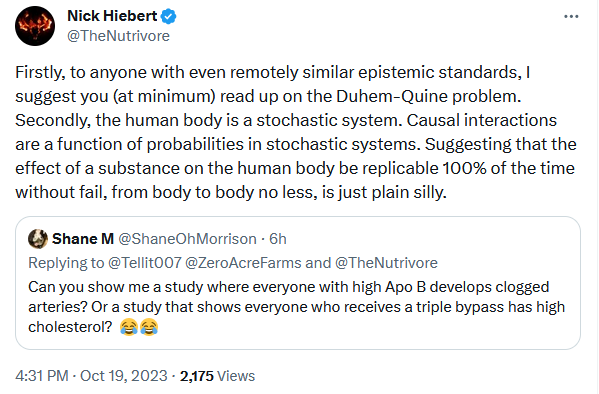
Correlational evidence has less predictability compared with causal evidence as it has a lot of confounding factors. Causal evidence excludes confounding factors and find independent risk factors. LDL is an independent risk factor which means it is very detrimental with or without other risk factors. This risk factor independence of LDL was discovered by clinical trials and genetic studies.
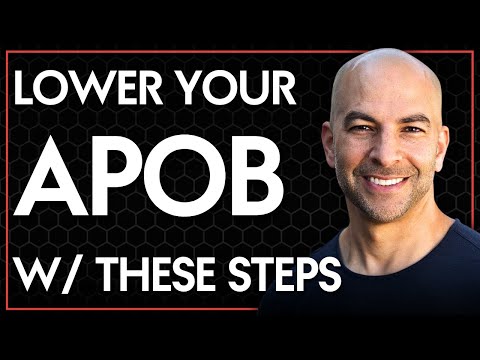
Wow what a great video everyone should see it. It has everything in it. I agree with his approach and the only reason I would consider statins over other drugs is because of monetary cost just like he does.
Peter Attia uses a PCSK9 inhibitor and Ezetimibe+Bempedoic Acid combo to bring his apoB down from 90-100 which is around the 50th percentile to the levels required to make ASCVD irrelevant.
With a rosuvastatin and ezetimibe combination you can already reduce your LDL levels by 60-70% depending on the dose for 10 bucks a month. For the average adult that means going from 130mg/dL to anywhere from 30-60mg/dL which is pretty close to the recommended 20-40mg/dL level.
Maybe, 5 mg rosuvastatin my apoB levels weren’t as low as I wanted to be, and I have to be more careful than others about suppressing cholesterol synthesis in my brain because of my APOE4 allele increasing Alzheimer’s risk. Long-term I am probably not going to use statins, but I might use it until other medications become cheaper depending on when Bempedoic Acid will become available in the EU.
Please Poke holes as you wish on these results and as much as you can. To me it’s mostly gibberish. LOL
Thanks,
btw- not worried about the glucose part since i think i had stuffed my mouth with couple muffins that day (used to have free breakfast at work) as this test was done before i ever started on watching what i eat.
"Other lipid fractions, including total cholesterol, high-density–lipoprotein (HDL) cholesterol and apolipoprotein B100, do not change substantially after eating. Other high-quality studies have shown that nonfasting lipid levels predict risk for coronary heart disease and stroke better than fasting lipid levels. Nonfasting lipid testing: the new standard for cardiovascular risk assessment - PMC.
@John_Hemming
I have to assume that my test above did not include the CRP right? Yes, I am that clueless
Thanks,
btw, this was my first ever blood test in my life…
That looks good. No flags. Yes, you left out some important tests, including CRP.
Now you may want to go from just looking good to striving for optimal biomarkers. Next time you get tested, add the other tests. To get an understanding of what tests you might want to include, and what they mean, I recommend you study the information in this article: