People REVERSED their Cancer by eliminating Glycine and Serine
I. Executive Summary
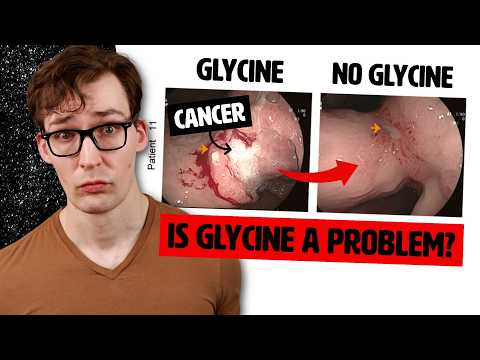
The analyzed transcript evaluates the complex, frequently paradoxical role of the non-essential amino acids serine and glycine in cancer progression, specifically through their integration into one-carbon metabolism. The core thesis posits that while early clinical interventions utilizing dual serine- and glycine-restricted diets show promise in limiting tumor proliferation, isolated biochemical data indicates that serine is the primary oncogenic driver. Pre-clinical models and in vitro assays demonstrate that serine restriction stunts neoplastic growth, whereas isolated glycine restriction yields negligible anti-tumor efficacy.
Crucially, the transcript identifies glycine as a metabolic “double agent.” Because the enzymatic conversion of serine to glycine via serine hydroxymethyltransferase (SHMT) is substrate-dependent and fully reversible, supraphysiological influxes of exogenous glycine force the pathway backward. This reverse reaction (glycine to serine) consumes, rather than donates, the critical one-carbon units required for nucleotide biosynthesis. Consequently, high intracellular glycine acts as a metabolic sink, starving the tumor of the nucleic acids necessary for DNA synthesis and genomic replication. While pre-clinical murine models suggest high-dose glycine supplementation limits tumor progression by exploiting this bottleneck, severe translational gaps remain. The aggressive leap from in vitro isotope tracing to human oncological protocols is premature, and additional large-scale, randomized human trials are mandatory to determine the safety and efficacy of targeted amino acid modulation in active malignancies.
II. Insight Bullets
-
Amino Acid Dependency: Malignant cells exhibit a profound reliance on specific non-essential amino acids, particularly serine, to fulfill the anabolic requirements of rapid proliferation and genomic replication.
-
One-Carbon Metabolism: Serine fuels the one-carbon metabolism network by donating a carbon atom during its conversion to glycine, an essential step for synthesizing DNA and RNA building blocks.
-
Dual Restriction Efficacy: Phase I clinical trials and early murine models indicate that simultaneously restricting dietary serine and glycine restricts tumor proliferation and modulates the tumor immune microenvironment.
-
The Serine Dominance: In vitro isolation reveals that serine restriction independently halts tumor proliferation, whereas isolating glycine restriction fails to impede cancer growth.
-
Pathway Reversibility: The enzymatic conversion between serine and glycine is a reversible biochemical reaction dictated entirely by cellular substrate concentrations.
-
The Glycine Paradox: Exposing cancer cells to high concentrations of exogenous glycine forces the reversible SHMT pathway backward, driving glycine to convert back into serine.
-
Carbon Depletion Sink: The reverse conversion of glycine to serine actively consumes one-carbon units instead of donating them, effectively collapsing the one-carbon metabolism cycle.
-
Nucleic Acid Starvation: The disruption of one-carbon metabolism severely limits the tumor cell’s ability to synthesize DNA, hindering replication, genome repair, and survival.
-
Pre-Clinical Glycine Efficacy: Murine models demonstrate that high-dose glycine supplementation paradoxically acts as an anti-tumorigenic agent by exploiting this metabolic vulnerability.
-
Translational Gap in Supplementation: The efficacy of oral glycine supplementation as an active anti-cancer intervention currently lacks robust human Randomized Controlled Trials (RCTs).
-
Prophylactic Safety: For individuals without an active malignancy, current data indicates that ongoing glycine supplementation is safe and potentially beneficial for broader metabolic health and lifespan extension.
-
Clinical Ambiguity: For active cancer patients, the data presents a contradictory risk profile (dietary restriction vs. high-dose supplementation), making isolated dietary self-medication highly hazardous without continuous biomarker tracking and oncological oversight.
III. Adversarial Claims & Evidence Table
| Specific Claim |
What they cited |
Verified status + PubMed/DOI Link |
Evidence Grade (A-E) |
Verdict |
| Dual restriction of Serine/Glycine reverses cancer mass |
Phase I clinical trial data |
Verified. Early Phase I data (e.g., ChiCTR2300067929) shows -SG diets modulate systemic immunity and limit tumor proliferation. PMC12708301
|
Level C |
Plausible |
| Serine restriction inhibits tumor growth; glycine restriction does not |
In vitro (cell culture) assays |
Verified. Exogenous glycine cannot substitute for serine in driving proliferation because the reverse conversion consumes one-carbon units. PMC12708301
|
Level D |
Strong Support |
| High glycine reverses one-carbon metabolism, starving cancer of nucleic acids |
Isotope tracing in cell models |
Verified. Reversing the SHMT reaction drains 5,10-methylene-THF, acting as a one-carbon sink and starving the cell of nucleotides. PMC12708301
|
Level D |
Plausible |
| Glycine supplementation halts cancer progression |
Pre-clinical animal models |
Source unverified in live search for human RCTs. While animal models show suppressed tumor growth via metabolic trapping, translation to human oncology is clinically undocumented. |
Level D |
Translational Gap |
IV. Actionable Protocol (Prioritized)
To translate these findings into a pragmatic longevity and health framework, we must separate healthy baseline metabolism from active tumor biology. Full Phase III RCT data is required before any of these interventions cross into standardized oncology.
High Confidence Tier (General Health & Longevity)
-
Prophylactic Glycine Supplementation: If you are healthy and possess no active malignancies, continuing to supplement with glycine is highly supported. It provides necessary substrates for glutathione (GSH) synthesis, promotes collagen repair, and supports general metabolic health without any verified oncogenic risks.
Experimental Tier (Active Malignancy)
-
Dual Dietary Restriction (-SG Diet): For patients with active malignancies, a strict serine and glycine-free diet is currently under Phase I investigation, often combined with immunotherapies (e.g., anti-PD-1). This requires total synthetic medical nutrition to starve the tumor of exogenous amino acids. Knowledge Gap: Efficacy heavily depends on the tumor’s genetic profile, as some cancers will aggressively upregulate de novo synthesis to survive.
Red Flag Zone (Avert)
-
High-Dose Glycine Supplementation for Cancer Treatment: Using high-dose glycine to intentionally “reverse” one-carbon metabolism and starve an active tumor is theoretically brilliant but clinically dangerous. Safety Data Absent. Tumors are highly heterogeneous; depending on whether a tumor has amplifications in the PHGDH gene, flooding the system with glycine could paradoxically fuel alternate compensatory survival pathways rather than starving the cell.
V. Technical Mechanism Breakdown
One-Carbon Metabolism & The Folate Cycle
Serine is the primary carbon donor for the cellular folate cycle. The enzyme Serine Hydroxymethyltransferase (SHMT)—specifically SHMT1 in the cytosol and SHMT2 in the mitochondria—transfers a carbon atom from serine to tetrahydrofolate (THF). This reaction yields glycine and 5,10-methylene-THF. This newly minted one-carbon unit (5,10-methylene-THF) is then heavily utilized in the biosynthesis of purines and pyrimidines (thymidylate), which are the fundamental nucleic acids required for DNA replication in highly proliferative cancer cells.
Metabolic Trapping (The “Double Agent” Reversal)
The SHMT enzymatic reaction exists in a state of equilibrium and is entirely reversible based on mass action. In a controlled microenvironment where tumors are flooded with exogenous glycine (a high-glycine/low-serine ratio), the mass action ratio forces the SHMT enzyme to operate in reverse, converting glycine back into serine.
Crucially, this reverse reaction consumes 5,10-methylene-THF (the 1C unit) instead of producing it. By acting as a massive 1C “sink,” the excess glycine depletes the intracellular pool of available one-carbon units. This triggers a cascading failure: nucleotide biosynthesis halts, replication stress compounds, the cancer cell cannot repair its genomic damage, and tumor proliferation collapses.
The De Novo Serine Synthesis Pathway (SSP) Escape Mechanism
It is important to acknowledge a vital knowledge gap regarding dietary restriction alone: many aggressive tumors bypass dietary serine deprivation by upregulating the endogenous Serine Synthesis Pathway (SSP). They divert the glycolytic intermediate 3-phosphoglycerate (3-PG) into endogenous serine production via the rate-limiting enzyme Phosphoglycerate Dehydrogenase (PHGDH). Consequently, targeting cancer metabolism often requires a combinatorial approach: restricting exogenous intake while simultaneously utilizing pharmacological inhibitors of PHGDH to block the tumor’s internal synthesis escape route.