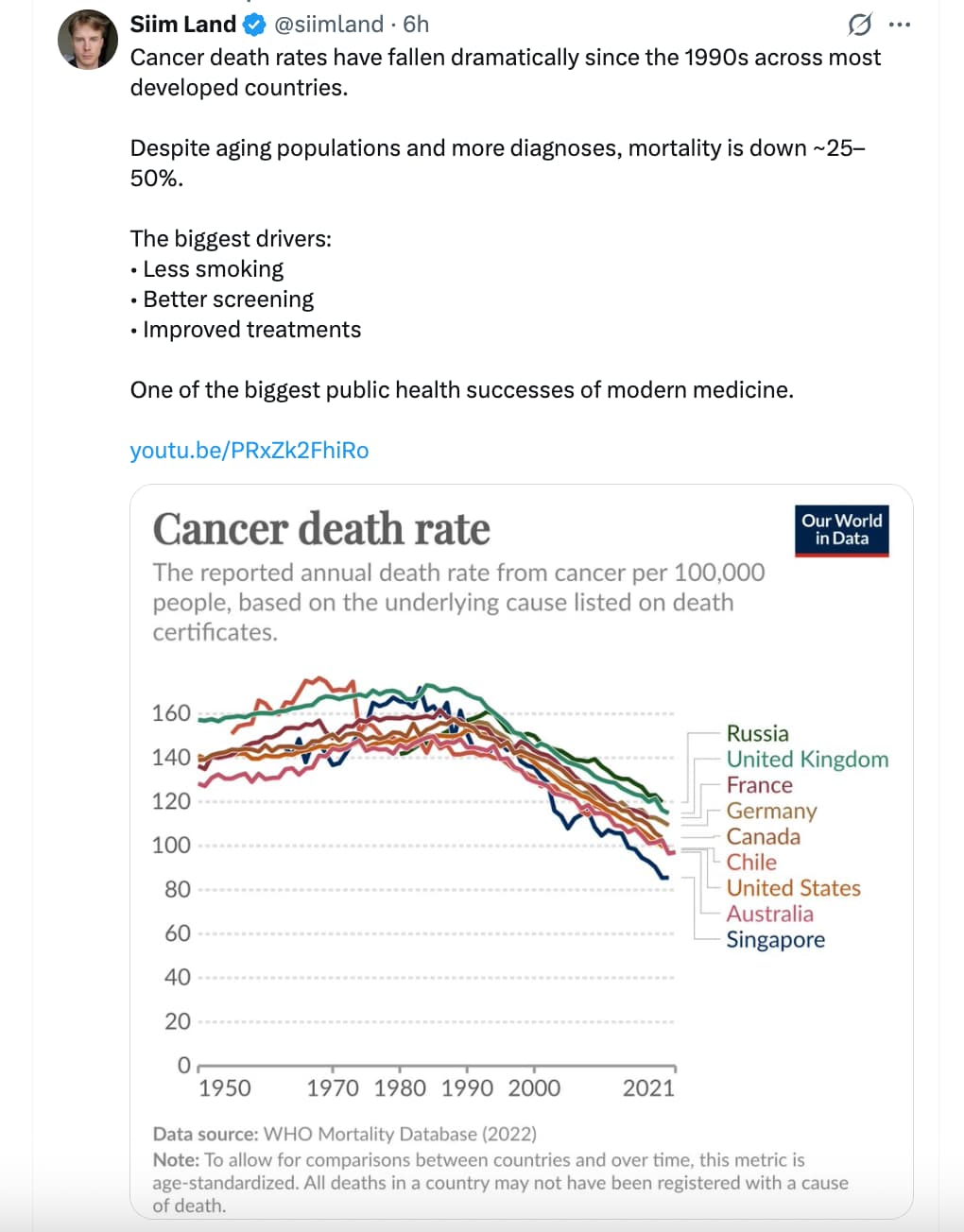
Prevent and cure cancer

Yes, absolutely it’s highly dependent on the individual. A lot of guidelines are born out of practicality, cost and demands on the medical system, not what is the most beneficial for one single patient.

To be clear, these recommendations are not just a re-statement of standard guidelines. They are aiming to be a sensible starting point for myself, my friends and family. I have my own biases, and I tried to balance something “perfect” and something feasible. I tended a bit towards additional screening where it could be beneficial and where the risks are low, and I tended away where I thought it wouldn’t be worth it. You can see more detail in the PDF.

For example with colonoscopy, I know a guy who had colon polyps at 41, which may have turned into cancer if he’d waited until 50 for his first colonoscopy. So that kinda biases me towards doing one early. I took into account that the progression of CRC from polyp → early tumour → deadly tumour is quite slow (10 years or more). But I also took into account that colonoscopy isn’t perfect and it does miss some polyps and even tumours. Therefore, a scan every 3-5y is a reasonable middle ground where you’re very unlikely to miss something twice in a row, but you’re also unlikely to suddenly discover a stage 4 death sentence. If you want to almost guarantee you won’t die from CRC, you could scan every year, but there is some risk and cost etc etc.

Similar for mammography, where guidelines actually vary a lot by country. Annual seems to be a sweet compromise spot, and biannual if you have higher risk. However, the benefits of mammography are not so clear-cut as colonoscopy. We’re decent at treating more advanced breast cancer now, and you generate a lot of false positives with small lesions, unnecessary testing, biopsies, and maybe even surgery or chemo for tumours that were never really dangerous. So the overall survival benefit doesn’t seem to be that great for mammography. But it’s also quick and safe, and has a fairly high miss rate, so repeated screenings are a good counter for that.

For derma, I think it’s very cultural, because in some countries doctors will think you’re insane for asking them to check moles every 3 months! I did look at apps, but couldn’t find good authoritative recommendations from societies or national guidelines, though I’m sure that some of them are great. Do you know any good ones?

I also reckoned there are less common ones in there. I haven’t seen people talk much about H.pylori testing or gastroscopy on this forum. But that’s a screening test basically as good as colonoscopy, and it’s another slow growing cancer which is extremely nasty once it’s spread. I’m doing my first H.pylori test and gastroscopy next month!

For cervical cancer, things have really moved on since I worked in a cytology lab 20 years ago. Now there’s HPV testing, automated cell examination etc. It’s another slow growing cancer, so this screening test is an absolute no brainer with very low risk and potentially huge reward.

I figure most people won’t have genetic testing done, so I didn’t go down that road. But one of the biggest factors is family history for sure. If you have strong family history, or something like Lynch syndrome, you’d probably want to move your testing earlier and increase the frequency. I totally agree. But that’s way beyond the pay grade of my little single-page recommendation PDF :stuck_out_tongue:

What I would really like to know is if people had perfect adherence to screening tests, how much cancer would we be able to cure. I guarantee you there are women reading this who haven’t done their cervical test for a few years, or men who haven’t attentively fondled their balls for years.
6 Likes

For $100 you can have your genome sequenced at AncestryDNA and receive info on 700 K SNP’S. Sequencing.com offers WGS for $399: https://sequencing.com/

I wouldn’t be surprised if you could use this output file and calculate polygenic risk scores for different cancers from mendelian randomization, GWAS, with Codex or Claude Code in a short time.

2 Likes

That’s really cool. However, I’m not confident (yet) about whether that output would be validated. I assume someone will make it a service at some point.

My other question is that I don’t feel confident that it would be useful or actionable. For example, if you have 7 SNPs with links to increased prostate cancer, and 4 linked to decreased prostate cancer, I’m not sure how you’d integrate that, decide the weights etc. And what would the end decision be? Do PSA every 6 months instead of every 12? And if you have SNPs associated with being protected from cancers, would we screen less often? I really don’t know.

I suppose there are a few obvious ones like BRCA which are well worth knowing. But I reckon the boring average people among us can gain a lot from family history, and looking at your other risk factors.

1 Like

You could ask it to search for and replicate a few papers then use the same methodology on your own SNP’s with the same code. In so far as the papers are correct, it’s for you. Services have legal issues. I wouldn’t rely on any of this to assume lower risk to be on the safe side i.e not reduce screening, nor assume that it captured all of the high risk (there are a lot of papers and not done studies yet after all!).

I read on wikipedia that BRCA increases risk of other cancers. Polygenicity captures more of the genetic variance, I presume.

2 Likes
3 Likes

49% reduction in cancer risk with mRNA cancer vaccine
(In August, RFK Jr announced $500M in cuts to mRNA vaccine research)

Moderna Cancer Vaccine Maintains 49% Risk Reduction in Five-Year Melanoma Study Follow-up

The companies have an expansive clinical program for the mRNA neoantigen therapy intismeran autogene in combination with immuno-oncology heavyweight Keytruda.

Merck and Moderna’s mRNA neoantigen therapy reduced the risk of recurrence or death in patients with advanced melanoma by nearly half at the five-year mark of a mid-stage trial when paired with Keytruda. The latest results build on the companies’ efforts to develop a long-term solution to the intractable skin cancer that often recurs even after complete removal via surgery.

The data come from an analysis of the Phase IIb KEYNOTE-942/mRNA-4157-P201 study, an open label trial that paired the therapy, called intismeran autogene, with Merck’s immuno-oncology juggernaut. Patients had high-risk stage three or four melanoma and underwent complete resection prior to receiving the treatment combo or Keytruda alone for a year.

In a readout at the three-year mark in December 2023, the combo reduced the risk of recurrence or death by 49% compared to Keytruda alone.

In Tuesday’s release, the companies said that number was the same at the five-year mark. They did not report what Keytruda alone achieved. The study originally reached the primary endpoint in December 2022, achieving a risk reduction of 44%.

Moderna and Merck said in a statement that the data builds on the analyses performed at two years and three years. Safety was consistent with previous readouts.

“While incremental,” William Blair analysts wrote in a note Tuesday morning, “we view today’s 5-year data update on intismeran as positive maintenance of an impressive effect over Keytruda monotherapy, the first therapy, to our knowledge, to show added benefit in this post-surgical setting.”

Prior Reporting:

10 Likes

Pancreatic Cancer: Top 10 Triggers for an Often-Silent Disease

Based on the Medscape commentary “Pancreatic Cancer: Top 10 Triggers for an Often-Silent Disease” (February 2026), the 10 factors commonly identified as primary triggers or risk factors are:

  • Smoking: Considered the most significant modifiable risk factor, accounting for a substantial percentage of cases.
  • Obesity: Excessive body weight, particularly central (abdominal) obesity, is strongly linked to increased risk.
  • Diabetes: Especially new-onset Type 2 diabetes, which can serve as both a risk factor and an early warning sign of the disease.
  • Chronic Pancreatitis: Long-term inflammation of the pancreas, often associated with heavy alcohol use or smoking, increases susceptibility.
  • Family History: Individuals with close relatives (parents or siblings) who have had pancreatic cancer are at higher risk.
  • Genetic Syndromes: Inherited genetic mutations, such as those associated with BRCA1/BRCA2 (breast/ovarian cancer), Lynch syndrome, and Peutz-Jeghers syndrome.
  • Age: The risk increases significantly as people get older, with most diagnoses occurring after age 55.
  • Race and Ethnicity: Studies show a higher incidence rate among African Americans and people of Ashkenazi Jewish descent.
  • Diet: A diet high in red and processed meats, saturated fats, and low in fruits and vegetables is a contributing factor.
  • Chemical/Environmental Exposure: Occupational exposure to certain pesticides, dyes, and chemicals used in metal refining, as well as heavy alcohol consumption (often linked to pancreatitis).

Story on Medscape:

https://www.medscape.com/viewarticle/pancreatic-cancer-top-10-triggers-often-silent-disease-2026a10003ut

1 Like

New iron nanomaterial wipes out cancer cells without harming healthy tissue

Scientists at Oregon State University have engineered a powerful new nanomaterial that zeroes in on cancer cells and destroys them from the inside out. Designed to exploit cancer’s unique chemistry—its acidity and high hydrogen peroxide levels—the tiny iron-based structure sparks not one but two intense chemical reactions, flooding tumors with cell-damaging oxygen molecules. This dual attack overwhelms cancer cells with oxidative stress while sparing healthy tissue.

6 Likes

2 Likes

9 Surprising Foods that Cause Cancer

The following foods are explicitly implicated in the transcript as containing or facilitating the formation of carcinogens under specific conditions:

  • Peanuts: Risk of Aflatoxin B1 (fungal toxin) contamination, particularly in unregulated markets.
  • Corn (Maize): Similar risk of Aflatoxin contamination as seen in peanuts.
  • Pickled Vegetables: Linked to Stomach Cancer due to high sodium content (15% increased risk per 40g daily).
  • Salted Fish (e.g., Cod): Linked to Nasopharyngeal Cancer due to salt and preservation methods.
  • Miso: Identified as a high-sodium fermented food with potential gastric cancer links.
  • Red Wine & Liquor: Ethanol is a direct carcinogen with a linear risk relationship.
  • Coffee & Tea: Risk of Oral/Throat Cancer only if consumed at temperatures exceeding 65C , 149F.
  • Starchy Foods (e.g., French Fries, Toast): Risk of Acrylamide formation when cooked at high temperatures or burnt.
  • Muscle Meats (Poultry, Fish, Red Meat): Risk of HCAs and PAHs when grilled, charred, or exposed to open flames.
  • Spices (certain types): Noted as potential carriers of Aflatoxin contamination in some regions.

I. Executive Summary

The provided transcript outlines several dietary exposures and preparation methods linked to increased oncogenic risk, specifically targeting aflatoxins, high sodium intake, thermal injury, and pyrolysis products. The core thesis posits that “healthy” foods (e.g., peanuts, tea, fish, vegetables) can become significant vectors for carcinogenesis depending on storage conditions, processing (salting/pickling), and cooking temperatures.

A primary concern is Aflatoxin B1, a potent Group 1 carcinogen produced by Aspergillus species on peanuts and corn. While strictly regulated in the US, it remains a major driver of hepatocellular carcinoma (HCC) globally, particularly in individuals with comorbid Hepatitis B/C. The transcript further identifies high-sodium diets—specifically pickled vegetables and salted fish—as drivers of gastric and nasopharyngeal cancers through mucosal degradation and potentiation of H. pylori colonization.

Thermal factors are highlighted as dual-threats: physical and chemical. Physical injury from liquids $>65^\circ\text{C}$ is linked to esophageal squamous cell carcinoma. Chemically, high-heat cooking of carbohydrates (acrylamide) and animal proteins (Heterocyclic Amines [HCAs] and Polycyclic Aromatic Hydrocarbons [PAHs]) creates DNA-reactive metabolites. The speaker proposes mitigations such as acidic/antioxidant-rich marinades (rosemary, turmeric) and pre-cooking techniques to limit pyrolytic exposure.

While the transcript accurately reflects IARC classifications, it occasionally blurs the line between population-level epidemiological signals (e.g., pickled vegetables in East Asia) and individual risk in Western contexts. The “Actionable Intelligence” lies in the transition from what is eaten to how it is sourced, stored, and prepared.


II. Insight Bullets

  • Aflatoxin Potency: Aflatoxin B1 is a Group 1 human carcinogen; it is a primary driver of 5–28% of global liver cancer cases.
  • Synergistic Risk: Aflatoxin exposure combined with Hepatitis infection exponentially increases liver cancer risk compared to either factor alone.
  • Regulatory Buffer: US FDA testing makes aflatoxin contamination in major commercial peanut brands statistically unlikely; the risk is concentrated in unregulated or “natural” markets and developing regions.
  • Visual Screening: Shriveled, discolored, or moldy peanuts are high-risk indicators for fungal mycotoxins and should be discarded.
  • Sodium-Gastric Axis: Each 40g daily increment of pickled vegetables is associated with a 15% increase in stomach cancer risk.
  • Mucosal Vulnerability: Excess salt physically damages the gastric lining, facilitating H. pylori infection, a known precursor to gastric adenocarcinoma.
  • Thermal Threshold: Consuming beverages above $65^\circ\text{C}$ ($149^\circ\text{F}$) is classified as “probably carcinogenic” due to chronic epithelial thermal injury.
  • Ethanol Linearity: Alcohol lacks a “safe” threshold for cancer; the relationship between intake and oncogenic risk is essentially linear across multiple tissue types.
  • Acrylamide Formation: Asparagine and sugars in starchy foods react at high temperatures ($>120^\circ\text{C}$) to form acrylamide, a “probable” human carcinogen.
  • Pyrolysis Byproducts: Charring meat creates HCAs from protein/creatine reactions and PAHs from fat drippings reacting with flames/smoke.
  • Marinade Chemistry: Acidic marinades (vinegar/citrus) and antioxidant spices (rosemary/turmeric) can reduce HCA formation by up to 90%.
  • HCA Mitigation: Pre-cooking meat (microwave/oven) before a brief “finish” on the grill significantly reduces the time-temperature product required for HCA/PAH synthesis.
  • Lean Cut Advantage: Trimming visible fat reduces flame flare-ups, directly lowering the deposition of PAHs onto the food surface.
  • Miso Paradox: While fermented, the high sodium content in commercial miso may offset probiotic benefits regarding gastric cancer risk.
  • Physical Removal: Manually excising charred portions of meat is a low-tech but effective method to reduce PAH/HCA ingestion.

III. Adversarial Claims & Evidence Table

III. Adversarial Claims & Evidence Table

Claim from Video Speaker’s Evidence Scientific Reality (Current Data) Evidence Grade Verdict
Aflatoxin B1 is a potent human carcinogen. IARC Group 1 Classification. Confirmed. AFB1 forms DNA adducts at the 249th codon of the p53 gene, causing G$\rightarrow$T mutations. Attributable to ~17% of global HCC cases. PMC12643785 A Strong Support
Pickled veg. increase stomach cancer risk by 15% per 40g/day. Meta-analysis citations. Pooled Relative Risk (RR) of 1.15 (95% CI: 1.07–1.23) per 40g daily increment. Effect is dose-dependent and linear. MDPI-Cancers A Strong Support
Salted fish is linked to nasopharyngeal cancer. Cited in Asian populations. Meta-analysis shows RR 1.45 for high intake. Salt and nitrosamines may reactivate Epstein-Barr Virus (EBV). Lian et al., 2022 A Strong Support
Hot drinks ($>65^\circ\text{C}$) cause oral/throat cancer. Thermal epithelium damage. Observational data supports a $2.5\times$ risk for ESCC. However, 2025 Mendelian Randomization (MR) studies suggest no genetic causal link, implying confounding factors (e.g., alcohol/smoking). JTD-88601 A/B Plausible / Contested
Marinades (rosemary/turmeric) reduce carcinogen formation. Antioxidant inhibition. Turmeric/rosemary marinades reduce HCA formation by up to 69–88% in beef/chicken. PMC12589718 D Strong Support (Translational)
Acrylamide in burnt toast/fries is a cancer risk. “Plausible relationship.” Classified as “Probable” (Group 2A). Evidence in humans is inconsistent; primary data remains pre-clinical/animal models. D Speculative (Human)

IV. Actionable Protocol (Prioritized)

High Confidence Tier (Verified Level A/B)

  • Thermal Regulation: Allow all beverages (coffee/tea) to cool for $\ge 4$ minutes or until temperature is $<60^\circ\text{C}$ ($140^\circ\text{F}$) to prevent chronic thermal injury to the esophageal epithelium.
  • Sodium Management: Limit “salt-preserved” foods (salted fish, heavily pickled vegetables) to $<40\text{g}$ per day. Favor fresh or vinegar-pickled (non-fermented/low-salt) alternatives to protect gastric mucosa.
  • Sourcing Integrity: Stick to major commercial brands for peanuts and maize in regulated markets (e.g., US/EU) where FDA/EFSA monitoring for aflatoxins is standard. Discard any nuts showing signs of shriveling or discoloration.

Experimental Tier (Level C/D - High Safety Margin)

  • The “Antioxidant Shield”: Marinate muscle meats for at least 20 minutes in a solution containing Turmeric, Rosemary, and an acidic base (lemon juice/vinegar). This reduces HCA synthesis during subsequent high-heat cooking.
  • Pre-emptive Cooking: Use a microwave or oven to reach an internal temperature of $60\text{–}70^\circ\text{C}$ before finishing on a grill. This minimizes the duration of pyrolytic exposure.
  • Lean Selection: Prioritize lean cuts to reduce PAH-laden smoke from fat drippings.

Red Flag Zone (Safety Data Absent / High Risk)

  • Charred Tissue Consumption: Aggressively excise all black/charred portions of meat. These contain concentrated HCAs and PAHs with no known “safe” threshold for DNA damage.
  • Hepatitis + Aflatoxin Synergy: Individuals with chronic HBV/HCV must maintain near-zero tolerance for unregulated “natural” peanut or corn products due to the $30\text{–}60\times$ synergistic HCC risk.

V. Technical Mechanism Breakdown

  1. Aflatoxin B1 Metabolism & p53 Mutagenesis: AFB1 undergoes bioactivation by hepatic cytochrome P450 enzymes (specifically CYP1A2 and CYP3A4) into AFB1-8,9-epoxide. This highly reactive electrophile forms covalent adducts with the N7 position of guanine. The most significant target is the p53 tumor suppressor gene at codon 249. This mutation inactivates the cell’s ability to trigger apoptosis in response to DNA damage, leading to clonal expansion of initiated hepatocytes.
  2. The Sodium-Gastric Axis: High concentrations of sodium chloride ($NaCl$) exert an osmotic effect that strips the protective mucus layer of the stomach. This exposure results in chronic superficial gastritis, increased epithelial cell proliferation (compensatory hyperplasia), and heightened sensitivity to carcinogens. Furthermore, the denuded lining facilitates the colonization of Helicobacter pylori, which induces chronic inflammation via the CagA/VacA pathways, eventually progressing to atrophic gastritis and adenocarcinoma.
  3. Pyrolytic Chemistry (HCAs and PAHs): * Heterocyclic Amines (HCAs): Formed via the Maillard reaction when amino acids, sugars, and creatine react at temperatures $>150^\circ\text{C}$. Compounds like PhIP and MeIQx are pro-carcinogens that require metabolic activation to form DNA-reactive nitrenium ions.
  • Polycyclic Aromatic Hydrocarbons (PAHs): Formed by the incomplete combustion (pyrolysis) of fats. When fat drips onto a heat source, PAHs (e.g., Benzo[a]pyrene) are aerosolized in smoke and deposited on the meat’s surface. These molecules act as ligands for the Aryl Hydrocarbon Receptor (AhR), triggering the expression of enzymes that further metabolize them into carcinogenic diol-epoxides.
  1. Thermal Epithelial Disruption: Chronic exposure to liquids $>65^\circ\text{C}$ causes repeated thermal injury and inflammatory regeneration. This chronic “wound-healing” state increases the rate of cellular turnover, raising the statistical probability of spontaneous mutations and decreasing the “barrier function” of the esophageal squamous epithelium, potentially making it more permeable to other carcinogens like acetaldehyde from alcohol or tobacco-specific nitrosamines.
3 Likes

Avoid cancer, avoid the “breaking bad” effect. (Or, give people better healthcare coverage and you lower the crime rate).

A cancer diagnosis can push people to crime

Even generous welfare states are not immune to a “Breaking Bad” effect

In “breaking bad” a mild-mannered chemistry teacher reinvents himself as a drug lord after learning he has terminal cancer. A new study suggests the television show’s plot is less outlandish than it seems. Researchers in Denmark and the Netherlands find that the likelihood of a cancer patient committing a crime is 14% higher in the decade following their diagnosis than the baseline rate among people yet to develop the disease.

A criminal history does not affect the pattern much. Instead, the strongest predictors of criminality are patients’ finances and their prognosis. Even in Denmark, where health care is free and welfare generous, cancer reduces earnings and raises the risk of unemployment. The increase in criminal activity is concentrated among financially vulnerable patients, such as people without partners or with little education (see chart 2). The researchers find that the risk of offending is higher in areas where municipal-level benefits are stingier, suggesting the trend could be starker in countries with thinner safety nets.

Read the full story: A cancer diagnosis can push people to crime (The Economist)

3 Likes

Some good news

2 Likes

What does everybody here think about use of drugs to prevent cancer? Somebody in the Ora Biomedical thread mentioned Desloratadine the other day, which got me to do some reading:

Desloratidine seems quite strongly associated with improved survival in several cancers, particularly breast cancer, melanoma

Users of desloratadine showed consistently improved survival (HR 0.67, 95% CI 0.55–0.81, p < .001) regardless of patient age, menopausal status, estrogen receptor status, or tumor stage. (https://www.tandfonline.com/doi/full/10.1080/0284186X.2020.1769185)

Desloratadine use was associated with improved survival for all ten immunogenic tumor types studied (gastric, colorectal, pancreatic, lung, breast, prostate, kidney, bladder cancer, melanoma, and Hodgkin lymphoma), but not for the six non-immunogenic ones (Improved survival in several cancers with use of H1-antihistamines desloratadine and loratadine - PubMed)

Of note, other antihistamines like Cetirizine did not have this association

And there’s a pretty comprehensive mouse study about liver cancer:

desloratadine, an antiallergic drug, can repress proliferation in HCC cell lines, cell-derived xenograft (CDX), patient-derived organoid (PDO) and patient-derived xenograft (PDX) models.
Blockade of NMT1 enzymatic activity inhibits N-myristoylation of VILIP3 protein and suppresses liver cancer progression | Signal Transduction and Targeted Therapy

And in the supplemental data of this paper (https://onlinelibrary.wiley.com/doi/10.1111/acel.14334), looking at the UK biobank and drugs associated with all-cause mortality, Desloratidine has HR 0.811, 95% CI 0.670–0.982; p = 0.031955. Again, no similar effect for other antihistamines.

There doesn’t seem to be any sort of dementia signal associated with it (unlike 1st get antihistamines), but there is a small signal for weight gain and metabolic dysregulation (Association of prescription H1 antihistamine use with obesity: Results from the National Health and Nutrition Examination Survey - PMC)

3 Likes

Probably a good idea to switch to this antihistamine.

1 Like

Trump has collapsed cancer research. —> The National Cancer Institute hasn’t made a single grant this fiscal year

Nationally, N.I.H. grants to universities are down by more than ninety per cent in the current fiscal year; during that time, the National Cancer Institute hasn’t made a single grant.

Full story: The Unmaking of the American University (New Yorker)

3 Likes

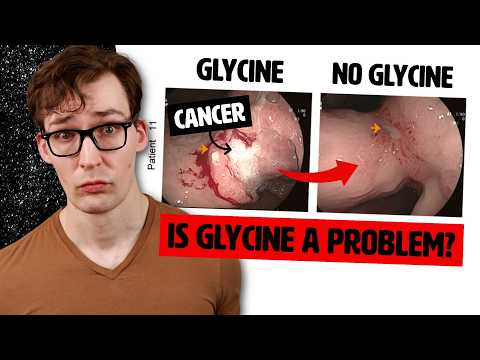
People REVERSED their Cancer by eliminating Glycine and Serine

I. Executive Summary

The analyzed transcript evaluates the complex, frequently paradoxical role of the non-essential amino acids serine and glycine in cancer progression, specifically through their integration into one-carbon metabolism. The core thesis posits that while early clinical interventions utilizing dual serine- and glycine-restricted diets show promise in limiting tumor proliferation, isolated biochemical data indicates that serine is the primary oncogenic driver. Pre-clinical models and in vitro assays demonstrate that serine restriction stunts neoplastic growth, whereas isolated glycine restriction yields negligible anti-tumor efficacy.

Crucially, the transcript identifies glycine as a metabolic “double agent.” Because the enzymatic conversion of serine to glycine via serine hydroxymethyltransferase (SHMT) is substrate-dependent and fully reversible, supraphysiological influxes of exogenous glycine force the pathway backward. This reverse reaction (glycine to serine) consumes, rather than donates, the critical one-carbon units required for nucleotide biosynthesis. Consequently, high intracellular glycine acts as a metabolic sink, starving the tumor of the nucleic acids necessary for DNA synthesis and genomic replication. While pre-clinical murine models suggest high-dose glycine supplementation limits tumor progression by exploiting this bottleneck, severe translational gaps remain. The aggressive leap from in vitro isotope tracing to human oncological protocols is premature, and additional large-scale, randomized human trials are mandatory to determine the safety and efficacy of targeted amino acid modulation in active malignancies.

II. Insight Bullets

  • Amino Acid Dependency: Malignant cells exhibit a profound reliance on specific non-essential amino acids, particularly serine, to fulfill the anabolic requirements of rapid proliferation and genomic replication.
  • One-Carbon Metabolism: Serine fuels the one-carbon metabolism network by donating a carbon atom during its conversion to glycine, an essential step for synthesizing DNA and RNA building blocks.
  • Dual Restriction Efficacy: Phase I clinical trials and early murine models indicate that simultaneously restricting dietary serine and glycine restricts tumor proliferation and modulates the tumor immune microenvironment.
  • The Serine Dominance: In vitro isolation reveals that serine restriction independently halts tumor proliferation, whereas isolating glycine restriction fails to impede cancer growth.
  • Pathway Reversibility: The enzymatic conversion between serine and glycine is a reversible biochemical reaction dictated entirely by cellular substrate concentrations.
  • The Glycine Paradox: Exposing cancer cells to high concentrations of exogenous glycine forces the reversible SHMT pathway backward, driving glycine to convert back into serine.
  • Carbon Depletion Sink: The reverse conversion of glycine to serine actively consumes one-carbon units instead of donating them, effectively collapsing the one-carbon metabolism cycle.
  • Nucleic Acid Starvation: The disruption of one-carbon metabolism severely limits the tumor cell’s ability to synthesize DNA, hindering replication, genome repair, and survival.
  • Pre-Clinical Glycine Efficacy: Murine models demonstrate that high-dose glycine supplementation paradoxically acts as an anti-tumorigenic agent by exploiting this metabolic vulnerability.
  • Translational Gap in Supplementation: The efficacy of oral glycine supplementation as an active anti-cancer intervention currently lacks robust human Randomized Controlled Trials (RCTs).
  • Prophylactic Safety: For individuals without an active malignancy, current data indicates that ongoing glycine supplementation is safe and potentially beneficial for broader metabolic health and lifespan extension.
  • Clinical Ambiguity: For active cancer patients, the data presents a contradictory risk profile (dietary restriction vs. high-dose supplementation), making isolated dietary self-medication highly hazardous without continuous biomarker tracking and oncological oversight.

III. Adversarial Claims & Evidence Table

Specific Claim What they cited Verified status + PubMed/DOI Link Evidence Grade (A-E) Verdict
Dual restriction of Serine/Glycine reverses cancer mass Phase I clinical trial data Verified. Early Phase I data (e.g., ChiCTR2300067929) shows -SG diets modulate systemic immunity and limit tumor proliferation. PMC12708301 Level C Plausible
Serine restriction inhibits tumor growth; glycine restriction does not In vitro (cell culture) assays Verified. Exogenous glycine cannot substitute for serine in driving proliferation because the reverse conversion consumes one-carbon units. PMC12708301 Level D Strong Support
High glycine reverses one-carbon metabolism, starving cancer of nucleic acids Isotope tracing in cell models Verified. Reversing the SHMT reaction drains 5,10-methylene-THF, acting as a one-carbon sink and starving the cell of nucleotides. PMC12708301 Level D Plausible
Glycine supplementation halts cancer progression Pre-clinical animal models Source unverified in live search for human RCTs. While animal models show suppressed tumor growth via metabolic trapping, translation to human oncology is clinically undocumented. Level D Translational Gap

IV. Actionable Protocol (Prioritized)

To translate these findings into a pragmatic longevity and health framework, we must separate healthy baseline metabolism from active tumor biology. Full Phase III RCT data is required before any of these interventions cross into standardized oncology.

High Confidence Tier (General Health & Longevity)

  • Prophylactic Glycine Supplementation: If you are healthy and possess no active malignancies, continuing to supplement with glycine is highly supported. It provides necessary substrates for glutathione (GSH) synthesis, promotes collagen repair, and supports general metabolic health without any verified oncogenic risks.

Experimental Tier (Active Malignancy)

  • Dual Dietary Restriction (-SG Diet): For patients with active malignancies, a strict serine and glycine-free diet is currently under Phase I investigation, often combined with immunotherapies (e.g., anti-PD-1). This requires total synthetic medical nutrition to starve the tumor of exogenous amino acids. Knowledge Gap: Efficacy heavily depends on the tumor’s genetic profile, as some cancers will aggressively upregulate de novo synthesis to survive.

Red Flag Zone (Avert)

  • High-Dose Glycine Supplementation for Cancer Treatment: Using high-dose glycine to intentionally “reverse” one-carbon metabolism and starve an active tumor is theoretically brilliant but clinically dangerous. Safety Data Absent. Tumors are highly heterogeneous; depending on whether a tumor has amplifications in the PHGDH gene, flooding the system with glycine could paradoxically fuel alternate compensatory survival pathways rather than starving the cell.

V. Technical Mechanism Breakdown

One-Carbon Metabolism & The Folate Cycle
Serine is the primary carbon donor for the cellular folate cycle. The enzyme Serine Hydroxymethyltransferase (SHMT)—specifically SHMT1 in the cytosol and SHMT2 in the mitochondria—transfers a carbon atom from serine to tetrahydrofolate (THF). This reaction yields glycine and 5,10-methylene-THF. This newly minted one-carbon unit (5,10-methylene-THF) is then heavily utilized in the biosynthesis of purines and pyrimidines (thymidylate), which are the fundamental nucleic acids required for DNA replication in highly proliferative cancer cells.

Metabolic Trapping (The “Double Agent” Reversal)
The SHMT enzymatic reaction exists in a state of equilibrium and is entirely reversible based on mass action. In a controlled microenvironment where tumors are flooded with exogenous glycine (a high-glycine/low-serine ratio), the mass action ratio forces the SHMT enzyme to operate in reverse, converting glycine back into serine.

Crucially, this reverse reaction consumes 5,10-methylene-THF (the 1C unit) instead of producing it. By acting as a massive 1C “sink,” the excess glycine depletes the intracellular pool of available one-carbon units. This triggers a cascading failure: nucleotide biosynthesis halts, replication stress compounds, the cancer cell cannot repair its genomic damage, and tumor proliferation collapses.

The De Novo Serine Synthesis Pathway (SSP) Escape Mechanism
It is important to acknowledge a vital knowledge gap regarding dietary restriction alone: many aggressive tumors bypass dietary serine deprivation by upregulating the endogenous Serine Synthesis Pathway (SSP). They divert the glycolytic intermediate 3-phosphoglycerate (3-PG) into endogenous serine production via the rate-limiting enzyme Phosphoglycerate Dehydrogenase (PHGDH). Consequently, targeting cancer metabolism often requires a combinatorial approach: restricting exogenous intake while simultaneously utilizing pharmacological inhibitors of PHGDH to block the tumor’s internal synthesis escape route.


7 Likes

For liver cancer (HCC) Cyproheptadine (a 1st-Gen H1-antihistamine) also provides cancer protection. Like Desloratadine it results in weight gain, which is considered a plus for cancer patients that tend to lose weight due to loss of appetite.

Cyproheptadine is OTC in most countries outside the USA, and I ordered some, just in case, from India.

Looks like Desloratadine is prescription only in USA, but is OTC in other counties. Not sure if it is available in India.

1 Like

I don’t see how you go serine free. Your body can make it from glucose or glycine. All protein has got it, even vegetable protein. You pretty much have to be keto, meaning almost all fat, no sugar or starch, almost no protein. It may stop the cancer, but not a long term solution for any living thing.

2 Likes

Yes - its a specially formulated medical diet (not something you can easily choose in a grocery store):

In clinical trials and pre-clinical models, a -SG diet is achieved exclusively through elemental or synthetic medical diets Dietary Manipulation of Amino Acids for Cancer Therapy, 2023.

This involves stripping all natural, intact protein from the diet. Instead, patients consume a proprietary, lab-formulated powder containing the other 18 amino acids, strictly calibrated to contain zero serine and zero glycine. Biotech companies pioneering this space engineer highly processed, precision meals to make these synthetic amino acid profiles palatable and compliant for human oncology patients.

III. Protocol Translation: Example -SG Daily Meals

A patient enrolled in a -SG clinical trial consumes a heavily calculated, synthetic diet. A daily meal plan relies on zero-protein carbohydrate and fat sources acting as delivery vehicles for the synthetic amino acid blend.

  • Breakfast: The Elemental Shake
    • A liquid formula serving as the primary caloric and macronutrient base.
    • Composition: The -SG synthetic amino acid blend, emulsified with pure fats (e.g., refined coconut oil or MCT oil) and pure carbohydrates (e.g., maltodextrin). Flavored with zero-protein artificial extracts.
  • Lunch: Engineered Carbohydrate Matrix
    • Zero-protein starches used to mimic a traditional meal.
    • Composition: Noodles made from Konjac root (glucomannan) or pure cassava starch, served with a protein-free synthetic broth fortified with the -SG amino acid powder and essential micronutrients.
  • Dinner: Amino-Acid Modulated “Meals”
    • Food scientists physically reconstruct the texture of food using pure macronutrient isolates.
    • Composition: An amino-acid-modulated synthetic “dahl” or porridge. This relies on zero-protein binders, specific isolated lipids, and the precise -SG amino acid powder, often microwaved and served with a zero-protein fat source (like a synthetic, dairy-free yogurt substitute).
  • Snacks & Hydration:
    • Filtered water, black coffee, or zero-calorie/zero-protein clear fluids. No natural snacking (no nuts, fruits, or vegetables) is permitted, as trace amounts of natural proteins instantly break the -SG restriction.
4 Likes

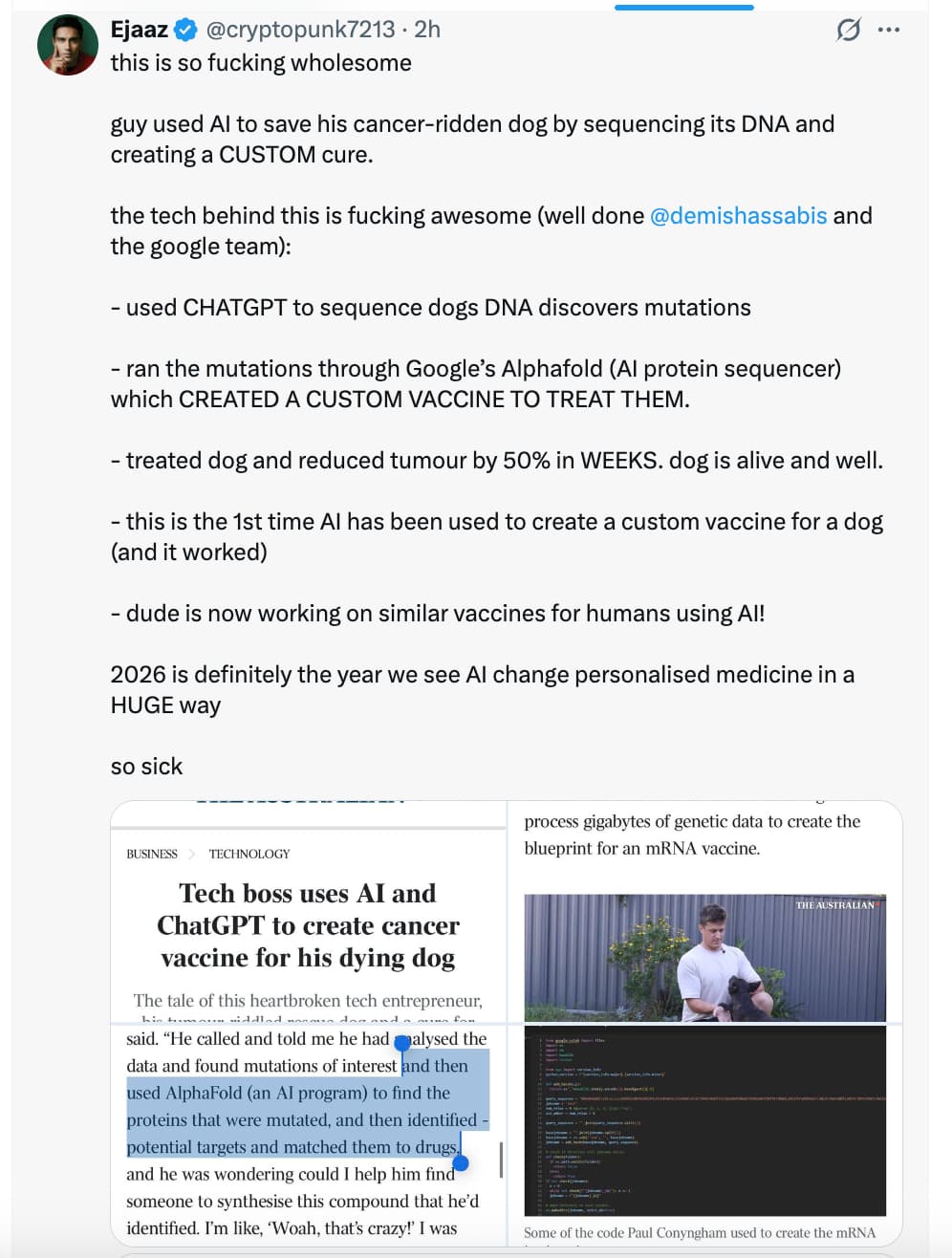
Full story here:

Tech boss uses AI and ChatGPT to create cancer vaccine for his dying dog

https://www.theaustralian.com.au/business/technology/tech-boss-uses-ai-and-chatgpt-to-create-cancer-vaccine-for-his-dying-dog/news-story/292a21bcbe93efa17810bfcfcdfadbf7

7 Likes