I had never heard of the Nutritarian Diet - so wanted more information:
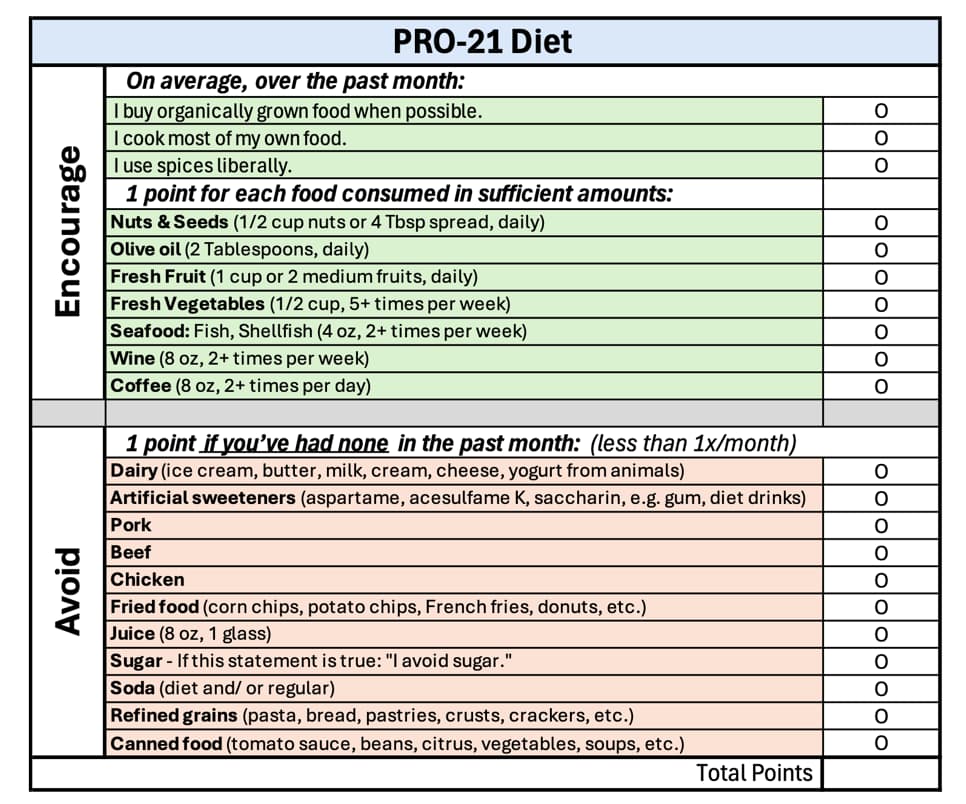
PRO-21 exclusions
From the Nutritarian Video Dr. Fraser posted:
Top Doctors on Food, Healing, and Hope
I. Executive Summary
This panel discussion, convened under the auspices of the Physicians Committee for Responsible Medicine at the National Health Association Conference, examines the clinical application of whole-food, plant-based (WFPB) and “nutritarian” diets for chronic disease mitigation, athletic longevity, and neurobehavioral recovery. The clinical thesis asserts that shifting from a standard Western dietary pattern—characterized by ultra-processed foods, refined carbohydrates, saturated lipids, and animal protein—to an unrefined, micronutrient-dense plant portfolio significantly modulates all-cause mortality, cardiovascular pathology, and systemic inflammation. The panelists, comprising lifestyle medicine and sports medicine clinicians, argue that dietary categorization requires clinical precision. They differentiate between an unsupplemented, nutrient-poor vegan diet and targeted whole-food regimens designed to maximize phytochemical density (specifically through cruciferous vegetables, alliums, legumes, fungi, berries, and seeds).
A primary clinical tension explored is the trade-off between short-term athletic adaptation and long-term cardiometabolic survival. Panelists note that extreme hypertrophic mass and high-protein, animal-dense or ketogenic protocols common in collision sports (e.g., NFL linemen) accelerate coronary atherosclerosis, microvascular hypoperfusion, and tendinopathy, leading to significantly shortened lifespans compared to non-collision, endurance, or movement-centric athletes. Conversely, evidence indicates that isocaloric, protein-adequate plant-based regimens preserve lean body mass and aerobic endurance while attenuating vascular inflammation and endothelial oxidative stress.
Addressing public health implementation, the discussants evaluate food addiction through a neurobiological lens. They model ultra-processed hyper-palatable formulations (combinations of free sugars, saturated fats, and sodium) as central nervous system dopaminergic disruptors requiring prolonged neurochemical recalibration. A clinical debate emerges between gradual risk-reduction strategies (“baby-stepping”) and total enforced abstinence. The panelists favor structured immersion and intensive lifestyle intervention models—such as shared medical appointments, residential retreats, and institutional “choice architecture” alterations—to reset hedonic tone and sustain long-term behavioral compliance. Finally, while recognizing the profound predictive validity of population modeling studies demonstrating an 8- to 13-year life expectancy extension via dietary optimization, the clinicians emphasize that individual biological reversibility depends on baseline vascular damage, epigenetic aging, and adherence thresholds.
II. Insight Bullets
- Dr. Megan Greger defines a clinically effective plant-predominant dietary pattern as consisting of minimally processed fruits, vegetables, legumes, whole grains, nuts, seeds, mushrooms, and spices, devoid of animal products, refined seed oils, added sodium, and processed sugars.
- Dr. Joel Fuhrman argues that standard “whole-food plant-based” terminology lacks clinical specificity and promotes the “Nutritarian” model, which prioritizes nutrient-to-calorie ratios and high-phytochemical plant groups.
- The Physicians Committee for Responsible Medicine promotes evidence-based lifestyle medicine interventions to prevent and reverse cardiometabolic conditions.
- The Kellen Foundation implements community-level lifestyle medicine interventions across diverse socioeconomic cohorts using standardized nutritional education frameworks.
- A vegan diet reliant on ultra-processed carbohydrates, refined oils, and sodium frequently exacerbates acne, fatigue, visceral adiposity, and metabolic dysregulation due to micronutrient dilution and glycemic volatility.
- Dr. Fuhrman posits that broad variance in human longevity curves is heavily determined by modifiable lifestyle inputs, which can compress morbidity and narrow the lifespan distribution toward maximal genetic potential.
- Dr. Stephan Esser notes that elite athletic training can temporarily mask underlying vascular and metabolic pathology induced by hypercaloric or carnivorous diets, but chronic degenerative disease manifests post-retirement.
- According to the National Institute for Occupational Safety and Health (Baron et al., 1994 / CDC), retired NFL linemen exhibit a 52% higher risk of cardiovascular mortality compared to the general male population and triple the risk of non-linemen peers due to extreme body mass and diet-induced cardiometabolic strain.
- Non-collision professional athletes maintaining lower adiposity and engaging in endurance- or agility-based sports demonstrate enhanced career longevity when adhering to micronutrient-rich, plant-predominant nutrition.
- Systemic hypercholesterolemia and elevated low-density lipoprotein particles impair microvascular perfusion and alter extracellular matrix remodeling, directly increasing the risk of tendinopathies and tendon ruptures.
- Sumo wrestlers consuming high-calorie, hyper-protein diets experience severely truncated life expectancies (frequently dying in their late 50s) driven by metabolic syndrome and premature coronary artery disease.
- Global Burden of Disease modeling published in PLoS Medicine by Fadnes et al., 2022 demonstrates that transitioning from a typical Western diet to an optimized plant-predominant diet at age 20 increases life expectancy by approximately 10.7 years for men and 13.0 years for women.
- The same modeling by Fadnes et al., 2022 indicates that adopting an optimized dietary portfolio at age 60 yields an estimated 8.0 to 8.8 years of increased life expectancy, and at age 80 adds approximately 3.4 years of healthy survival.
- Dr. Fuhrman asserts that aggressive, comprehensive lifestyle modification can restore motor balance and functional cognitive capacity in early-stage neurodegenerative decline.
- Dr. Esser highlights that modifiable behaviors governed by physical activity, lifestyle choices, and nutritional intake serve as the primary determinants of clinical healthspan.
- Environmental choice architecture within schools, medical centers, and municipal venues currently defaults to ultra-processed, calorie-dense foods, impeding long-term dietary adherence.
- The American College of Lifestyle Medicine advocates for therapeutic lifestyle interventions as the primary treatment modality for chronic lifestyle-related diseases.
- Peer-to-peer coaching and shared medical appointment models demonstrate superior clinical outcomes over standard 10-to-15-minute primary care encounters by providing sustained accountability and community reinforcement.
- Ultra-processed, hyper-palatable foods containing engineered ratios of salt, sugar, and fat induce dopamine receptor downregulation akin to classical substance use disorders.
- Dr. Fuhrman contends that gradual harm-reduction approaches (“baby-stepping”) frequently fail in severe food addiction due to intermittent reinforcement of hedonic cravings, advocating instead for acute, enforced abstinence.
- Resetting central nervous system dopamine sensitivity and extinguishing food-cue cravings typically requires an intensive 3-month intervention period, with neurobehavioral consolidation taking 6 to 12 months.
- Severe physician burnout within standard fee-for-service systems—characterized by excessive patient panels (e.g., 5,000 patients) and compressed visit times—limits the delivery of preventive lifestyle medicine.
- The National Health Association supports research and education on whole-food plant-based nutrition, water-only fasting, and disease reversal.
- The Culinary Institute of America has integrated nutritional science into culinary training via initiatives such as “The Protein Flip,” teaching chefs to rebalance plates with plant proteins and complex whole foods.
- Replacing maladaptive emotional eating with deliberate somatic coping mechanisms—including resistance exercise, outdoor endurance activities, and sleep hygiene—attenuates hypothalamic-pituitary-adrenal axis hyperactivation.
- Plant-predominant dietary frameworks supply adequate amino acid profiles and total caloric density to sustain elite athletic recovery, mitochondrial biogenesis, and physical endurance without compromising lean tissue mass.
- Structural societal interventions—such as institutional food policy reforms and municipal wellness initiatives—must augment individual behavioral modification to reverse escalating national obesity and metabolic disease prevalence.
III. Adversarial Claims & Evidence Table
| Claim from Video |
Speaker’s Evidence |
Scientific Reality (Current Data) |
Evidence Grade (A-E) |
Verdict |
| Switching from a standard Western diet to an optimized plant-rich diet at age 20 increases life expectancy by 10 to 13 years, and at age 60 by ~8 years. |
Global Burden of Disease (GBD) 2019 modeling simulation data. |
Validated modeling study utilizing GBD data (Fadnes et al., 2022, PLoS Med). Largest gains derived from increased legumes, whole grains, nuts, and reduction in red/processed meats. |
Level A |
Strong Support |
| Professional NFL linemen suffer the shortest life expectancy of any North American athletic group due to forced hypertrophy and hypercaloric diets. |
NIOSH NFL occupational mortality cohort study cited by Dr. Fuhrman. |
NIOSH cohort analysis (Baron et al., 1994 / CDC) confirmed linemen had a 52% higher risk of cardiovascular mortality compared to the general population and a 3-fold higher risk than non-linemen players. However, overall NFL players had lower all-cause mortality (SMR 0.54) due to a healthy worker effect; the claim of “shortest lifespan of anyoccupation in North America” is an overstatement. |
Level C |
Plausible |
| Elevated serum cholesterol directly correlates with tendon pathology, structural tendon degradation, and micro-tears. |
Dr. Esser’s clinical experience and referenced laboratory/human literature. |
Systematic reviews and meta-analyses (Tilley et al., 2015, Br J Sports Med; Zhao et al., 2020) establish that individuals with Achilles tendinopathy and tendon ruptures exhibit significantly higher total cholesterol, LDL-C, and triglycerides, driven by extracellular matrix lipid accumulation and tendon microvascular ischemia. |
Level A |
Strong Support |
| Intensive plant-based lifestyle interventions can arrest or reverse early-stage dementia and restore lost neuromotor balance. |
Anecdotal cases in Dr. Fuhrman’s clinical practice over 35 years. |
A Phase II randomized controlled trial (Ornish et al., 2024, Alzheimers Res Ther) demonstrated that a comprehensive lifestyle intervention (plant-based diet, exercise, stress management, supplements) improved cognitive and functional metrics (ADAS-Cog, CDR-SB) and plasma Aβ42/40 ratios in mild cognitive impairment and early Alzheimer’s. However, claims of complete “reversal” and balance restoration remain small-scale and preliminary. |
Level B |
Plausible |
| Severe food addiction cannot be resolved via incremental changes (“baby-stepping”); it requires strict enforced abstinence to reset dopamine receptors. |
Addiction medicine withdrawal model and Dr. Fuhrman’s residential retreat observations. |
Neurobiological studies verify downregulation of striatal D2 dopamine receptors in response to hyper-palatable ultra-processed foods (Volkow et al., 2017). However, clinical trials in eating disorders and ultra-processed food addiction demonstrate that rigid abstinence can trigger binge-eating relapse and orthorexic behaviors; evidence directly comparing mandatory abstinence vs. structured flexible moderation remains equivocal (Thompson et al., 2025, Front Psychiatry). |
Level E |
Speculative |
| Neurotransmitter sensitivity and craving drives take 3 months of strict abstinence to recalibrate in food addiction. |
Extrapolation from the neurobiology of substance use disorders (e.g., cocaine, alcohol, nicotine). |
Functional neuroimaging confirms that dopaminergic and opioid receptor densities normalize over 12–24 weeks of sustained abstinence from specific addictive reinforcers. Human neuroimaging data quantifying this exact 3-month timeline specifically for food-cue striatal reactivity remains unverified in controlled longitudinal trials. |
Level D (Translational Gap) |
Speculative |
| Plant-based athletes achieve superior aerobic capacity and equivalent strength/power performance compared to omnivorous athletes. |
Clinical observations of elite endurance and tennis athletes (e.g., Venus Williams, Novak Djokovic). |
Systematic reviews and meta-analyses (Neville et al., 2024, Br J Nutr; Monteyne et al., 2021, Sports Med) show that plant-based diets improve or match aerobic performance (VO2 max, endothelial perfusion) and support equivalent skeletal muscle hypertrophy and strength when total daily protein is matched (≥1.6 g/kg/day). |
Level A |
Strong Support |
IV. Actionable Protocol (Prioritized)
High Confidence Tier (Level A/B Evidence)
| Domain |
Clinical Action |
Dosing / Target |
Primary Endpoint |
| Cardiometabolic Optimization |
Transition from Western dietary pattern to unrefined whole plant foods (legumes, whole grains, vegetables, nuts). |
Daily target: ≥3 servings legumes, ≥3 servings whole grains, ≥5 servings vegetables, 30–50 g nuts/seeds; saturate fiber at ≥45 g/day. |
Reduction of serum ApoB (<70 mg/dL), LDL-C (<70 mg/dL), hs-CRP (<1.0 mg/L), and 8–13 year extension in projected life expectancy (Fadnes et al., 2022). |
| Microvascular & Tendon Health |
Atherogenic dyslipidemia control via saturated fat elimination and soluble viscous fiber titration. |
Limit saturated fatty acids to <5% of total caloric intake; eliminate trans fats; maintain plant sterols at >2 g/day. |
Normalization of serum lipid parameters; attenuation of tendinous xanthomatous lipid infiltration and tendon rupture risk (Tilley et al., 2015). |
| Athletic Endurance & Performance |
Nitrogen-balanced whole-food plant diet with high complex carbohydrate loading. |
Target 1.6–2.2 g/kg/day protein via varied plant sources (soy, mycoprotein, lentils, hemp) and 6–10 g/kg/day complex carbohydrates. |
Maintenance of skeletal muscle protein synthesis (MPS) equivalent to whey/meat; enhanced skeletal muscle glycogen repletion and flow-mediated dilation (Neville et al., 2024). |
| Cognitive Decline Mitigation |
Multidomain intensive lifestyle intervention in mild cognitive impairment (MCI). |
Whole-food plant diet + 30 min/day aerobic exercise + 60 min/day stress reduction + 3x/week group support + targeted supplementation (B12, D3, EPA/DHA). |
Statistically significant improvements in CDR-SB and ADAS-Cog scores; stabilization of plasma Aβ42/40 ratio at 20 weeks (Ornish et al., 2024). |
Experimental Tier (Level C/D Evidence - High Safety Margin)
-
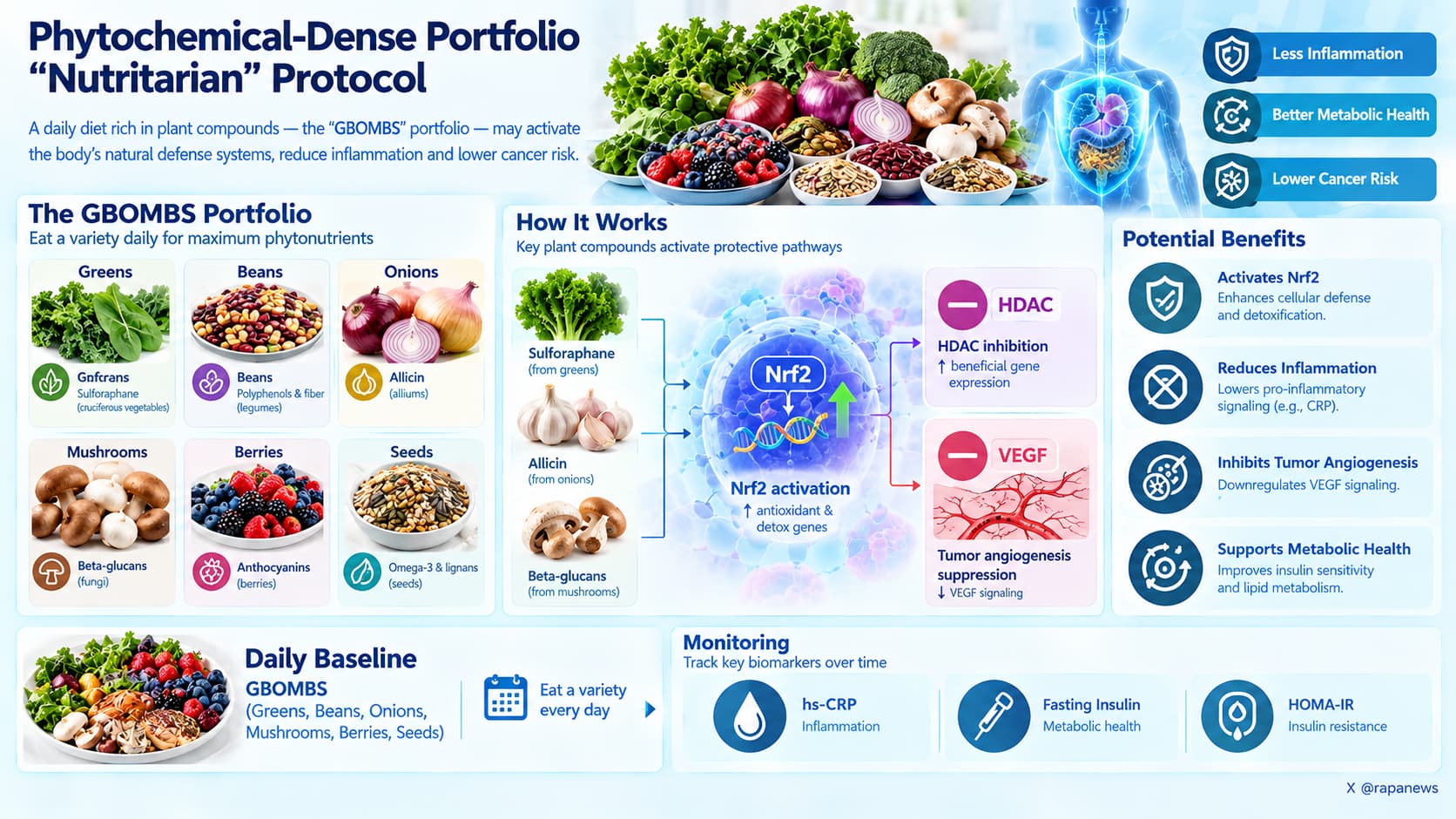
Phytochemical-Dense Portfolio (“Nutritarian” Protocol): Consume a daily baseline of the “GBOMBS” portfolio (Greens, Beans, Onions, Mushrooms, Berries, Seeds). Proposed mechanism: sulforaphane, allicin, and beta-glucans induce Nrf2 transcription, inhibit HDAC, and suppress tumor angiogenesis via VEGF downregulation. Monitoring: Serial high-sensitivity C-reactive protein (hs-CRP), fasting insulin, and Homeostatic Model Assessment of Insulin Resistance (HOMA-IR).
-
Supervised Habituation Reset for Food Addiction: Implement a structured 12-week dietary period eliminating hyper-palatable ultra-processed foods (refined flours, isolated fats, concentrated sugars). Proposed mechanism: resensitization of central D2 dopamine receptors within the ventral striatum and reduction of nucleus accumbens cue reactivity. Monitoring: Yale Food Addiction Scale (YFAS 2.0) score, binge frequency logs, and resting sympathetic tone.
-
Non-Pharmacologic Somatic Stress Inoculation: Replace hedonic food-reward seeking with protocolized physical exertion (zone 2 aerobic exercise, resistance training) and nature immersion. Proposed mechanism: attenuation of hypothalamic-pituitary-adrenal (HPA) axis cortisol secretion and normalization of sympathetic tone. Monitoring: Heart rate variability (HRV, rMSSD), diurnal salivary cortisol, and Pittsburgh Sleep Quality Index (PSQI).
Red Flag Zone (Debunked, High-Risk, or Contraindicated)
Unmonitored Extreme Hypertrophic Regimens (e.g., Heavyweight Collision Athletes): Consuming chronic hypercaloric animal-dense diets (e.g., >5,000 kcal/day with excessive saturated fats and cholesterol) to force supraphysiological body mass. Clinical Risk: Accelerates systemic atherogenesis, severe endothelial dysfunction, premature coronary artery disease, obstructive sleep apnea, and significantly elevated cardiovascular mortality (Baron et al., 1994).
Junk-Food Veganism (Refined Plant Diets): Eliminating animal products while relying primarily on ultra-processed vegan substitutes, refined seed oils, isolated starches, and liquid sugars. Clinical Risk: Induces high glycemic variability, hepatic de novo lipogenesis, visceral adiposity, hypertriglyceridemia, and elevated risk of non-alcoholic fatty liver disease (MASLD) identical to or exceeding standard omnivorous diets.
Rigid Enforced Dietary Abstinence in Unscreened Eating Disorder Cohorts: Imposing absolute, binary dietary bans (“forbidden foods”) on patients with binge-eating disorder or bulimia nervosa without psychiatric supervision. Clinical Risk: High incidence of psychological distress, orthorexia nervosa, rebound binge episodes, and treatment attrition (Thompson et al., 2025).
V. Technical Mechanism Breakdown
[ Ultra-Processed Diet (SFA, Refined Sugars, Sodium) ] │ ├─► Systemic Hyperlipidemia (ApoB/LDL-C) ──► Endothelial Dysfunction & Tendon Extracellular Lipid Infiltration ├─► Striatal Dopamine Overstimulation ──► D2 Receptor Downregulation ──► Hedonic Cravings & Food Addiction └─► Chronic Systemic Inflammation (hs-CRP) ──► Microvascular Rarefaction & Neurodegeneration
1. Striatal Neuroadaptation and Hedonic Allostasis in Food Addiction
The neurobiology underlying ultra-processed food addiction involves artificial industrial formulations that combine refined carbohydrates (free sucrose, high-fructose corn syrup) and concentrated lipids at ratios not found in nature. Ingestion induces rapid gastric emptying and immediate postprandial glucose-insulin spikes, triggering supra-physiological surges of extracellular dopamine within the mesolimbic dopamine system—specifically the nucleus accumbens (NAc) and ventral tegmental area (VTA).
Chronic, repeated exposure drives down-regulation of post-synaptic striatal dopamine D2 receptors (D2RD2R), analogous to the neuroadaptations observed in substance use disorders. This receptor deficiency manifests as an allostatic shift in the brain’s reward threshold: physiological, nutrient-dense whole foods (e.g., raw cruciferous vegetables, whole grains) fail to elicit sufficient dopaminergic tone, inducing chronic hypodopaminergia, anhedonia, and compulsive food-seeking. The 12-week timeline posited for abstinence protocols reflects the biological latency required for neurogenesis, transcriptional remodeling of ΔFosBΔFosB, and cellular upregulation of striatal D2RD2R availability to re-establish physiological baseline sensitivity.
2. Endothelial Perfusion, Microvascular Rarefaction, and Lipid-Mediated Tendinopathy
The correlation between atherogenic dyslipidemia and musculoskeletal injury involves distinct vascular and structural mechanisms:
-
Microvascular Perfusion Deficits: Elevated circulating apolipoprotein B (ApoB)-containing lipoproteins infiltrate the subendothelial space of microvascular capillary beds supplying poorly vascularized connective tissue (e.g., the watershed region of the Achilles tendon and supraspinatus tendon). Enzymatic and non-enzymatic oxidation yields oxidized low-density lipoprotein (oxLDL), which binds scavenger receptors (CD36, LOX-1) on endothelial cells. This interaction triggers protein kinase C activation and upregulates NADPH oxidase, generating reactive oxygen species (ROS) that uncouple endothelial nitric oxide synthase (eNOS). The resulting deficiency in bioactive nitric oxide (NONO) impairs flow-mediated vasodilation, producing chronic microvascular ischemia within tendon sheaths.
-
Extracellular Matrix (ECM) Disruption: Hypercholesterolemia drives direct lipid deposition within tenocytes and the interstitial extracellular matrix. Accumulated oxLDL promotes tenocyte apoptosis and stimulates matrix metalloproteinases (specifically MMP-1, MMP-2, and MMP-9) while suppressing tissue inhibitors of metalloproteinases (TIMPs). This enzymatic shift degrades type I collagen fibers and alters tendon ultrastructure, resulting in micro-tears, collagen disorganization, and failure to repair under repetitive mechanical tensile loads.
3. Hypertrophic Signaling vs. Vascular Longevity in Athletes
The dichotomy between athletic mass accumulation and lifespan hinges on the modulation of the nutrient-sensing kinase mammalian target of rapamycin complex 1 (mTORC1) and insulin-like growth factor 1 (IGF-1):
-
mTORC1 Hyperactivation: Diets high in animal protein, particularly rich in essential branched-chain amino acids (leucine, isoleucine, valine) and sulfur-containing amino acids (methionine), potently stimulate Sestrin2 and the Rag GTPase signaling cascade, driving constitutive mTORC1 phosphorylation. While this maximizes ribosomal biogenesis and muscle protein synthesis, chronic mTORC1 activation suppresses cellular autophagy and mitophagy. This prevents the clearance of damaged mitochondria, aggregates of misfolded proteins, and senescent cells.
-
Accelerated Vascular Aging: In collision athletes requiring high caloric loads, sustained elevated IGF-1 and hyperinsulinemia drive vascular smooth muscle cell proliferation and osteogenic differentiation, accelerating arterial calcification and pulse-wave velocity. When paired with high saturated fat intake, the downstream atherogenic burden precipitates early-onset coronary plaque instability, providing a mechanistic basis for the excess cardiovascular mortality observed in super-heavyweight athletes.
4. Neuroinflammation and the Amyloid-Microbiome Axis in Cognitive Decline
The reversal or slowing of cognitive impairment via intensive plant-predominant lifestyle modifications operates through metabolic, vascular, and gut-brain axes:
-
Amyloid Homeostasis: High-fat, hypercholesterolemic diets disrupt blood-brain barrier (BBB) integrity via the receptor for advanced glycation end products (RAGE) pathway, increasing peripheral circulating Aβ influx into the brain parenchyma while decreasing low-density lipoprotein receptor-related protein 1 (LRP1)-mediated clearance. A whole-food plant diet reduces circulating saturated lipids and systemic oxidative stress, promoting clearance and shifting the plasma Aβ42/Aβ40 ratio toward neuroprotective thresholds.
-
Microbiome-Mediated Neuroprotection: Unrefined dietary plant fibers and resistant starches undergo anaerobic fermentation by colonic taxa (e.g., Faecalibacterium prausnitzii, Roseburia), yielding short-chain fatty acids (SCFAs), predominantly butyrate, acetate, and propionate. Butyrate crosses the gut barrier, enters systemic circulation, and acts as an endogenous histone deacetylase (HDAC) inhibitor. It upregulates brain-derived neurotrophic factor (BDNF) expression in the hippocampus, strengthens tight junction claudin-5 and occludin expression at the BBB, and suppresses microglial M1 pro-inflammatory polarization, attenuating neuroinflammatory synaptic pruning.
Actionable Execution & Verification Schedule
-
Baseline Biochemical Staging (Week 0): Obtain an advanced cardiometabolic panel: NMR LipoProfile (quantifying LDL Particle Number and Small Dense LDL), ApoB, fasting insulin, HbA1c, hs-CRP, comprehensive metabolic panel, and fasting lipid panel. Screen for food addiction pathology utilizing the standardized Yale Food Addiction Scale (YFAS 2.0).
-
Phase 1 Dietary Recalibration (Weeks 1–4): Eliminate all ultra-processed foods, refined carbohydrates, added vegetable seed oils, and saturated animal fats. Construct daily intake exclusively around the verified plant portfolio: minimum 45 g/day total dietary fiber, focusing on legumes (lentils, chickpeas, black beans), whole grains (rolled oats, quinoa, farro), cruciferous vegetables (sulforaphane precursors), alliums, and intact seeds (flax, chia, walnut).
-
Phase 2 Neurobehavioral & Training Consolidation (Weeks 5–12): Structure daily somatic stress mitigation (30 minutes of aerobic zone 2 cardiovascular output; 15 minutes of structured parasympathetic down-regulation via breathwork or meditation). If athletic hypertrophy or endurance is required, titrate plant protein to 1.6–2.0 g/kg/day utilizing whole-food matrices (tempeh, edamame, concentrated lentil purees, seitan) without resorting to isolated ultra-processed powders.
-
Endpoint Laboratory Verification (Week 12): Re-test ApoB, lipid panel, hs-CRP, and fasting insulin. Target clinical metrics: ApoB <70 mg/dL, hs-CRP <0.8 mg/L, HOMA-IR <1.5. Re-administer YFAS 2.0 to quantify objective suppression of hedonic food-cue reactivity.
Produced by Gemini 2.5 Pro