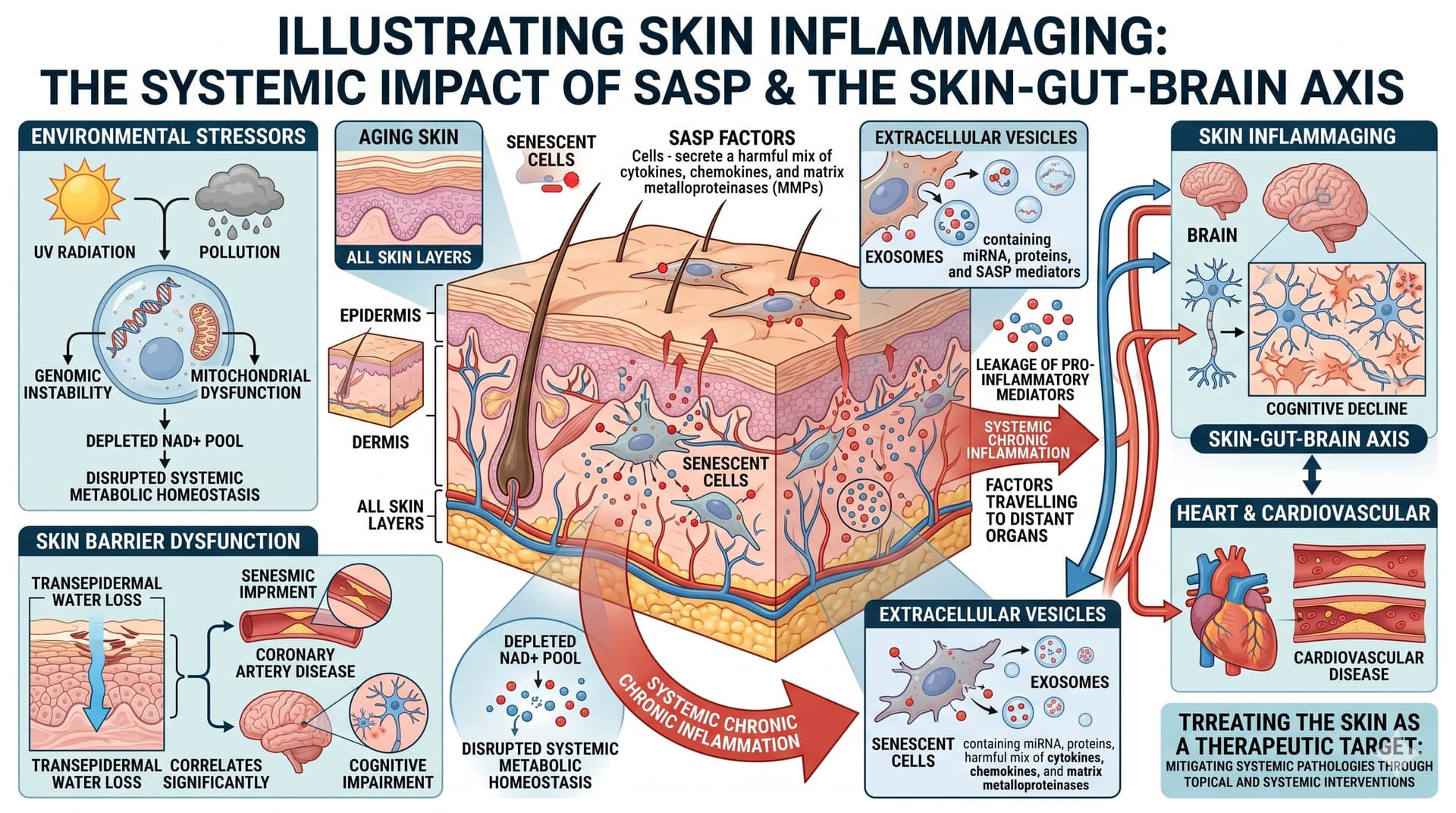
The prevailing view of skin as merely a protective envelope or a cosmetic canvas is being replaced by a more rigorous, “geroscientific” perspective. A comprehensive review published in Nature Aging argues that the skin is a “window” into the exposome—the cumulative environmental pressures an individual faces—and, more importantly, an active mediator of systemic aging. The paper posits a bidirectional relationship where skin-specific deterioration through the 12 hallmarks of aging directly fuels systemic decline in the heart, brain, and bones.
The core “Big Idea” is that skin acts as a massive, chronically inflamed surface area that leaks pro-inflammatory mediators into the bloodstream. This “inflammaging” originates from senescent cells in all skin layers, which secrete a harmful mix of cytokines known as the senescence-associated secretory phenotype (SASP). These factors can travel via extracellular vesicles to distant organs, potentially accelerating cognitive decline and cardiovascular disease. The review highlights how environmental stressors like UV radiation and pollution do not just cause wrinkles; they trigger genomic instability and mitochondrial dysfunction that deplete the body’s NAD+ pool and disrupt systemic metabolic homeostasis.
Furthermore, the paper identifies the “skin-gut-brain axis,” noting that skin barrier dysfunction—measured by transepidermal water loss—correlates significantly with coronary artery disease and cognitive impairment. By treating the skin as a therapeutic target rather than a cosmetic one, researchers suggest we can mitigate systemic pathologies.
Actionable Insights
The primary takeaway is that maintaining skin barrier integrity is a non-negotiable longevity intervention, not a vanity project. Practical applications include:
-
Barrier Maintenance: Consistent use of topical emollients to reduce transepidermal water loss. A three-year trial showed that repairing the skin barrier in elderly individuals resulted in stable cognitive scores compared to a declining control group.
-
Systemic Lifestyle Integration: Regular physical activity is verified to rejuvenate skin by reducing circulating inflammatory factors and enhancing the dermal extracellular matrix.
-
Targeted Supplementation: Topical or systemic NAD+ boosters (like nicotinamide riboside) may rescue melanocyte stem cell function and improve mitochondrial activity, which has been shown to extend lifespan in animal models.
-
Environmental Shielding: Rigorous use of broad-spectrum sunscreen and avoiding pollutants is essential to prevent the “field change” of genomic instability that drives both skin cancer and systemic inflammaging.
-
Nutrient Support: Micronutrients like lycopene and green tea catechins provide measurable protection against UV-induced damage, supporting the skin’s antioxidant defense system.
Source:
- Open Access Paper: Skin health and biological aging
- Lead Institution: Buck Institute for Research on Aging.
- Country: USA (with collaborators from Switzerland, France, Belgium, Singapore, Japan) .
- Journal Name: Nature Aging, 2025 Jul.
- Impact Evaluation: The impact score (JIF) of this journal is approximately 17.0, therefore, this is an Elite impact journal for the field of gerontology and aging biology.