Yeah, so many of these trials on these meds dont take into account the problems of the people needing them in the first place. Like possibly statins have ‘no affect on lifespan’, but is it people with dyslipidemia taking statins to get where normal people already are and not folks in the longevity scene using it to get to low levels. The people taking melatonin may have needed it due to a underlying insomnia that was wrecking their health
1 Like
I started high dose melatonin again recently. I’ve noticed significantly increased dream recall.
What is your definition of “high dose”?
I’ve got 100g of pure melatonin powder, in it I have a 1/4 teaspoon scoop. I don’t know how much this weighs but it is significantly more than a standard supplement dosage.
1 Like
When do you take the melatonin?
Right before I go to bed.
Also one night I woke up to urinate, I took another scoop and went back to bed. Not sure if that was necessary.
678mg I just weighed.
That is a lot more than I thought, I’m going to get a smaller scoop!
I feel sleepy quite early the next day but this is just a temporary thing I’m cycling for brain health.
Just checked my smallest scoop, it is 55-60mg. This is a bit more of a reasonable dose to experiment with.
I think I’m going to go to 10mg capsules at night before bed and find some 1-3mg lozenges to have by my bedside to take if I wake up and can’t sleep.
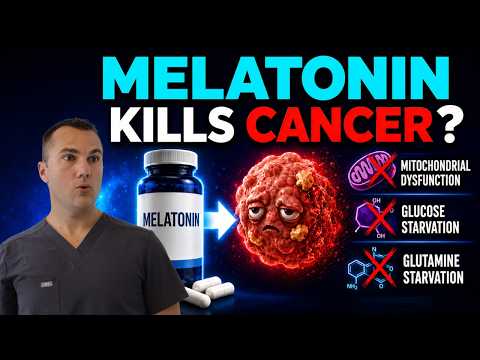
Melatonin as a Cancer Metabolic Disruptor — Key Points
- Far more than a sleep hormone. Melatonin functions as a mitochondrial and metabolic signaling molecule with documented effects on cancer cell energy metabolism, inflammation, hypoxia signaling, and multiple oncogenic pathways — drawing comparisons to vitamin D in the breadth of its systemic impact.
- It’s a “glycolytic” — it counteracts the Warburg effect. Cancer cells preferentially ferment glucose to lactate even when oxygen is present (the Warburg effect). Melatonin acts as a glycolytic agent that causes cancer cells to abandon aerobic glycolysis and shift back to mitochondrial oxidative phosphorylation for ATP production. This metabolic switch is a core mechanism of its anti-cancer action. Uthscsa
- Melatonin targets glucose metabolism at multiple nodes. It downregulates glucose transporters (GLUTs), hexokinase, PFKFB, lactate dehydrogenase A (LDHA), lactate transporters, and PDK — effectively disrupting glycolysis at nearly every major step along the pathway.
- The PDK axis is particularly important. PDK (pyruvate dehydrogenase kinase) blocks pyruvate from entering the mitochondria, trapping cancer cells in glycolysis. Melatonin reduces the HIF-1α/PDK axis, which normally inhibits the pyruvate dehydrogenase complex (PDH), thereby restoring the flow of pyruvate into mitochondria as acetyl-CoA — the same mechanism exploited by the drug dichloroacetate (DCA). ScienceDirect
- HIF-1α destabilization is central. HIF-1α is the master transcription factor driving hypoxic metabolic adaptation in tumors. HIF-1α stabilization rewires cellular metabolism to a phenotype that promotes tumor growth, invasion, and metastasis by promoting glycolysis, stimulating the pentose phosphate pathway, supporting angiogenesis, and acidifying the extracellular microenvironment through lactate release. Melatonin directly counteracts this by destabilizing HIF-1α. MDPI
- c-Myc inhibition cuts off glutamine. The oncogene c-Myc is a major driver of glutamine uptake and utilization in cancer cells. Longer-term melatonin treatment reduces c-Myc protein expression, suppressing glycolysis via downregulation of hexokinase 2 (HK2) and LDHA. By inhibiting c-Myc, melatonin simultaneously starves cancer cells of both glucose-derived and glutamine-derived fuel. PubMed
- AKT/PI3K/mTOR pathway suppression. AKT sits at the center of the PI3K–AKT–mTOR signaling axis, which coordinates both glucose and glutamine metabolism. Melatonin’s inhibitory effect on AKT adds another layer of metabolic interference, compounding the effects of HIF-1α and c-Myc suppression.
- Mitochondrial quality improves under melatonin. In lung cancer studies, melatonin treatment was accompanied by higher ATP production, elevated oxygen consumption, higher mitochondrial membrane potential, lower lactate secretion, and improved activity of electron transport chain complexes I and IV — a profile consistent with restored normal cell energetics rather than cancer-type metabolism.
- Light at night is a “darkness deficiency” that undermines this system. Cancer cells use cytosolic aerobic glycolysis to actively proliferate, avoid apoptosis, and readily metastasize. When nocturnal melatonin rise is suppressed by artificial light exposure, this protective metabolic switching doesn’t occur — leaving cancer cells operating in their pathological metabolic state around the clock. Uthscsa
- Broader signaling reach. Beyond the pathways covered in the video, melatonin also modulates AMPK, PPAR, IGF-1, STAT3, VEGF, and NF-κB — suggesting its anti-cancer metabolic influence is unusually broad for an endogenous molecule.
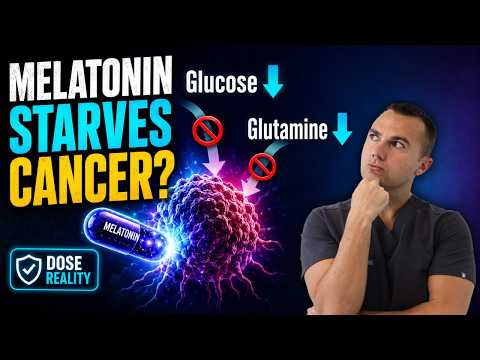
Melatonin & Cancer Fuel Starvation — Dosing Reality Check
- The key question isn’t can melatonin starve cancer cells — it’s at what concentration. Cell studies consistently show melatonin reducing glucose and glutamine uptake, but almost all use 0.1–1 millimolar concentrations in a dish. The video’s central argument is that this concentration gap is the most important and least-discussed issue in the melatonin/cancer literature.
- Glucose suppression data is striking at high concentrations. In prostate cancer cell lines, 1 mM melatonin reduced glucose uptake by 79% (lymph node metastasis model) and 37% (bone metastasis model). Ewing’s sarcoma cells showed 19–32% reductions. These are dramatic numbers — but they’re at the 1 mM benchmark.
- Glutamine suppression is similarly dose-dependent. In osteosarcoma cells, 1 mM melatonin reduced glutamine uptake 37–40% and cut glutaminase enzyme expression by 33–45%. A 2026 paper identified a previously unknown mechanism: melatonin suppresses the glutamine transporter SLC38A5 via PI3K/AKT inhibition, reducing transporter expression by 30–50% and blocking anoikis resistance and lung metastasis in animal models.
- Pancreatic cancer data adds breadth. A 2025 paper found melatonin simultaneously suppresses SLC1A5 (the classical glutamine transporter), glutaminase, and SLC7A11 (the cystine/glutamate transporter known as the “Achilles heel” of cancer) — collapsing the redox homeostasis system cancer cells use to survive oxidative stress.
- The pharmacokinetic math is sobering. To reach 1 mM in the bloodstream via oral dosing requires an estimated 250–500 grams of standard melatonin — essentially impossible. Even the lower 0.1 mM threshold would require 25–50 grams orally. Liposomal formulations improve this by roughly 3–5x but don’t close the gap at the 1 mM level.
- The mitochondrial concentration multiplier is the saving grace. Melatonin concentrates approximately 100-fold inside mitochondria relative to blood levels. Accounting for this, reaching the 0.01 mM threshold intramitochondrially requires only ~5–10 mg orally (standard doses), and 0.1 mM intramitochondrially requires roughly 250–500 mg orally — achievable with high-dose supplements.
- Practical dosing implication. The 0.01–0.1 mM intramitochondrial range is realistically attainable and still produces meaningful effects: ~27% reduction in glucose uptake and 12–15% reduction in glutamine uptake. The dramatic 37–80% reductions seen at 1 mM are likely out of reach for most people. Doses in the 250–1,000 mg/day range (using 120 mg+ capsules or liposomal formulations) are probably where meaningful metabolic interference begins.
- Boosting endogenous melatonin remains underrated. The video flags that a future discussion will cover endogenous melatonin optimization — implying that darkness discipline and red/infrared light exposure may compound the effects of supplemental dosing without requiring gram-level oral doses.
3 Likes
1,000mg of Melatonin, DNP & the Lab Rat Life - Richard | Down To Health
Richard takes 1,000mg of melatonin. As bulk powder. On purpose. And that’s where it starts.
This episode is the lab rat’s rabbit hole, the stuff one of us actually runs through his own body before recommending it to anyone. We get into the melatonin megadose and why he calls it the master antioxidant of the mitochondria instead of a sleep aid, the DNP corner of the weight-loss and bodybuilding world that won’t leave it alone, where self-experimentation stops being a hobby and starts being a question, and the part nobody films: the honest reason a person keeps doing the most dangerous thing on the table anyway.
This isn’t a how-to. It’s a look at what testing it on yourself actually sounds like, the good and the genuinely reckless, with the harm-reduction line drawn out loud. Plus the back half turns prescriptive, the five low-risk things Richard says anyone can do to call themselves healthy.
Richard’s X: Richard (@PGC1a_RB) / X
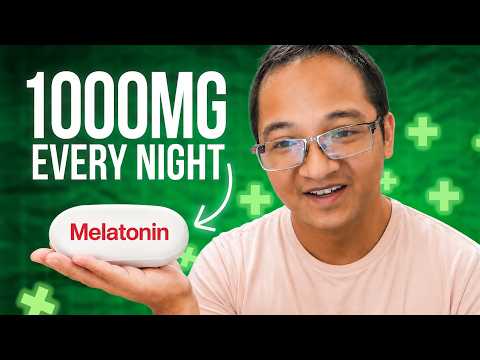
I. Executive Summary
The video features a clinical and philosophical dialogue on the limits and methodologies of extreme n=1 self-experimentation, contrasted against foundational circadian medicine. The core thesis centers on the structural execution of personal biohacking, where the researcher functions as an empirical laboratory to test physiological boundaries while maintaining an acute awareness of translational gaps and safety thresholds. By tracking biomarker responses rather than relying solely on subjective feedback, the guest illustrates how advanced metabolic conditioning—specifically through chronic High-Intensity Interval Training (HIIT)—fundamentally modifies systemic tolerance to exogenous compounds, minimizing standard side effects like peripheral flushing.
The primary arguments delve into the pharmacology of high-risk and experimental modalities, including mitochondrial uncoupling agents, supra-physiological peptide dosing, and megadose antioxidant saturation. The discussion addresses the dangerous uncoupling kinetics of 2,4-Dinitrophenol (DNP), the lipid-modulating and insulin-sensitizing pathways of mitochondrial-derived peptides like MOTS-c, and the role of Melanotan II in systemic metabolic shifts. Additionally, the dialogue explores the use of gram-scale melatonin as a targeted mitochondrial countermeasure to modern blue-light and environmental stressors, rather than as a baseline somnolent aid.
Crucially, the dialogue establishes a clear boundary between hazardous, experimental chemical interventions and a high-confidence, universally applicable health architecture. This baseline framework prioritizes low-risk, zero-cost behavioral interventions: strict circadian light hygiene, front-loaded caloric positioning, perpetual sub-maximal physical activity such as postprandial ambulation, face-to-face social integration, and intellectual skepticism devoid of orthorexic anxiety. By filtering out commercialized hype and brand-driven dogmatism (e.g., hyper-focused dietary constraints), the discussion advocates for a systematic, practical model of health optimization. This model requires individuals to deeply comprehend the underlying mechanisms of any ingested substrate before deployment, prioritizing controllable behavioral levers over speculative, unverified chemical enhancements.
II. Insight Bullets
- n=1 Self-Experimentation Framework: Establishing an empirical baseline by testing a single molecule for 1–2 weeks after comprehensive literature review allows clear mapping of idiosyncratic biological responses.
- Advanced Metabolic Conditioning Overrides Flushes: Chronic high-intensity interval training (HIIT) alters baseline ATP and oxygenation demands, downregulating the subjective flush or rapid energy burst typically felt by novice users of mitochondrial-derived peptides.
- DNP Mechanism of Action: 2,4-Dinitrophenol (DNP) acts as a proton ionophore that deliberately dissipates the mitochondrial proton gradient, wasting potential energy as heat to force rapid fuel consumption.
- DNP Therapeutic Window: The line between DNP’s fat-burning capability and lethal hyperthermic toxicity is razor-thin due to runaway, uncontrolled mitochondrial uncoupling.
- MOTS-c Peptide Utility: The mitochondrial-derived peptide MOTS-c serves as an exercise mimetic, downregulating fasting blood glucose, HbA1c, and fasting insulin over extended observation windows.
- MOTS-c Lipid Modulation: High-dose MOTS-c (e.g., up to 20 mg/day) improves serum lipid profiles by elevating high-density lipoprotein (HDL) while concomitantly reducing low-density lipoprotein (LDL) and triglycerides.
- Peptide Anaphylaxis Risk: Mitochondrial and growth hormone peptides (such as MOTS-c, Tessamorelin, or Sermorelin) carry acute risks of severe localized allergic reactions or systemic anaphylactic shock.
- Growth Hormone Secretagogue Tolerance: Supra-physiological dosing (up to 5x therapeutic guidelines) of growth hormone secretagogues exhibits fewer subjective adverse effects in highly active, metabolically optimized individuals.
- Melatonin as a Timing Molecule: Melatonin acts as a systemic master chronobiological and timing molecule rather than merely a sleep-inducing sedative.
- Mitochondrial Melatonin Pool: The intracellular pool of melatonin concentrated within the mitochondria functions independently of the pineal gland’s systemic endocrine secretion to guard against localized oxidative stress.
- Melatonin as a Master Antioxidant: Within the inner mitochondrial membrane, melatonin scavenges reactive oxygen species (ROS) and preserves cardiolipin integrity to prevent age-related bioenergetic decay.
- Gram-Scale Melatonin Tolerance: Experimental gram-scale (1,000 mg) oral dosing of melatonin is tolerated by specific self-experimenters without inducing daytime grogginess, shifting downstream effects instead to hyper-vivid dream recall.
- Thymus and Immune Peptides Hazard: Compounds like Vylon, Epitalon, and Pinealon require rigorous post-administration blood monitoring due to unpredictable immune system modulation and potential long-term dysregulation.
- Primary Health Lever—Light Hygiene: Maximal daylight exposure coupled with strict evening darkness forms the fundamental pillar of circadian biological health.
- Nutritional Front-Loading: Consuming identical caloric loads and macro splits earlier in the waking day prevents circadian-mediated weight gain compared to identical workloads eaten nocturnally.
- Perpetual Sub-Maximal Activity: Maintaining intermittent movement throughout the day is biochemically superior to a single isolated workout bookended by prolonged sedentary behavior.
- Postprandial Walking Glycemic Blunting: Short, 5-to-10-minute walks immediately following a meal mitigate postprandial glucose excursions via non-insulin-dependent GLUT4 translocation, mirroring metformin kinetics.
- Social Integration as a Biological Healer: Direct, face-to-face social interactions trigger endogenous neurological and endocrine signaling pathways that accelerate somatic recovery and enhance psychological resilience.
- Psychedelic Isolation Pitfall: Deploying psychedelic compounds (e.g., psilocybin) in absolute sensory isolation or commercial enclosures ignores their evolutionary, prosocial, and nature-connecting mechanisms.
- Intellectual Openness vs. Dogma: True scientific optimization requires breaking away from rigid dietary camps (e.g., pure keto vs. pure high-carb) to observe varied empirical pathways to identical health endpoints.
- Melanotan II Metabolic Pleiotropy: Beyond inducing skin pigmentation via melanocortin receptors, Melanotan II enhances central and peripheral insulin sensitivity and reduces visceral adiposity.
- White Adipose Tissue Browning: Activation of central and peripheral melanocortin signaling pathways by agonists like Melanotan II facilitates the phenotypic browning of white adipose tissue, elevating resting metabolic rate.
- Orthorexia as a Control Illusion: Obsessive focus on minor environmental contaminants (e.g., parts per billion of lead) represents an anxiety-driven displacement of control rather than actionable health optimization.
- Cognitive Laziness of Blind Rule-Following: Blindly adhering to health influencer dictates or rigid protocols constitutes a form of intellectual compliance that undermines customized, data-driven optimization.
- The Mechanistic Comprehension Imperative: Substrates should never be introduced into the human body unless the user can accurately articulate their exact biochemical pathways, binding affinities, and potential off-target toxicities.
IV. Actionable Protocol (Prioritized)
High Confidence Tier (Backed by Level A/B Evidence)
- Postprandial Glycemic Mitigation: Engage in a 5-to-10-minute moderate-intensity walk immediately following major carbohydrate-containing meals. This leverages non-insulin-dependent glucose clearance, mirroring metformin efficiency by blunting postmeal glucose spikes (Erickson et al., 2024; Draznin et al., 2020).
- Early Caloric Front-Loading: Shift the daily eating window to ensure the majority of calories and macronutrients are consumed during the first half of the waking day. Avoid late-evening and nocturnal feeding to align nutrient delivery with optimal insulin sensitivity phases (Italian Society of Endocrinology, 2026; Circadian Nutrition Review, 2025).
- Circadian Light Alignment: Secure direct sunlight exposure within the first hour of waking. Conversely, minimize or eliminate exposure to short-wavelength blue light post-sunset using specialized lenses or hardware display filters to preserve natural chronobiological signaling (Italian Society of Endocrinology, 2026).
- Somatic Social Optimization: Prioritize systematic, face-to-face social engagements over digital, text-based interactions to modulate systemic stress reactivity and suppress chronic inflammatory markers.
Experimental Tier (Level C/D Evidence with High Safety Margins)
- Targeted Mitochondrial Melatonin Administration: Utilize titrated exogenous oral melatonin (dosed nightly) as a lipophilic, mitochondria-targeted free-radical scavenger to preserve inner mitochondrial membrane bioenergetics (Reiter et al., 2018; Paradries et al., 2015).
- MOTS-c Peptide Integration: Consider subcutaneous administration of MOTS-c (typically titrated from 1–5 mg under supervision) to serve as an exercise mimetic, optimize serum lipid panels, and drive down fasting insulin—ensuring continuous blood chemistry tracking (Yuan et al., 2024).
- Melanotan II for Adipose Browning: Deploy melanocortin receptor agonists exclusively for downstream metabolic benefits, including visceral fat mobilization and peripheral insulin sensitization, while maintaining strict monitoring for off-target pigmentary and sexual side effects (Melanocortin Pathway Review, 2019).
Red Flag Zone (Debunked or Safety Data Absent)
- Gram-Scale Melatonin Ingestion (1,000 mg+): Safety Data Absent. Massive supra-physiological loading risks severe chronobiological disruption, endocrine receptor desensitization, and lacks any validated safety profile in human clinical models.
- 2,4-Dinitrophenol (DNP) Administration: Categorically Banned / Highly Lethal. DNP triggers unpredictable toxicokinetics, uncontrolled uncoupling of oxidative phosphorylation, catastrophic ATP depletion, severe hyperthermia, and acute risk of death (Swedish Clinical Poisoning Report, 2025; Grundlingh et al., 2011).
- Blind Peptide Poly-Pharmacy: Unmonitored stacking of multiple growth hormone secretagogues (e.g., Tessamorelin, Sermorelin) or unverified immune peptides without subsequent post-protocol blood panels carries high risks of anaphylaxis, localized injection-site pathology, and autoimmune dysregulation.
1 Like
These are things where there is quite a bit of anecdotal data, but to get a phase 1 trial would possibly be an ethical challenge. From my personal perspective I do close to weekly blood tests (I did one on Monday last week, but for various reasons it is Wednesday this week). Hence at that level (and it is quite a broad test) and with all the other testing although basic things like bp and HRV etc. I would expect to see if there are any problems with taking about 1.5g per night.
Personally, however, I am not inclined to try DNP. Although doing it with melatonin might be better. However, doing melatonin without DNP is probably best.
2 Likes
What are your thoughts on SS-31/Elamipretide? Seems like a very impressive mitochondrial effect so I’m curious to hear your take on it.
I haven’t given it much thought. I have a large number of interventions and to add any more would require masses of evidence.
He’s a little late to the party. @AlexKChen posted Melatonin megadoses? on Aug '22. Rap Admin’s thread “High-Dose Melatonin Reverses Artery Hardening by “Waking Up” the SIRT6 Longevity Gene” Dec 2025 “Researchers have uncovered a potent anti-aging mechanism of melatonin that goes far beyond sleep.”
Based on Doris Loh’s views of high-dose melatonin supplementation. I bought pure bulk melatonin, and I encapsulate it into 1-gram doses.
As an n=1 experiment, I have taken 1067 mg of melatonin (1 g + my usual 67 mg tablet) for several weeks.
I noticed zero subjective effects. It does not cause any morning or daytime sleepiness, as some might expect. Melatonin is technically a chronobiotic (a substance that shifts the timing of your internal clock), rather than a classic sedative or hypnotic sleep agent.
Also, I didn’t notice anything unusual or anything that I could attribute to melatonin on any of my blood work results.
Now I only take the high doses occasionally, based on a subjective feeling that I need to, based on “Loh theorizes that when the body faces a massive threat—like a severe virus (she wrote extensively about this during the COVID-19 pandemic), cancer, or severe inflammation—the mitochondria get completely overwhelmed.”
There is evidence of melatonin’s anti-cancer properties, especially in breast cancer.
The potential anti-cancer effects of melatonin on breast cancer
Gemini:
Doris Loh is an independent medical researcher and author widely recognized for her extensive peer-reviewed publications exploring the advanced biophysical roles of melatonin. Moving far beyond its common classification as a simple sleep hormone, her work—frequently co-authored with the world-renowned melatonin pioneer Dr. Russel J. Reiter—focuses on melatonin as an ancient, evolutionary molecule critical for cellular thermodynamics, mitochondrial health, and fluid dynamics. [1, 2, 3, 4, 5, 6]
Biomolecular Condensates and Phase Separation
Loh’s foundational scientific contribution is the study of Liquid-Liquid Phase Separation (LLPS) and how melatonin regulates membraneless organelles (MLOs). Her research highlights how melatonin manages cellular biochemistry: [1, 2]
- Preventing Toxic Aggregations: Melatonin controls phase separation to prevent proteins from misfolding or clumping into pathological aggregates. This mechanism is crucial in slowing down neurodegenerative disorders like Alzheimer’s and dementia. [1, 2, 3, 4, 5]
- Synergy with Light and Water: Her research outlines how light and melatonin lower cellular viscosity, freeing water molecules to stabilize adenosine triphosphate (ATP) and preserve optimal cellular structural integrity. [1]
Mitochondrial Health and Cellular Defense
Loh maps out how melatonin acts as a high-concentration, site-specific defender inside the cell: [1]
- Mitochondrial Protection: Melatonin directly protects critical mitochondrial components like cardiolipin and mitochondrial DNA (mtDNA) from severe oxidative stress. [1]
- Reversing Warburg Metabolism: Her papers focus on how melatonin counteracts the Warburg-type metabolism (accelerated glycolysis) found in aging neurons and cancer cells, effectively restoring healthy mitochondrial respiration. [1, 2]
- Viral Defense (COVID-19 and PASC): She has published extensively on how melatonin alters viral phase separation, potentially helping the body outmaneuver chronic issues like Post-Acute Sequelae of COVID-19 (Long COVID). [1, 2]
High-Dose Melatonin Protocols
Beyond theoretical biophysics, Doris Loh is widely known in health optimization communities for discussing and proposing weight-based, high-dose melatonin schedules. While standard over-the-counter doses range from 1 mg to 10 mg for circadian regulation, Loh’s research and protocols often evaluate much higher clinical doses—ranging from hundreds of milligrams up to multiple grams daily depending on the severity of the metabolic or viral infection challenge. She frequently translates these complex concepts for the public across her Facebook Page and her YouTube Playlist. [1, 2, 3, 4]
4 Likes
FWIW…
AI-generated answer.
Please verify critical facts
Doris Loh defines high-dose melatonin (HDM) as any intake above 1,000 mg in 24 hours , classifying it as supra-pharmacological . Her research posits that melatonin regulates phase separation , a cellular process critical for gene expression and immune defense, which viral infections can disrupt by increasing cytosol viscosity and impairing mitochondrial ATP production.
Loh advocates for ultra-high doses to restore mitochondrial function and dissolve these harmful condensates, claiming melatonin acts as an energy booster rather than a sedative. She suggests starting with 180 mg nightly for a 50-year-old and increasing by 100 mg per year of age, with some proponents taking up to 3,000 mg daily .
Key considerations from her protocol include:
- Synergy with Vitamin C : Supplementation must be supported by ascorbic acid to achieve full benefits.
- Medical Contraindications : Individuals with cardiac conditions , hypertension , or those taking ACE inhibitors should consult a physician, as high doses may cause hypotension .
- Timing for Diabetics : Those with insulin resistance should avoid melatonin before 3 PM because it can suppress insulin.
- Safety Profile : Loh asserts melatonin is non-toxic with no known LD50 and does not shut down natural production via a feedback loop.
AI-generated answer.
Please verify critical facts.
2 Likes
And the person whose has performed melatonin research more than anyone alive.
AI-generated answer.
Please verify critical facts.
The researcher is Russel Reiter (also cited as Russel J. Reiter ), a cellular biologist and neuroendocrinologist at the University of Texas Health Science Center at San Antonio . He has studied melatonin for approximately 30 to 40 years , with bibliometric analyses identifying him as the scholar who made the largest contribution to the field. His research has extensively demonstrated melatonin’s role as a potent antioxidant that protects cells from oxidative damage, radiation, and various toxins in animal models.
AI-generated answer.
Please verify critical facts.
Ask the master?
AI-generated answer.
Please verify critical facts.
The professional book by Russel J. Reiter is titled Melatonin: Biosynthesis, Physiological Effects, and Clinical Applications .
This comprehensive reference work, co-authored with Hing-Sing Yu, provides a thorough review of recent advances in melatonin research, covering its history, biochemistry, secretion, physiological effects, and clinical significance. It is arranged in a logical sequence to serve as an important resource for neurobiologists, cell biologists, ophthalmologists, endocrinologists, and other researchers and clinicians interested in the subject.
- Authors : Hing-Sing Yu and Russel J. Reiter
- Publisher : CRC Press (Taylor & Francis)
- Publication Date : Originally published in 1992, with a later edition released in 2020.
- Focus : Biosynthesis, physiological effects, and clinical applications of melatonin.
AI-generated answer.
Please verify critical facts.
A link / PDF copy of this book is on this forum.
Look and you will locate.
1 Like
It’s an FDA approved drug designed specifically to target the mitochondria.
I have Purebulk melatonin powder as well. It’s a good quality brand. Try putting the melatonin under your tongue for sublingual absorption before swallowing, see if it makes a difference. I notice Purebulk melatonin has a significant effect on sleepiness.
Oral transmucosal administration may potentially be a clinically relevant due to avoiding first-pass metabolism. Pharmacokinetics of Alternative Administration Routes of Melatonin: A Systematic Review - PubMed
Melatonin is not a soporific
Taken around usual bedtime it does make me sleepier.
I do find glycine more potent for that effect however.
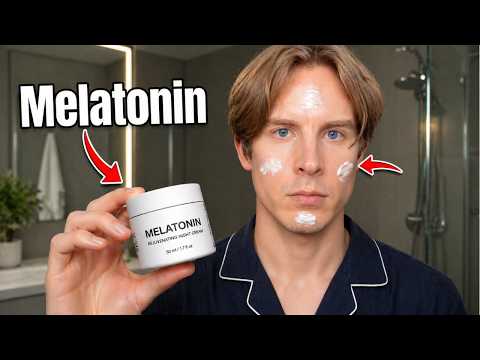
TL;DR
Topical melatonin has a surprising amount of clinical evidence for skin anti-aging, mainly through UV protection, antioxidant activity, and mitochondrial support (mitophagy). Applied before sun exposure, it can meaningfully blunt UV-induced skin inflammation and DNA damage, and separate studies show benefits for reducing radiation dermatitis in cancer patients, improving skin hydration/roughness, and even modestly regrowing hair in androgenic alopecia. It’s not a sunscreen replacement and weaker than retinoids for structural remodeling, but it looks like a legitimate complementary tool, especially as a pre-sun antioxidant or nighttime cream.
Actionable Insights
- Timing is everything. Melatonin gel applied 15 minutes before UV exposure almost completely suppressed UV-induced skin reddening in one study. Applied after exposure, it did essentially nothing. If you’re going to use it for photoprotection, apply it before you go outside, not after you get sunburned.
- It doesn’t replace sunscreen. Since ~90% of extrinsic skin aging is UV-driven, sunscreen still does the heavy lifting during the day. Treat topical melatonin as a complementary layer of oxidative stress defense, not a substitute.
- Concentration depends on your goal. The video cites 0.01% for basic skin penetration data, 0.1% as having the clearest human anti-aging evidence, 0.5-12.5% for photoprotection studies, and 2.5% as having the strongest overall clinical evidence.
- Nighttime cream is the more evidence-backed use case. A 12-week nighttime cream (melatonin + carnosine + Helichrysum italicum extract) reduced brown spot count (~5.5%), UV spots (~13.2%), and wrinkle count (up to ~18.9%) in 117 people. Worth noting this was a combination formula, not melatonin alone.
- For hair loss (androgenic alopecia), 0.1% solution once daily for 90-180 days is the dosage with the most supportive data, alongside a lower-concentration option (~0.0033%). Effects on hair density and anagen (growth phase) hair counts were reported to persist even after stopping treatment, though these studies lacked control groups, so treat this as promising rather than confirmed.
Key Points
UV protection mechanism:
- Clinical evidence for topical melatonin spans UV protection, reduced radiodermatitis, reduced UV-induced DNA damage, improved skin barrier function, reduced inflammation/redness, and reduced transepidermal water loss.
- Original 1990s studies used 0.05-0.5% melatonin gel on UVB-irradiated skin; 0.5% performed best, with effects concentrated in “strong reactor” subgroups 8 hours post-irradiation.
- A 2016 study on women undergoing cancer radiotherapy found melatonin cream reduced grade 1-2 radiation dermatitis occurrence (59% vs 90% in controls), with women over 50 showing even better outcomes (56% vs 100%).
Anti-aging mechanisms:
- Melatonin acts as a potent antioxidant, scavenging free radicals directly and upregulating endogenous defenses (SOD, glutathione peroxidase).
- It has immunomodulatory effects relevant to dermatitis and wound healing, and has shown skin cancer cell growth inhibition via apoptosis in mechanistic studies.
- A less-discussed angle: melatonin activates mitophagy (mitochondrial cell turnover), increases NAD levels, and restores proline synthesis, supporting collagen regeneration. This ties into an underappreciated driver of skin aging, mitochondrial dysfunction.
Comparison to other actives:
- vs. Sunscreen: complementary, not a replacement.
- vs. Retinoids: weaker evidence for structural remodeling; retinol still wins for wrinkle reduction.
- vs. Vitamin C/E/ferulic acid: mechanistically competitive in oxidative defense, but far less clinically validated.
- vs. Niacinamide: less evidence for barrier function and tone; niacinamide still preferable for those specific goals.
Evidence quality caveat: Several of the most positive studies (the 2012 wrinkle study, the 2023 nighttime cream study) combined melatonin with other actives (vitamin E, betaglucans, carnosine, Helichrysum extract), so isolating melatonin’s standalone contribution is difficult. The hair growth studies also generally lacked control groups. The mechanistic rationale is solid, but standalone-melatonin human data is thinner than the framing suggests.