As we age, our immune systems undergo a double-edged transformation: they become less effective at fighting off new viral threats while simultaneously becoming trapped in a state of chronic, low-grade inflammation—a phenomenon known as “inflammaging.” However, a new clinical trial suggests that a protein found in breastmilk and cow’s milk, lactoferrin, may provide a simple oral intervention to recalibrate this delicate balance in older adults.
Researchers at the University of Newcastle (Australia), publishing in the British Journal of Nutrition, conducted a double-blind, randomized controlled trial (RCT) involving 103 healthy adults over the age of 50. For four weeks, participants took either a “low dose” (200 mg), a “high dose” (600 mg), or a placebo. The results revealed a dose-dependent “immuno-tuning” effect that could have significant implications for longevity and pandemic preparedness in an aging population.
The high-dose group showed a notable reduction in systemic inflammatory markers, specifically Interleukin-6 (IL-6) and C-reactive protein (CRP). High levels of these markers are strongly associated with age-related diseases and overall mortality. Perhaps more impressively, when the participants’ immune cells were challenged ex vivo with common respiratory viruses like Rhinovirus (the common cold) and H1N1 (influenza), the cells from those taking high-dose lactoferrin responded more robustly. They produced more anti-viral Interferon-α2 while keeping pro-inflammatory “cytokine storm” signals like IL-6 in check.
Lactoferrin appears to act as a metabolic rheostat. At the high dose, it boosted the frequency of T cells—the “special forces” of the adaptive immune system that typically decline with age. Meanwhile, the low dose seemed to quiet down overly aggressive innate immune cells like neutrophils and Natural Killer (NK) cells, potentially reducing the collateral damage they cause to healthy tissue.
Impact Evaluation: The impact score of this journal (British Journal of Nutrition) is 3.71 (JIF) / 6.6 (CiteScore), a Medium impact journal. While not Nature or The Lancet, it is a respected, peer-reviewed staple in nutritional science and clinical metabolism.
Type: Clinical Trial (Phase II, Double-Blind, Placebo-Controlled, Parallel-Group RCT).
Subjects: 103 healthy human adults (97 completed).
Demographics: Age (range 50–82 years), predominantly Caucasian.
Intervention: Bovine lactoferrin (16% iron saturation) at 200 mg/d (Lf-Low) or 600 mg/d (Lf-High) vs. Microcrystalline cellulose placebo for 28 days.
Mechanistic Deep Dive
Lactoferrin’s efficacy in this study is likely mediated through several converging pathways:
Cytokine Modulation: High-dose (600 mg/d) intervention significantly decreased plasma IL-6 and CRP. In ex vivo viral challenges, it suppressed IL-6 release while enhancing Type I Interferon (IFN-α2) production. This suggests a shift away from “inflammaging” towards a more youthful “anti-viral” profile [Confidence: High].
Adaptive Immune Rejuvenation: Lf-High increased total CD3+ and CD4+ T cell frequencies. This is a critical finding for longevity, as T-cell attrition is a hallmark of immunosenescence [Confidence: Medium].
Innate Regulation: Lf-Low (200 mg/d) primarily acted on the innate side, reducing neutrophil and NK cell frequency. This indicates that lower doses may be more “anti-inflammatory” (reducing innate over-activation) while higher doses are “immunostimulatory” (promoting adaptive T-cell responses) [Confidence: Medium].
Iron Sequestration: Although not measured directly in this paper, the authors acknowledge lactoferrin’s 16% iron saturation, suggesting its ability to deprive pathogens of iron and modulate iron-dependent oxidative stress pathways [Confidence: High].
Novelty
This study is the first to demonstrate that oral lactoferrin can shift the immune response to live viral challenges (RV-16 and H1N1) in an older population, rather than just measuring responses to synthetic mimics like LPS. It identifies a clear dose-dependent divergence: 600 mg/d is necessary for systemic anti-inflammatory (CRP/IL-6) and adaptive (T-cell) benefits.
Critical Limitations
Duration: The 4-week window is sufficient for biomarker shifts but insufficient to determine if this translates to fewer clinical infections or increased healthspan.
Sample Size: While powered for the primary outcome (/group), the cohort is small for broader epidemiological conclusions.
Health-Related Quality of Life (HRQOL) Paradox: Curiously, the Lf-High group reported a higher number of days where poor health restricted activity compared to placebo, which contradicts the biochemical improvements and remains unexplained.
Missing Data: The study did not measure markers of gut permeability (Leaky Gut) or the microbiome, which are primary sites of lactoferrin interaction.
Part 3: Claims & Verification
The following analysis verifies the biological and medical claims made in the provided study against the broader landscape of clinical and meta-analytic evidence.
External Verification: A systematic review and meta-analysis of 25 studies confirmed that in adults, lactoferrin significantly reduces IL-6 [mean difference: –24.9 pg/mL; 95% CI: –41.64, –8.08 pg/mL] Berthon et al. (2022). Another study in children also demonstrated a significant reduction in IL-6, particularly in those with pre-existing undernutrition.
Claim: Oral lactoferrin (600 mg/d) reduces C-reactive protein (CRP) levels in healthy older adults.
Evidence Level:B
External Verification: While the primary study reported a decrease, a 2022 meta-analysis found no significant standardized mean difference in CRP across pooled adult studies [SMD: –0.09; 95% CI: –0.82, 0.65] Berthon et al. (2022). Other trials in athletes also reported no change in markers of inflammation like CRP after lactoferrin supplementation.
Translational Uncertainty: There is a discrepancy between the specific results of the Newcastle study and broader meta-analytic data regarding CRP, suggesting effect-size uncertainty.
Claim: Lactoferrin supplementation enhances anti-viral interferon responses and protects against respiratory infections.
Evidence Level:A (Infants/Children) / B (Adults)
External Verification: A meta-analysis of 9 RCTs ($N=1,194$) showed a significantly reduced odds of developing RTIs (OR: 0.57; 95% CI: 0.44–0.74) Ali et al. (2021). However, a separate systematic review noted that while incidence was reduced in infants/children, it did not reach significance in general adult populations [OR: 1.00; 95% CI: 0.76, 1.32] Berthon et al. (2022).
Confidence:High (for infants); Medium (for adults).
4. Modulation of T Cell Subsets (Adaptive Immunity)
Claim: Oral lactoferrin (600 mg/d) increases the frequency of total CD3+ and CD4+ T cells in older adults.
Evidence Level:B
External Verification: Limited human RCTs support this specifically in healthy older adults. A trial in HIV-positive individuals found no significant changes in monocyte/T-cell activation at much higher doses (3,000 mg/d). Clinical data suggests lactoferrin generally improves immune function in 75% of adult studies, but specific T-cell subset shifts are reported in only ~33% of those cases Berthon et al. (2022).
Confidence:Medium.
5. Modulation of Innate Immunity (Neutrophils and NK Cells)
Claim: Low-dose lactoferrin (200 mg/d) reduces the frequency of circulating neutrophils and Natural Killer (NK) cells.
Evidence Level:B/C
External Verification: In patients with colorectal polyps, 3.0 g/d of bovine lactoferrin was found to retard polyp growth, with authors noting that lactoferrin typically attenuates neutrophil movement and activation in rodents. However, meta-analyses in healthy adults found no significant effect on NK cell cytotoxicity [MD: 4.84%; 95% CI: –3.93, 13.60%] Berthon et al. (2022).
Translational Gap: The claim regarding neutrophil reduction heavily references mechanistic rodent models to explain human data.
Claim: Lactoferrin enhances the production of IFN-α2 when immune cells are challenged with viruses like H1N1 and Rhinovirus.
Evidence Level:D (Ex vivo)
External Verification:In vitro data shows lactoferrin binds to viral proteins (e.g., VP1 of EV71) and induces IFN-α expression in human cell lines. While the primary study confirmed this in cells taken from human subjects (ex vivo), there is a lack of in vivo human data confirming elevated systemic interferon levels following oral intake.
Confidence:Medium.
Part 4: Actionable Intelligence
The Translational Protocol (Rigorous Extrapolation)
**Human Equivalent Dose (HED) Calculation:**The Newcastle study used direct human dosing (600 mg/d), making animal extrapolation unnecessary for this specific protocol. However, for a 70 kg adult, this equates to 8.57 mg/kg/day.
Pharmacokinetics (PK/PD):
Bioavailability: Poor (1% systemic absorption for native bovine lactoferrin). It is susceptible to pepsin/trypsin degradation, though 30 kDa fragments remain bioactive.
Half-life: Approximately 2 hours in systemic circulation.
Note: Its primary effects appear mediated through interaction with gut-associated lymphoid tissue (GALT) and the intestinal lactoferrin receptor, rather than broad systemic distribution.
Safety & Toxicity:
NOAEL (No Observed Adverse Effect Level): 2,000 mg/kg/day in rats (equivalent to ~22,000 mg/day in a 70 kg human).
LD50: >2,000 mg/kg (Oral, Rat).
Phase I Profile: Generally Recognized as Safe (GRAS) by the FDA.
CYP450: No known induction or inhibition of major CYP enzymes (3A4, 2D6, etc.).
Kidney/Liver: No signals of toxicity; occasionally used to reduce drug-induced hepatotoxicity in pre-clinical models.
Biomarker Verification
To verify target engagement in a “biohacker” or clinical setting, monitor:
Systemic: High-sensitivity CRP (hs-CRP) and IL-6 (standardized labs).
Specific: Frequency of CD3+/CD4+ T cells via flow cytometry (if available via specialized providers).
Iron Status: Serum Ferritin (lactoferrin may modulate iron sequestration without altering total body iron).
Feasibility & ROI
Sourcing: Widely available as a dietary supplement (derived from bovine whey). Ensure “Apolactoferrin” (iron-depleted) if seeking maximal iron-sequestration, or “Native” (15-20% saturated) as used in the study.
Cost vs. Effect: * Monthly Cost: ~$30.00 – $45.00 for 600 mg/day.
Marginal Gain: High ROI for older adults (> 50) with elevated baseline IL-6/CRP or chronic respiratory susceptibility. Low ROI for younger, “immunologically fit” individuals.
Part 5: The Strategic FAQ
Why did the high-dose group report more “days of restricted activity” despite better biomarkers?
Answer: This is the study’s primary red flag. It may be a statistical fluke or indicate that higher immune activation (higher T-cells) causes more symptomatic “pro-inflammatory” sensing of sub-clinical threats.
Is bovine lactoferrin as effective as human recombinant (rhLF)?
Answer: Bovine and human lactoferrin share ~69% sequence homology. Clinical data suggests bovine LF is effective at binding human LF-receptors in the gut.
Can I take it with Metformin?
Answer: No known interaction. Metformin’s anti-inflammatory effects are largely AMPK-mediated, while Lactoferrin acts via cytokine modulation and iron sequestration.
What about SGLT2 inhibitors or Acarbose?
Answer: No known interaction.
Does iron saturation matter?
Answer: Yes. Apolactoferrin (iron-free) is superior for anti-microbial/anti-viral sequestering; Hololactoferrin (iron-saturated) is used for iron delivery. The study used native LF (16% saturation).
Does it survive stomach acid?
Answer: Partially. Enteric coating is recommended by some experts to maximize delivery to the small intestine, though this study used standard capsules.
Will it raise my serum iron?
Answer: Unlikely. It is a modulator, not a high-dose iron supplement.
Are there risks for those with autoimmune conditions?
Answer: Potentially. Since it increases CD4+ T-cell frequency, individuals with T-cell mediated autoimmunity should exercise caution.
Is 600 mg the ceiling dose?
Answer: No. Sepsis trials use up to 3,000 mg/day, but for “inflammaging,” 600 mg appears to be the minimum effective dose for systemic marker reduction.
Interaction Check (Common Longevity Stack):
Metformin/SGLT2i/Acarbose: [Low Risk] – No known metabolic interference.
17-alpha Estradiol: [Safety Data Absent].
PDE5 Inhibitors: [Low Risk] – No known hemodynamic interaction.
If anyone wants to test this approach to lowering inflammation:
Top 10 Lowest-Cost Resellers: Standardized Bovine Lactoferrin
The following table ranks the lowest-cost resellers for Double Wood, Life Extension, The Lactoferrin Co., and Lattoglobina. Rankings are determined by the Cost Per 600 mg of active Bovine Lactoferrin.
Crucial Dosage Notes:
The Lactoferrin Co: The most cost-effective option per gram. Their standard bottle is high-volume (120 capsules).
Life Extension: Contains 300 mg per capsule (Apolactoferrin).
Double Wood: Label states “250 mg Per Serving” (2 capsules). Each capsule contains 125 mg.
Lattoglobina: An Italian pharmaceutical product (Merqurio Pharma). It typically contains 100 mg per capsule and is difficult to source in the US without high import/shipping fees.
The Lactoferrin Co: Ships directly to the USA. Their larger bottle size (120 caps) provides the best economy of scale, effectively tying with the lowest discounted price for Life Extension.
Life Extension: Widely available. Walmart currently offers the lowest street price ($37.64), undercutting the manufacturer’s direct price.
Double Wood: While the bottle price is low ($25.95), the lower dosage per capsule (125mg) makes it significantly more expensive per gram of active ingredient compared to Life Extension and The Lactoferrin Co.
Lattoglobina: Sourcing this Italian brand in the USA is highly inefficient. The eBay listing cited includes ~$40.00 in shipping fees from Italy. It is not a viable option for cost-conscious procurement compared to the US-available brands.
Would you like me to identify which of these brands offers the highest purity or specific “low-endotoxin” claims?
This table of lactoferrin supplements is of very limited value. The fundamental reason is that there are different forms of lactoferrin with very different effects. Therefore you should distinguish between the different supplements, because as it is, you’re comparing apples to oranges (see the other thread, link to Chris Masterjohn exploring this issue, including the Australian study referencing IL-6 lowering).
For those in Australia, the authors used Noumi PUREnFERRIN, “prepared directly from fresh Australian cow’s milk whey”: PUREnFERRIN™ | Noumi Limited
The effect on CRP and IL-6 is weird:
Only high dose lactoferrin decreased systemic inflammation in this study, with lower IL-6 and CRP seen in Lf-High compared to Lf-Low, though concentrations were not different to the placebo group. Other trials have shown that lower lactoferrin doses are able to reduce IL- 6, with doses ≤200mg/d or equivalent to the Lf-Low intervention(59; 23; 60; 14; 44; 25), though these studies were mostly conducted in populations with inflammatory diseases or disrupted iron homeostasis. The literature does not show consistent effects of lactoferrin supplementation on circulating CRP. Longer duration trials with doses ≤200mg/d for 12- weeks have reported decreased CRP levels, though other trials with both higher and lower doses than the high dose intervention have shown no effect(59; 61). Plasma TNF-α was not affected by either the Lf-High or Lf-Low intervention in this study. Other studies with doses ≤200mg/d and longer duration (3 months) have shown reductions in plasma TNF-α (59; 61) , while a trial with 1000mg/d for 12 weeks showed no effect on this biomarker(62) . In healthy older adults, a higher dose of lactoferrin may be required to reduce systemic inflammatory biomarkers, though further evidence is required in this population group.
Why would CRP increase with low dose but decrease with high dose? Can the increase just be transient?
Currently, I have been taking NutriCost lactoferrin, which I assume is bovine-derived, as the supplement says it contains milk. After reading the Rap Admin posts, I think I will start putting the capsules inside an empty enteric-coated capsule. I do this with some other supplements, such as rapamycin and probiotics. When I finish this batch, I am going to switch to Double Wood.
There is a patented form of lactoferrin that some supplement companies, such as Double Wood, use.
It is indeed bovine lactoferrin. There are many companies on Amazon that supply bovine lactoferrin, but Bioferrin seems like the best choice.
Gemini:
Bioferrin is a specific, patented form of bovine lactoferrin, a naturally occurring glycoprotein found in high levels in colostrum (the first milk produced after birth), which helps the body regulate iron absorption and fight infections.
Source: It is isolated from fresh sweet whey using advanced fractionation and separation processing technologies.
Iron Saturation: Bioferrin is partially saturated with iron, which allows it to bind to free iron particles in the intestines and help the body utilize them efficiently without the typical gastrointestinal upset associated with other iron sources like ferrous sulfate.
Bioavailability: Clinical research cited by manufacturers like Glanbia Nutritionals indicates that lactoferrin may be up to 5.8 times more bioavailable for increasing serum ferritin levels compared to other sources of iron.
Potency: When tested against other lactoferrin brands, Bioferrin reportedly led with a high concentration of lactoferrin peptides, contributing to its potency.
Some brands that contain Bioferrin:
Double Wood Supplements
This brand explicitly states on their packaging that their lactoferrin supplement uses the patented Bioferrin ingredient from Glanbia Nutritionals.
Reviewers on retailer websites like Walmart and Amazon often cite the product’s use of Bioferrin as a key reason for purchase, highlighting its superior iron absorption properties.
bioQuad Life Sciences
BioQuad’s " Lactoferrin Gold 1.8 " is a supplement that uses the Bioferrin ingredient for immune support, digestive health, and iron absorption.
This product is lactose-free, gluten-free, and non-GMO.
MFIT SUPPS
Their “Bi-Immune” product lists 300mg of Bioferrin 2000 per serving as a key immune-boosting ingredient, alongside vitamins D, C, and Zinc.
Doctor Life
Doctor Life uses the “unique and strongest” Bioferrin 2000 form developed by Glanbia Nutritionals.strong text
How would you compare Lactoferrin to bovine collostrum? Would it work instead of Lactoferrin used in this study?
Gemini Response:
Based on the pharmacological mechanisms and concentration gradients in the broader literature, no, bovine colostrum would not work similarly to the standardized bovine lactoferrin (bLf) used in mitochondrial dysfunction studies.
While colostrum contains lactoferrin, it is a complex biological fluid driven primarily by immunoglobulins and growth factors, whereas isolated lactoferrin acts as a precision iron-modulator and mitochondrial antioxidant. Substituting them for the specific endpoint of “mitochondrial repair” would likely fail for three specific reasons:
1. The “Dose-Volume” Impossibility
The primary limiting factor is concentration. In the study context you likely referenced (targeting mitochondrial ROS or iron sequestration), the effective human equivalent dose is often 250mg–1000mg of pure lactoferrin.
Natural Concentration: Bovine colostrum typically contains only 0.5% to 1.5% lactoferrin by weight.
The Math: To achieve a therapeutic dose of 600mg of lactoferrin (the dose calculated in our procurement search), you would need to consume approximately 40 to 120 grams of standard bovine colostrum powder daily.
Result: You cannot achieve the specific mitochondrial signal of bLf using standard colostrum capsules without ingesting massive, caloric, and potentially digestive-disturbing amounts of powder.
OK - I’ve updated the list above to only include the brands that MasterJohn suggests are acceptable: Lattoglobina, Double Wood and Lactoferrin Co. (and additionally Life Extension brand).
They are quite expensive on a per day basis at 600mg per day. If people are successful in lowering their inflammaging measures using those supplements, it might be interesting to try some of the lower cost supplements that have been identified by AI, and see if the reductions continue…
RapAdmin is doing our community a fine service with his intriguing series of biohacker analysis on a range of issues.
The latest one, on lactoferrin, has the added virtue of showing results on humans. My IL-6 at 2.0 pg/Ml is border-line. For me it’s a no-brainer to start lactoferrin to try to get it down to under 1.
My CRP, at 0.2, may be less of a target, and anyway the impact of lactoferrin on that is less consistent than it is on IL-6.
Excellent CRP and so-so IL-6 is not uncommon and the higher IL-6 carries independent risk.
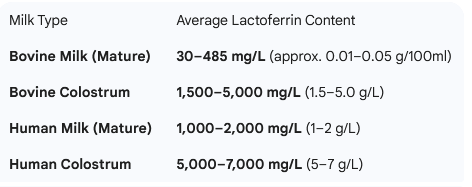
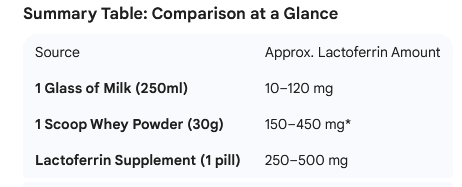
By your measure you might need to drink 20 liters of milk to get the 600mg lactoferrin (in two capsules) that was used in the study. Per day. Go for it
The world’s first bio-identical human lactoferrin: Helaina effera
effera™ is the world’s first bio-identical lactoferrin, precision-made to be functionally equivalent to the protein in mother’s milk. It’s the foundational protein for human health, delivered with undeniable impact.
SwissRX Revitalize: A dedicated, high-dose (340mg) effera™ capsule designed for athletic recovery, immune function, and iron regulation.
Desert Harvest Menopause Support: Combines 300mg of effera™ with aloe vera to target hormonal fluctuations, bone health, and iron deficiency.
Sunny Within Longevity: A liquid sachet formulation combining effera™ with NAD+, glutathione, and CoQ10 for cellular aging support.
Kroma Wellness: Incorporates effera™ for gut health and immune support, particularly in their, “Super Core” products.
Levelle Nutrition: Offers a “Cycle Syncing Protein” designed for menstruating women, incorporating effera™ for enhanced iron metabolism.
Key Advantages of Effera™ Products:
Bio-identical: As the first precision-fermented human-identical lactoferrin, it avoids immune rejection, with 15x more activity than many bovine, cow-derived alternatives.
Superior Absorption: It mimics human milk, offering better survival through the digestive tract.
Versatile Benefits: Used to treat iron deficiencies without GI distress, enhance immune function, and improve gut health.
Ah,… good point, and there is the issue of the error-bars for these tests at these levels:
Current documentation from Quest Diagnostics and LabCorp indicates the following lower limits of quantitation (LoQ) for their consumer-accessible High-Sensitivity C-Reactive Protein (hs-CRP) tests.
Quick Summary: Lowest Measurable Levels
Lab Provider
Lowest Measurable Level (LoQ)
Test Name (Consumer)
Test Code (Clinical)
Quest Diagnostics
0.20 mg/L
hs-CRP Test
91737 (Cardio IQ®)
LabCorp
0.30 mg/L
hs-CRP Test
120766
At the lowest measurable limits (near 0.2–0.3 mg/L), the precision is lower. As you move up to “optimal” ranges (1.0 mg/L), the precision improves significantly.
Measured hs-CRP Level
Estimated CV%
Error Bar (±1 SD)
Confidence Interval (68%)
0.20 mg/L (Quest Limit)
~10%
±0.02 mg/L
0.18 – 0.22 mg/L
0.30 mg/L (LabCorp Limit)
~8–10%
±0.03 mg/L
0.27 – 0.33 mg/L
0.50 mg/L
~5–6%
±0.03 mg/L
0.47 – 0.53 mg/L
1.00 mg/L
~2–4%
±0.03 mg/L
0.97 – 1.03 mg/L
LabCorp (Likely Platform: Roche Cobas c501/c502)
LabCorp extensively utilizes the Roche Cobas platform for their routine chemistry.
Assay: Roche Tina-quant C-Reactive Protein Gen.3
Limit of Quantitation (LoQ): 0.3 mg/L
Precision (CV) at LoQ: The manufacturer specifies a CV of <10% at the functional sensitivity limit (0.3 mg/L).
Precision (CV) at Higher Levels: At 1.0 mg/L and above, the CV drops to <5% (often ~2.5% in real-world QC).
Implication: If LabCorp reports 0.3 mg/L, the true value lies between 0.27 and 0.33 mg/L (with 68% confidence).
Quest Diagnostics (Likely Platform: Siemens or Beckman Coulter)
Quest (and their subsidiary Cleveland HeartLab) typically utilizes high-throughput Siemens or Beckman analyzers for the “Cardio IQ” panel.
Assay: Siemens CardioPhase hsCRP or Beckman AU hsCRP
Limit of Quantitation (LoQ): 0.16 – 0.20 mg/L
Precision (CV) at LoQ: These assays generally exhibit a CV of ~5–7% even at levels as low as 0.4 mg/L. At the absolute floor (0.2 mg/L), the CV widens to roughly 10%.
Implication: If Quest reports 0.2 mg/L, the true value lies between 0.18 and 0.22 mg/L.
3. Why This Matters for Longevity Tracking
For a user tracking “optimal” inflammation (aiming for <0.5 mg/L):
Noise Floor: Do not over-interpret small fluctuations at the bottom. A move from 0.2 mg/L to 0.3 mg/L is borderline noise (it is within ±2 SDs).
Significant Shift: A move from 0.3 mg/L to 0.6 mg/L is a statistically significant doubling of inflammation, well outside the error bars of the assay.
Protocol: To smooth out these error bars, standard clinical guidance (and biohacker best practice) is to average two tests taken 2 weeks apart .