That’s incorrect many products in the EU don’t show the exact form.
In any case if it’s native bovine then it is NOT apolactoferrin only and the label is wrong. That’s the problem. Apolactoferrin has iron saturation % lower than 5%.
Thank you for bringing this to our attention.
The product image you saw is an old visual, and we will look into updating it. Our product is hololactoferrin, and the iron saturation remains 10-20% as previously mentioned.
Conversely, Holo-bLf exhibited pro-oxidant effects and increased α-synuclein accumulation even in absence of rotenone. Overall, these results highlight the differential neuroprotective effects of both Nat- and Holo-form, resulting from their distinct iron saturation level and their ability to modulate protein expression, with the native form emerging as a promising candidate for therapeutic strategies to counteract PD-associated neurodegeneration.
Vitamatic lactoferrin should therefore go to the trash @John_Hemming.
A third person from Vitamatic answered me (it’s never the same person!):
The iron saturation level of the lactoferrin is 14.6%, which falls within the typical range of 10–20%.
This level of iron saturation indicates that the product is partially iron-saturated (native bovine lactoferrin), meaning it naturally contains bound iron as it occurs in milk, rather than being fully iron-depleted (apo) or fully saturated (holo).
So, same company, three people, three different answers! I hope they’re better at manufacturing, testing compounds and securing their supply chain…
They are likely buying from a Chinese supplier, unless they told you differently, and do not know what they are selling. However the color indicates that it is unlikely Hololactoferrin, (iron-saturated is noticeably deeper pink to reddish)
I am looking at another brand that claims to be freeze-dried bovine lactoferrin.
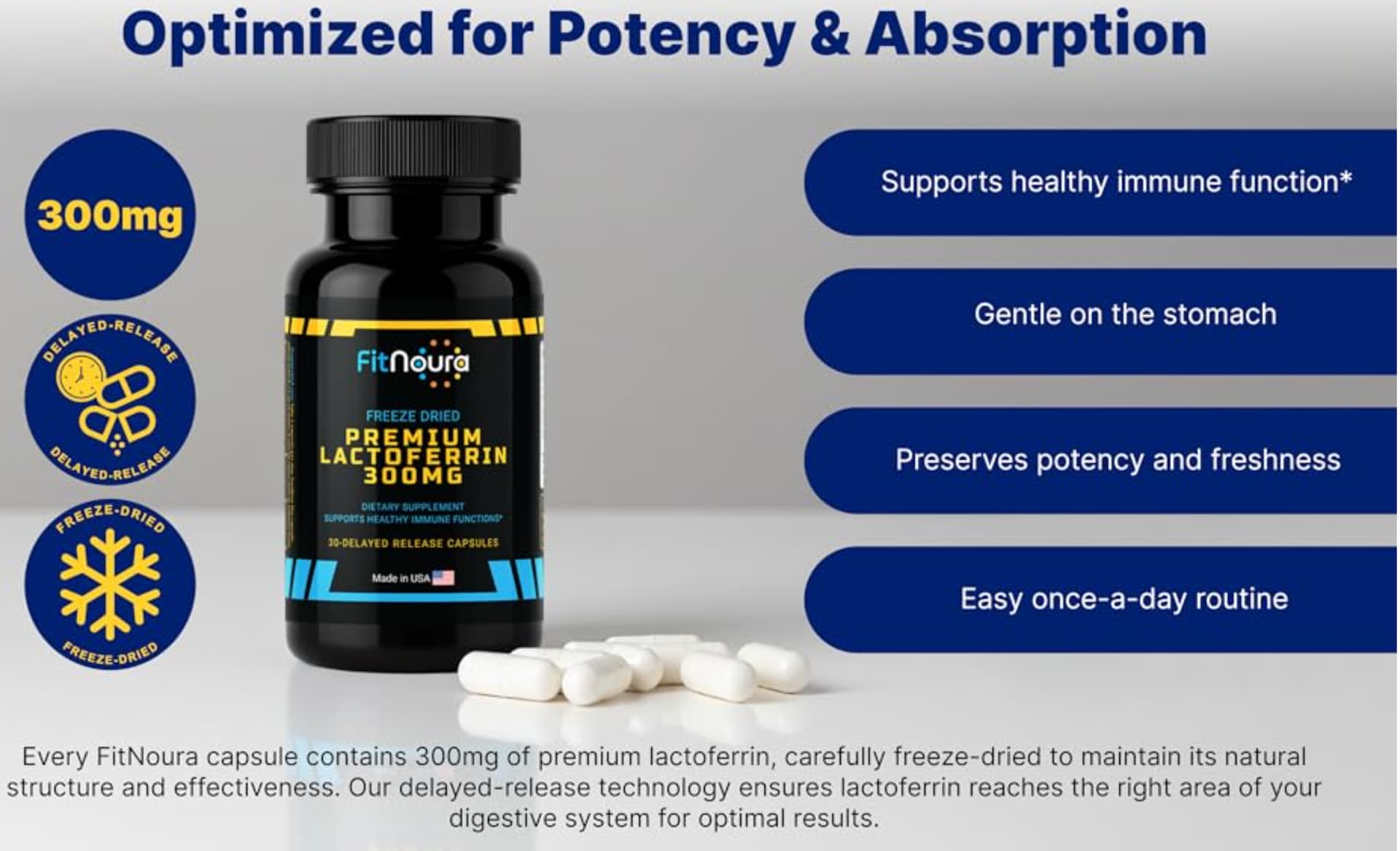
Gemini: A freeze-dried lactoferrin supplement is generally considered superior to a “regular” (spray-dried) supplement if your goal is maximum bioactivity, as the low-temperature process better preserves the protein’s natural structure.
Several customers have supplied pictures and claim it looks white. It is also supplied in an enteric-coated capsule. I have been putting my Vitamatic capsules in a larger enteric-coated capsule. When I finish my Vitamatic, I think that I will try these, unless another member finds a better one.
Vitamatic eventually got back to me with a proper answer:
The iron saturation level of our lactoferrin is 14.6%, which falls within the typical range of 10–20%. This level of iron saturation indicates that the product is partially iron-saturated (native bovine lactoferrin), meaning it naturally contains bound iron as it occurs in milk, rather than being fully iron-depleted (apo) or fully saturated (holo).
We have already updated the product label after confirming the correct specification with the manufacturer. The product now reflects the accurate classification.
Hb and Transferrin saturation. I had only taken 3 or 4 pills (I have the record) and had made the mistake of not taking it on fasting days. I am now taking it 7 days a week.
In summary, this trial clarified that the ingestion of eLF for an 8-week period can reduce visceral fat in men and women without the need for any lifestyle change. Additional analysis, with larger sample sizes, of this potential to prevent obesity and decrease risk of the metabolic syndrome is clearly warranted.
I started Lactoferrin around the same time as you. I chose Lactoferrin 95+ from www.lactoferrin.co largely because it was local to me and certainly bovine sourced. The 95% relates to purity not iron saturation, which I do not know. The product quality seems very good.
My last iron studies were from 11 March 2026:
Iron 14.1 umol/L
Transferrin 2.9 g/L
Saturation 22%
Ferritin 35 ug/L (a significant drop from my norms)
I took a little Iron bisglycinate every other day for 8 days (25mg x4) and started lactoferrin 95 which a had determined would be valuable for my gut, and from their to my general metabolism. My expectation is that the lactoferrin will increment marginally my iron and ferritin.
I generally don’t ever take Iron and about to retest to see where I am but my energy levels have certainly improved.
I take the lactoferrin (300mg) 2 hours before breakfast in the morning.
I’ll report in on my next iron study.
My primary interest is to regulate my iron for Immune system support and biome / gut bacteria health. Extensive adventure travel in Africa, South America and Asia introduced me to a few unwanted passengers in the past. I’m clear but acutely aware of the problem.
Helaina human lactoferrin (LF) (effera®) is a potential, well-tolerated alternative for improving iron status in women who present with chronic iron deficiency. This case series reports on two active women who had persistently low iron levels and poor response to, or intolerance of, standard orally administered iron supplements. The two individuals independently started oral ingestion of effera® at 100 mg/day for 6-20 weeks. Both showed notable increases in ferritin, with one also exhibiting marked increases in serum iron and transferrin saturation. The two participants reported better energy, fewer symptoms, and improved exercise capacity, all without gastrointestinal issues. These results align with growing evidence that LF supports iron homeostasis through receptor-mediated absorption, hepcidin-ferroportin modulation, and immune-balancing effects, potentially surpassing or working in synergy with conventional treatments. While limited to case reports, these observations support further controlled trials of effera® as an adjunct or alternative for iron deficiency, including non-anemic presentations.
We identify Lactoferrin (LTF) as a risk factor associated with poor AML prognosis using a machine learning–based prognostic model. Through LTF knockdown and overexpression in a mouse leukemia model, we demonstrate its pivotal role in CNS invasion. Mechanistically, neutrophil serine proteases (NSPs) act as downstream effectors of LTF, and pharmacological inhibition with Brensocatib effectively blocks AML cell entry into the brain.
AI parsing and analysis of the study:
Crucial Caveat: This is a study in mice and using cell models. While highly suggestive, its direct application to humans receiving chemotherapy needs further clinical research.
The study does NOT say lactoferrin (LTF) causes leukemia.
The research focuses entirely on patients who already have Acute Myeloid Leukemia (AML). In that context, it identifies LTF as a “risk factor for poor prognosis” and a “mediator of CNS infiltration” – meaning it helps existing leukemia cells spread to the brain, making the disease harder to treat. This is about progression and complication, not initiation.
No evidence that lactoferrin supplementation causes leukemia.
 I hope they’re better at manufacturing, testing compounds and securing their supply chain…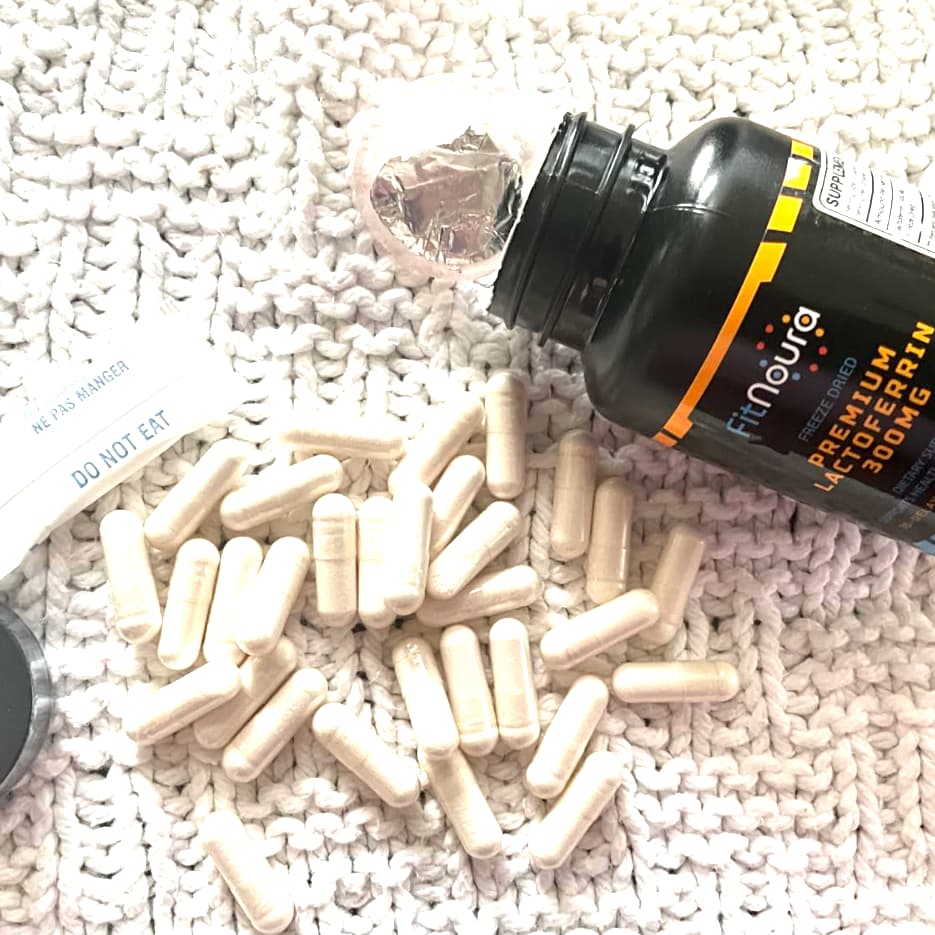
 Paper authored by the manufacturer