I take LF on an empty stomach with a large glass of water to minimize any stomach acid interference. Just my n=1.
1 Like
And on that note @Rick,
Just letting you all know my husband has been taking it for a few days, but it’s giving him stomach pain. He wasn’t focusing on having it with food, but he will going forwards… tba…
1 Like
Two recent lactoferrin papers:
- Synergistic action of human milk oligosaccharides and lactoferrin enhances neurodevelopment in piglets: evidence from MRS based metabolic profiling 2026: “The combined cHMOs and Lf group exhibited significantly higher absolute levels of total lipids and macromolecules (tLM), along with increased relative concentrations of glutathione (GSH), total creatine (tCr), total choline (tCho), and tLM (p < 0.05). […] The combined cHMOs and Lf supplementation may synergistically support neurodevelopment by enhancing lipid mobilization, energy metabolism, and antioxidant capacity”
-
Effect of Lactoferrin in Obese Children and Adolescents with Metabolic Dysfunction-Associated Steatotic Disease: A Randomized Controlled Study 2026: “After 3 months of treatment, the lactoferrin group had a significantly lower weight, body mass index (28.7 ± 1.48 vs 30.2 ± 1.45, p < 0.001), alanine aminotransferase (47.7 ± 4.4 vs 56.4 ± 4.3, p < 0.001), homeostatic model assessment method of insulin resistance (2.86 ± 0.43 vs 3.08 ± 0.4, p = 0.03), aspartate aminotransferase, fasting blood glucose, total cholesterol, triglycerides, homocysteine, malondialdehyde, and interleukin-6 compared with the control group and the pre-treatment levels.” (
 Egyptian paper )
1 Like
After reading some evidence around lactoferrin (see: Iron: an underrated factor in aging - #231 by adssx ) I decided it to give it a try.
I used Osavi Lactoferrin 200 mg, one pill per day in the morning. It contains the “Proferrin®” form of native bovine lactoferrin. After two months of supplementation:
- Iron: 92 → 196 µg/dL
- UIBC: 228 → 130 µg/dL
- TIBC: 320 → 326 µg/dL
- Transferrin saturation: 29% → 60%
- Ferritin: 71 → 63 ng/mL
- Hemoglobin: 14.8 → 15.3 g/dL
- hs-CRP: 0.7 mg/L (unchanged)
So the main effect was a marked increase in circulating iron and transferrin saturation without an increase in ferritin. However, lactoferrin doesn’t contain iron in any meaningful way. So it seems that it changed how my body handles its own iron. I tried to stop lactoferrin and felt way worse (more tired, slower, less alert, etc.), so I’m back on it. I still wonder whether I should continue it or not given the high serum iron and TSAT levels. Poke @DrFraser @CronosTempi you might be interested in that.
5 Likes
It may be worth adding a small amount of iron supplementation. (Iron Bisglycinate probably)
I have bought some lactoferrin. I am quite tempted to add it to my stack for a while. After all I am doing weekly tests and it would be interesting to see how quickly anything changes if it does. I do have some key tests for the next few weeks, however, and I may leave lactoferrin until after those.
Why add iron bisglycinate? My serum iron seems already too high.
Lactoferrin: which one did you buy?
I don’t know what type of lactoferrin I have. I have given myself a task of finding it.
Serum Iron is almost entirely iron carried by transferrin.
Ferritin indicates iron storage not just in serum, but also in cells.
Arguably your iron storage has not really moved that much. Moreso it is more available through the blood (which is probably a good thing), but if you need more iron for dopamine it is not necessarily there.
Which brand did you buy? The Osavi one available in the UK has native bovine lactoferrin. Others I found in the UK didn’t provide much data on the form (holo or apo or native).
Re. Iron supplementation: OK.
FWIW:
By iron saturation level:
- Apolactoferrin — the iron-free (or very low iron) form
- Hololactoferrin — fully iron-saturated
- Native/standard lactoferrin — partially iron-saturated (roughly 15–20% saturated, as it naturally occurs in milk)
Can You Tell Iron Status by Color?
"Yes, actually — color is a surprisingly useful clue:
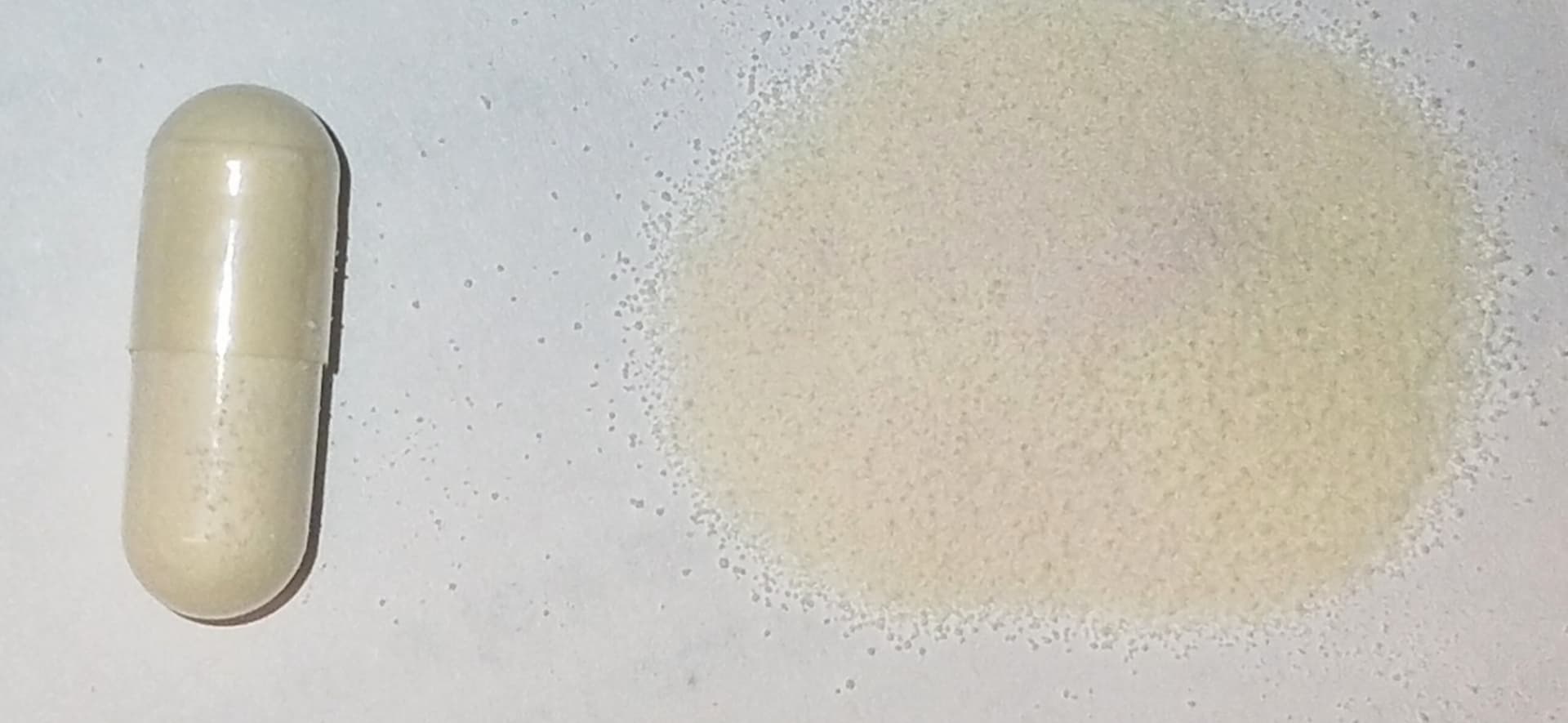
- Apolactoferrin (iron-free) tends to be a pale white to off-white/cream color
- Partially saturated lactoferrin (standard) is typically a light pink or pinkish-beige
- Hololactoferrin (iron-saturated) is noticeably deeper pink to reddish
This is because lactoferrin gets its color from iron binding — the protein has a natural pink-red hue when iron is bound to it, and that color intensifies with higher iron saturation. So a very white powder or pale capsule contents are a reasonable indicator of low iron content, while a pink or reddish hue suggests iron is present."
2 Likes
I have found it. It is Vitamatic which just says 500mg lactoferrin. I need to take if after a Randox blood test and before another Randox blood test. As I am doing Medichecks next week. (I did Randox today) I will need to wait a fortnight and start it in w/c 20th April.
I emailed them to know which lactoferrin form it is. The good one is native bovine (iron saturation around 10%).
1 Like
I will have back to back blood tests to see the effects in a week. MY TSat is normally quite low.
What I might try is a range of doses to see what effects they have on TSat and Hb.
1 Like
Half-life below 1h but effects last way longer via altered iron metabolism + gut. I don’t know how long though.
1 Like
I am using the “Vitamatic Lactoferrin 500 mg.” It is mostly white, which gives a clue. I will be having some blood tests in the near future. We will see if it moves any needles.
Does it say Apolactoferrin on your bottle?
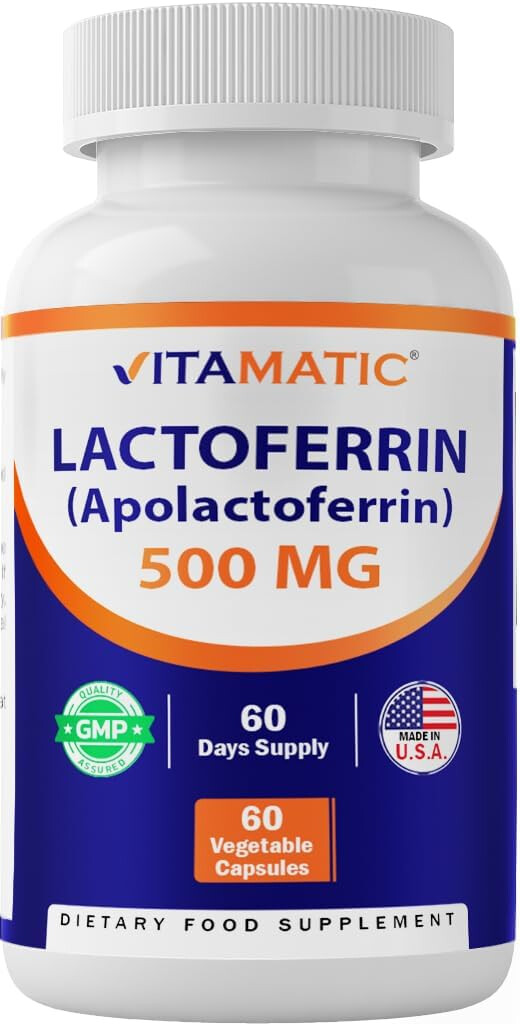
1 Like
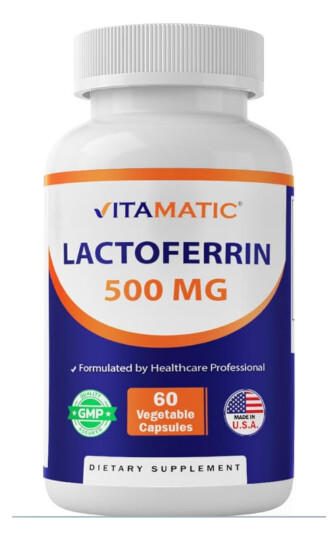
Their answer to my email: “The iron saturation of our lactoferrin is 10-20%. It is sourced from bovine.”
So that’s good news. Why does the Amazon UK image show “apolactoferrin” below though? 
Ergothioneine and lactoferrin treatment exert neuroprotective effects via Tnfrsf12a.
Tnfrsf12a regulates neuronal oxidative stress, neuroinflammation, and apoptosis.
Ergothioneine and lactoferrin synergistically suppress Tnfrsf12a/NF-κB signaling.
Targeting Tnfrsf12a pathway may be beneficial for nutritional strategies against AD.
Mouse model + Tier 2 Chinese team + Tier 2 journal. FWIW…
1 Like
Probably a holdover from when GB was a member of the EU.
“Why the EU requires this level of specificity:
Foods to which lactoferrin has been added must have “lactoferrin from cows’ milk” written on the label PubMed Central under EU novel food rules, and the EU’s broader framework demands ingredient transparency down to the form and source. The EU has a more rigorous system for health claims, requiring pre-approval and scientific substantiation, and requires the presentation of detailed nutritional information. Nutracompliance”