Thanks, I should have done this “LLM reality check”. It’s also from a Tier 2/3 Chinese team in a Tier 2 journal.
After a couple of weeks it seems to increase transferrin saturation and reduce ferritin.
I take two 300-mg capsules from The Lactoferrin Co. Should I take them as a single or divided dose?
Can you please share your figures?
Mine: Lactoferrin: A Milk-Derived "Immunoceutical" Reverses the Clock on Inflammaging - #48 by adssx
It’s interesting that in anemic people lactoferrin seems to increase ferritin but in non anemic people it slightly reduces it and increases TSAT.
I would not read that much into these values as yet:
| Hb | Iron | Tot Iron Bind C | Unsat IBC | Transferrn | Transferrin Sat | Ferritin | |
|---|---|---|---|---|---|---|---|
| g/l | umol/L | umol/L | umol/L | g/L | % | ug/L - ng/mL | |
| 13-Apr-26 Medichecks | 145 | 14.7 | 56 | 41.3 | 26 | 56 | |
| 20-Apr-26 Randox | 142 | 8.5 | 48.3 | 17.6 | 66.73 | ||
| 27-Apr-26 Randox | 139 | 12.3 | 47.9 | 2.34 | 25.7 | 56.2 | |
| 04-May-26 Randox | 136 | 11.7 | 50.4 | 2.33 | 23.2 | 42.77 | |
| 11-May-26 Randox | 135 | 15.6 | 47.5 | 2.34 | 32.8 | 32.01 |
1 Like
OBJECTIVES/GOALS: The main objective of this study was to determine if dietary supplementation with the iron-binding protein lactoferrin is able to reverse age-related brain proteomic changes in a heterogenous mouse model of aging, with implications for the modulation of age-related brain disease.
METHODS/STUDY POPULATION: UM-HET3 mice of both sexes were aged to 6 months on control chow (Young Control, N=11) or 24 months (Old Control, N=12) on control chow or a diet supplemented with 12,000 ppm of bovine lactoferrin for 9.5 weeks before sacrifice (Old Lactoferrin, N=13). At sacrifice, brain cortex was collected. Cortex homogenate was analyzed through SomaLogic for 1,500 specific proteins relevant to brain aging. Differential expression analysis was run to analyze the age and treatment effect separately, with an adjusted pvalue cutoff of 0.05 to reveal effects of age (young control vs old control) and treatment (old control vs old lactoferrin) separately. Gene Ontology Biological Processes (GO-BP) Enriched Pathway analysis was run to identify the biological pathways altered by lactoferrin supplementation.
RESULTS/ANTICIPATED RESULTS: Differential expression analysis adjusted by sex identified 71 differentially expressed proteins in the age comparison and 99 differentially expressed proteins in the treatment comparison. Thirteen proteins were differentially expressed in both lists, which we classify as lactoferrin rescued proteins, those that were elevated in old untreated mice, but significantly lowered by treatment. These proteins include SYDC, CLIC5, NF2L2, STAT3, Peroxiredoxin.3, UFM1, Profilin.1, NUCB1, Laminin.2, Ezrin, PPT1, IDH, and PUR9. Pathway analysis revealed significant alteration in 30 pathways relevant to synapse, neuron, and cellular structure and function relevant to age-related neurodegenerative disease.
DISCUSSION/SIGNIFICANCE OF IMPACT: Lactoferrin may be a viable therapy for the modulation of age-related brain changes. Next, we will evaluate endogenous levels of lactoferrin as a biomarker for Alzheimer’s disease, moving toward a clinical trial to evaluate the utility of lactoferrin to serve as both a biomarker and intervention against age-related neurodegenerative disease.
Very interesting:
- Lactoferrin partly reversed age-associated cortical proteomic changes
- The rescued proteins/pathways point toward oxidative stress, inflammatory signaling, mitochondrial/redox biology, synaptic function, neuronal structure, and cellular maintenance
- 12,000 ppm in chow = 1.2% diet by weight. = same as ITP but that would be 8 g/day HED = impossible?
On 2/9/26, I posted my husband’s ferritin was 18
Since then, he’s taken 1 pill per day (on most days) of lactoferrin from the Lactorferrin Co.
His new labs showed his ferritin has dropped from 18 to 15, so I guess he will start taking iron
If anyone has any suggestions on how he should dose, that would be appreciated, otherwise we will ask AI.
From yesterday:
Hemoglobin 15.5g/dL
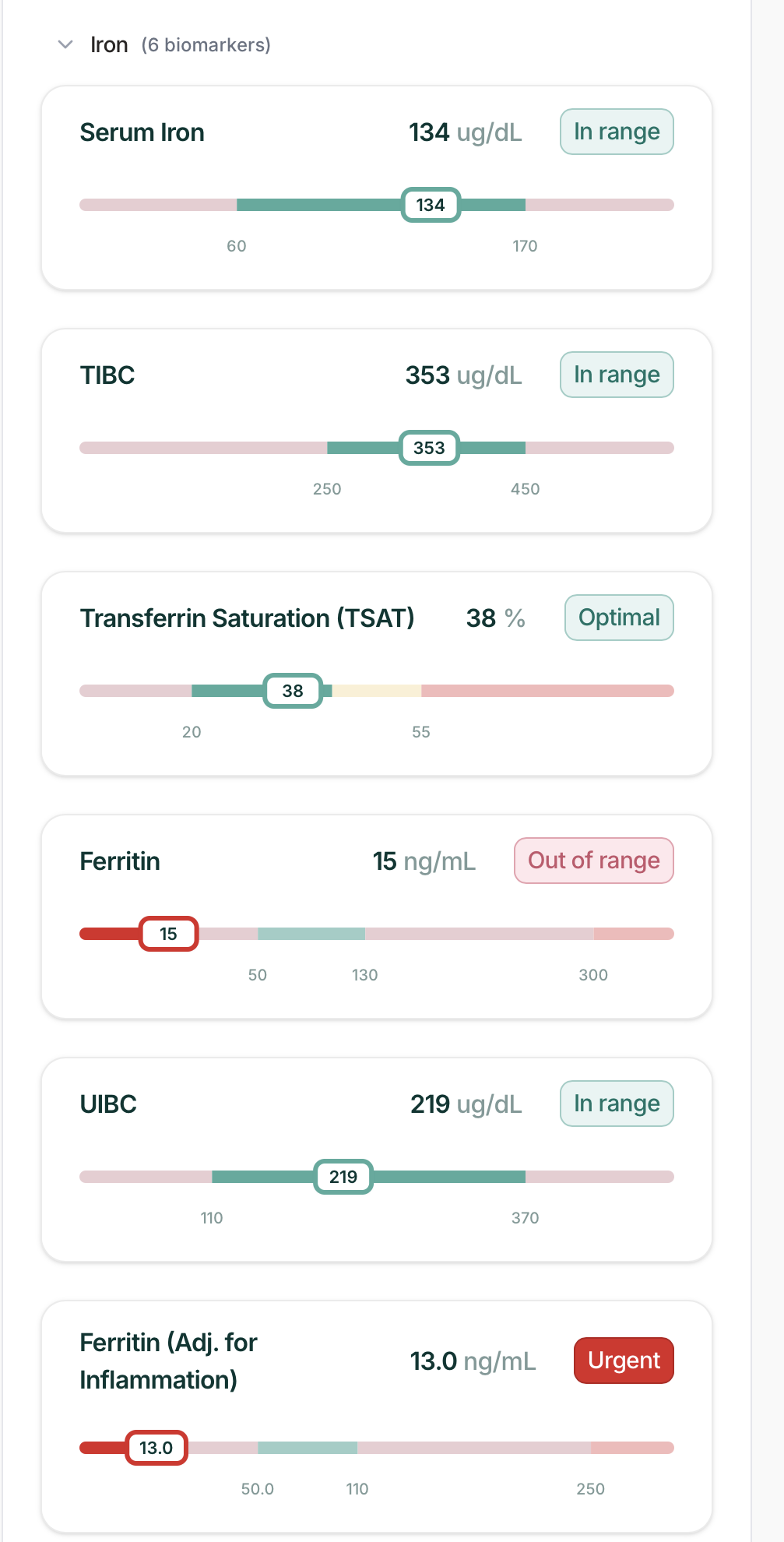
My own ferritin is continuing to drop, so I’ll make a seperate post asking about that soon.
What I find strange is that his hemoglobin is in the normal range, while his ferritin levels are low.
It may be just an error in testing. I wouldn’t worry about it unless it stays that low. Even then, it would worry me too much. I have had low levels for many decades.
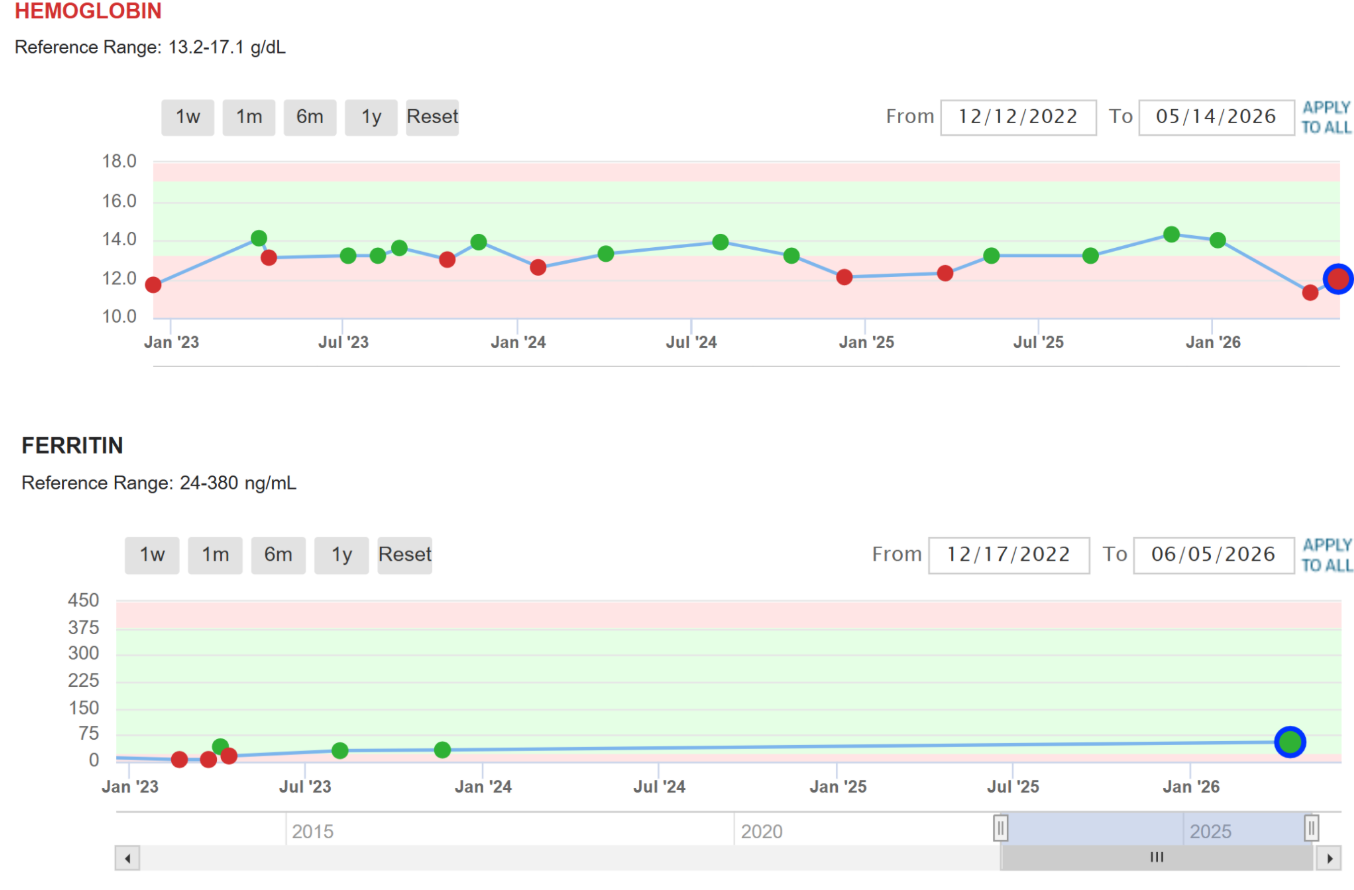
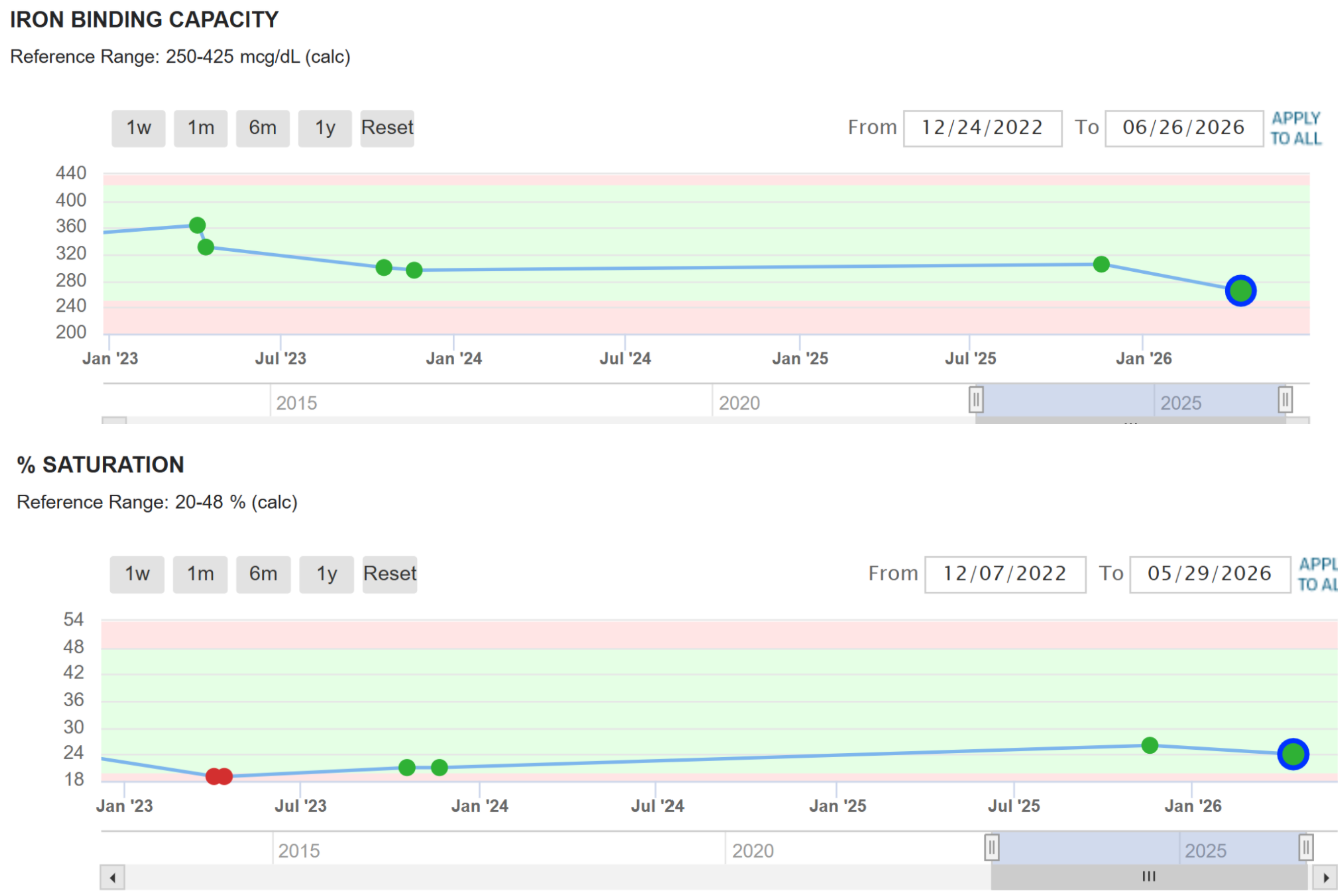
My iron and hemoglobin levels have always been on the low side. I supplement with iron glycinate only when I fall out of range. Right now, I am taking iron glycinate, which has fewer side effects than most iron supplements. It always works for me. I have taken lactoferrin on and off for quite some time without any measurable effect. For me, it’s just a waste of money.
I really don’t worry about it too much, as low iron levels have some benefits. I just try to keep it in the low normal range. The two lowest points on the ferritin graph are 6 ng/mL, and I’m still kicking.
I hope some of the doctors on the forum will share their opinions.
1 Like
I read “Cure” by Morley Robbins. He throws a long fit about Iron and Copper and I think he says to not supplement iron for low ferritin. You should supplement copper. It’s been quite a while since I read this and could be wrong. Ask your AI about ceruloplasmin. I’d be taking copper.
2 Likes
Worth a shot. I’ve got some copper glycinate on the shelf. I’ll give it a try and supplement with it for a few weeks and then see if it has any positive effects. I do like not supplementing with iron unless I have to.
1 Like