Increasing Muscle Mass in the Elderly

Hi Joseph, Very good write up, I agree with it, A few things to consider adding:

  1. a Foam Roller (to help with recover)
  2. Urolithin A ? Anyone have feedback on this?
  3. a key one I think you missed is EAA’s (I like them better than BCAA’s)
  4. HMB (maybe)
  5. Turkesterone & Ecdysterone (thoughts?)

Cheers

1 Like

@Denet

Agree with EAA. Need enough but extra might be counter productive. Have to experiment to discover how much is enough (build and retain muscle).

Urololithin A is promising. I have been taking 0.5-1g per day for 2 months. No obvious benefits but its use has coincided with important subjective improvement in vitality and recovery.

2 Likes

I’d be interested in hearing more about your experience with enclomiphene. I know people who use it and I’ve seen their personality change for the worst.

I took 25 mg per day, which was too much. Spiked my T to 1100 and made me more abrupt on the phone. Of course I promptly quit. I find the effects of the gel to be quite smooth.

I’ve also been taking febuxostat, which lowers uric acid and seems to eliminate pedema. As a consequence, I’ve started taking 200 mcg of CJC/ipa per day. This has in the past caused my feet to swell, but tentatively speaking, not any more. It compliments testosterone very nicely.

I use 20% cream and enjoy it. I wish you could get the cream from online pharmacies but only gel is available.

CJC/ipa I’ve tried but I didn’t get much. I’m looking to try something like that again, or mk677 or straight HGH.

@blsm, @Jay

I wore a weight vest for four or five years, hoping to increase my speed in the stairwell but never did. I have a built-in speed limit, related to overexertion and overheating. My vest was made of neoprene, which eventually split in several places. Neoprene glue worked for a while.

2 Likes

Did the same vest last you the entire time? I just washed my Cap vest and it fortunately held up well. I’ll probably invest in a higher quality one for my next purchase though.
I recently read a good write up about the latest science on the topic by Michael Easter. It’s behind a paywall but I’m going to see if I can get permission to share it. Apparently there’s something going on that’s been termed a gravistat and it’s communication between certain bone cells and the brain that signals organisms to eat less when under additional weight like using a vest or pack. It explained why I was able to steadily lose weight in the past without really mindfully restricting my food intake much.

1 Like

No, but when the first one fell apart, the company sent a replacement. This was 20 years ago, so I don’t remember the name, but it looks like Amazon has good selection.

Enclomiphene revisited. This was discussed at length previously, but I am too lazy to search the threads.

I tried some Enclomisign, Enclomiphene 50 mg tablets from India in December of 2023. I mistakenly thought I was buying enclomiphene when, in fact, it was just clomiphene.

It turned out it wasn’t pure enclomiphene but rather enclomiphene from clomiphene. In any case, it wasn’t very effective, but I didn’t feel any side effects after taking it for more than a month. Most people are quick to point out any adverse effects, especially on Reddit.

Clomiphene citrate contains:
≈ 62% enclomiphene (E-isomer, anti-estrogenic) and ≈ 38% zuclomiphene (Z-isomer, estrogenic). **It is the zuclomiphene that causes most of the unwanted side effects in males.

“Clomiphene is a blend—effective but carrying the baggage of a long-acting estrogenic isomer. Enclomiphene is the purified “good half,” giving a cleaner hormonal profile, quicker kinetics, and generally fewer estrogenic-type side-effects, but at the cost of FDA-unapproved status and higher price.”

But still, the side effects are experienced by less than 10% of the users.

“The most frequent side effects were mood changes, blurred vision, and breast/nipple tenderness.” "Reported side effects were only prevalent in less than 10% of the study populations, and no serious adverse events were reported.

Since then, looking at IndiaMart, there are now more choices than when I ordered in 2023.
I am going to give it another shot. Some brands claim to be just enclomiphene citrate. Who knows? It’s from India, and one can only hope. Why? Because I want to preserve muscle mass and get a little more energy. Enclomiphene does not affect the natural production of testosterone when you stop taking it. And of course, my doctor isn’t going to help me because my free T is still in the low normal range.

I looked at a meta-analysis of clomiphene.
Clomiphene citrate for men with hypogonadism: a systematicreview and meta-analysis
https://onlinelibrary.wiley.com/doi/epdf/10.1111/andr.13146

2 Likes

Good luck with all that. Enclo is certainly superior to clomid.

1 Like

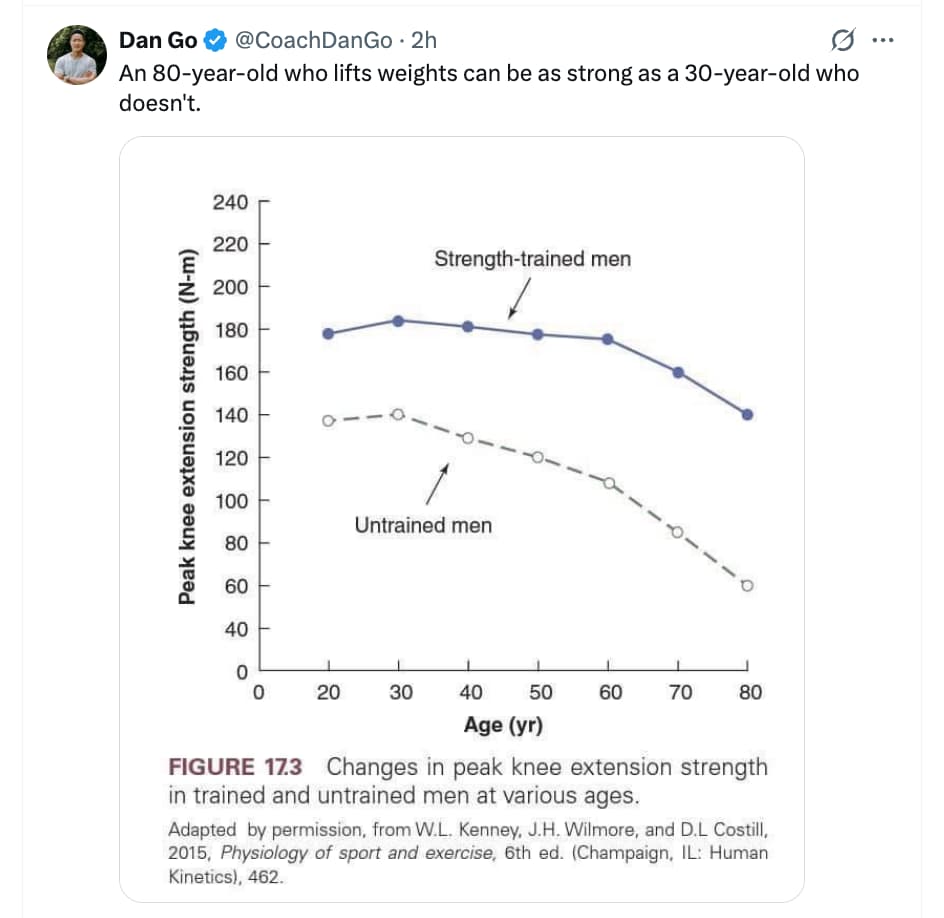
Source: Dan Go on X: "An 80-year-old who lifts weights can be as strong as a 30-year-old who doesn't. https://t.co/ROgqENvxKI" / X

2 Likes

Does it make you tired or sleepy, relaxed? Do you tKe it in the morning or when? Extra energy?

Increasing Muscle Mass in the Elderly

Forget any of the mice or supplement studies. The only way to increase muscle mass in the elderly is through regular resistance or weight training. All other interventions only augment that.

If any other intervention worked, I wouldn’t be going to the gym.

8 Likes

Take it first thing in the morning, and still haven’t noticed any effects neither positive nor negative.
I may well stop taking it it when my stock runs out to then see if I have any noticeable effect of missing it.

2 Likes

Perhaps this has been addressed elsewhere, but is there a benefit to taking enclomiphine for a few days every once in a while? I’ve read about body builders using enclomiphine and Tamoxifen as a post cycle therapy. Taking roids shuts down natural testosterone production and it takes forever to recover. The enclomiphine and tamoxifen kick start the natural testosterone production. My testosterone level at 63 is still good and I would like to maintain that. Perhaps enclomiphine for 5 days every 3 months would help maintain natural testosterone levels, or perhaps it would make the inevitable decline happen sooner.

It’s possible.

1 Like

Great find. The mechanism is called “gravitostat.”

I had a bit of trouble finding it initially as apparently Gravistat is an oral contraceptive pill, lol!

It’s Dumb, But It Builds Muscle Almost 4x Faster

I. Executive Summary

In this investigation presented by Jeremy Ethier, a 30-day intra-individual human trial was conducted to evaluate the hypertrophic and neuromuscular impacts of daily resistance training (7 days per week) compared to standard training frequency (2 days per week). To isolate local muscular adaptation from inter-individual genetic variability, three subjects trained one side of their body daily (accumulating 35 hard sets per week) while training the contralateral control side twice weekly (accumulating 10 hard sets per week). Muscle cross-sectional area was quantified using baseline and 30-day post-intervention magnetic resonance imaging (MRI) scans, preceded by a mandatory 72-hour training washout to eliminate transient muscle swelling and edema.

All three participants demonstrated superior hypertrophy and local strength endurance gains on the daily-trained limb. In trained subjects, arm muscle volume increased by 3 percent on the daily side versus 1 percent on the control side, while quadriceps/hamstring volume expanded by 2 to 3 percent versus 0 percent. In a less experienced lifter, chest hypertrophy reached 19.6 percent on the daily side compared to 5.0 percent on the control side. Mechanistically, two core physiological phenomena explain these outcomes:

  1. Dissociation of Soreness and Recovery: Delayed Onset Muscle Soreness (DOMS) peak intensity does not track neuromuscular force deficits. Force production capability returns to baseline well before subjective soreness resolves.
  2. The Repeated Bout Effect (RBE): High-frequency mechanical tension rapidly upregulates structural remodeling and neural protective mechanisms, suppressing microtrauma and eliminating DOMS within 7 to 10 days of continuous exposure (ResearchGate, 1998).

However, a primary methodological limitation of this trial is the confounding of training frequency with total weekly set volume (35 sets versus 10 sets per week). Systematic meta-analyses demonstrate that muscle hypertrophy is primarily dictated by total volume rather than frequency when volume is equated (Schoenfeld et al., 2017). Furthermore, unrotated daily heavy loading presents high connective tissue overuse risks; tendons and ligaments adapt far slower than vascularized skeletal muscle. Daily training is an unsustainable long-term strategy, but its biological principles can be safely applied via periodic, short-term “specialization cycles” using systematic exercise rotation.

II. Insight Bullets

  1. Intra-Individual Trial Design: Utilizing a within-subject model (training the right side daily and the left side twice weekly) eliminates genetic, dietary, hormonal, and sleep-related confounding variables across experimental arms.
  2. MRI Gold-Standard Measurement: Muscle cross-sectional area was evaluated via 3D MRI scans analyzed blindly by exercise science researchers, providing high sensitivity for detecting subtle short-term hypertrophic changes.
  3. Edema Washout Protocol: Requiring a 72-hour rest window prior to post-intervention MRI scans prevents transient muscular fluid accumulation (edema) from skewing hyperplastic or hypertrophic volume data.
  4. Volume-Frequency Confounding: The daily training arm performed 35 hard sets per week compared to 10 sets on the control arm, meaning the observed hypertrophy was primarily driven by a 3.5-fold volume increase rather than frequency in isolation.
  5. Dose-Response Hypertrophy Relationship: Systematic meta-analyses confirm a clear dose-response relationship between weekly set volume and muscle growth, provided sets are executed at sufficient proximity to failure (PMC, 2018).
  6. Soreness Is Not a Marker of Muscle Damage: Delayed Onset Muscle Soreness (DOMS) reaches peak intensity approximately 24 to 48 hours post-exercise, a time point when neuromuscular force production has frequently returned to baseline.
  7. Force Recovery Outpaces DOMS Resolution: Training a muscle while subjectively sore does not impair performance or interrupt hypertrophic signaling if motor unit force generation has fully recovered.
  8. The Repeated Bout Effect (RBE): Repetitive exposure to muscle-damaging eccentric contractions induces rapid neural, connective tissue, and cellular structural adaptations that protect muscle fibers from subsequent damage (Frontiers, 2021).
  9. Attenuation of DOMS Timeline: Subjective muscle soreness completely disappeared within 7 to 8 days of daily training due to the Repeated Bout Effect rapidly downregulating inflammatory signaling.
  10. Training Status Modulates Hypertrophic Speed: Highly trained lifters exhibited modest 30-day growth (2 to 3 percent), whereas a less experienced lifter achieved massive growth (19.6 percent), reflecting the progressive attenuation of hypertrophic potential over time.
  11. Differential Adaptation Rates: Skeletal muscle tissue possesses high vascularity and adapts rapidly to daily stress, whereas tendons and articular cartilage adapt slowly due to poor blood flow.
  12. Connective Tissue Overuse Risk: High-frequency training using fixed exercise patterns drastically increases the risk of tendinopathy and joint impairment, even when muscle tissue successfully adapts.
  13. Exercise Rotation as Joint Protection: Rotating 2 to 3 distinct exercise variations for a single muscle group alters joint force vectors and distributes mechanical stress, preventing focal tendon microtrauma.
  14. Daily Training Strength Adaptations: All participants exhibited greater rep capacity and neural skill execution on their daily-trained limb, driven by frequent motor pattern rehearsal.
  15. Per-Session Volume Density Thresholds: Attempting to perform 30+ sets per muscle group in a single workout causes rapid set-quality degradation; distributing volume across multiple days maintains high mechanical tension per set.
  16. Chest Hypertrophy Outcomes: The less experienced subject achieved a 19.6 percent cross-sectional increase in chest muscle on the daily side (35 sets/week) versus 5.0 percent on the control side (10 sets/week).
  17. Arm Hypertrophy Outcomes: Biceps and triceps cross-sectional area increased by 3 percent on the daily arm compared to 1 percent on the twice-weekly control arm.
  18. Leg Hypertrophy Outcomes: Experienced leg training yielded a 2 to 3 percent increase in quadriceps volume on the daily leg compared to 0 percent on the control leg.
  19. Specialization Cycle Concept: Rather than training the whole body daily, lifters can safely apply high-volume stimulus by prioritizing 1 to 2 lagging muscle groups at the start of standard training sessions.
  20. Exercise Order Prioritization: Placing target specialization exercises at the absolute beginning of a workout maximizes neural drive and mechanical tension before systemic fatigue sets in.
  21. Tendon Strain Incompatibility: Continuous 1RM maxing or unrotated daily heavy loading leads to high injury attrition; a 34-day daily bench press trial noted that over half of participants experienced joint pain despite strength gains (StrengthLog, 2025).
  22. Practical Unsustainability: Daily single-muscle training is time-inefficient, fatigue-intensive, and offers diminishing returns compared to structured, well-recovered split routines.

IV. Actionable Protocol (Prioritized)

High Confidence Tier (Level A/B Evidence)

Protocols backed by systematic reviews, meta-analyses, and well-controlled resistance training RCTs.

  • Weekly Volume Escalation for Hypertrophy:
    • Evidence Level: Level A Meta-Analysis (Schoenfeld et al., 2017).
    • Protocol: Program 10 to 20 hard sets per muscle group per week for optimal hypertrophic progression. Advanced lifters may temporarily push to 20–30 sets per week, provided volume is distributed across 2 to 4 sessions to avoid per-session quality degradation.
  • Frequency Optimization with Volume Equated:
    • Evidence Level: Level A Meta-Analysis (PMC, 2021).
    • Protocol: Train each major muscle group 2 to 3 times per week. When total weekly set volume is matched, training a muscle 2–3 days per week yields comparable muscle growth to higher frequencies without provoking joint overuse.
  • Objective Force-Based Autoregulation:
    • Evidence Level: Level B RCT Evidence (ResearchGate, 1998).
    • Protocol: Do not use subjective soreness (DOMS) as the primary indicator of recovery. If rep performance and force production are maintained at baseline levels, the muscle is biologically prepared for high-intensity mechanical loading regardless of mild residual soreness.

Experimental Tier (Level C/D Evidence)

Protocols derived from short-term intra-individual trials, acute physiological models, and expert consensus.

  • Targeted Muscle “Specialization Cycles”:
    • Evidence Level: Level C Preclinical / Short-Term Trial Data.
    • Protocol: Select a single lagging muscle group (e.g., side deltoids or calves) and perform 2 to 3 hard sets at the start of existing workouts 4 to 6 days per week for 4 to 6 weeks. Cap total specialized volume at 20–30 weekly sets, then return to maintenance volume (6–10 sets/week).
  • Systematic Exercise Rotation for Joint Protection:
    • Evidence Level: Level D Physiological Consensus.
    • Protocol: When training a muscle group with high weekly frequency (3+ days/week), alternate between 2 or 3 distinct exercise variations (e.g., Day A: Incline Dumbbell Press; Day B: Cable Flyes; Day C: Dips) to shift mechanical stress vectors and prevent focal tendon microtrauma.

Red Flag Zone (Safety Data Absent / High Risk)

Unsafe, unvetted, or counterproductive practices lacking long-term clinical safety data.

  • Unrotated Daily Heavy Compound Loading (Daily 1RM or High-Volume Daily Lifts):
    • Status: High Hazard / High Injury Rate.
    • Risk Assessment: Performing heavy compound movements (e.g., max bench press or squats) daily without exercise rotation causes severe tendon degeneration, joint microtrauma, and high injury rates (StrengthLog, 2025).
  • Equating Soreness (DOMS) with Hypertrophic Signaling:
    • Status: Debunked Fallacy.
    • Risk Assessment: Chasing extreme muscle soreness via constant exercise variation impairs force production, prolongs recovery timelines, and lowers total effective weekly training volume.
  • Neglecting Washout Periods in Progress Tracking:
    • Status: Methodological Error.
    • Risk Assessment: Judging muscle growth immediately after high-volume daily training misinterprets acute intracellular fluid accumulation and inflammation (edema) as true structural muscle protein synthesis.

Produced by Gemini 2.0 Flash

4 Likes

Sorry, I don’t plan on going to the gym 7 days a week anytime soon.:face_with_diagonal_mouth:

1 Like

Will muscle-boosting meds be the next big thing after GLP-1 drugs?

A number of drugs designed to prevent muscle loss and boost muscle growth are being tested in clinical trials. Columnist Michael Le Page looks at whether building and maintaining muscles is about to get a whole lot easier

Essentially, muscle is costly to maintain in energy terms, so we’ve evolved to use it or lose it. In addition to muscle-boosting growth factors released when we use our muscles, there are muscle-shrinking factors like myostatin. The size of our muscles is determined by the balance between them: shift the dial by blocking myostatin and the same level of exercise should result in larger muscles.

That could make a big difference in older age. “You want people to maintain mobility with old age, be it to get up a flight of stairs, go to the bathroom or go to the store,” says David Glass at Regeneron, one of the companies developing muscle-boosting drugs.

“But starting in your 30s, you lose strength as you get older,” he says. “There are naturally occurring mechanisms that make it harder to get a benefit from [exercise].”

Staying mobile is just one benefit of being more muscular. The fact that maintaining big muscles requires a lot of calories is an advantage in a world where many of us eat too much. Boosting muscles should help prevent or treat obesity as well as related conditions such as diabetes.

There is also concern that the long-term use of myostatin-blocking drugs could affect a vital muscle: the heart. But in a study that came out in March, Glass and his colleagues analysed data on a million people in the UK Biobank study. They found no signs of cardiovascular issues in people with mutations affecting myostatin function – but these people did have up to 10 per cent more muscle and a higher grip strength.

Despite the disappointing initial results, pharmaceutical companies have got a lot more interested in developing muscle-boosting drugs thanks to the runaway success of GLP-1 weight-loss drugs. That’s because it turns out that GLP-1 drugs result in a loss of muscle mass as well as fat.

When people stop taking GLP-1 drugs, they often regain lost fat very quickly, say Gabriel. But they don’t regain the muscle as fast. This has led to concern that muscle loss could become a major problem in people who repeatedly start and stop taking these drugs.

So, many of the newer myostatin-targeting drugs are now being tested in combination with GLP-1 drugs. The hope is that they can not only reduce or prevent muscle loss, but also enhance weight loss, because of the extra energy needed to maintain muscle.

The results of one animal trial, published last year, caused much excitement in some corners of the internet. Regeneron gave obese cynomolgus monkeys a triple therapy consisting of the GLP-1 drug semaglutide, a myostatin precursor-targeting antibody called trevogrumab and an activin A-targeting antibody called garetosmab. The monkeys gained lean mass while losing a lot more weight than animals given semaglutide alone. One YouTuber with a large following suggested these drugs would replace steroids for bodybuilders.

But interim results from Regeneron’s phase II trial in humans are less positive. The triple combo did prevent 80 per cent of the lean mass loss seen with semaglutide alone, while boosting fat loss. But a third of these people developed side effects severe enough for them to stop taking the drugs.

Read the full story: Will muscle-boosting meds be the next big thing after GLP-1 drugs? (New Scientist)

Related Threads:

1 Like