Metformin has been tested by Ora so has imeglimin at various doses or combos with other molecules?
1 Like
Have you tried this yet? Any results (pro or con) to report?
2 Likes
It appears to be widely available from India at a reasonable price. I will be ordering some to try, as I can no longer use metformin because it causes gastrointestinal problems.
As I previously posted, I have become intolerant of metformin. It was causing me to have gastric problems. That said, I still think metformin is the first-line choice if you can tolerate it.
I was taking 500 mg of metformin daily. I changed to Jardiance, but Jardiance was quite ineffective compared to metformin. Also, Jardiance is much more expensive, even with a prescription or sourced from India.
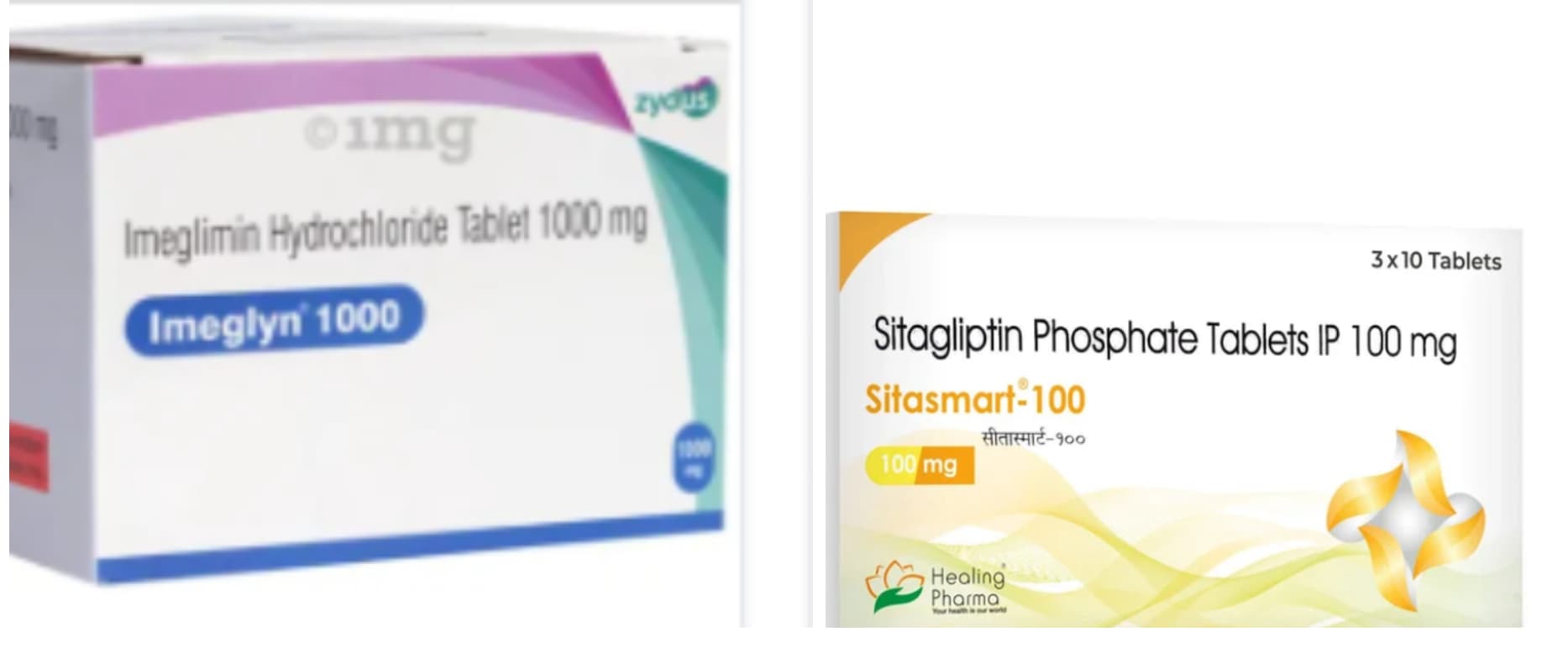
After looking at the Japanese Imeglyn Hydrochloride studies, I decided to give it a try. I took Imeglyn first at “1,000 mg” twice a day. I had zero side effects from it, but it doesn’t work as well for me as 500 mg of metformin. So after about two weeks, I added 100 mg of sitagliptin in the evening before supper.
The combo of 2 x 1 gm of Imeglyn and 100 mg of sitagliptin is working quite well; my fasting glucose level stays fairly close to 98 mg/dL. My A1c levels are always below 5.7%, so I don’t worry too much about that. It is my fasting glucose that has been a problem. At 85, I am happy with this number. The combo might be even more effective in younger people.
For me, it has had zero subjective or measurable negative side effects. I would recommend the combo for someone who can’t tolerate metformin.
5 Likes
Yes, pretty funny video. I especially appreciated the author’s empahsis on imeglimin impact on mitochondria whose importance is mediated by the goddess Shiva. I always feel better when my health is under the protection of Hindu gods.
That’s all fine, more eyebrow raising was the claim of imeglimin not only inhibiting mTOR Complex I (metformin does that too), but also “reducing the activity of complex II”. Hmm.
Regardless, it was good to chase down the various papers the speaker was referencing in his presentation (small text under images/slides).
3 Likes
I. Some Video Points and ideas
IV. Actionable Protocol (Prioritized)
High Confidence Tier (Backed by Level A/B Evidence)
- Glycemic Control Integration: Imeglimin (1000 mg twice daily) is a validated, well-tolerated oral agent for patients with type 2 diabetes who require HbA1c reductions of 0.5%–1.0%. It is highly effective as an add-on to insulin or DPP-4 inhibitors.
- Renal Dose Adjustment: Renal function must be continuously monitored. For patients with an eGFR between 15 and 45 mL/min/1.73 m², the dosage must be strictly reduced to 500 mg twice daily to prevent systemic accumulation.
Experimental Tier (Level C/D Evidence - High Safety Margin)
- Mitochondrial & Healthspan Applications: Imeglimin’s targeted elevation of the NAD+/NADH ratio, activation of AMPK, and upregulation of PGC-1α mimic well-established geroprotective pathways. While it offers a theoretical advantage over metformin by not severely inhibiting maximal oxygen consumption (thereby avoiding exercise adaptation blunting), its use purely for off-label healthspan extension remains experimental pending validated human aging biomarkers.
- Endothelial Stabilization: Preclinical data heavily supports its role in preventing ROS-induced apoptosis in endothelial tissue. In patients with metabolic syndrome who fail to tolerate SGLT2 inhibitors or GLP-1 RAs, imeglimin provides a secondary, physiologically plausible option for microvascular preservation, albeit without proven mortality benefits.
Red Flag Zone (Safety Data Absent or Claims Debunked)
- Cardiovascular Superiority Replacement: Do not substitute imeglimin for SGLT2 inhibitors or GLP-1 receptor agonists in patients with established atherosclerotic cardiovascular disease (ASCVD) or clinical heart failure. Cardiovascular outcome trials (CVOT) for imeglimin do not currently exist.
- High-Dose Biguanide Co-Administration: Combining imeglimin with high-dose metformin (>1000 mg/day) significantly increases gastrointestinal adverse events. If combined, biguanide dosages should be actively managed and titrated downward to ensure compliance.
V. Technical Mechanism Breakdown
Imeglimin acts as a precise modulator of mitochondrial bioenergetics, targeting the electron transport chain (ETC) without fully decoupling oxidative phosphorylation.
- ETC Complex Modulation: It partially and competitively inhibits Complex I (NADH:ubiquinone oxidoreductase) while correcting inherent deficiencies in Complex III (cytochrome bc1 complex). This dual action prevents reverse electron transport, dramatically curbing the generation of reactive oxygen species (ROS) typical in hypercaloric and diabetic states.
- mPTP Stabilization: By lowering ROS and mitochondrial calcium overload, imeglimin prevents the catastrophic opening of the mitochondrial permeability transition pore (mPTP). This sequesters Cytochrome C within the intermembrane space, halting the activation of the caspase-3/9 apoptotic cascade, effectively preserving beta-cell mass and endothelial integrity.
- Metabolic Sensor Activation: The compound shifts the intracellular AMP/ATP and NAD+/NADH ratios. This activates 5’ AMP-activated protein kinase (AMPK) and Sirtuin-1 (SIRT1), driving the deacetylation and subsequent activation of PGC-1α (Peroxisome proliferator-activated receptor-gamma coactivator 1-alpha). PGC-1α acts as a master transcriptional regulator of mitochondrial biogenesis, optimizing tissue oxidative capacity and whole-body energy expenditure.
- Insulinotropic Pathway (GSIS): In pancreatic beta cells, imeglimin increases the intracellular NAD+ pool. This stimulates CD38 (an ADP-ribosyl cyclase) to synthesize cyclic ADP-ribose (cADPR), which binds to ryanodine receptors on the endoplasmic reticulum. The resulting controlled calcium efflux triggers glucose-stimulated insulin secretion (GSIS) in a strictly glucose-dependent manner, eliminating the risk of severe hypoglycemia typically associated with sulfonylureas.
Metformin vs. Imeglimin in Exercise
I. The Metformin Antagonism: Blunting Aerobic and Hypertrophic Adaptations
Metformin activates AMP-activated protein kinase (AMPK) by inhibiting mitochondrial Complex I, reducing the cellular ATP/AMP ratio. While this mimics an energy-depleted state favorable for baseline metabolic health, the mechanism becomes antagonistic during acute physical exertion.
- Aerobic Capacity (VO2 max): Human randomized controlled trials consistently demonstrate that metformin attenuates improvements in peak aerobic capacity (VO2 max) and whole-body insulin sensitivity when combined with endurance training. By chemically bottlenecking Complex I, metformin restricts maximal mitochondrial respiration. This restriction elevates the rate of perceived exertion (RPE), increases reliance on anaerobic glycolysis, and prevents the peak oxidative flux necessary for optimal aerobic adaptation Das et al., 2018.
- Skeletal Muscle Hypertrophy: Metformin’s systemic and chronic activation of AMPK directly antagonizes the mechanistic target of rapamycin complex 1 (mTORC1), a requisite signaling node for muscle protein synthesis. Consequently, older adults combining metformin with progressive resistance training (PRT) exhibit blunted skeletal muscle hypertrophy and diminished muscle density compared to cohorts undergoing PRT with a placebo Walton et al., 2019.
II. The Imeglimin Distinction: Bioenergetic Restoration and Muscle Quality
Imeglimin shares a structural tetrahydrotriazine backbone similar to biguanides but acts distinctly on the electron transport chain (ETC). It operates as a partial, competitive inhibitor of Complex I while simultaneously correcting functional deficiencies in Complex III and preventing the opening of the mitochondrial permeability transition pore (mPTP) Hallakou-Bozec et al., 2021.
- Aerobic Capacity (VO2 max): Knowledge Gap Identified. To date, there are no published human RCTs directly measuring imeglimin’s impact on VO2 max adaptations during a structured endurance protocol. However, because imeglimin only partially inhibits Complex I and redirects substrate flux toward Complex II while enhancing overall mitochondrial DNA synthesis and network integrity, bioenergetic models suggest it is unlikely to impose the same restrictive ceiling on maximal oxygen consumption as metformin.
- Skeletal Muscle Adaptations: Recent human data signals a differentiated physiological benefit. A 2024 prospective cohort study of patients with type 2 diabetes demonstrated that 24 weeks of imeglimin therapy significantly increased quadriceps knee extension strength without altering lean body mass (LBM) or skeletal muscle index Kashiwagi et al., 2024. This indicates a targeted improvement in intrinsic muscle quality—generating greater force per unit of cross-sectional area. The strength gain is driven by the restoration of localized mitochondrial bioenergetics and reduced oxidative stress, rather than classical morphological hypertrophy.
III. Actionable Protocol: Exercise-Pharmacology Integration
- Metformin Scheduling: For individuals utilizing metformin for glycemic control or experimental geroprotection, administration must be strictly temporally separated from exercise windows (e.g., executing training protocols in the morning while restricting dosing to the evening). This pharmacokinetic washout period is required to minimize the blunting of peak aerobic and hypertrophic adaptations.
- Imeglimin Potential: Imeglimin’s documented ability to enhance skeletal muscle strength independent of mass accumulation positions it as a compelling therapeutic candidate for counteracting age-related sarcopenia and metabolic dysfunction. Current human cohort data suggests it may synergize with, rather than antagonize, muscular exertion. Rigorous human RCTs pairing imeglimin with standardized PRT and endurance protocols are required to definitively verify its superiority over metformin in highly active populations.
4 Likes
I am glad that it has some advantages over metformin.
2 Likes
Well, that is a very loaded statement because if it counters age related sarcopenia then to me that is HUGE and seems like a no-brainer. There isn’t really much out there that it is claimed to have such an effect (fighting sarcopenia) in terms of meds, other than exercise. Are we sure of that though? The wording seems a bit vague and is there other studies saying same.
2 Likes
There is no wording that it might suppress muscle growth, as metformin does.
Though I think the negative effects on muscle growth are overblown. I noticed no effect one way or another with metformin. I can no longer take metformin, or that would be my first choice.
4 Likes
How and when do you test your glucose at home? Morning? What application do you use for this graph?
I test my glucose in the morning, about 2 hrs after I get up, while still fasting.
The chart is supplied by Quest Diagnostics, which is where I get my blood work done
A similar chart could be easily made in a spreadsheet.
1 Like
Did you ever update us on this? How are you doing on Imeglinin? and how does it compare with metformin, glucose lowering, exercise effect etc…?
1 Like
I’d been 8 weeks so it’s still early as the plain effects takes up to 24 weeks.
That said it’s already improving my fasting glucose and my dawn effect is much reduced too. It generally stays below 100mg/dl which is new for me. Before my glucose would rise up to 110, fasted in the morning.
I will do my next extensive blood tests in a 2 weeks but it might be too early to see a meaningful impact on HbA1C.
BTW metformin did not do anything for my glucose, just made me tired.
I’m training for the Boston marathon and Imeglimin had no impact on my running cardiovascular performance which is increasing normally with the training.
Here is an update on my progress after eight weeks on Imeglimin. While it can take up to 24 weeks for the full effects, I am already seeing positive results.
My fasting glucose has improved, and the dawn effect is significantly reduced. My glucose levels now generally stay below 100 mg/dL in the low 90’s, whereas previously they would rise to 110 mg/dL in the morning (fasted). Interestingly, metformin had no impact on my glucose levels and only caused fatigue.
Regarding exercise effects, I am currently training for the Boston Marathon. Imeglimin has had no negative impact on my cardiovascular performance, which continues to improve as expected with my training plan.
I plan to complete extensive blood tests in two weeks, though it may still be too early to see a meaningful change in my HbA1C.
4 Likes
Thanks, and it sounds great, a no brainer for us that are taking metformin. Was planning on finishing off my current supply of metformin but I think I’ve heard enough good things about Imegllimin so I’ll be placing an order tomorrow. the fact that it doesn’t negatively affect your exercise regimen is a great plus IMO.
2 Likes
Tnx for all this folks!!! I never heard that *alozens like empa, dapa etc replaced metformin in this line of questioning are the *aflozens to be taken in parallel with this improved metformin tool (imeglimiin()?
I’m taking 10mg dapa for antiaging. I would take metformin if it didn’t make me feel lethargic AND is a mitochondria toxin.
I presume that all info points to supporing the above mitochondria comment: The core thesis of this analysis posits that Imeglimin functions as a “mitochondrial optimizer”
Source you are buying from? Cost?
Tnx all for yet another great compound to boost anti aging, Curt
1 Like
source same as all other india meds: jagdish, maulik
cost about $.15-.20 per 1000mg pill plus shipping
2 Likes
can you elaborate on this? and how do you think Imeglimin is helping you, i.e. more energy, better mood etc.,
thanks
1 Like
Just received my order of Imeglimin from Maulik. I am currently on 1000 Metformin ER. HA1C is 5.6 and fasting glucose about 86. Insulin is about 3-4 uL/ml. I think my situation is not classic prediabetes but glucokinase mody – the pancreas beta cells do not respond adequately to glucose. Layered on top of that, Repatha has raised glucose. While current glucose levels are OK, I really need to increase muscle (and also stimulate the pancreas beta cells a bit) so interested in using less metformin or replacing it altogether. So, will start by adding 500 Imeglimin and gradually titrate up, and depending upon labs, gradually reduce metformin.
Thank you all for this thread – would not otherwise have known about Imeglimin.
2 Likes
Please let us know the impact on fasting blood glucose and A1C as your trial progresses.
2 Likes
I think you are over worrying this, especially at your age. I have no medical background, just an opinion.
If you are adding Imeglimin to metformin, I certainly would monitor my glucose levels closely. Replacing metformin with imeglimin will almost certainly raise your fasting glucose levels. Adding it to metformin seems to be okay if you can tolerate it. Metformin now is the same as taking a strong laxitive for me.
I think the addition of Imeglimin to metformin is interesting and I hope it works out well for you.
I did ask ChatGPT about the combo.
FWIW: 1. Randomized controlled trial: imeglimin added to metformin
A multicenter double-blind randomized trial evaluated imeglimin as add-on therapy in people with type 2 diabetes inadequately controlled on metformin.
Design
- 156 patients with HbA1c ≥7.5% on stable metformin (1500–2000 mg/day)
- Randomized to:
- imeglimin 1500 mg twice daily + metformin
- placebo + metformin
- Duration: 12 weeks
Results
- HbA1c reduction vs placebo: −0.44%
- Mean HbA1c change:
- imeglimin + metformin: −0.65%
- metformin alone: −0.21%
- More patients achieved ≥0.5% HbA1c reduction:
- 63.6% vs 36.4%
- Improvements also occurred in fasting glucose and β-cell function markers.
- Safety: similar to placebo with no major adverse events reported.
Interpretation:
The combination modestly improves glycemic control beyond metformin alone.
2. Real-world observational study
A later retrospective study examined patients treated with imeglimin added to existing therapy, including metformin users.
Results after ~6 months
- HbA1c in metformin users:
- 8.5% → 7.7%
- Glycemic improvement occurred whether or not patients were on metformin.
- Gastrointestinal side effects were more common when imeglimin was combined with metformin (38% vs 11%).
Interpretation:
The combination works but may increase GI intolerance, which is already common with metformin.
3. Trial comparing imeglimin add-on vs increasing metformin dose
A more recent randomized study looked at patients already on low-dose metformin plus a DPP-4 inhibitor.
Design
- Add imeglimin 2000 mg/day vs increase metformin dose
- 24 weeks
Result
- HbA1c reduction slightly greater with imeglimin:
- −0.68% vs −0.47%
- Difference: −0.21% favoring imeglimin.
Interpretation:
Adding imeglimin may be slightly more effective than simply increasing metformin.
Mechanistic rationale for the combination
The drugs have partly complementary mechanisms:
| Drug | Primary mechanisms |
|---|---|
| Metformin | ↓ hepatic glucose production, ↑ insulin sensitivity |
| Imeglimin | ↑ mitochondrial function, ↑ insulin secretion, ↓ hepatic glucose production |
Imeglimin also increases incretin hormones such as GLP-1 and GIP, which metformin does less strongly.
Because of this, combining them theoretically addresses three major defects of type 2 diabetes: hepatic glucose output, insulin resistance, and impaired insulin secretion.
 Overall conclusion
- Yes, metformin + imeglimin has been studied in several trials.
- The combination typically produces ~0.4–0.7% additional HbA1c reduction.
- Safety is generally acceptable, but gastrointestinal side effects may increase compared with either drug alone.
- Evidence is still smaller than for combinations like metformin + SGLT2 inhibitors or GLP-1 agonists.
3 Likes
Charles, thank you for the information. You mentioned gastro issues with Metformin. Were you taking the extended release version? When I was raised from 500 to 1000 I immediately developed issues, but when switched from the regular to the extended release, the problems ceased. Seems the docs prescribe the regular version (it’s cheaper), but when the patient has issues and finds out about and asks for the ER version, then they get the script for that. At least that has been my experience.
2 Likes