Full stack optimization based on the findings from the genetic deep dive reports

Here is what I get when optimizing my medications and supplements stack based on all the genetic pathways deep dive reports so far.

Note that my stack was already mostly optimized using those reports but there is still room for a few improvements.

Executive Summary

The current regimen is exceptionally well-aligned with this genetic profile. Across 21 genetic reports the dominant themes are:

  1. very-high CAD risk from homozygous PCSK9 gain-of-function plus 9p21 double heterozygous plus MYLIP/IDOL homozygous;
  2. beta-cell secretion deficit (CDKAL1 hom + INS rs689 hom + IFIH1 hom + KCNJ11/ABCC8 hom) on a paradoxically insulin-sensitive background (IRS1 protective hom);
  3. a keystone NRF2 / glutathione bottleneck confirmed across at least six reports (NFE2L2 rs6721961 hom + CTH hom + GLO1 hom + AKR1B1 hom + GSTP1 hom + NQO1 het);
  4. distributed methylation pressure (TCN2 hom B12-transport + MTHFR het + SHMT1 hom + MTHFD1 het);
  5. elevated IGF-1 production tendency partially counter-balanced by one copy of the FOXO3 longevity haplotype;
  6. homozygous PTPN22 R620W autoimmunity risk (mitigated by absent HLA counterweights); (7) NO-signaling convergence (GUCY1A3 + NOS3 + PDE5A + SPR); and (8) homozygous EIF2AK3 PERK-B haplotype (ER stress sensitivity, novel from May 2026 proteostasis report).

Most of the regimen is doing exactly what the cumulative genetic profile predicts it should. The lab data confirm efficacy: LDL-C 48, ApoB 50, TG 59, HDL-C 69, Lp(a) 13 nmol/L, hs-CRP 0.60, GlycA 280, fasting insulin 2.7, HOMA-IR ~0.6, fructosamine 239, IGF-1 88 (15–20th percentile for age, dropped from 108 over 6 months on rapamycin), 25(OH)D 84.6, magnesium RBC 6.4 (mid-range), and homocysteine 12.2 (above optimal <10 and trending up — the one persistent open issue).

Integrated_Stack_Optimization_May2026.pdf (869.4 KB)

4 Likes

Wow @cl-user, this is outstanding!

I’ve been working on something like this with Claude based on my limited gene information. I will attempt to follow in your footsteps to improve upon what I’ve done. It was your posts that got me interested in getting more of my gene info. RapAdmin posted options yesterday. Which service did you choose? Thx!

1 Like

I used Nebula.org for a 30x sequencing then Sequencing.com for another 30x sequencing a few years later and combined them into a 60x decoding.

Now there are 100x sequencing available and I would encourage people to use that if they can to avoid any gaps or low quality readings on some genes.

4 Likes

This is interesting to me because i also have a risky-for-homocysteine genome.

I’m going to test in 8 weeks once my new stack has bedded in. My stack.includes B2 for A1298C support , Creatine for methyl sparing, Hydroxo B12 amd TMG. If Homocysteine still comes back high i aim to try follinic acid

What are you taking currently for Homocysteine?

FWIW, I’m taking Seeking Health Homocysteine Nutrients. @Bicep highly recommends this product.

My levels doubled this year. For a few months I added a little TMG and methyl folate, but my number didn’t budge, so now I’m using this for a few months to see what happens. I’m also taking additional TMG


e

1 Like

I’m taking the usual stuff for MTHFR C677T (heterozygous) without any success. I also tested for all the related B vitamins from B2 to B12 and they are all normal or even high.

Thanks to those pathway deep dives I now know that I have a severe NRF2 / glutathione bottleneck which by itself is enough to get high homocysteine.

I’ve started taking sulforaphane (Avmacol ES) for the NRF2 / glutathione bottleneck so we’ll see if that helps.

Here is Gemini 3 thinking explanation of that:

The short answer is yes. A bottleneck in the NRF2 pathway or a deficiency in glutathione (GSH) can lead to elevated homocysteine levels, even when your B-vitamin status and GGT (Gamma-Glutamyl Transferase) levels appear optimal.

This happens because the body prioritizes oxidative stress management over the methylation cycle. When glutathione is depleted or NRF2 is under-activated, the body diverts sulfur-containing precursors toward antioxidant production, creating a ā€œmetabolic pullā€ that can trap homocysteine.


1. The ā€œTranssulfuration Pullā€ Mechanism

Homocysteine sits at a critical junction in your metabolism. It can either be recycled back into methionine (via B12 and Folate) or sent down the transsulfuration pathway to create cysteine, the rate-limiting precursor for glutathione.

  • The Bottleneck: If NRF2 is not sufficiently upregulating the enzymes required for glutathione synthesis, or if there is high oxidative stress, the body ā€œcallsā€ for more cysteine.
  • The Result: Homocysteine is diverted heavily into the transsulfuration pathway. If the downstream synthesis of glutathione is slow (the NRF2 bottleneck), homocysteine can ā€œback upā€ because the cycle isn’t clearing it fast enough, or the body is intentionally keeping homocysteine production high to meet the perceived demand for antioxidants.

2. Why Low GGT and High B-Vitamins Don’t Rule This Out

It is common to assume that if B-vitamins are ā€œhigh,ā€ methylation should be perfect. However, in this specific context:

  • B-Vitamin Paradox: Having high serum levels of B12 or Folate does not mean they are being utilized efficiently at the cellular level. If the transsulfuration pathway is being heavily ā€œpulledā€ due to glutathione demand, the methylation side (where those B-vitamins work) may become secondary.
  • The GGT Misconception: While high GGT is a marker of oxidative stress, very low GGT can actually be a sign of glutathione depletion. GGT is responsible for breaking down extracellular glutathione so the amino acids can be brought back into the cell. If there isn’t enough glutathione to ā€œrecycle,ā€ GGT activity may drop significantly.
  • The NRF2 Factor: NRF2 controls the enzyme GCLC (Glutamate-Cysteine Ligase), which is the first step in making glutathione. If NRF2 is sluggish, you cannot convert cysteine into glutathione efficiently, leading to a build-up of the intermediates—including homocysteine.

3. The Role of Cystathionine Beta-Synthase (CBS)

In an NRF2/Glutathione bottleneck, the enzyme CBS is often up-regulated by oxidative stress. This enzyme pulls homocysteine out of the methylation cycle.

If your NRF2 response isn’t finishing the job (turning that cysteine into glutathione), you end up in a state of ā€œhigh demand, low output.ā€ The body continues to feed the transsulfuration pathway to fix the redox imbalance, keeping homocysteine elevated as it waits for the bottleneck to clear.


Summary Table: Why the Bottleneck Occurs

Factor Status Impact on Homocysteine
NRF2 Activity Low/Sluggish Fails to trigger glutathione synthesis enzymes, causing metabolic backup.
GGT Low May indicate a lack of glutathione available for recycling/transport.
B-Vitamins High Shows the ā€œmachineryā€ is fueled, but the ā€œpriorityā€ is shifted to antioxidants.
Oxidative Stress High Acts as a signal to keep diverting homocysteine away from methylation.

To address this, the focus usually shifts from ā€œmore B-vitaminsā€ to NRF2 activators (like sulforaphane) or direct glutathione support to signal the body that the oxidative crisis is over, allowing homocysteine to return to its normal recycling patterns.
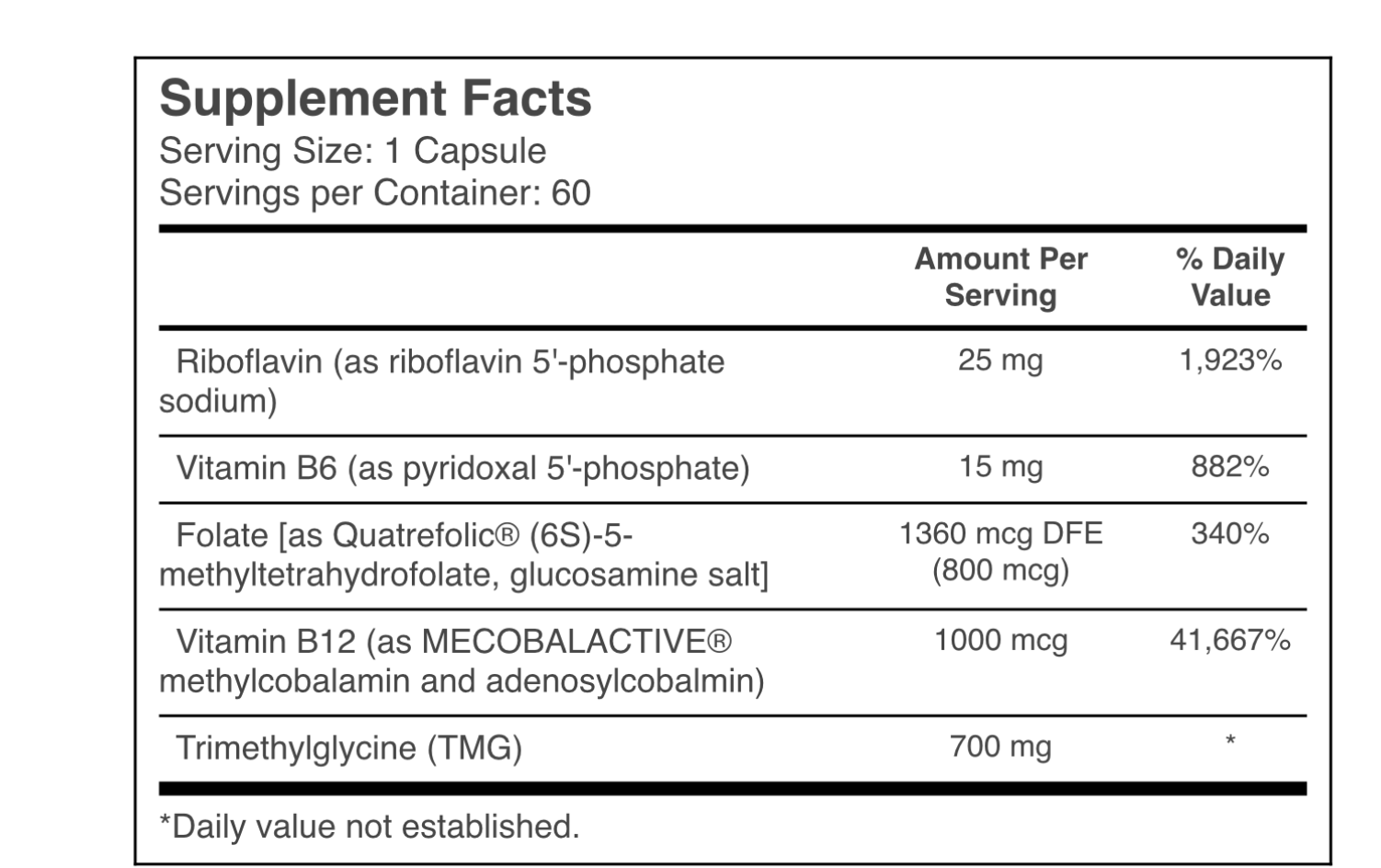

That looks great. I’m doing it all separately because I’m trying to avoid a huge b12 dose. But I may have to give in at some point to reduce pill burden!

Have you tried creatine also? The idea is that most of our homocysteine is a byproduct of our body making creatine.Which can be avoided if we supplement. I’m hopeful creatine will do most of the heavy lifting to reduce homocysteine risk.

" Endogenous creatine synthesis is responsible for approximately 40% to 75% of the body’s total daily homocysteine production. Effects of creatine supplementation on homocysteine levels and lipid peroxidation in rats | British Journal of Nutrition | Cambridge Core

1 Like

Thx for that. I did start taking creatine last year without knowing it might help homocysteine levels.

I don’t need that much b12 either, but I also wanted fewer pills! If this supplement doesn’t work, I have no idea what to try next.

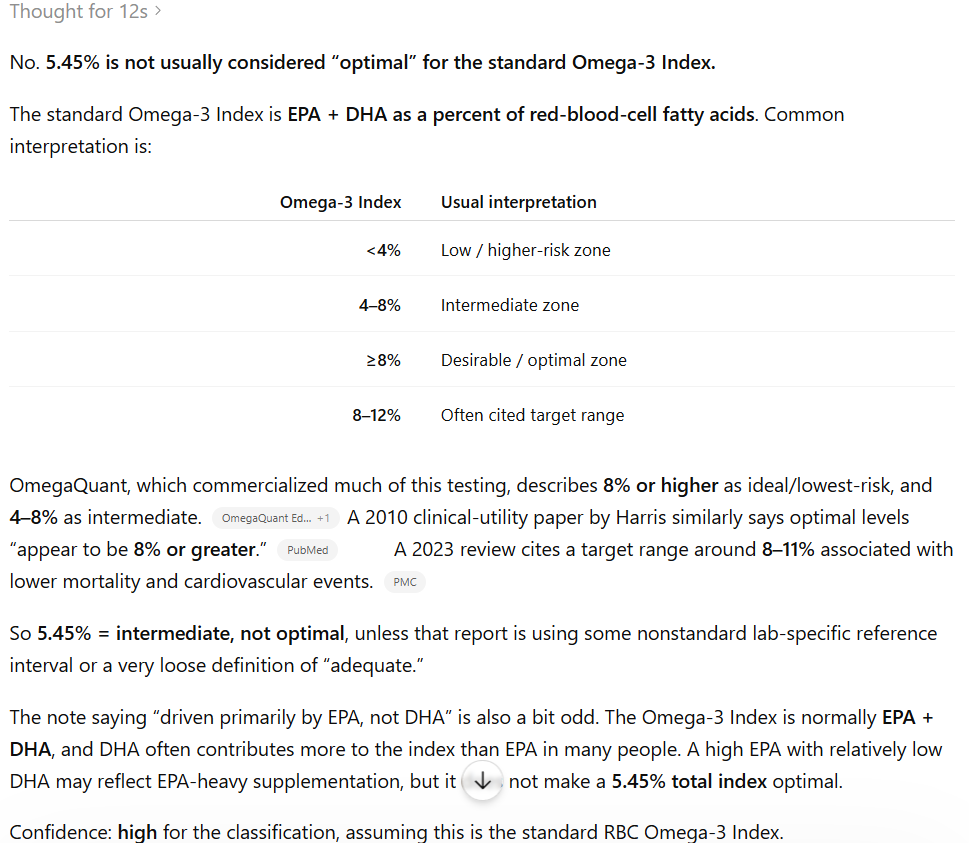
Just scanned parts of this, but a couple things caught my eye:

  1. what

  1. What definition of ā€˜optimal’ is used here?

Which AI is this?

1 Like

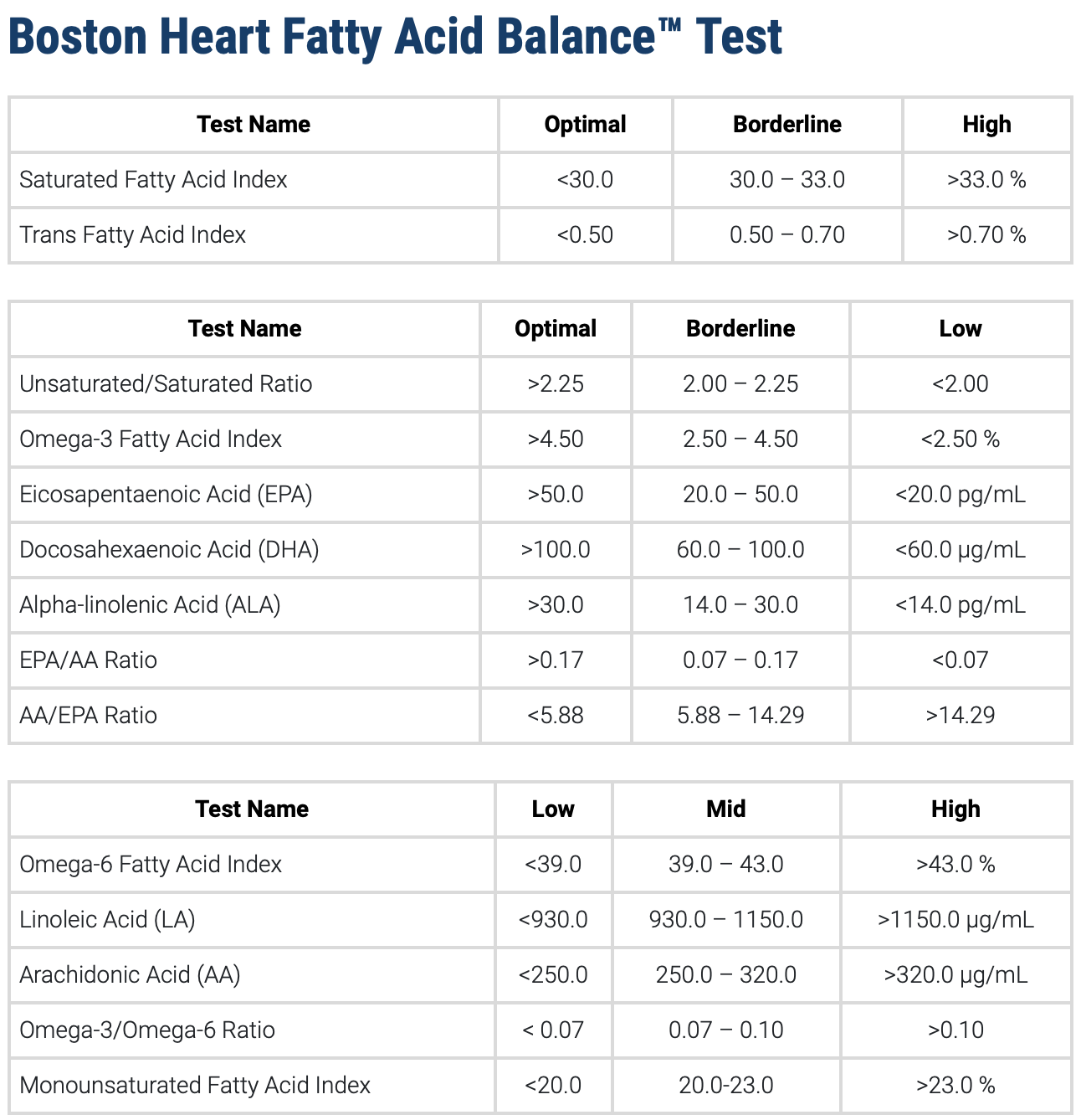
The test used is not OmegaQuant but Boston Heart Fatty Acid Balance.

They give >4.50% as optimal.


BTW I did an OmegaQuant test 2 years ago which put me around 10%.

Anyway I’m increasing my consumption of SMASH fishes to bump it up.

1 Like

In fact the Omega 3 index from the Boston Heart Fatty Acid Balance test is not the same as the Omega 3 index from OmegaQuant.
Basically it’s that same difference as fasting blood glucose vs HbA1C.

Gemini 3 thinking:

While both tests assess your omega-3 status, they are not the same. They measure fatty acids in different ā€œcompartmentsā€ of the blood, which results in different numerical values and clinical interpretations.

The primary difference lies in the specimen type: OmegaQuant measures fatty acids in the red blood cell (RBC) membranes, while the Boston Heart Fatty Acid Balance test typically measures them in the blood plasma.

Technical Comparison

Feature OmegaQuant Omega-3 Index Boston Heart Fatty Acid Balance
Measurement Site Red Blood Cell (RBC) Membrane Blood Plasma (Phospholipids)
Biological Window Long-term (~120 days). Reflects steady-state tissue levels. Short-term (days to weeks). Reflects recent dietary intake.
Optimal Range 8% – 12% > 4.5%
Fasting Required No (RBCs are stable regardless of recent meals) Yes (Plasma levels fluctuate significantly after eating)
Clinical Standard Based on the Harris/von Schacky protocol Proprietary Boston Heart methodology

Why the Numbers Differ

The numerical discrepancy (e.g., 8% vs. 4.5%) is due to how fatty acids are distributed in the blood.

  1. Red Blood Cells (OmegaQuant): The Omega-3 Index specifically measures the percentage of EPA + DHA relative to the total fatty acids in the RBC membrane. Because RBCs have a lifespan of about 120 days, this index acts as a ā€œmoving averageā€ of your omega-3 status, similar to how an HbA1c test measures long-term blood sugar.
  2. Plasma (Boston Heart): Plasma fatty acids are highly sensitive to what you have eaten in the last 24–72 hours. Even if you fast for 8 hours, the plasma lipid pool is more reflective of recent habits than long-term cellular integration. The total concentration of fatty acids in plasma is also different from the membrane bilayer, leading to a lower ā€œoptimalā€ percentage threshold.

Which One Should You Use?

  • For Long-Term Tracking: The OmegaQuant (RBC-based) test is generally considered the gold standard in nutritional research because it is less ā€œnoisy.ā€ It isn’t affected by a single meal of salmon or a missed supplement dose the day before the test.
  • For Comprehensive Lipid Profiling: The Boston Heart test is often bundled with other cardiovascular markers (like cholesterol balance and inflammatory markers). If your goal is to see a snapshot of all circulating lipids in the context of cardiovascular risk management, it provides a broader, albeit more transient, picture.

Summary of Interchangeability

You cannot directly compare a 6% result from Boston Heart to an 8% goal on the OmegaQuant scale. If you are tracking your progress over time—especially if you are adjusting supplementation or high-intensity training loads—it is best to stick with one methodology to ensure the data is longitudinally consistent.

@cl-user , I may have missed this if you posted it earlier, but is there a ā€œresearch dateā€ specified in any of the primary genetics reports you’ve gotten with regard to identifying specific genetic / SNP / Allele reports as associated with specific problems/disease or benefits?

I see a constant flow of new research, like these I posted yesterday:

So, obviously, our understanding of genetic predispositions or beneficial alleles is something that is changing every month, as these new research papers come out. But, how exactly do we know if these new research paper findings are being integrated into the platforms that we’re using to identify these software platforms (I’m not sure what you used to identify the specific deleterious genes / SNPs / Alleles - was it the Genome processing site, or some intermediate software platform, or Claude?).

Do you have a strategy for tracking how this new knowledge that is published every month, gets updated in the software we use to evaluate our genome, and mapped directly onto our genomes, so we have a better understanding over time as the science progresses?

As data comes in, you need to rerun the analysis, I recon. It could be a schedule, like once a month. When I got my sequencing done, it was first a super limited set done years ago when 23andme was just starting out. So I had to repeat it with greater precision some years later, but progress is still being made. Therefore I see another sequencing in my future (it’s at 100x atm?).

It’s a dual process. More snps data is flowing in all the time and the sequencing is getting more fine grained. This means both will need to be regularly updated.

The minimum usable sequencing covering 100% of the genes is 30x but you can still have some missing or low quality ones. At 100x the probability of those is virtually eliminated.

Gemini:
Key Differences Between 30x and 100x Sequencing

  • Accuracy and Confidence: 30x is sufficient for most clinical-grade analyses and general health screenings. 100x provides higher confidence in calling rare variants and significantly reduces the false-positive/negative rates compared to lower depths.
  • Application Focus:
    • 30x (Standard): Ideal for identifying inherited (germline) diseases and routine personal genomics.
    • 100x (Deep): Better suited for cancer genomics, where detecting low-frequency mutations in heterogeneous tumor samples requires higher depth (often 100x–200x) to distinguish true mutations from noise.
  • Cost vs. Utility: 30x offers the best ā€œvalue for moneyā€ for the vast majority of consumers, as 100x often provides marginal added value for standard ancestry or general health reporting.

In summary, 30x is the standard for high-quality, comprehensive personal genomics, whereas 100x is a specialized, ā€œultra-deepā€ approach for finding rare or complex mutations.

Have you done a full genome sequencing i.e. 100% of the genome or another microarray like 23andme that covers 0.1% or so of the genome?

I’m still in the learning phase because this entire topic is way over my head… but in the meantime, AI is telling me 100x will be 1k or so.

Have you by chance found it for less?

I do believe 100x is better, but I don’t yet understand HOW much extra value I get for the spread vs what health benefits I could get if I spent that money on something else.