I think both of those statements are are accurate… I don’t want to repeat the cardiovascular disease thread discussion here, just saying that higher APOB trends are something I’m going to watch/measure and work to reduce. Nobody knows yet how the beneficial effects of rapamycin on the heart balance out against any possible lipid increases, in humans.
3 Likes
The data of people with genetically PCSK9 loss-of-function says otherwise.
Yes it is, it increases atherogenic lipoprotein concentration, hence it causes heart disease. You’d have to show practically impossible evidence that it would counter negative effects from the increase in atherogenic lipoproteins. Mice studies cannot counter RCT’s and genetic data in humans, that would make no sense.
If a fallacious appeal to authority argument is going to be used, it should be done for an expert lipidologist like Allan Sniderman or Thomas Dayspring. Not a pediatric endocrinologist. In an earlier video that was linked of Lustig, he literally confused a table of studies with a meta analysis. The paper which also argued against meta analysis as a method.
I also doubt Joseph understands what apoB is, since Lustig seems to be fond of measuring triglycerides, which apoB also measures the lipoprotein concentration of.
ASCVD and heart disease and risk is really easy to understand, just people like Lustig wants to be Lustig (It’s Swedish for funny) and do a reverse Occam’s razor and muddy the waters.
1 Like
Forgive me. I didn’t realize you were an MD. If yes then, of course, the studies would mean more to you than to me. If you were not a cardiologist, I would take the views of a pediatric endocrinologist over yours any day of the week.
I think you missed the part where I said it was a fallacy.
Arguments and evidence stand on their own two feet.
I mentioned Thomas Dayspring and Allan Sniderman.
If you’re not going to read any science papers yourself, why not listen to Sniderman instead?

Oh yeah, humans are WAY more vulnerable to cardiovascular disease than mice, which barely die of it.
ApoB is mostly bad when oxidized/glycated - thus reductions in inflammation/ROS [with BOTH rapamycin+metformin+taurine+carnosine] should reduce much of the risk associated with increased lipids.
3 Likes
Citation needed, and mechanistic speculations isn’t high quality evidence, it is actually next to the lowest on the evidence hierarchy. Until there is (1) genetic studies showing significance of inflammation/ROS (2) randomized controlled trial of a drug via the same mechanism, then it is too early to say.
And if that was the case, just take the drug proven in a randomized controlled trial.
To gamble on mitigating causal risk with increased lipoprotein concentration via other mechanisms, is just an unnecessary gamble imo. When there are safe drugs to lower said lipoprotein concentration.
1 Like
Randomized controlled trials for cardiovascular disease are meaningless. They are too short. I could send you a link, but why bother?
As I have shamelessly posted many times from "Rapamycin for longevity: opinion article" by
Mikhail V. Blagosklonny
“If you wait until you are ready, it is almost certainly too late.” ~ Seth Godin
2 Likes
No, they establish a baseline which you can extrapolate from using genetic studies.
And short term CVD trials do show beneficial effects.
But this discussion is done because I don’t think you’re serious.
Are you using ChatGPT? That paper doesn’t exist.
3 Likes
A couple weeks ago I was doing research on Trametinib using ChatGPT and I asked it for academic references. I spent the next hour trying to find any of the references it quoted. I couldn’t, they were all made up.
4 Likes
I had the same experience - it makes up papers! Really makes you wonder about it.
3 Likes
According to Dr. Lustig and most of the other experts, avoiding sugar plays the most important role in prevention of atherosclerosis and heart disease. Insulin resistance affects development or worsening of hyperlipidemia. Low carb diet is probably the most reasonable.
2 Likes
Sugar only plays a role in as far as it reduces apoB, the vast majority of apoB is due to saturated fat, so for most people a low carb diet will have the opposite result.
apoB measures all atherogenic lipoproteins, including those with triglycerides.
But it’s possible to have a healthy low carb diet, replacing saturated fat for polyunsaturated or monounsaturated fat. And measuring apoB every now and then to make sure things are (or are going) in the right direction.
Search “LDL” on the keto subreddit for some morbid wednesday reading 


“We still have LDL denialists out there”
“It’s one of the most dangerous things I see, actually”

I have a friend who did keto and had sky-high apoB. Tbf it was meat-based keto, not MUFA-based keto
Jose Ricon also speculated that the increasing prevalence of keto may increase heart disease risks in people in the future
I tried plant-based keto for like a month and while my panels weren’t terrible, they were still elevated a bit. Even olives and nuts have SOME saturated fat in them, and the unsaturated fats don’t increase HDL that much (HDL seems more genetically determined)
2 Likes
Saturated fat increases apoB → apoB causes heart disease → keto often has a lot of saturated fat → heart disease will increase.
Yes, I’ve seen some people try high fat diets on reddit with a lot of nuts, etc, yet have high apoB. I think it might be because of the some amount of SFA in them. Or that the replacing SFA with PUFA/MUFA discovery breaks down with high dietary fat intakes¸ I’m not sure.
1 Like
N=1
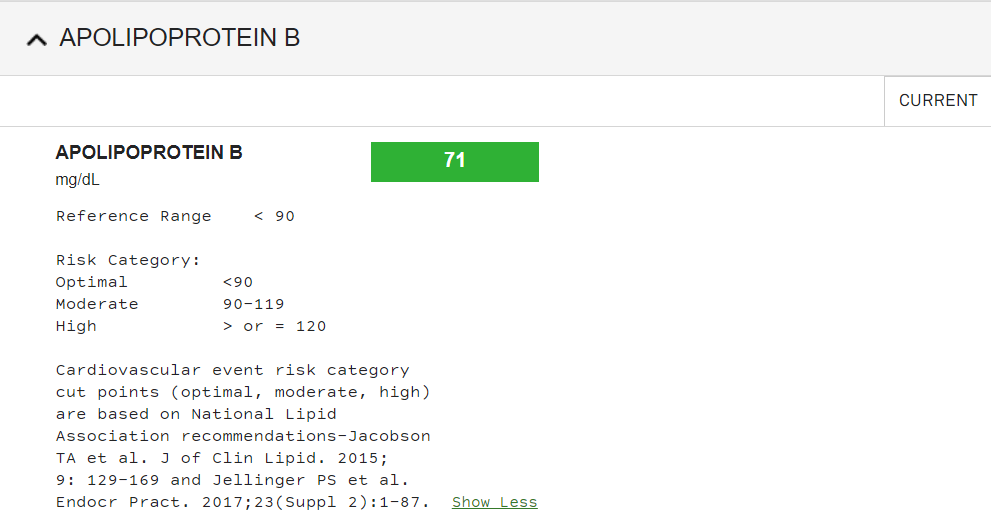
I am 82 and in very good health with no heart problems.
I have been on keto in the past and I still eat a lot of saturated fats in the form of milk, cream,
MCT oils and steaks. All of my cholesterol levels are currently in normal ranges. My apoB is good.
2 Likes
Have your cholesterol levels ever been out of range? It seems like you won the genetic lottery!
1 Like
Yes, whenever I’ve done keto my LDL skyrockets. It hit 300 once. We are all a bit different.
1 Like