From rejuvenation experiments in mice and AI-powered drug discovery to new longevity clinics and biotech products, the 7th TimePie Longevity Forum in Shanghai offered a closer look at the research and technologies shaping the field.
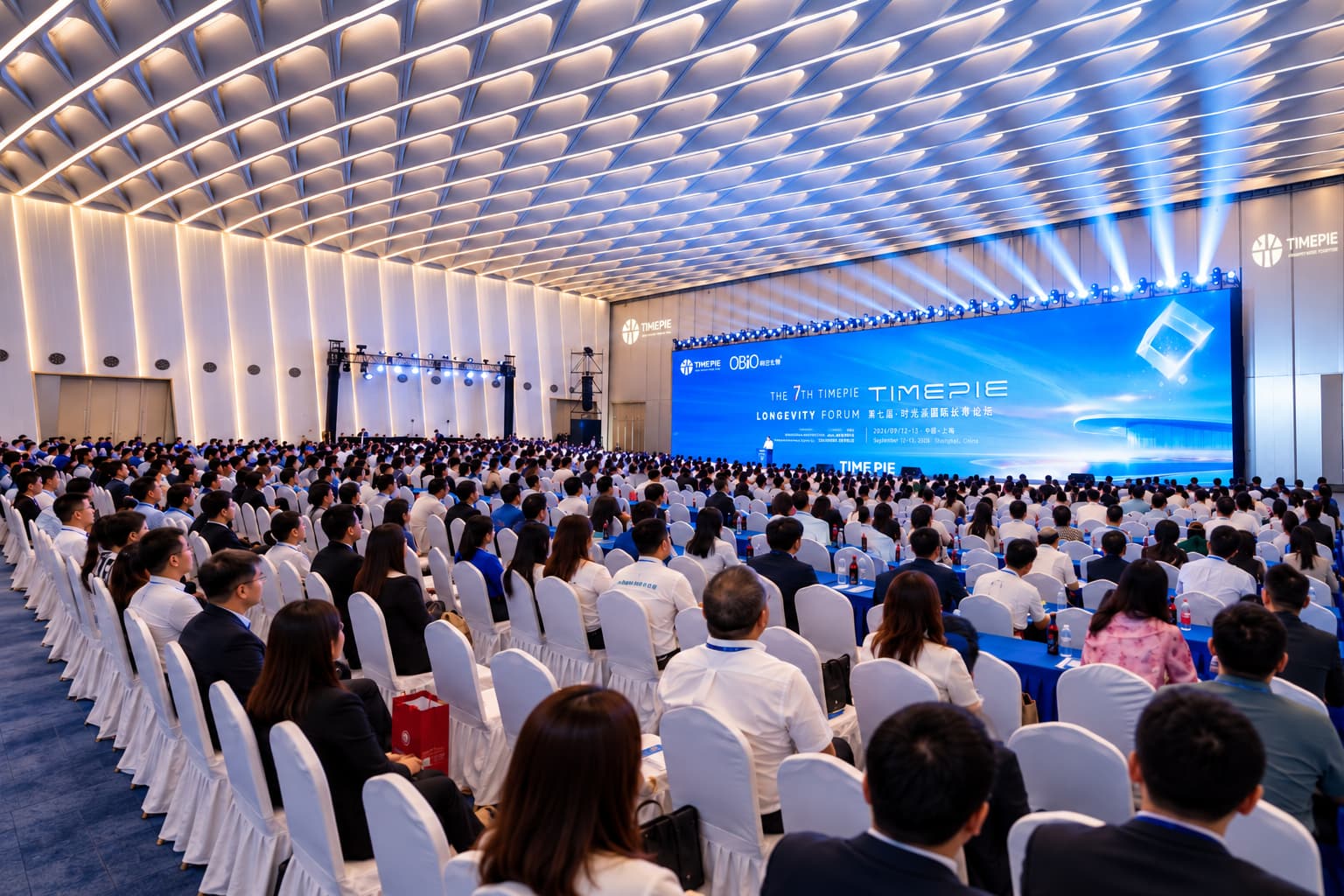
A biological clock that measures the pace of aging, a drug being tested for age-related conditions, a biotech company developing new therapies, and a clinic offering longevity-focused care. These seemingly different efforts came together at the 7th TimePie Longevity Forum, which brought around 3,000 participants to Shanghai in September 2026.
Big Pharma Mines Aging Biology
GLP-1 drugs may be the most familiar link between Big Pharma and longevity, but drugmakers are also turning to the biology of aging for new therapeutic possibilities. Researchers are examining how aging changes the body and whether those insights could lead to treatments for age-related conditions.
At Novartis, researchers are exploring regenerative treatments for age-related muscle loss and osteoarthritis. Jimmy Elliott shared clinical findings that show both the promise and the challenges of this approach. Bimagrumab increased lean body mass, but brought limited additional improvements in physical function. Another candidate, LNA043, showed early evidence of cartilage regeneration, although a subsequent Phase IIb trial did not meet its primary endpoint. Turning these biological effects into meaningful benefits for patients remains a challenge.
At Genentech, Heinrich Jasper is investigating why our tissues become less capable of repairing themselves as we age. His experimental work on sPtk7-related signaling revealed an intriguing contrast: a pathway that helps damaged tissue repair itself can interfere with regeneration when it remains active in aging tissues. Understanding such differences could help researchers find better ways to restore the body’s regenerative capacity.
Slowing Aging — But How Do We Know?
Biological aging clocks aim to capture changes in the body that chronological age cannot. But questions persist about what they actually measure and whether they can tell us if an intervention is slowing aging.
Columbia University’s Daniel Belsky discussed the distinction between biological age and the pace of aging, arguing that the latter may be more informative in intervention studies. In the CALERIE calorie-restriction trial, DunedinPACE detected a treatment-associated reduction in the estimated pace of aging, whereas two other epigenetic clocks did not.
Researchers are also broadening the types of data used to study aging. Morten Scheibye-Knudsen presented AI-based methods that analyze cell nuclei, blood smears and tissue images for aging-related features. Jiucun Wang of Fudan University discussed composite physiological measures associated with future frailty, disability and cognitive decline.
The reliability of aging measures is particularly important for evaluating interventions. Researchers are testing approaches ranging from rapamycin and senolytics to gene therapy and regenerative medicine, including combinations of treatments. At the nonprofit LEV Foundation, Aubrey de Grey’s Robust Mouse Rejuvenation program is combining several of these approaches in older mice, tracking both survival and health outcomes.
Longevity Takes Shape in Clinics and Biotech
Longevity medicine is moving into hospitals as well as private clinics. At the forum, Beijing Geriatric Hospital vice president Xiaopeng Liu shared the hospital’s experience developing longevity medicine services that combine nutrition, chronic disease management and multidisciplinary care. Anant Vinjamoori of Hims & Hers proposed pooling data from standardized patient trials across clinics and healthcare companies to build evidence on longevity interventions.
For companies focused on longevity, the search for new interventions extends beyond conventional drugs. Linda Kenney of Mechanobiologics presented research on low-frequency ultrasound, including experiments in mouse models of Alzheimer’s disease. The work explores the potential of physical stimulation to treat age-related conditions, although the approach remains experimental.
Longevity medicine is also drawing interest from established biotech companies. Obio Technology, known as China’s first publicly listed cell and gene therapy (CGT) company and a co-organizer of the forum, announced plans to establish a longevity clinic, extending its activities into clinical services.
Investing in Longevity’s Next Steps
The growth of longevity medicine has created new demands for clinical evidence, professional standards and research support. In response, the TimePie Longevity Forum has broadened its scope to include specialized sessions and initiatives addressing these needs.
Funding new research is one part of that effort. Proceeds from the previous forum supported four early-career scientists through the second round of TimePie’s research grants.
Clinical practice presents a different set of needs, particularly around training and professional standards. The newly established Global Association for Longevity Advancement (GALA) aims to address these through clinician education and collaboration. A guide jointly released by TimePie and Frost & Sullivan examines longevity interventions and their practical applications.
The previous year’s forum was still yielding new developments. At this year’s gathering, Kejun Ying of Stanford University School of Medicine discussed a meeting report he had led on the sixth TimePie Longevity Forum, with contributions from speakers including Steve Horvath and Ana Maria Cuervo. Shortly after the seventh forum concluded, the report appeared in Nature Aging.
Much of the work discussed in Shanghai is still unfolding, from testing new interventions to developing clinical practices and professional standards. When the 8th TimePie Longevity Forum takes place on September 11–12, 2027, there will be more progress to examine and questions to revisit.
Further details are available at timepielongevityforum.com.