Yes but by apologizing it’s again trying to make you feel better. It interprets your language as hostile emotional interaction so it will treat you like you’re a psycho who can explode at the drop of a hat. You really want neutrality. And it’s harder to elicit than we imagine.
3 Likes
One of the reasons I moved over to Gemini. OpenAI seems far too focused on consumer engagement as a business model, getting you to “like” and “relate” to the AI as a person, and become attached to it. It’s basically Facebook for LLMs.
6 Likes
Yes. But I find all models have the same vulnerabilities—it’s a matter of degree of sycophancy, not finding that white unicorn that’s free of bias.
2 Likes
Perhaps also an issue of how you design your prompts. I have always add: “avoid sycophancy”, and related things, see below:
Role: You are a Longevity Research Analyst and Science Journalist. Your audience consists of scientifically literate longevity biohackers, biotech investors, and clinicians.
Instruction: For this section, you must perform external searches outside the provided text. Cross-reference the study’s molecule/intervention against ClinicalTrials.gov, DrugBank, and PubMed for safety data. Do not hallucinate safety; if data is absent, state “Data Absent.”
Provide research article titles, dates, and Embed direct URLs in Markup to any external references cited. Double check the accuracy and accessibility of all sources and weblinks included in your response to validate that they are the papers you are saying they are.
Tone: Objective, critical, “Tell it like it is.” No hype.
7 Likes
Yeah, and your point is? 
2 Likes
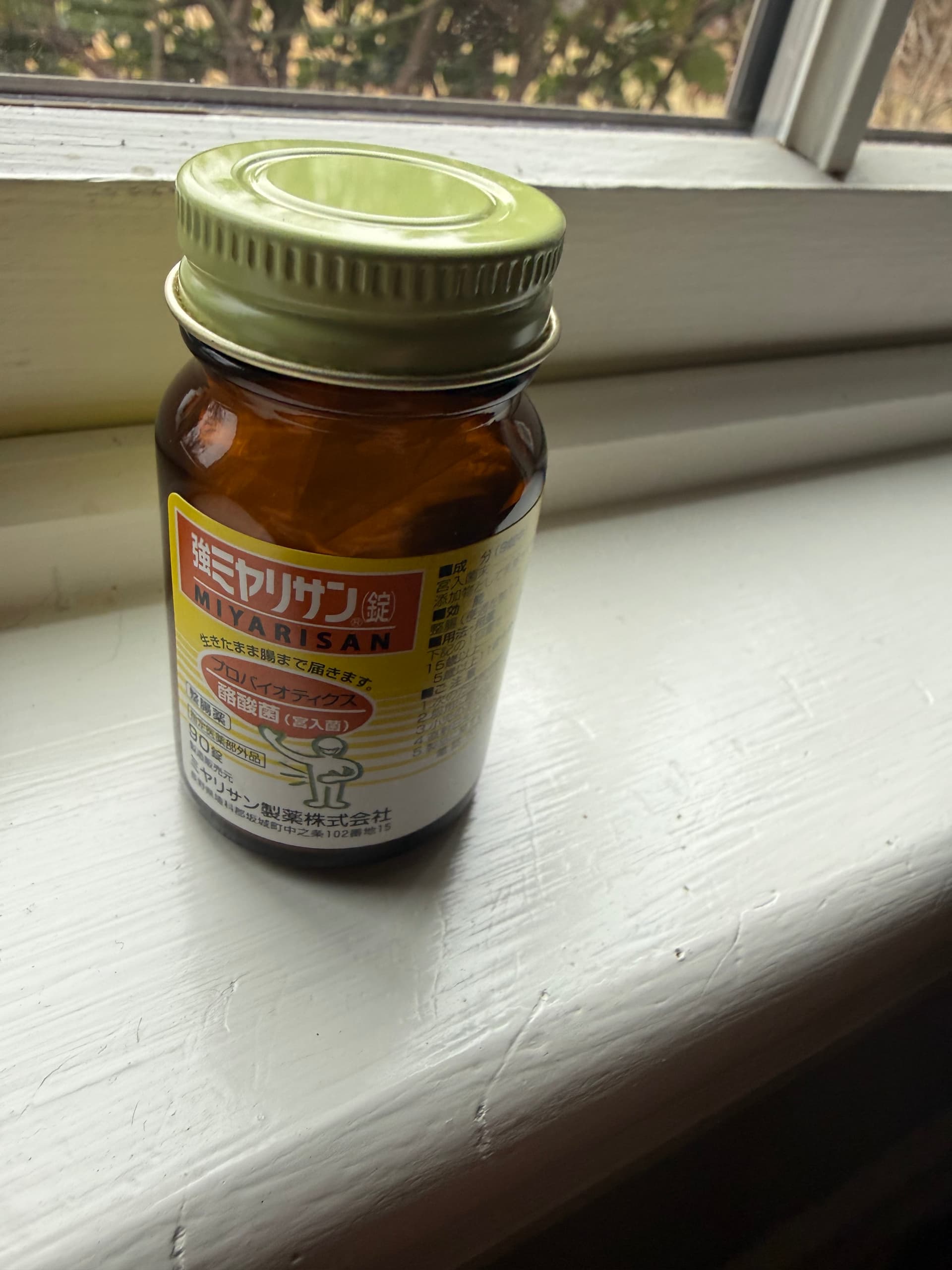
Took a bit but got the ‘right’ stuff from Japan. Took it with the other two ingredients yesterday. We will see if any changes. I’ll do the visual Bristol Chart and maybe a stool sample.
5 Likes
I’ve had acid reflux and metabolic acidosis for about five years, which makes my gut volcanic. After taking tributyrate for two weeks, my symptoms have been much reduced and nearly eliminated.
4 Likes
Have you tried any citrate?
1 Like
No, but I take baking soda as an alkalizing agent.
You have mentioned citrate many times in your posts. How much do you take and what does it do for you?
1 Like
I take a lot. It operates on the core acetlatyion pathway so best not to take as much as i do without careful monitoring.
1 Like
Please (if you can) do pre and post HS-CRP measures, and let us know if it changes things.
3 Likes
Exactly what I got. I have been hitting it pretty hard for a couple weeks. 3 pills with my 2 meals a day. I have kefir with each meal in small amounts to help feed it. The difference is subtle but I can tell. I’ll buy again when this is gone. This and the alpha cyclodextrin had to come from Japan. Go Japan.
3 Likes
Another new paper related to Butyrate:
Research Analysis: Gut-Muscle Axis Crosstalk in Sarcopenia
The “Gut-Muscle” Loop: How Dysbiosis Drives Sarcopenia and Why “Muscle Probiotics” May Be the Next Frontier
This review, published in Frontiers in Microbiology by researchers at Henan University of Chinese Medicine, synthesizes the emerging evidence for a bidirectional “gut-muscle axis” in the pathogenesis of sarcopenia (age-related muscle loss). The authors argue that sarcopenia is not merely a localized tissue failure but a systemic collapse driven by a “vicious cycle” of gut dysbiosis, chronic inflammation (inflammaging), and anabolic resistance.
The central thesis is that aging degrades the gut microbiome—specifically depleting butyrate-producing genera like Faecalibacterium—which triggers a cascade of systemic inflammation (LPS translocation) and insulin resistance that actively catabolizes muscle tissue. Crucially, the paper highlights that this relationship is bidirectional: contracting muscle releases myokines (Irisin, BDNF) that maintain gut integrity. When muscle fails, the gut degrades further, accelerating the cycle. The review evaluates therapeutic interventions including Fecal Microbiota Transplantation (FMT), next-generation probiotics (e.g., L. plantarum TWK10), and targeted metabolites (Butyrate, Niacin) to break this cycle.
Context:
- Date: 2026-01-13
- Source Paper: Gut-muscle axis crosstalk in age-related sarcopenia: mechanisms and therapeutic targets
- Institution: Henan University of Chinese Medicine, China.
- Journal: Frontiers in Microbiology
- Impact Evaluation: The impact score of this journal is ~4.0–5.2 (Impact Factor) / 8.5 (CiteScore), evaluated against a typical high-end range of 0–60+ for top general science. Therefore, this is a Medium-High impact journal, highly respectable in microbiology but distinct from elite general medical journals like NEJM or Lancet.
4 Likes
RapAdmin "Contraindication: SIBO (Small Intestinal Bacterial Overgrowth)**
Trade-off: If you have SIBO, this entire protocol (except Tributyrin) is contraindicated. Adding fermentable starch (GBF) or blocking absorption (Acarbose) will feed the bacteria in the small intestine, worsening SIBO symptoms significantly. In this case, use Tributyrin only(softgels), as it absorbs before reaching the bacterial overgrowth"
I am most grateful to RapAdmin for this warning, which caused me to belatedly test for SIBO, which showed that I have this. Not surprising, given that I have IBS-D.
Will try to get hold of Rifaximin, an antibiotic with limited negative gut effects and the prime treatment for SIBO.
2 Likes
How did you order from Japan? What were the costs including S&H?
1 Like
More good news on Butyrate:
Gut Check: Microbiota-Derived Butyrate Rescues Mice from Mitochondrial Multimorbidity
Mitochondrial disease is typically viewed as a cellular energy crisis. This study flips the script, suggesting the fatal blow in mitochondrial dysfunction may come from the gut. The researchers generated a mouse model with an inducible, whole-body deletion of Tfam (a key mitochondrial transcription factor) in adulthood, causing rapid, systemic organ failure. They discovered that mitochondrial collapse in the host destroys the intestinal barrier, altering the gut environment (likely via oxygen levels) and wiping out commensal bacteria that produce butyrate—a critical short-chain fatty acid (SCFA).
The “Aha!” moment: The resulting systemic collapse (sarcopenia, kidney failure, neurodegeneration) was not just due to the missing mitochondria in those tissues, but partly due to the missing butyrate. By performing fecal transplants from healthy mice or simply feeding the sick mice tributyrin (a butyrate prodrug), they restored intestinal barrier integrity via epigenetic remodeling (histone butyrylation). Astonishingly, this single intervention delayed widespread organ failure and significantly extended lifespan, proving that gut metabolites can bypass genetic mitochondrial defects to sustain life.
Open Source Paper: Butyrate extends health and lifespan in mice with mitochondrial deficiency
Context: Centro de Biología Molecular Severo Ochoa (CBM), CSIC-UAM, Madrid, Spain. Journal: bioRxiv (Preprint). Posted January 14, 2026. Impact Evaluation: As a preprint, this manuscript has not yet been peer-reviewed and thus does not have an Impact Factor.
Novelty
We knew butyrate was “good for the gut.” This paper demonstrates that systemic mitochondrial collapse kills via the gut-microbiota axis. It proves that restoring a single metabolite (butyrate) can compensate for a genetic defect (TFAM deletion) that theoretically should be fatal to every cell, suggesting mitochondria and microbiota share a compensatory metabolic network.
Critical Limitations
- Progeroid Model Bias: The iTfamKO model is an extreme catastrophe model (rapid, total mitochondrial loss). Results may not translate to the subtler mitochondrial decline seen in natural human aging.
- Massive Dosage: The mice were fed a diet of 10% Tributyrin. This is a pharmacological/macronutrient dose, not a simple “supplement” dose.
- Sex Bias: Experiments were primarily female to allow co-housing without aggression; sex-specific microbiome differences are well-documented and not fully accounted for here.
- Translational Uncertainty: Human epigenetic regulation via histone butyrylation is less mapped than in mice; assuming identical gene targets is speculative.
The Strategic FAQ
1. Does this apply to natural aging, or just “broken” mitochondria?
A: The paper utilized a Polg mutator model (accelerated aging) and saw similar dysbiosis. This suggests the mechanism holds for DNA-damage-induced aging. However, the lifespan extension in wild-type mice is unproven in this specific paper. [Confidence: Medium relevance to aging].
2. Can I just eat fiber to get this effect? A: Yes, if you have the bacteria. The paper explicitly shows that the bacteria (Clostridiales) are wiped out by mitochondrial stress. If you lack the bacteria, eating fiber won’t produce butyrate. Tributyrin bypasses the need for the bacteria.
3. Does this conflict with Rapamycin? A: Unlikely. Rapamycin inhibits mTOR; Butyrate inhibits HDACs. They act on different pathways. In fact, Rapamycin often alters the microbiome; stacking butyrate might hedge against potential rapamycin-induced dysbiosis.
4. Is the weight loss in the mice due to the treatment? A: No, the untreated sick mice lost weight (cachexia/sarcopenia). Tributyrin prevented the weight loss and preserved muscle mass. This is an anti-catabolic effect.
5. How does this relate to “Leaky Gut”? A: This is a definitive “Leaky Gut” paper. It provides a molecular mechanism (H3K27bu loss → downregulation of Tight Junctions) connecting mitochondrial health to barrier permeability.
5 Likes
1 Like
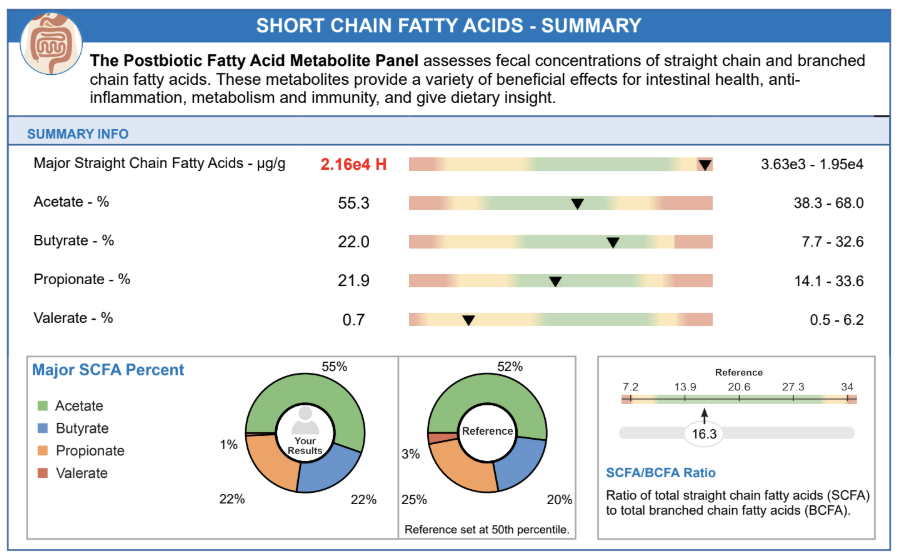
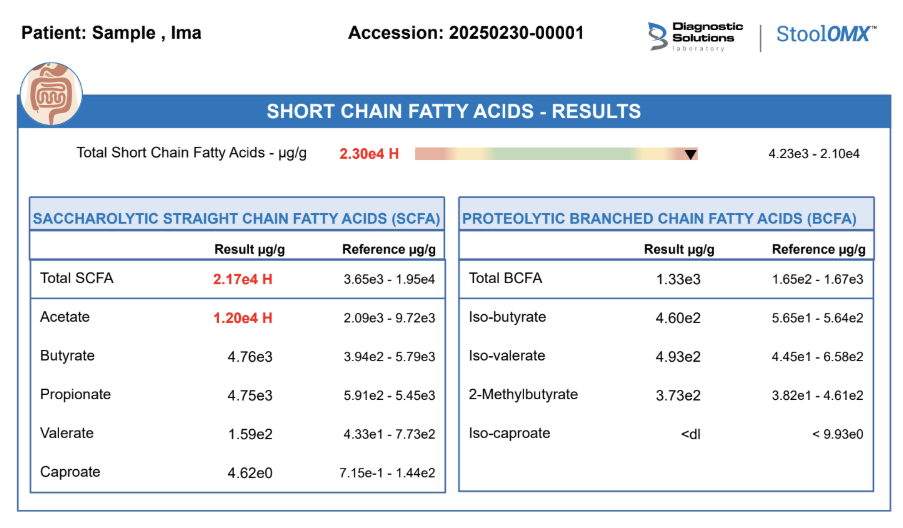
My doc had me do the GI-Map with StoolOMX add on. It included butyrate in the short chain fatty acids section. Mine was quite high due to my fiber intake.
(Graphics are from the Rupa sample report)
6 Likes
I’m liking the use of SunFiber in my coffee each morning. I add about 20 grams (and also about 10 grams of inulin) and no gastro issues at all.
So, I’m buying more SunFiber and was checking on the best priced sources:
Pricing Information
As of January 18, 2026, the procurement market for 100% Pure PHGG (Partially Hydrolyzed Guar Gum) or Sunfiber® is currently experiencing a “retail efficiency paradox” where high-volume retail canisters (7.4 oz to 8 oz) frequently outperform larger “bulk” containers in cost-per-gram.
The following ranking utilizes a 20g clinical dose (the upper-tier therapeutic dose for gastrointestinal intervention) to establish a standardized cost-ceiling for procurement planning.
Sunfiber® PHGG Price Ranking (Standardized to 20g Serving)
| Rank | Brand Name | Vendor | Form | Total Grams | Price (USD) | Cost/20g Dose |
|---|---|---|---|---|---|---|
| 1 | Healthy Origins Healthy Fiber | Walmart | Powder | 224g | $16.67 | $1.49 |
| 2 | Sunwarrior Organic Prebiotic Fiber | Sunwarrior | Powder | 210g | $17.97 | $1.71 |
| 3 | Bluebonnet Sunfiber® Prebiotic | iHerb | Powder | 210g | $18.36 | $1.75 |
| 4 | Doctor’s Best Prebiotic Powder Sunfiber | Vitacost | Powder | 210g | $19.99 | $1.90 |
| 5 | Essential Stacks PHGG | Direct | Powder | 210g | $20.27 | $1.93 |
| 6 | Tomorrow’s Nutrition Sunfiber® (Bulk) | GNC | Powder | 630g | $64.99 | $2.06 |
| 7 | Tomorrow’s Nutrition Sunfiber® | Target | Powder | 210g | $24.99 | $2.38 |
| 8 | Natural Factors Reliefiber® | iHerb | Powder | 150g | $20.97 | $2.80 |
| 9 | Regular Girl Original Powder | Direct | Powder | 210g | $29.99 | $2.86 |
| 10 | Labo Nutrition Bioactive Organic Fiber | eBay | Powder | 180g | $31.00 | $3.44 |
Procurement Notes
-
Bulk Winner: The Tomorrow’s Nutrition 1.39 lb (630g) “90-Day” canister is the largest verified standalone PHGG unit currently in stock for domestic U.S. shipping.
-
Price Inversion Warning: Contrary to typical procurement logic, the “Bulk Winner” ($0.103/g) offers no price advantage over smaller retail units. In fact, the Healthy Origins 7.9 oz canister ($0.074/g) is 39.2% cheaper per gram. Procurement agents should prioritize “stacking” multiple Rank 1 units rather than consolidating into the bulk SKU to maximize capital efficiency.
-
Raw Material Scarcity: Major bulk wholesalers (e.g., BulkSupplements, Nutricost) currently do not have a verified 100% PHGG SKU in stock for the retail market; their available “Guar Gum” inventories consist of non-hydrolyzed gelling agents, which are excluded from this analysis per task constraints.
-
Formulation Logic: Sources such as Regular Girl (Rank 9) include a probiotic (Bifidobacterium lactis), which accounts for the significantly higher cost per gram of fiber. Unless a synbiotic blend is clinically required, pure PHGG sources (Ranks 1–4) provide the highest utility per dollar.
-
B2B Alternatives: For true bulk (25kg drums), procurement must move to wholesale ingredient suppliers like Jeeva Organic or Ingredi. These require custom quotes and often a business EIN, but they can lower the cost to sub-$0.04/g ($0.80 per 20g dose) at those volumes.
-
Stock Alert: Avoid eBay listings for bulk PHGG that do not specify the manufacturer; “Sunfiber®” is the patented material from Taiyo International. Generic “PHGG” often lacks the low-viscosity properties and clinical backing of the branded material.
4 Likes
Holy Moses, 20g?! Amazing. That seems quite a bit! That said there’s research out there that 40g a day of resistant starch fiber measurably cuts visceral fat, while less than 40g does not. So, quantity definitely has a quality of its own, as misattributed to what Stalin supposedly said (and whose atrocious nutrition did not help him live past age 74).
3 Likes