Sorry my bad. I’ll have to double check though because the article might have actually been about Citrate (not 100% sure) but I remember thinking of John (the guy in here that loads up on citrate) when I read the article.
fyi- I did try citrates a while back, but I felt they caused indigestion, in other words I felt full in the morning when woke up, as if my food wasn’t processed, just an N=1 others may have different experiences.
thanks @RapAdmin and @CronosTempi I just ordered some and try it when they arrive. Now when I think of it my dad used to make it when I was a kid, but the taste was rather mild and buttery (if I remember correctly) as opposed to spicey sour from the store bought kefir.
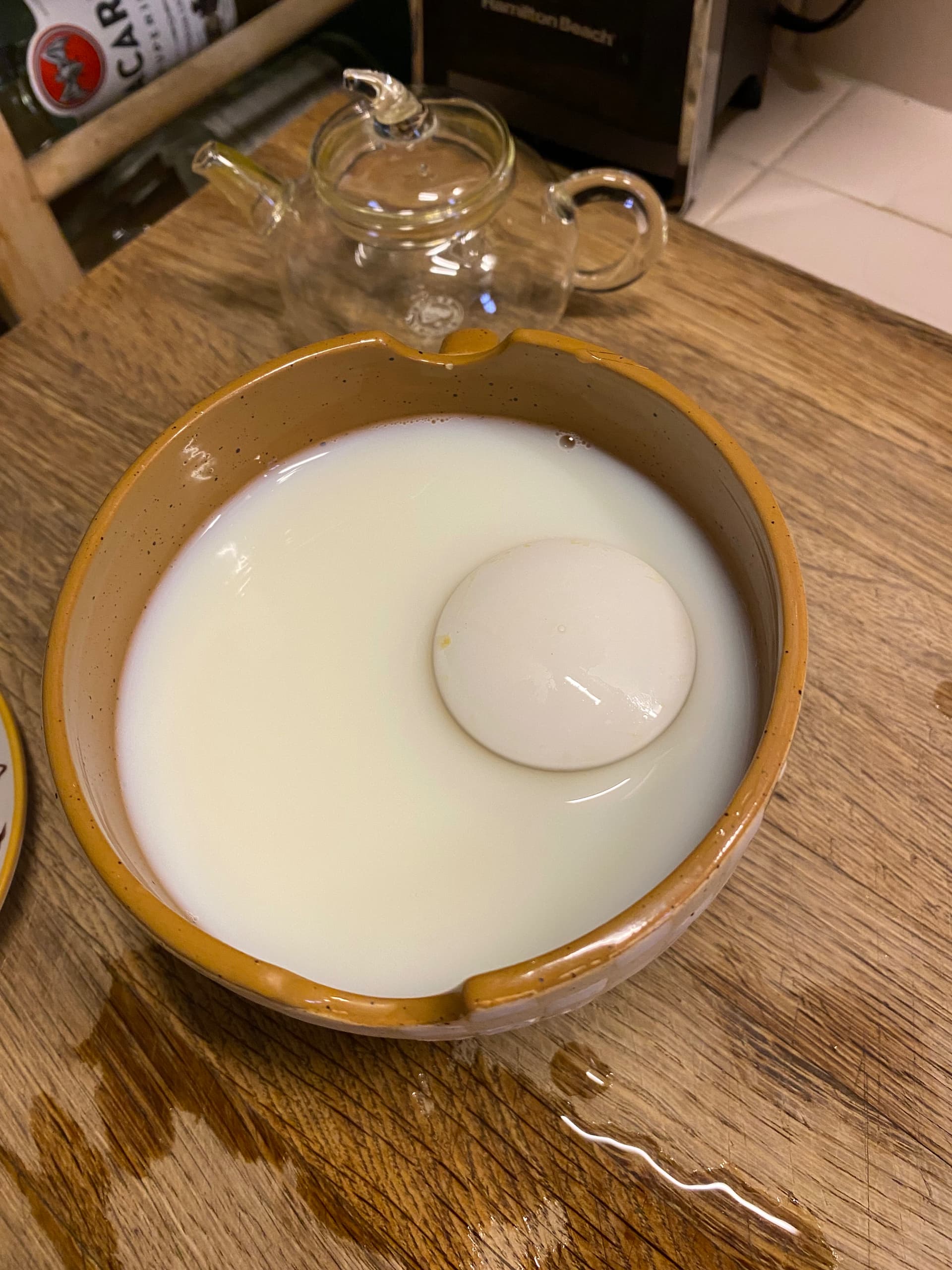
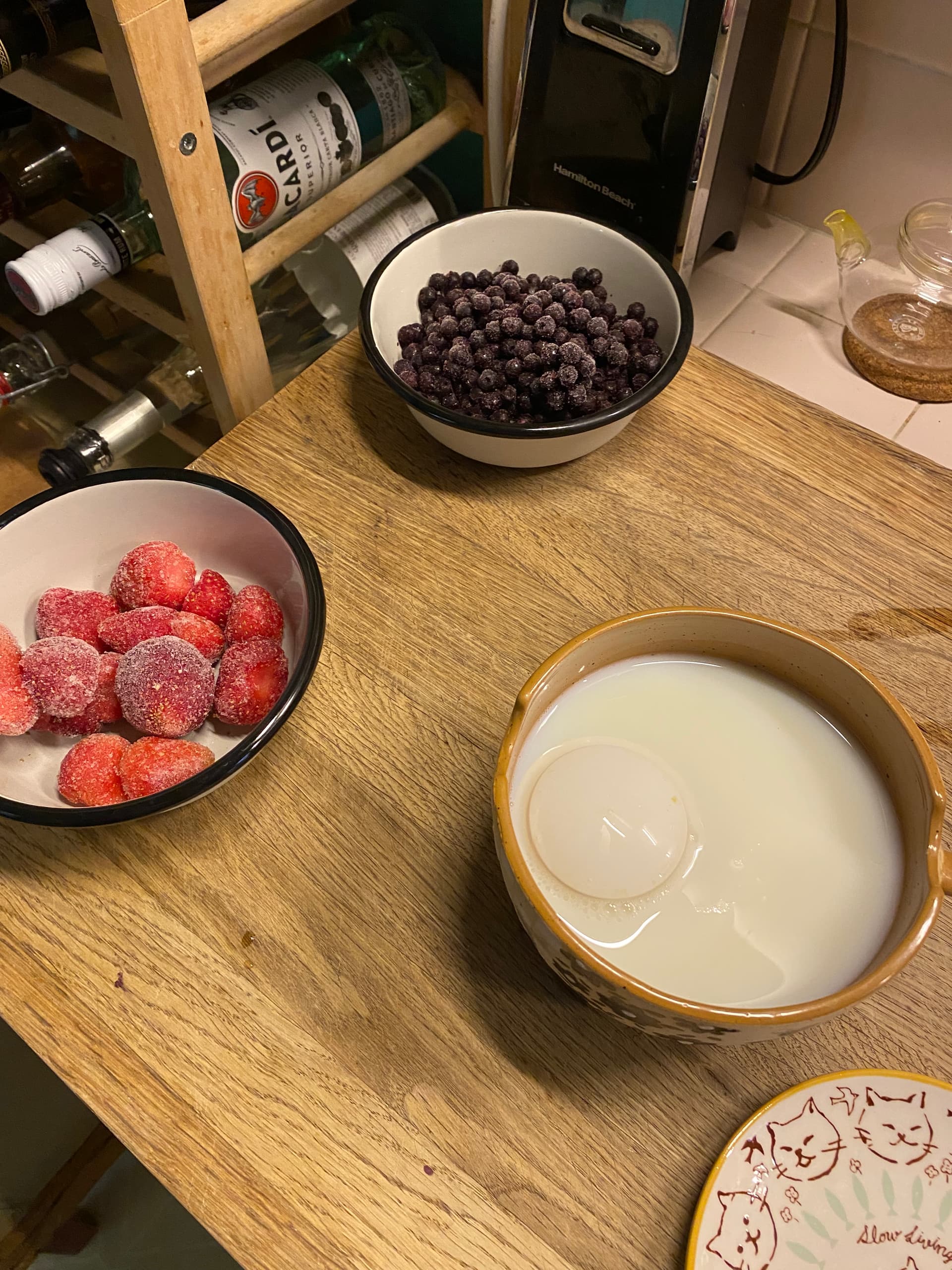
I make my kefir from nonfat milk. However, I do not drink it straight. I add a small dab of TJ’s peanut butter (100% peanuts, unblanched, unsalted) - this adds a bit of fat. I throw in a few frozen berries. I blend with a hand blender. This rather changes the taste - in any case, I like it.
Also, once the kefir is formed, you don’t have to drink it immediately - instead, you can place the whole thing in the fridge (including the floater with grains), where you can keep it for 2-3 days before consuming. If you drink kefir 1-2 times a week, you can keep the whole process in a loop: drink kefir, rinse floater/grains, immediately make the next batch, when ready put in fridge, drink it 2-3 days later, and repeat. Of course if you drink more frequently, you skip the refrigeration part, just keep going - make, drink, make. But if you travel or for whatever reason can’t make/drink kefir, you just store the grains in the fridge until you’re back on schedule. It’s important to keep the grains clean (without particles from previous kefir batches), because if the milk/kefir goes a touch “off”, that introduces undesirable bacteria and yeast strains and the grains can go bad and need to be thrown out. So, rinse the grains and clean the floater thoroughly after each batch is made.
Anyhow, that’s my process, everyone has their own depending on their situation and schedule.
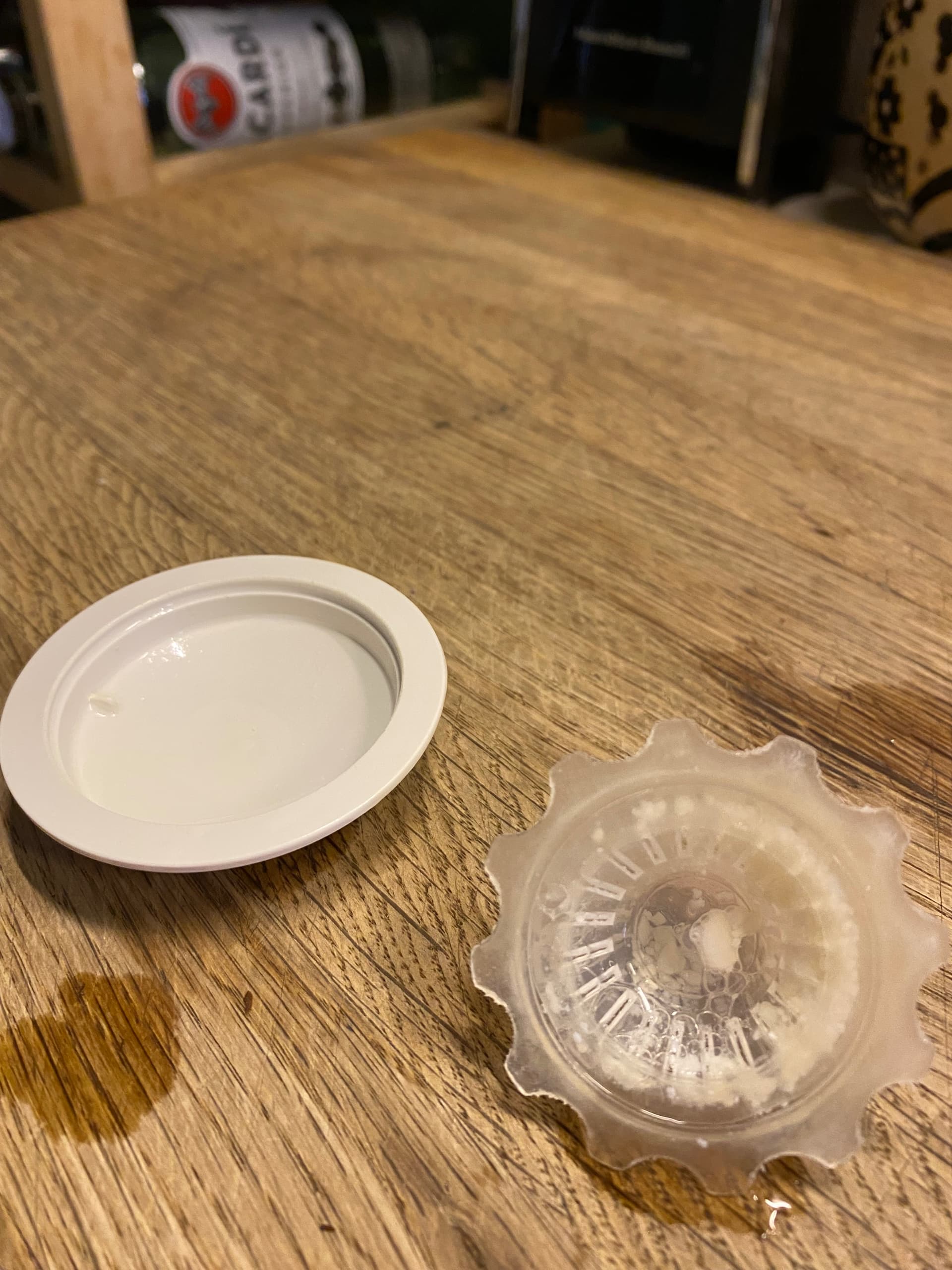
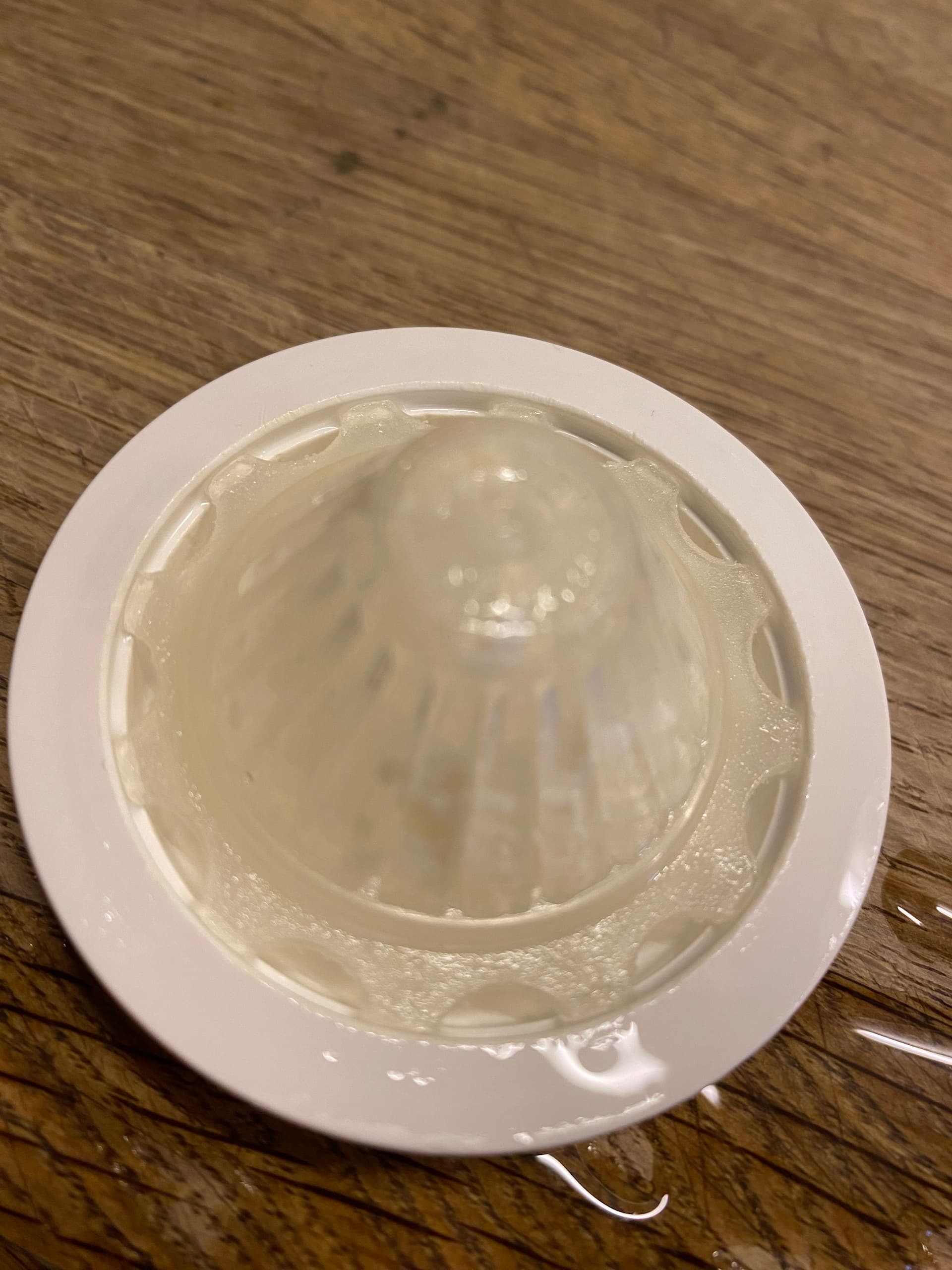
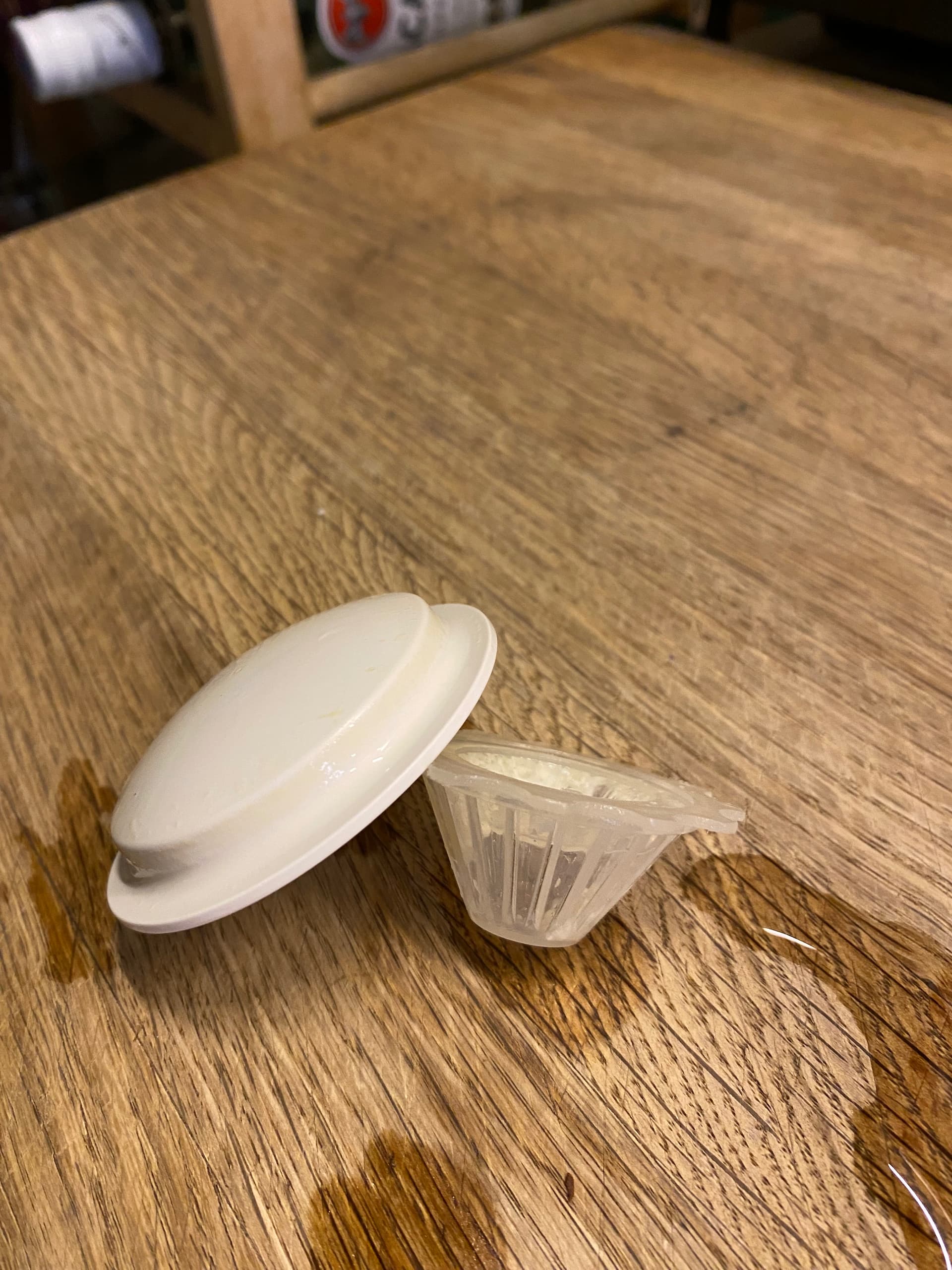
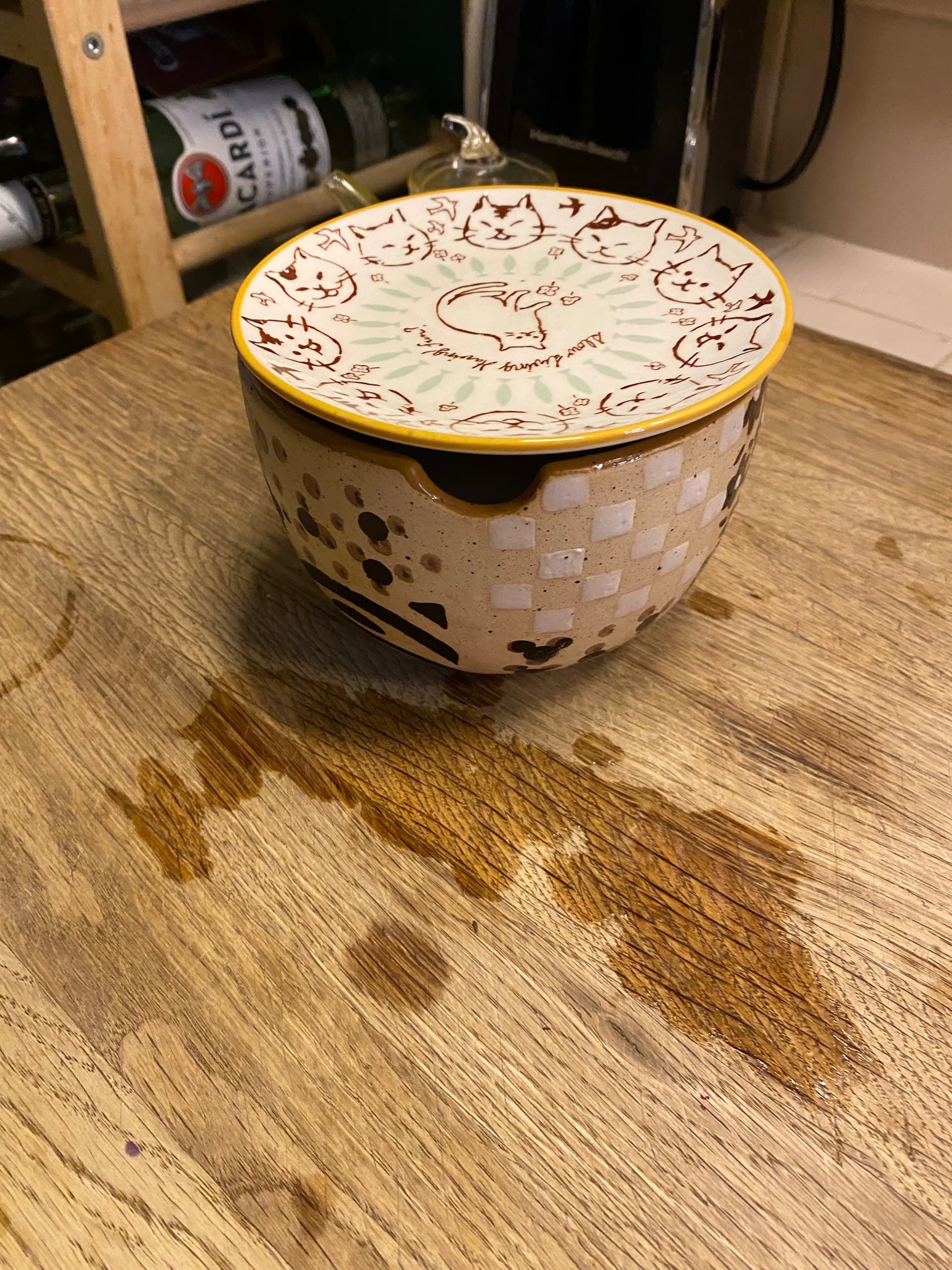
The floater I use (bought close to 20 years ago off Amazon, came with the grains from a company that no longer exists):
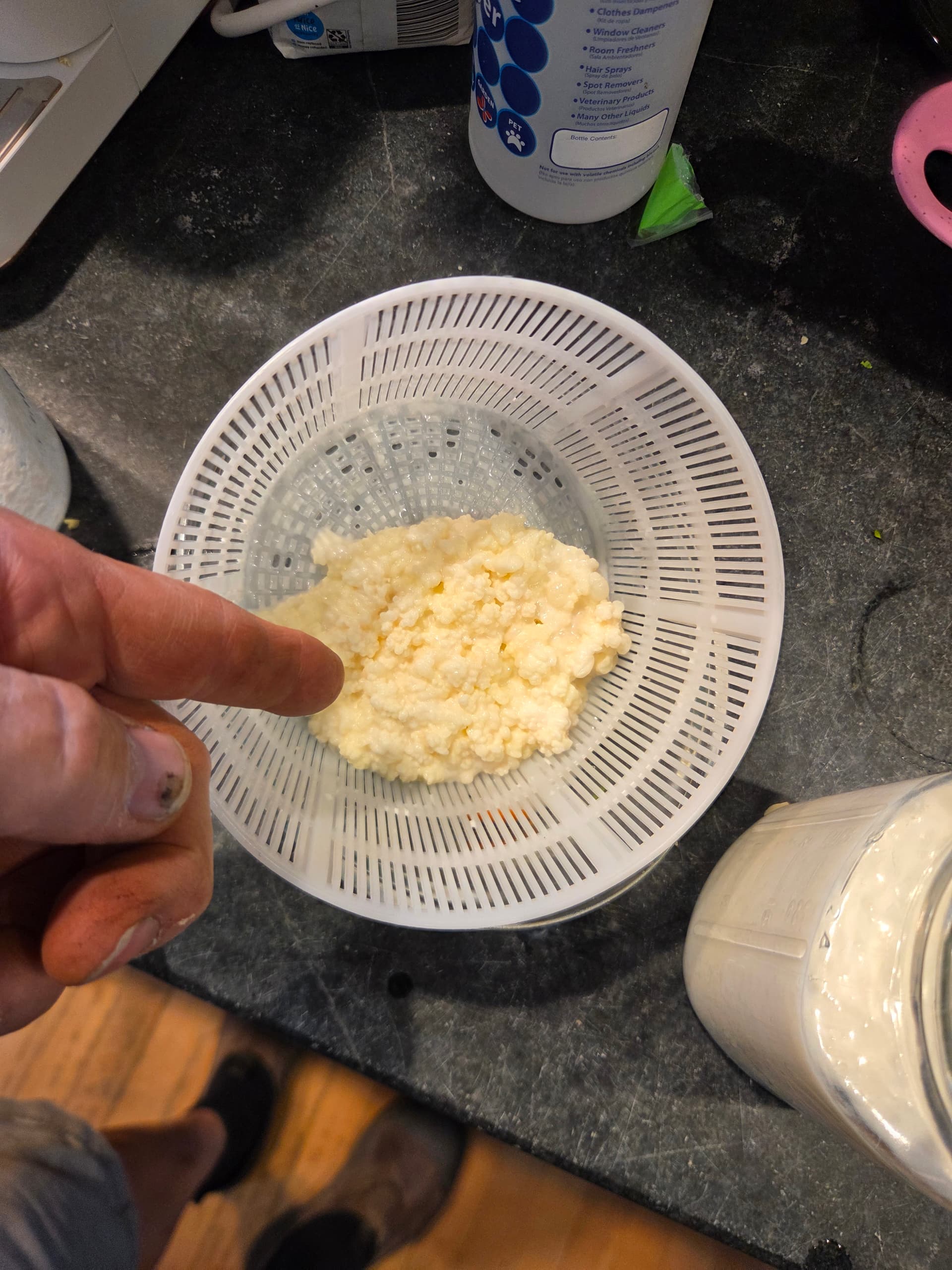
I’ve never seen a floater, sure are a lot of ways to do things. I’ve been using a cheese mold, borrowed from my wife and I think it’s the size to make brie:
The tiny slots are really good for saving every bit of the so called “grains”. Sometimes you order and they come and you can barely see them. I just pour raw goat milk into a half gallon jar with these grains in the bottom. After a day or so I pour the mix into the mold and separate. I have such a mass of grains now that I eat a few every morning. I would never run water over them, though I’ve heard it’s done. Water has germs and some has chlorine…raw milk is safer and this way you get it all. There are positives and negatives for everything. I’m not being critical. The floater looks easy.
I make 2 quarts every 2 or 3 days. I use a sous vide immersion circulator to maintain a precise constant temperature as I’ve found that it’s important to have the correct (as to my taste) balance of bacteria and yeast.
BTW if your grains don’t have yeast, it’s not a kefir but a yogurt.
I put the grains directly into a 2 quarts mason jar with A2 protein milk at 4% or 2% fat. Then I use a strainer to separate the grains and I generally (unless I’m too lazy/busy that day) put the kefir in a Vitamix mixer at low speed to homogenize it before storing it in the fridge.
Also - I let a batch go too long, so it’s got a ton of curdled milk mixed in with the grains now. Any special suggestions on how to separate the curdled milk from the grains? Its hard to tell where one ends and the other begins - it all looks like a gelatinous blob.
Mine frequently goes that far. The cheese mold I use will work well. Just shake back and forth and up and down. Takes probably 30 seconds for the worst ones.
I’ve read that using a blender on even yogurt kills a lot of it. I wouldn’t do much more than stir with a spoon. OTOH, I guess dead they probably work about as well.
Generally 22ºC, I increase it if the yeast activity is too low and reduce it if it’s too high.
Happens to me as well!
You can add a little bit of milk and shake it in a mason jar or similar then strain it. In desperate cases, you can separate the grains from the gelatinous blob with your fingers. The grains are relatively firm and it’s easy to make the difference with the rest of the gelatinous blob.
In light of the health benefits generally ascribed to RS, and of epidemiological evidence linking high fibre intake to reduced CVD risk( Reference Wu, Qian and Pan58 ), the increase in TMAO with RS is contrary to what might be expected. Earlier dietary intervention studies have also shown increased abundance of TMAO after diets high in soya( Reference Solanky, Bailey and Beckwith-Hall59 ) or low glycaemic load carbohydrates( Reference Barton, Navarro and Buas60 ), typically deemed beneficial to cardiometabolic health. Hence, although there is strong evidence for the relation of TMAO to atherosclerotic CVD, we cannot conclude that the dietary effects on TMAO observed here would translate into changes in risk for CVD. Furthermore, whether increases in TMAO are clinically relevant in the context of a concomitant improvement in glycaemic control, as is commonly observed with RS, remains to be established.
This is the advantage of a floater … it contains the kefir grains (see photos in my other post), and you never have to take them out of the floater. When done, just rinse the floater under running water or pour water over it from a jug. The grains in the floater never go missing or get tangled up in the kefir batch. Dead simple and fuss free. I’m still on the original grain floater close to 20 years now… these grains can last you a lifetime if you just take minimal care.
I used to always let my kefir ferment too long and the problem of the grains being mixed in the thicker cheese like part vexed me for years. Happy to report the open weave reusable cotton tea bags work great for keeping the grains separate.
Lets me over ferment happily! I like to reduce that lactate content as much as possible.
Also, to the poster who mentioned the sous vide, the sous vide is truly wonderful for thermophilic, mesophilic, and probiotic yogurt making.
OK, I’m completely sold on this. How do I find one to buy? Searching on Amazon for “Kefir floater” doesn’t result in any hits. I do find something a little similar (not floating) that might work, your thoughts?
Hmm. Wow, you’re right, this is not a common item - honestly don’t know why… hey, opportunity for an enterpreneur, lol . It didn’t occur to me that it might be a scarce item. But yes, what you found should work, but it’s not ideal. The baggie is a bit too floppy, might not be as easy to clean the grains. The one concern I have with the tea infuser is that the metal might interact with the acidity in the kefir - I’ve had these things rust just making tea.
Well, the idea is very simple - a stiff container for the grains with slots/mesh fine enough to keep the grains from falling out, and small enough not to have excessive amounts of kefir invade the container - this is an important point, because it makes cleaning the floater a breeze without losing much of the kefir. The actual floater is composed of two parts: the grain container and a separable floater cap. The cap allows the whole thing to float on top of the milk/substrate. When cleaning, you pop the grain container out and let a stream of water rinse out any kefir leaving behind just the grains. You clean the cap with a small brush under a stream of water. Then you clip the container and cap together and are good to go.
Anyhow, those are the design ideas, which I suppose can be implemented in a variety of ways.
Main rule is to not use metal. Other than that I like anything that works.
If you read about the origins and the lore, they talk about using bags of leather and hanging it on the door so that it agitates every time somebody uses the door. Obviously plastic is cleaner though I think some of the critters came from leather originally. There is a mold that can cause trouble and I have had it move in on top of the jar, because they say to leave the lid loose. If you shake a couple times (tighten the lid first) as you walk by this is easily solved. It can’t survive.
Long way of saying the kefir grain needs be intimate with the warm milk and not just see it off in the distance. You want to colonize as quickly as possible. Everybody wants the warm milk. There is competition. The floater or the plastic can with holes may be easier and work fine but I think I would increase agitation or maybe use 3 floaters or sinkers. Obviously in this case YMMV.
The gut microbiome is the great unknown in medical science. We really know very little about it. It’s like a whole separate world of incredible complexity that we have barely scratched the surface of. Puzzles and contradictions abound.
One example is the very fundamental assessment of what makes a beneficial gut microbiome composition in the elderly. As you age, the diversity of your microbiome (bacterial strains) drops. For a long time it was assumed that the greater diversity of youthful biome was beneficial in the elderly, and some FT studies (young to old and old to young) seemed to confirm that. It was thought that the lower diversity in the elderly was driven by less diversity in F&V consumption as the diets of the elderly tend to restrict in diversity. But then, there appeared strong evidence that the opposite is true. In a series of trials in mice it was shown very strongly that far from lower diversity gut microbiome being a negative deterioration in the older physiology, lower diversity was an active adaptation of the gut to age-related changes in the digestive system itself - the gut ages just as do all organs - it undergoes a senescent transition. In these trials, transplanting (FT) from younger to older mice caused negative health consequences, just as transplanting an older biome to younger mice was also a negative. It seems there is such a thing as “age appropriate gut microbiome” and trying to disrupt that by transplantation across age categories has negative consequences.
But it seemed that diverse food - as in more variety in F&V consumption - was still beneficial. All these contradictions have been puzzling me for a long time. Even fiber consumption is not a straightforward issue. Generally it seems more is better, or at least too little is bad, but which fiber when and for whom seems very fraught, and it looks like the wrong fiber can be quite detrimental; worse, the same fiber can be good or bad depending on other factors and the individual involved - few hard and fast rules.
All this has me firmly convinced of the Socratic dictum: “I know that I know nothing”. The whole area strikes me as a great unknown.
Here’s a paper that throws some light on the diversity paradox I described above. More food for thought - but what is actionable?
Increased nutrient diversity can induce loss of microbial diversity through enhanced resource uptake
“The origin of biodiversity is a central question in ecology, particularly how numerous microbial species co-exist within a single community. A prevailing hypothesis holds that microbial species co-exist by specializing on different resources, thereby reducing competition. Accordingly, increasing resource diversity is expected to promote species co-existence and boost biodiversity. By integrating high-throughput experiments, ecological analysis of global microbiome data, metabolic profiling and theoretical modelling, we find that the relationship between resource diversity and microbial biodiversity is not consistently positive and can even decline with increasing resource diversity. This unexpected result emerges from a widespread physiological response across diverse microbial taxa, in which more complex environments trigger higher overall resource uptake. This intensifies competition and can lead to biodiversity loss. Updating a central ecological model to include this physiological trait accurately reproduces the observed decline. Our findings suggest that physiological changes at the individual level can substantially alter predicted diversity patterns and scale up to influence community structure.”
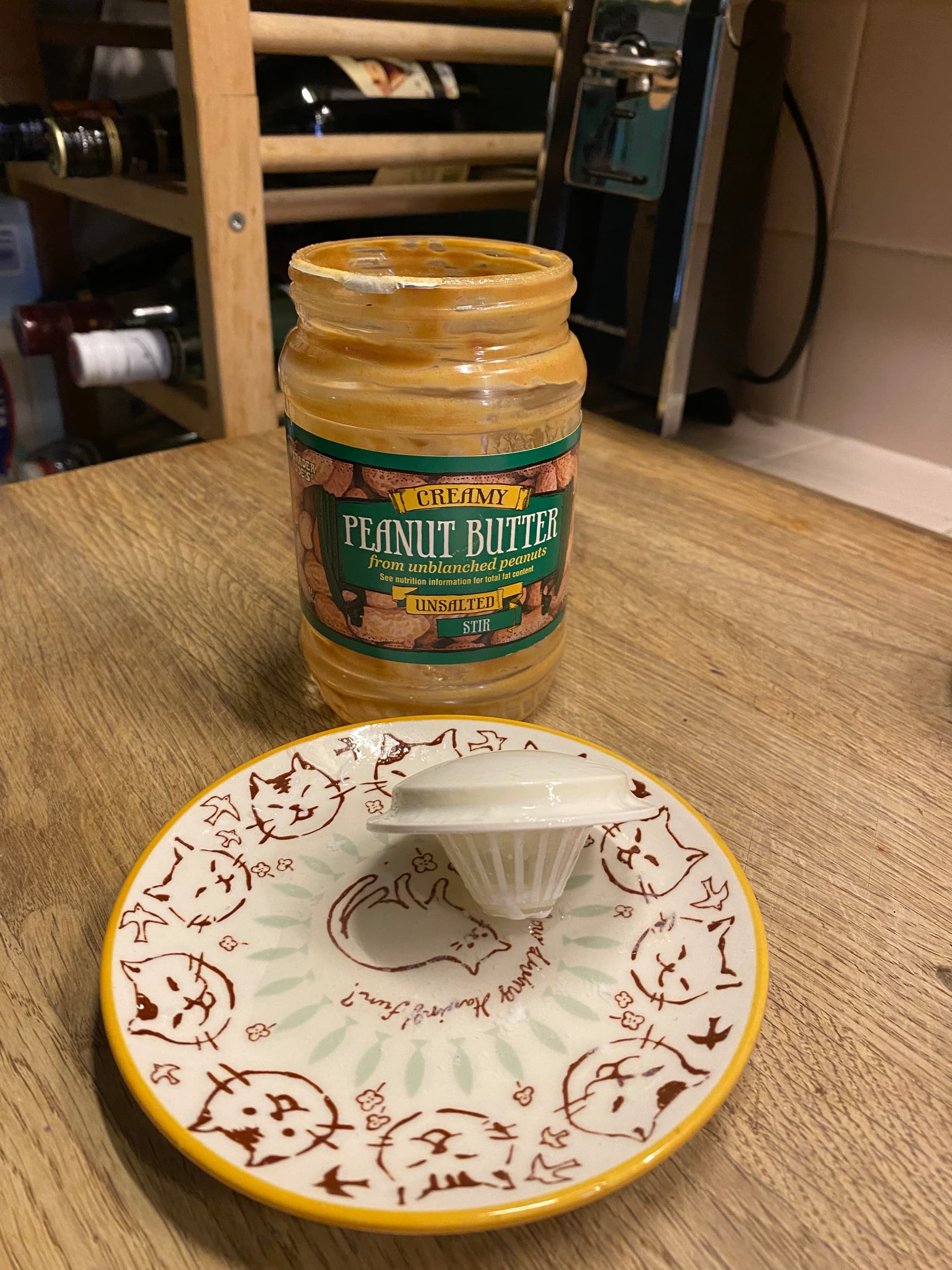
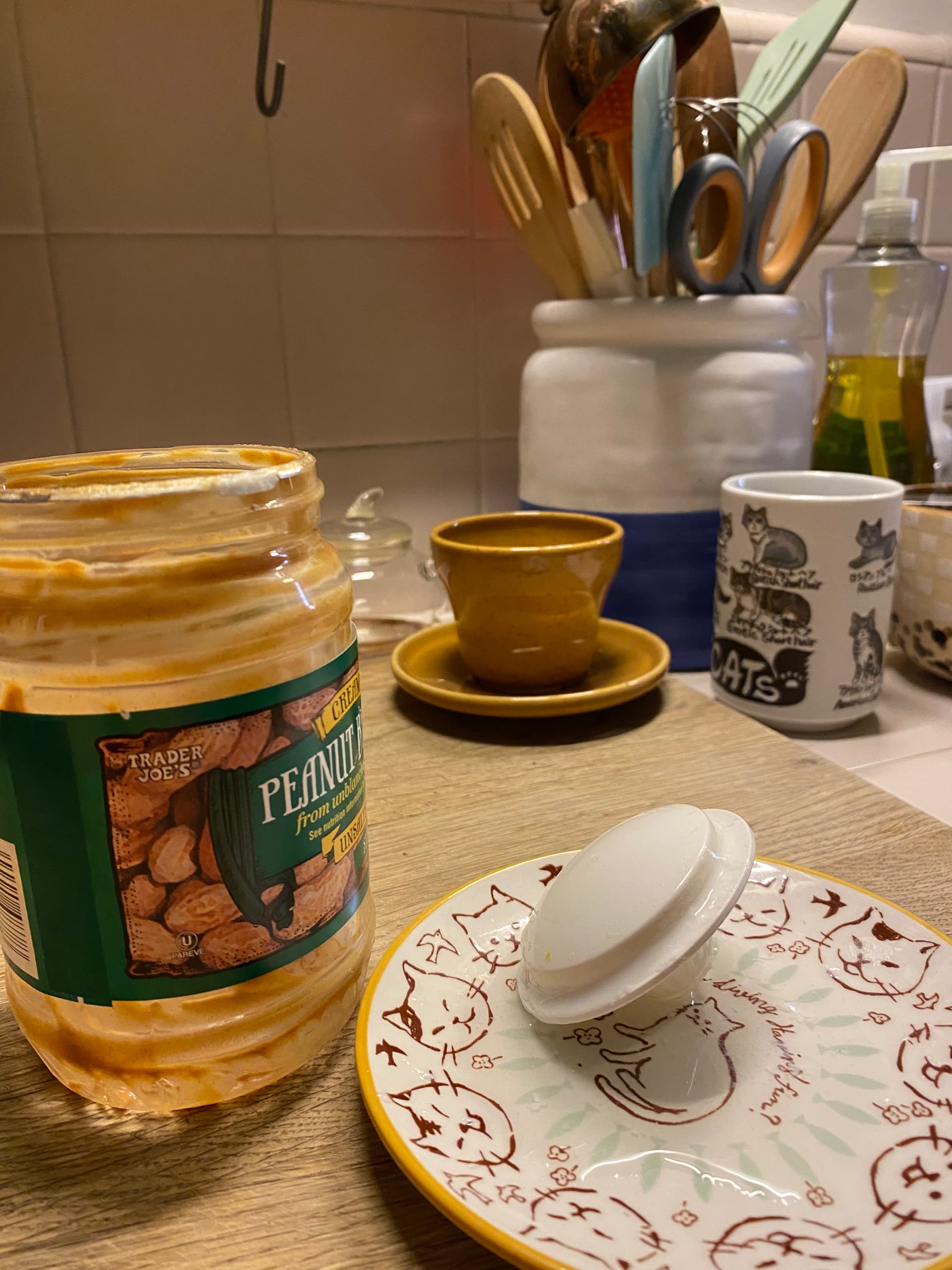
 … it contains the kefir grains (see photos in my other post), and you never have to take them out of the floater. When done, just rinse the floater under running water or pour water over it from a jug. The grains in the floater never go missing or get tangled up in the kefir batch. Dead simple and fuss free. I’m still on the original grain floater close to 20 years now… these grains can last you a lifetime if you just take minimal care.
 . It didn’t occur to me that it might be a scarce item. But yes, what you found should work, but it’s not ideal. The baggie is a bit too floppy, might not be as easy to clean the grains. The one concern I have with the tea infuser is that the metal might interact with the acidity in the kefir - I’ve had these things rust just making tea.