Finally, @John_Hemming , some good news about alcohol 
Drinking alcohol is bad in many ways; raising a glass can raise your risks of various health problems, such as accidental injuries, liver diseases, high blood pressure, and several types of cancers. But, it’s not all bad—in fact, it’s surprisingly good for your cholesterol levels, according to a study published today in JAMA Network Open.
Researchers at Harvard University led the study, and it included nearly 58,000 adults in Japan who were followed for up to a year using a database of medical records from routine checkups. Researchers found that when people switched from being nondrinkers to drinkers during the study, they saw a drop in their “bad” cholesterol—aka low-density lipoprotein cholesterol or LDL. Meanwhile, their “good” cholesterol—aka high-density lipoprotein cholesterol or HDL—went up when they began imbibing. HDL levels went up so much, that it actually beat out improvements typically seen with medications, the researchers noted.
It’s the residual confounding in studies that show an association of high HDL-c being harmful according to Kastelein iirc.
How the Risks of Drinking Increase in Older Age
Alcohol can present health problems for even light or occasional drinkers.
Drinking is harmful to your health at any age. But as you get older, the risks become greater — even with the same amount of drinks.
Alcohol affects “virtually every organ system in the body,” including the muscles and blood vessels, digestive system, heart and brain, said Sara Jo Nixon, the director of the Center for Addiction Research & Education at the University of Florida. “It particularly impacts older adults, because there’s already some decline or impact in those areas.”
“There’s a whole different set” of health risk factors for older drinkers, said Paul Sacco, a professor of social work at the University of Maryland, Baltimore who studies substance use and aging. People might not realize that the drinks they used to tolerate well are now affecting their brains and bodies differently, he said.
According to Dr. Nixon’s research, older people also show deficits in working memory at lower blood alcohol concentrations than younger drinkers. In another study Dr. Nixon worked on, some older adults in driving simulations showed signs of impairment after less than one drink.
Drinking alcohol can increase the risk of developing chronic conditions like dementia, diabetes, cancer, hypertension and heart disease. But it can also worsen outcomes for the majority of older adults already living with chronic disease, said Aryn Phillips, an assistant professor of health policy and administration at the University of Illinois Chicago who studies alcohol and aging.
Drug interactions also come into play. Mixing alcohol with prescription medicines that older adults commonly take, such as those for treating diabetes or hypertension, can make the medications less effective or cause harmful side effects, like ulcers or an irregular heart beat
Maha ha ha…
The Department of Health and Human Services has pulled back a government report warning of a link between cancer and drinking even small amounts of alcohol, according to the authors of the research.
Their report, the Alcohol Intake and Health Study, warned that even one drink a day raises the risk of liver cirrhosis, oral and esophageal cancer, and injuries. The scientists who wrote it were told that the final version would not be submitted to Congress, as had been planned.
The report is one of two assessments that were to be used to shape the new U.S. Dietary Guidelines’ recommendations on alcohol consumption. Its early findings were reported by The New York Times in January; a full draft remained on the H.H.S. website as of Friday afternoon.
A competing report, written by a National Academies of Sciences, Engineering and Medicine panel, came to a conclusion long supported by the industry: that moderate drinking is healthier than not drinking. Some panelists came under criticism for financial ties to alcohol makers.
and here is the Full Draft of the scientific report that I suspect will disappear from the HHS website very soon and be replaced by the industry approved version.
2025-draft-public-comment-alcohol-intake-health-study.pdf (1.9 MB)
Tons of people are going to be duped into believing moderate alcohol intake is good for you. This is just sad.
Next they’ll be saying a cigarette a day is good for you. This backsliding is shameful.
This is new to me. Apparently very expensive, but interesting:

We are in our 80s , we drink 2 half glasses a wine every night with dinner( husband drinks red I drink NZ Sauvignon blanc) we have been doing this for 13 years. I don’t know what a unit is but 2 half glasses should be regarded as 1 glass ?
We eat only organic fruit and veg, grass fed meat and wild caught fish. My husband works out 4 times a week ( own gym) and walks twice a week. I don’t exercise but walk at least 3,000 steps a day in my home doing housework etc, walking the pooch too. We both play golf at least 4 times a week, often having to walk because of the wet conditions in Florida .
We have full panel bloodwork done every 4 to 6 months . My results indicate I am 10/15 years younger than my age if I can get my glucose lower ( 124 non fasting last time) I am pre diabetic. My husbands bloodwork is excellent but takes blood thinners for elevated blood pressure. So, at our age and the fact that we are very active and no decline in memory ( we take supplements and Rapamycin) I think we will continue to enjoy our 2 half glasses of wine . Neither of us ever have any desire to drink alcohol during the day .
Thank you all for your comments , very interesting
Non fasting glucose will depend on when and what you eat and the timing of the blood draw. It also metabolises slowly in a blood sample.
Seems both of you are enjoying healthy lifestyle and aging well. 124 not fasting imo is pretty good. And golf 4 times/week is impressive! I remember how tired I was after just one round of golf.
I don’t feel so much tired after golf but I’m soaking wet from the humidity, I don’t tolerate the humidity very well and we have a misting system installed all around the golf cart to keep me from collapsing from the heat, also I use a Chilly Cheeks ice pack that really helps. .i have started to learn to play the keyboard too and after 3 months I can play lots of songs from a great teaching system online. I have low vision so I need very large print and this online course is perfect for me , I think keeping busy and learning new skills keeps people young .
I don’t know how you monitor your glucose but what helps me is wearing FreeStyle Libre 3 which I get at Costco. My insurance doesn’t cover it bc I don’t have diabetes, but my doctor still sent a script per my request. It helps me to make better choices about what I eat and drink and at what time. It’s $30 for 15 days.
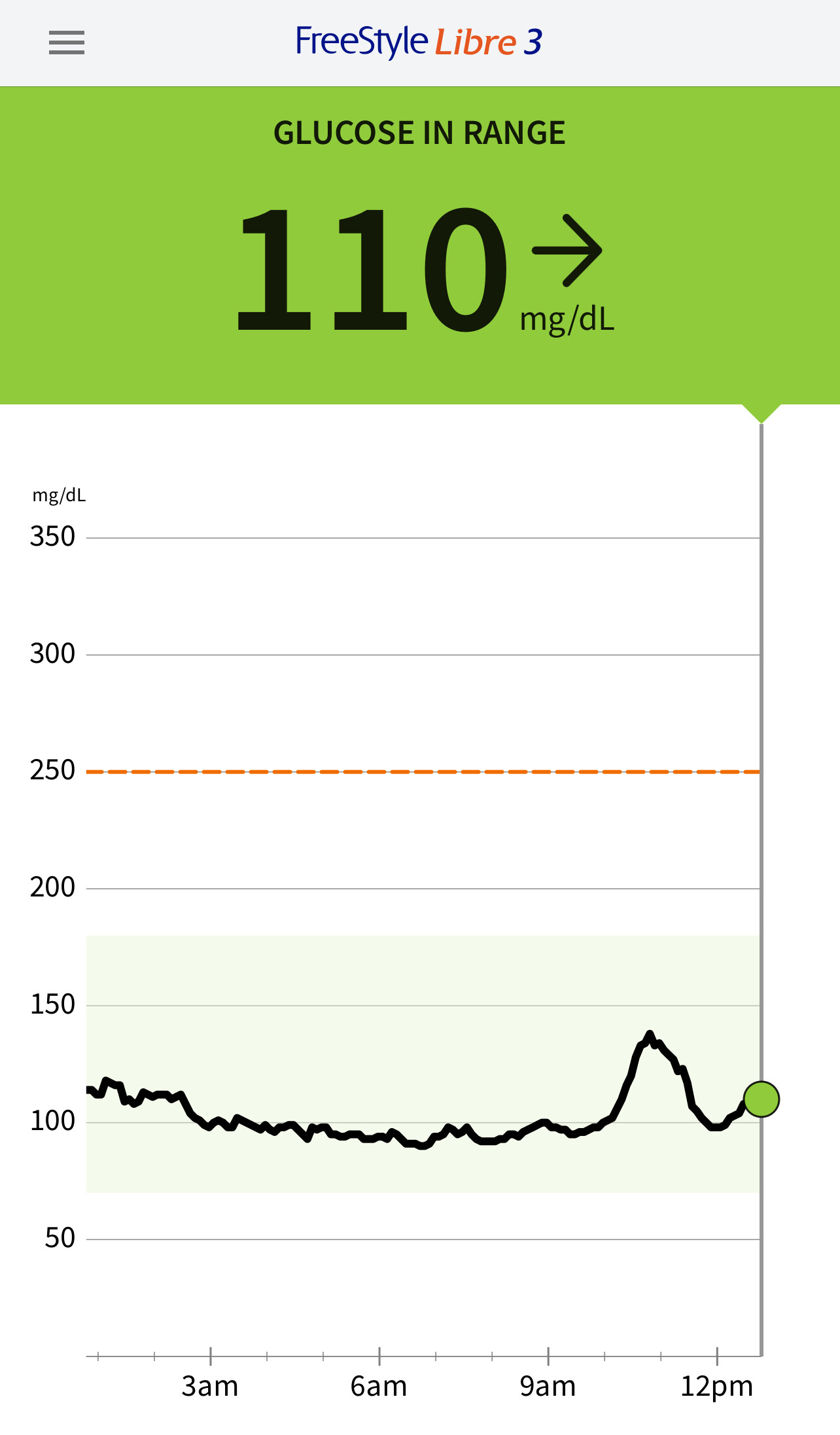
Thank you for that, I tried the monitor in my arm and it went off like a emergency alarm while I was resting, frightened the life out of me, then I couldn’t get the dam thing off, never again. My sugar levels have fluctuated between 118 to 124 for years. I eat everything low carb and no sugar which makes life very difficult, my insulin is my worry, it was at 5.5 6 months ago, last week it had dropped to 0.5 that doesn’t make sense, my A1C is 6.2 slightly better than the previous panel results
I tried to send a screen shot of my glucose range but I cannot see how to include it. I use a watch to check my glucose my but they are not reliable
Dee, to add an image to your post here just click on that little box with an arrow pointing up (see the right side of the image below) when you create a new message - and then upload the image from your phone or computer.

Thank you, I tried everything but that 
Decreases in serum α -Klotho levels in association with levels of regular alcohol drinking and binge drinking among US adults
https://academic.oup.com/alcalc/article-abstract/60/5/agaf054/8243830?redirectedFrom=fulltext
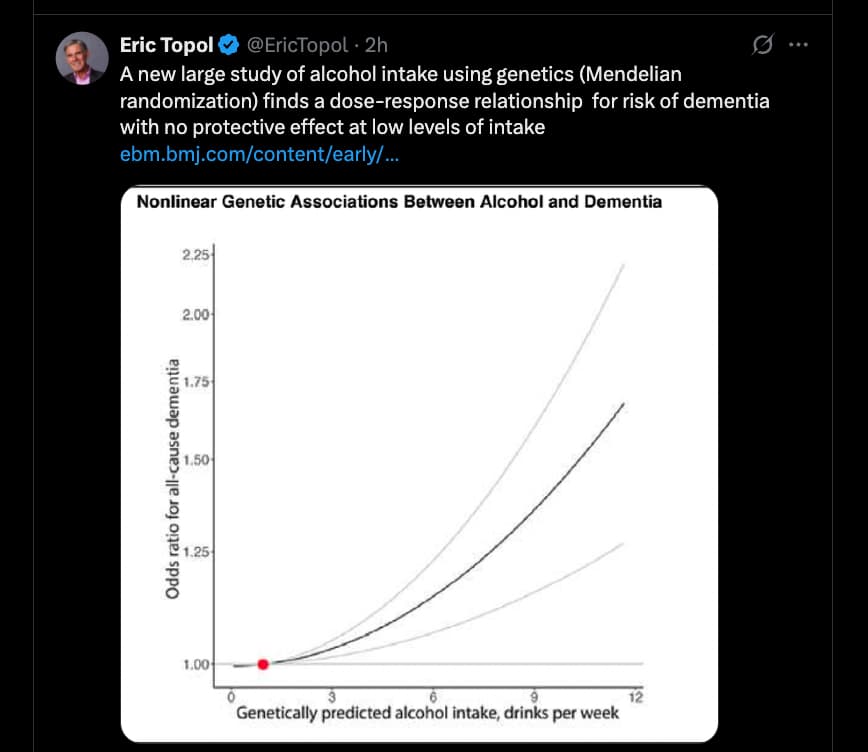
40 drinks a week for “high” is quite high. The UK advisory limit is 14 units.
One unit equals 10ml or 8g of pure alcohol, which is around the amount of alcohol the average adult can process in an hour.
The number of units in a drink is based on the size of the drink, as well as its alcohol strength.
For example, a pint of strong lager contains 3 units of alcohol, whereas the same volume of lower-strength lager has just over 2 units.
So this report identifies high as about 3x the UK advisory limit.
I have asked the authors for an opportunity to read the paper and review in details how the calculations are performed. Where a number of assumptions are made then it is normal for the assumptions to drive the conclusions.