The requirement applies to all countries and contents declarations are electronic and must be pre-cleared by US Customs (or a broker) before India Post will accept the package. Sep 22 to Oct 21 is a trial period, where enforcement may be less strict.
1 Like
FWIW…
A package was shipped to me yesterday 09/22/2023 it has already been stopped by customs for review (less than 24 hours after it was ship, shipped is by
UPS Worldwide Expedited)
Now I sit and wait.
1 Like
I suppose where there is great demand, there’s supply, ways around are found.
What is insane to me, is that we are not talking drugs, illegal substances, weapons which are a social harm. It’s not even luxury goods avoiding taxes.
It is life saving medication - in some cases acute, when people can’t afford or is unavailable stateside. Our government is forcing people to find sometimes less than legal workarounds, because they’ve passed laws that will result in death and injury. It’s akin to sealing the borders from importing food to a starving population so you can extort them domestically with high, frequently unaffordable prices. Now the starving are welcome to die, or become criminals obtaining food against the extortionate laws.
We are talking medicine people! This is insane.
8 Likes
I asked Jagdish if he had the new regulations figured out and if it would affect our doing business with each other. He seems to be hopeful but in a “wait and see” mode.
Hello sir, how are you?
Today we have dispatch some parcels to USA if they will go through then we can proceed with the new order. Till then I will suggest you to wait for some days. You contact me after 2- 3 days so that I will update you about the current situation.
Sorry for inconvenience. And don’t worry soon it will be everything will be alright and we will dispatch parcel like we use to do before. I am making everything clear before placing the order because I don’t want to make any false promises with you.
Regards,
Jagdish
RL PHARMA,
INDIA .
2 Likes
I also spoke with an acquaintance who runs a kind of private party brokerage here in the US. He imports pharma from India and sells privately to friends. The price is higher than direct to India but the advantage is that no Rx is required and he takes responsibility for non-delivery and refunds money or orders again.
His take on the new regs is that it will be business more-or-less as usual because his India supplier is telling him they have it worked out.
4 Likes
Rob Tuck, can you please share the identity of the acquaintance? I just want to order some imeglimin.
1 Like
He has asked to remain anonymous at this point, at least until these new regs shake out. I think he is a bit more concerned than he is letting on. What I did not understand until talking with him is that we are already in a test period for the new regs and that the October 22 regs could be modified based on how the test period works out.
2 Likes
A brief discussion with GPT on this issue produced this summary. It contained one obvious driver of the change that I had not been thinking of: interdicting routs for the delivery of dangerous and abused drugs.
The regulatory shift taking effect on October 22, 2026—which fundamentally alters small-parcel international postal entries—is the product of intersecting security mandates, trade policy shifts, institutional agency dynamics, and pharmaceutical market economics.
The primary catalysts driving this policy shift can be categorized by the weight of their empirical support and theoretical backing.
High-Probability Drivers (Strong Empirical and Statutory Support)
1. Interdiction of Illicit Synthetic Opioids and Unvetted Cargo
The primary explicit policy driver behind the suspension of Section 321 de minimis exemptions (19 U.S.C. § 1321) is the interdiction of illicit synthetic opioids (fentanyl, nitazenes), chemical precursors, and unvetted pill presses.
- The Volume Crisis: Between 2016 and 2024, de minimis parcel volume entering the U.S. grew from roughly 220 million to over 1.36 billion packages annually. U.S. Customs and Border Protection (CBP) repeatedly signaled to Congress that the minimal “release from manifest” data required for sub-$800 postal parcels rendered algorithmic pre-primary targeting for narcotics functionally impossible.
- National Security Framework: Executive Orders 14324 and 14388 invoked the International Emergency Economic Powers Act (IEEPA) to mandate 100% Electronic Advance Data (EAD) and formal customs entry for incoming parcels. Because illicit drug operations systematically packaged synthetic narcotics to mimic routine personal healthcare products, CBP’s operational mandate required eliminating the uninspected postal channel entirely, rather than attempting package-by-package chemical discrimination at International Service Centers.
2. Trade Policy Realignment and Regulatory Arbitrage Elimination
The dismantling of informal postal entry represents a broader bipartisan movement to eliminate regulatory arbitrage by international suppliers.
- Macroeconomic Equalization: The $800 de minimis threshold—raised from $200 by the Trade Facilitation and Trade Enforcement Act (TFTEA) of 2015—created a structural advantage for overseas entities shipping direct-to-consumer. Foreign vendors bypassed domestic retail taxation, state licensing, and federal regulatory oversight.
- Harmonized Tariff Integration: By forcing all incoming goods into the Automated Commercial Environment (ACE) with mandatory 10-digit Harmonized Tariff Schedule (HTS) classifications, the Treasury and CBP secured revenue collection and supply-chain traceability across all commercial sectors. Personal pharmaceutical orders were caught in this universal administrative sweep.
3. Protection of Domestic Market Segmentation and Pricing Power
From a public choice perspective, the U.S. pharmaceutical market operates on global geographic price discrimination. U.S. consumers absorb a disproportionate share of global drug development costs, while foreign governments enforce single-payer price caps.
- Statutory Wall: The Prescription Drug Marketing Act (PDMA) of 1987 and the Drug Supply Chain Security Act (DSCSA) of 2013 were explicitly structured to restrict the re-importation of foreign-market medications, ostensibly to preserve supply chain integrity and prevent counterfeiting.
- Economic Defense: Legitimate foreign mail-order pharmacies (such as those licensed in Canada under Health Canada oversight) operate as an arbitrage mechanism, exporting price-capped medications back into the higher-priced U.S. market. Major pharmaceutical coalitions (e.g., PhRMA) have consistently lobbied federal agencies to strictly enforce the statutory import prohibition, arguing that gray-market personal importation erodes intellectual property rights and undermines domestic capital allocation.
Speculative and Secondary Political Hypotheses (Limited Direct Support)
1. Administrative Recapture Bypassing Congressional Deadlock
Historically, Congress has maintained a delicate equilibrium regarding healthcare oversight. Lawmakers have repeatedly blocked FDA attempts to restrict dietary supplements (e.g., passing the Dietary Supplement Health and Education Act of 1994) and have resisted passing explicit, politically unpopular bans on individual drug importation.
- The Regulatory Loophole Closure: Under this hypothesis, the executive branch achieved an administrative goal without needing congressional consensus on healthcare or drug pricing. Rather than the FDA issuing a controversial public health ban on Canadian or Indian mail-order pharmacies, the enforcement mechanism was transferred to CBP customs entry and broker liability laws.
- Shifting the Enforcement Vector: By framing the issue as customs security, tariff compliance, and automated data entry, the administration effectively shuttered personal importation channels without requiring a vote on drug access in Congress.
2. Structural Removal of the Consumer “Safety Valve”
In political economy models, informal workarounds—such as cross-border personal importation—function as a socio-economic relief valve. They allow the most price-sensitive, highly motivated, and vulnerable patients (e.g., underinsured individuals with chronic illnesses) to secure essential maintenance medications at sustainable prices.
- Sustaining Domestic Pressure: By providing a backdoor for roughly 4 to 5 million Americans, personal importation historically dampened the immediate political pressure on domestic lawmakers to enact structural drug pricing reforms or comprehensive market fixes.
- Policy Sequencing: A speculative political theory suggests that shutting down this informal safety valve forces the full weight of high U.S. drug prices back onto domestic insurers, state Medicaid systems, and voters. In turn, this heightens political friction, potentially accelerating broader legislative action around domestic price negotiations, Prescription Drug Benefit Manager (PBM) transparency, or formal wholesale importation frameworks under Section 804 of the FD&C Act.
1 Like
I recently ordered from Simran Bhagat at Happy Pill Pharma (  ) simranbhagat0707@gmail.com. I have ordered from him several times in the past. I can’t remember why I ordered from him the first time, but I remember that I had a reason for having the order shipped through Dubai. I have ordered from him several times, and though he is more expensive than Jagdish or Maulik, the orders always came through.
He seems rather terse and grumpy for someone working for Happy Pill Pharma, but I don’t really care. As always, I place my order through email just because that is the way I like to do it.
Does anyone have a supplier that ships through Dubai that has prices comparable to Jagdish or Maulik?
My most recent order came through with no problems.
I have an order in transit from Maulik, but it is taking longer in US customs than normal.
From Happy Pill Pharma
Shipped on Sept. 9 and received on Sept. 22.
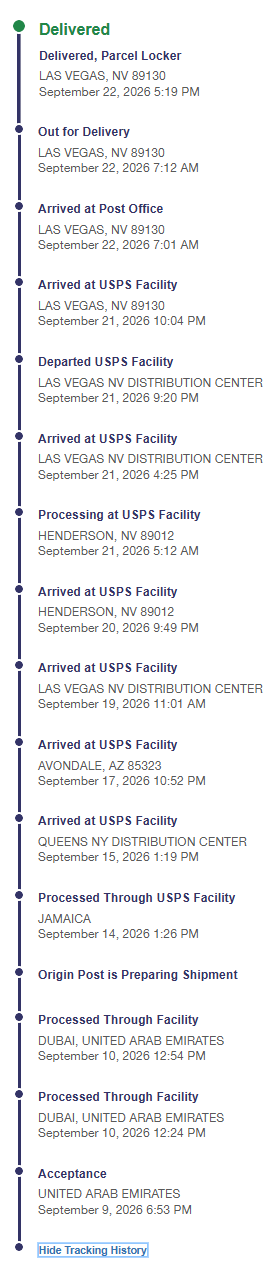
1 Like
Does he have a wide inventory? A price list you can select from?
I have never asked for a price list. I just ask for a quote for the meds that I am interested in. He will supply meds that Jagdish will not. He has quoted a price for everything that I have asked for.
2 Likes
The Indian guys never have a price list. They adjust their prices based on the competitive environment at the time, and provide prices only on a quote by quote basis (from what I’ve seen and heard)
3 Likes
Laxminarayan
I only have experience with Jagdish. It is sort of a price list. I tell him the pharma I want and he sends back a list with the prices for each brand of the specific drug. Sometimes the list is as thin as two options. On sirolimus, for example, he gave me a price for two brands. I wasn’t smart enough to pick the right one and he gave no advice on that.
Finally got access to the full Wall Street Journal Article:
Americans Are About to Lose Access to Cheap Gray-Market Prescriptions From Canada
Millions who use online pharmacies from Canada and other countries could get cut off in October
Diamantina Cavazos, 38-year-old Dallas-based project manager, has used an online Canadian pharmacy for two years to buy a prescription drug for around $10 a week, a fraction of what it costs in the U.S.
As of next month, a loophole that allows her to personally import the medication, Xifaxan, for her painful gut condition, is closing.
She will have to pay $1,100 a week for her prescription because she couldn’t get it covered by her insurer in the U.S. “I’m extremely upset,” she said.
Cavazos is one of millions of Americans who use foreign mail-order pharmacies, mostly from Canada, to acquire affordable daily medications. They are facing an impending deadline that could abruptly cut off their prescription supply.
These patients are racing to stock up on medications before late October, when a rule goes into effect requiring medications mailed from abroad to go through a customs process requiring a licensed customs broker and a financial guarantee—a bar few individual mail-order prescriptions have ever had to clear.
The government is trying to crack down on illegal contraband that it says comes into the country through low-value foreign shipments that don’t pay tariffs or submit data for tracking.
“There will be just a full stop of anything coming into the States,” said Tim Smith, general manager of the Canadian International Pharmacy Association, a trade group of licensed Canadian pharmacies that has built much of its business on serving American patients. “These are cash-strapped, uninsured or underinsured people; many senior citizens on fixed incomes.”
More than two million people in the U.S. who take prescription drugs bought them from outside the country to save money, according to a 2020 study published in JAMA Network Open, some of the most recent research available on the topic.
The practice has operated for decades in a legal gray area: technically barred under FDA rules, importers say it is rarely enforced. Customs agents have historically waved through low-value, personal-use packages rather than individually checking each one against the agency’s criteria.
The U.S. government has already made these imports more difficult. Starting in August of last year, patients ordering medication by mail have had to start paying customs fees on shipments that previously arrived free of charge.
The new rule fully closes the regulatory gap on Oct. 22.
After that, prescription drugs will need to move through a formal entry process with an accountable company or person legally on the hook if a shipment doesn’t qualify.
Zonos, a St. George, Utah-based company that processes customs documentation for foreign mail services, handles much of the mail moving through Canada and other countries.
That means Zonos, not customs agents at the border, will effectively decide which packages get through—by checking each one against the FDA’s actual criteria for personal drug imports, most of which have gone unenforced at scale for years. Zonos didn’t respond to requests for comment.
The FDA generally won’t stop a personal shipment if it treats a serious illness with no good U.S. treatment, isn’t marketed to American consumers, carries no unusual safety risk and comes with a doctor’s note for a 90-day supply or less. Before the rule change, that was rarely checked upfront for parcels under $800 in value because of a decades-old customs exemption for low-value mail.
A spokesperson for the Department of Health and Human Services said the FDA would continue to evaluate personal imports on a case-by-case basis.
Smith said his members have relied on the FDA’s leniency for 25 years, and that the era is ending. “Rather than exercising discretion, they’re going to exercise enforcement,” he said.
Ken Hunter, executive director of the New Jersey-based Campaign for Personal Prescription Importation, or CPPI, said the situation turned into a “five-alarm issue” when logistics operators such as Zonos began notifying shippers of the October cutoff.
In less than two weeks, his group’s membership surged by 20,000 people. The organization has fielded more than 1,000 frantic emails and coordinated more than 28,000 letters sent to members of Congress.
Hunter said many U.S. patients rely on cheaper imports for drugs they will take for life. Eliquis, a blood thinner, is one of the most commonly ordered. A 90-day supply from Canada costs less than $600—almost half the U.S. retail price on domestic discount platforms.
Many patients have told Hunter they will cut their doses, skip pills or go without their medications entirely in anticipation of the rule change. “It is just such an avalanche of fear and concern out there,” he said.
Northwest Pharmacy, a British Columbia-based international drugstore, wrote in a blog post that orders placed after Oct. 9 wouldn’t be guaranteed for delivery and that the company had stopped replenishing its inventory. A different online pharmacy, which urged people to stock up on as much medication as possible, said the change would put it out of business.
The rule applies to any FDA-regulated mail shipment from any country, including smaller medication pipelines from India, the United Kingdom, Australia and Turkey. It doesn’t change regulations around Americans who buy medication in person while traveling.
Source: Americans Are About to Lose Access to Cheap Gray-Market Prescriptions From Canada
2 Likes
This will predictably increase the share of these products that get sold in the black market, and the share of users using the black market. We’re already halfway there anyway with many Indian vendors offering reships and crypto payment options. They just need to work on their stealth packaging now.
2 Likes
I just ordered from Maulik this morning ( rapa, brillo, selegiline ); we will see if/when it arrives. 
FWIW…
Received the following…
09/25/2026
11:30 P.M.
The status of your package has changed.
Additional charges may have been applied based on recent tariff policy changes.
Rescheduled Delivery Date: Wednesday, 09/30/2026
Exception Reason: We are experiencing transit delays. We will deliver your package as soon as possible.
Exception Resolution: A hold on your package has been resolved.
To me this translates to they will be collecting / billing duty.
The total product cost was $220.00 plus shipping
Shipped by UPS Worldwide Expedited
At least on some medicines, he seems higher priced:
Huh. The prices I had received had been in line with what others said their sirolimus was costing. But he also knew that I’m on this forum, so maybe he was trying to be competitive. I have no idea what the medication this person requested is though. Maybe it depends on the medicine.
1 Like