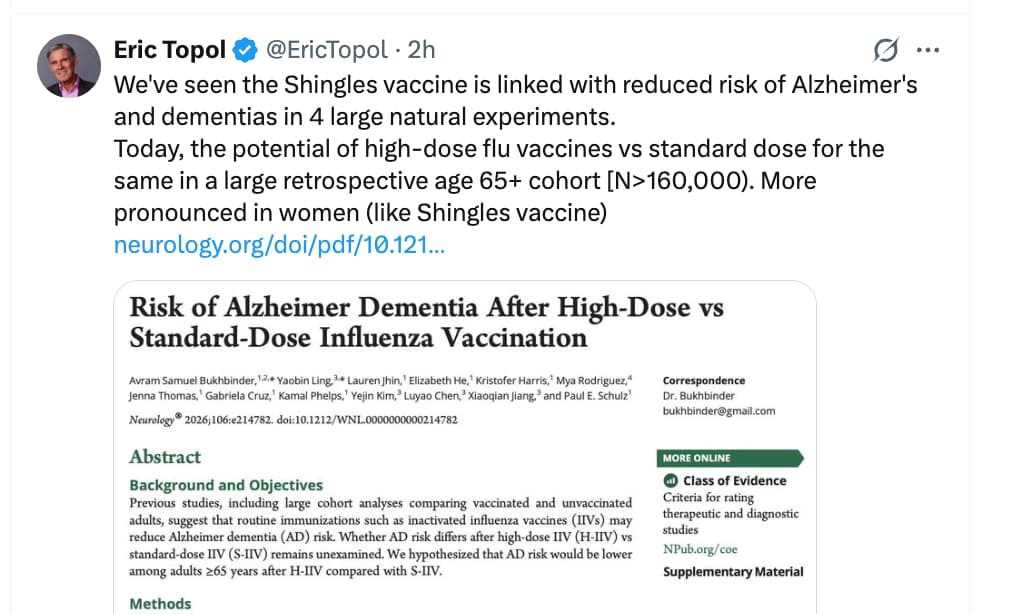
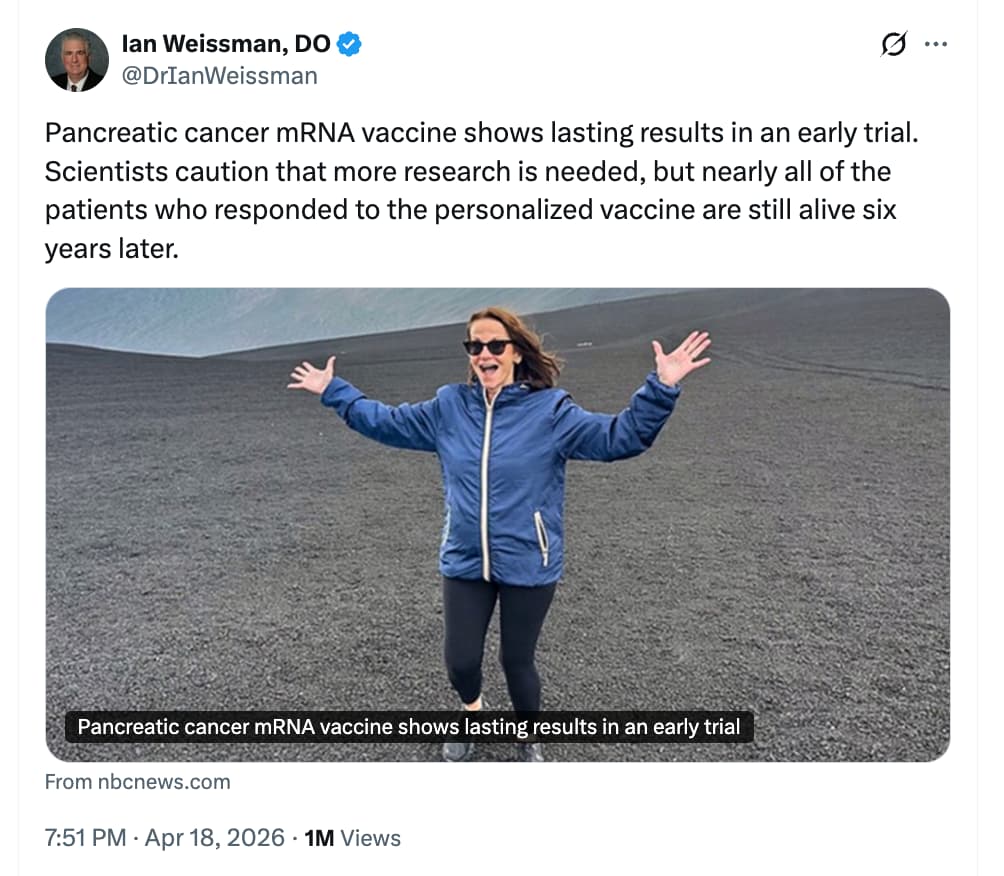
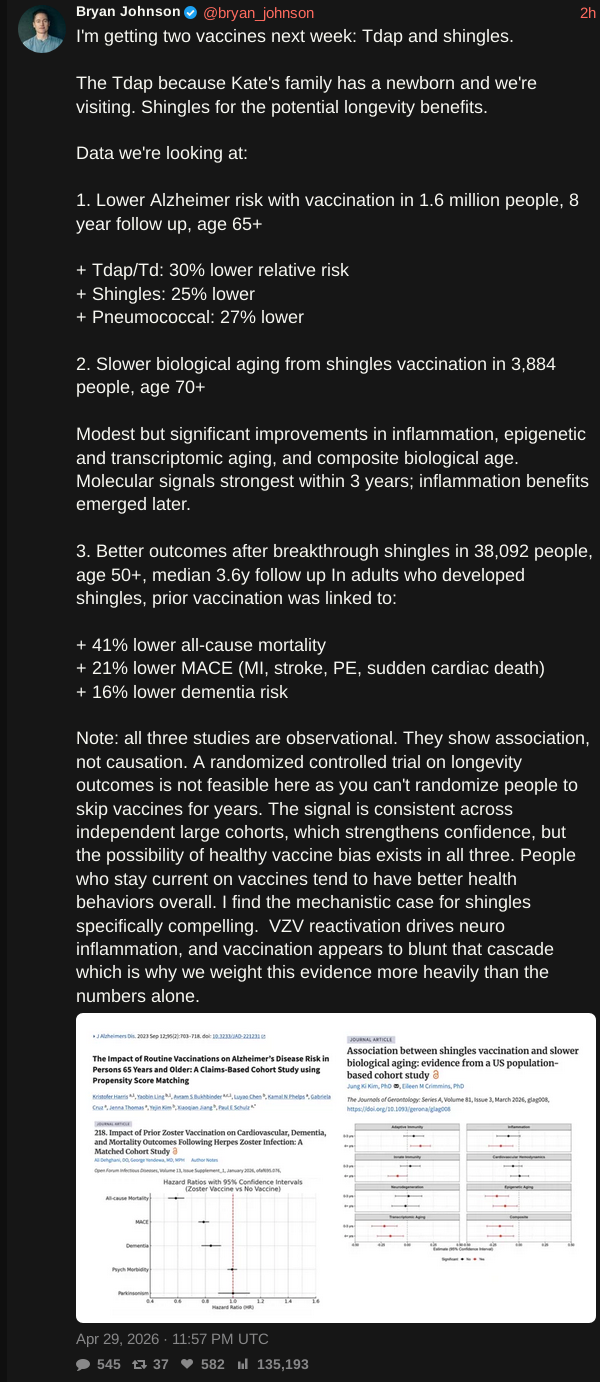
“As we get older, our immune system becomes less efficient and more prone to chronic inflammation. Vaccines can help keep the immune system “fit” by preparing it to recognize germs and to bounce back faster after infections. Some vaccines do more than protect against a single disease: they can also improve general immune responses (sometimes called “trained immunity”). In older adults, vaccines against flu, RSV, pneumococcus, COVID-19 and shingles lower the chances of serious illness, hospitalization and even heart problems linked to infections. New vaccine technologies (like mRNA and advanced adjuvants) and personalized schedules may improve protection further. Making vaccination a routine part of healthy aging — together with good nutrition, exercise, sleep and managing chronic conditions – can meaningfully improve health and quality of life.”
Shingles Vaccination Correlates with Much Lower Risk of Cardiovascular Events
People with heart disease who received a shingles vaccine had nearly half the rate of serious cardiac events a year later compared with those who did not get the vaccine, according to a study being presented at the American College of Cardiology’s Annual Scientific Session (ACC.26).
The study analyzed over 246,822 U.S. adults with atherosclerotic heart disease, a condition caused by plaque buildup in arteries. Its findings add to mounting evidence that the shingles vaccine not only protects against shingles, but may also reduce the risk of other health issues such as heart problems and dementia.
“This vaccine has been found over and over again to have cardioprotective effects for reducing heart attack, stroke and death,” said Robert Nguyen, MD, a resident physician at the University of California, Riverside and the study’s lead author. “Looking at the highest risk population, those with existing cardiovascular disease, these protective effects might be even greater than among the general public.”
The problem with BCG vaccine is that it’s impossible to get it in the States. No U.S. pharmacy stocks BCG as a TB vaccine. No U.S. distributor sells it for TB prevention. No U.S. clinic routinely administers it. It is not FDA‑approved for TB vaccination in the U.S.
New preprint ! HSV‑1 infection may raise neurodegenerative risk by pushing microglia into a long‑lasting inflammatory state, impairing their normal brain‑protective roles.
Discussion: Using a multiomic framework, we demonstrate that HSV-1 infection drives transcriptional and epigenetic remodeling of microglial populations, characterized by a dominance of IFN-responsive states and a loss of homeostatic signatures. These findings provide mechanistic insight into how localized viral infection can reprogram microglial regulatory landscapes to maintain persistent HSV-1-associated neuroinflammation, contributing to long-term neurological vulnerability and neurodegenerative disease risk.
I didn’t know intranasal is a significant vector for HSV-1!
Personally, it increases the importance I want to give to using masks/ saline rinses/ carageenan + Azelastine nasal sprays — particularly when in crowded areas or after activities that compromise my immune system (days of bad sleep, heavy exercise, etc.)
Vaccines decrease aging and increase lifespan as shown by new research
The current administration of the U.S. government is railing against vaccines.
No wonder the US is spending the most and seeing the shortest lifespans. I expect this trend to get worse. Unfortunately, it’ll probably show up in another administration’s data and they’ll get blamed for it.
I’m surprised that this is even considered controversial on X, I thought people didn’t like the COVID vaccines.
But it appears there’s vaccine hesitant active on social media. I guess they swarm around it after a few influencers from that area repost it. They’re radicalized?
@Curious I got my shingles vax before ever starting rapa, and I thought I might die from the side effects
I’ve never heard of anyone feeling as awful as I did after my first two covid vaccines, but shingles took the prize.
It’s impossible to know for sure, but you might have felt that way regardless of when you took your dose. 12 days sound like plenty of time to me, fwiw.